

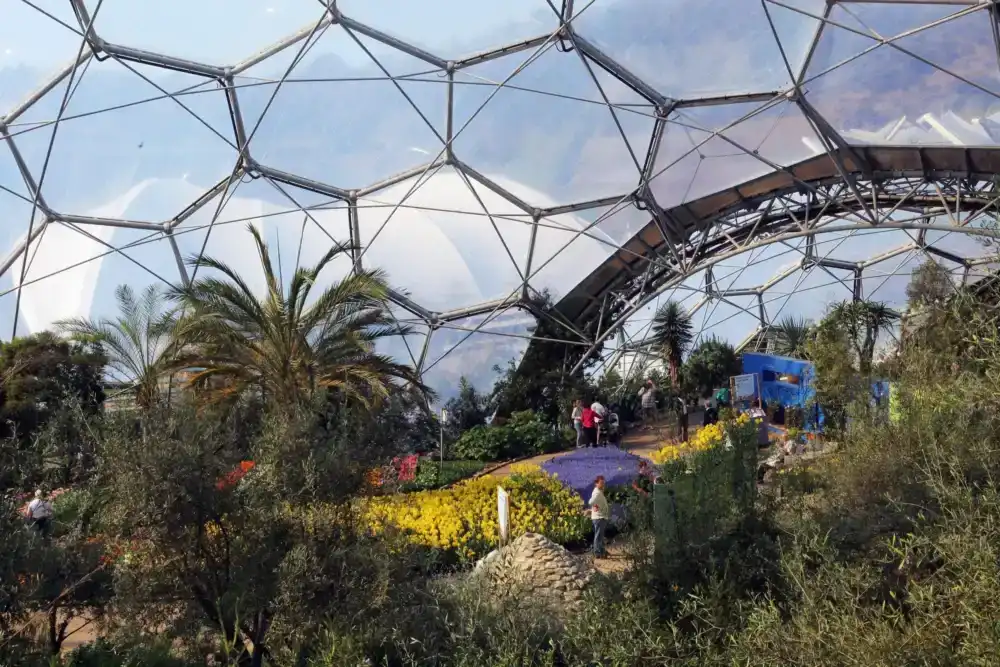
The transformation of a landscape from a scarred, industrial void into a flourishing beacon of biodiversity is rarely achieved within a single generation. Yet, in the rugged terrain of St. Austell, Cornwall, the Eden Project has spent the last quarter-century proving that ecological restoration is not merely possible, but economically transformative. As the organization marks its 25th anniversary, a comprehensive new impact report reveals the staggering scale of this "ecological miracle," detailing how a 60-meter-deep, nutrient-deficient china clay pit was reimagined as a global standard for sustainability, education, and regenerative technology.
Since its inception, the Eden Project has transcended its identity as a mere botanical garden or tourist attraction. It has become a living laboratory for the circular economy. According to the latest data, the site has welcomed over 25 million visitors to its iconic geodesic biomes, which house a diverse array of Mediterranean and rainforest ecosystems. This influx of tourism has catalyzed a monumental £6.8 billion in total economic impact for the South-West of England, demonstrating that environmental stewardship can serve as a primary engine for regional prosperity.
The genesis of the project was rooted in a radical architectural and biological gamble. When co-founder Sir Tim Smit and his team first surveyed the site, they were met with a "sterile place"—a lunar-like landscape of white clay with zero nutritional value for plant life. The engineering challenge was twofold: first, the creation of the world’s largest greenhouses using a lightweight, ETFE-foil-based geodesic design; and second, the literal manufacture of soil.
Chief Executive Andy Jasper describes the early stages as a feat of patience and scientific experimentation. Restoring the soil was the foundational priority. The team had to develop a synthetic topsoil that could support complex tropical and temperate flora. Today, that manufactured soil does more than just nourish plants; it serves as a critical carbon sink, sequestering approximately 10,000 tonnes of carbon annually. This highlights a shift in the project’s mission from mere conservation to active carbon management, aligning with their ambitious goal to eliminate Scope 1 and 2 emissions entirely by 2030.
The botanical achievements within the biomes are equally significant. The site currently hosts more than 100,000 plants, representing a global archive of botanical history and future potential. Among these are several critically endangered species, including the UK’s only Coco de Mer and the country’s first flowering baobab tree. These are not just exhibits; they are part of a broader international effort to preserve genetic diversity. The charity’s reach extends far beyond the Cornish coast, involving active partnerships in regions like Costa Rica, where they work to restore dry tropical forests, one of the world’s most threatened ecosystems.
From a technological perspective, the Eden Project has increasingly focused on energy autonomy and the "deep tech" of sustainability. In June 2023, the site reached a major milestone with the commencement of its deep geothermal power plant. By drilling five kilometers into the granite crust beneath the site, the project has tapped into a consistent source of renewable heat. This geothermal system represents a paradigm shift for the facility, moving it away from fossil-fuel-dependent heating for its massive biomes. The organization is currently seeking funding for an additional five geothermal pipes, which would further solidify the site as a pioneer in geothermal application for large-scale agricultural and architectural use.

The commitment to a circular economy is visible in every facet of the site’s operations. Water management is a prime example; the project harvests and recycles two-thirds of the water required for irrigation and sanitation. This closed-loop system is mirrored in their waste management strategy, where over 20 distinct waste streams are meticulously sorted and measured. The project has also taken a hard line on consumer habits, phasing out single-use plastic bottles in 2018 and implementing aggressive incentives for reusable coffee cups in 2024.
This ethos extends to the commercial arm of the organization. The products sold within Eden’s retail spaces are governed by a strict five-point sustainability rubric: they must be locally produced, plant-based, fairly traded, made from recycled materials, or directly promote a sustainable lifestyle. By imposing these constraints, Eden proves that the retail sector can operate ethically without sacrificing profitability, a lesson that many global retailers are only now beginning to adopt.
The success of the Cornwall site has sparked a global movement. Similar institutions, such as Terra Botanica in France, the Montreal Botanical Garden in Canada, and the futuristic Gardens by the Bay in Singapore, reflect a growing international appetite for "biophilic" urban planning and educational tourism. The Eden Project itself is expanding its brand of "creative ecology" through Eden Project International, with planned sites in various stages of development across the globe, including projects in Morecambe (UK), Qingdao (China), and beyond.
Reflecting on the 25-year journey, Sir Tim Smit emphasizes that the project’s true value lies in its ability to inspire hope. He notes that the original vision was to create a space where visitors could "suspend their cynicism about the natural world." In an era increasingly defined by climate anxiety, the Eden Project serves as a physical rebuttal to the idea that environmental degradation is irreversible. Smit asserts that the next 25 years must focus on intergenerational responsibility, shifting the narrative from despair to agency.
The impact report underscores this sentiment, suggesting that the "Eden Effect" is as much psychological as it is economic. By demonstrating that a "dead" industrial site can be brought back to life, the project provides a template for thousands of other post-industrial sites worldwide. Andy Jasper’s advice for future innovators is to "think big and be creative," suggesting that the DNA of the Eden Project—a mix of experimental science, bold architecture, and community engagement—is a replicable model for the 21st century.
As we look toward 2050, the role of institutions like the Eden Project will likely evolve from being "attractions" to becoming essential infrastructure for climate resilience. Their work in soil science, geothermal energy, and biodiversity preservation offers a roadmap for how humanity might navigate the Anthropocene. The transition from a barren clay pit to a thriving, carbon-locking ecosystem is no longer just a local success story; it is a global proof of concept.
In the final analysis, the 25th anniversary of the Eden Project is a celebration of human ingenuity applied toward the restoration of the natural world. It proves that with the right combination of technological innovation and ecological empathy, we can rewrite the history of a landscape. The message from Cornwall is clear: the future is not something that happens to us, but something we actively build, one plant and one geothermal well at a time. The next quarter-century will undoubtedly see this Cornish experiment continue to influence global policy, architectural design, and the way we perceive our relationship with the planet we call home.
