

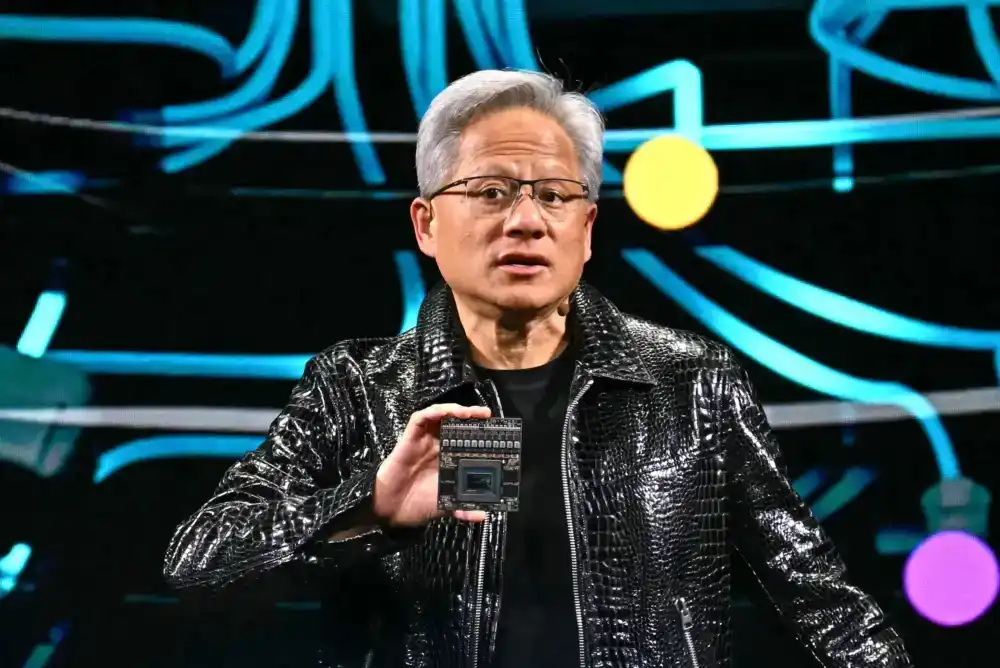
At the Morgan Stanley Technology, Media and Telecom conference in San Francisco this week, Nvidia CEO Jensen Huang delivered a message that sent ripples through the venture capital and artificial intelligence sectors: the world’s most valuable semiconductor company is likely finished investing in its most prominent partners, OpenAI and Anthropic. Huang’s assertion that the window for such investments is closing as these entities prepare for highly anticipated initial public offerings (IPOs) later this year has sparked a flurry of debate among analysts. While the explanation provides a convenient exit narrative, a deeper examination of the geopolitical, regulatory, and competitive landscape suggests that Nvidia’s retreat is motivated by factors far more complex than a simple change in the IPO calendar.
The official stance from Nvidia remains one of strategic completion. Huang noted that Nvidia’s venture activities are designed specifically to expand and deepen the company’s "ecosystem reach." From this perspective, Nvidia has already achieved its primary objectives. By securing significant stakes in the two most influential foundation model builders in the world, Nvidia ensured that its CUDA software platform and H-series Blackwell GPUs remained the industry standard during the most critical growth phase of generative AI. However, the logic that an impending IPO precludes further investment is difficult to reconcile with standard Silicon Valley practice. Historically, strategic investors and institutional heavyweights often increase their positions on the eve of a public debut—as seen with Berkshire Hathaway’s eleventh-hour entry into Snowflake—to capture the immediate "pop" of a public listing or to solidify long-term influence.
The cooling relationship between Nvidia and its primary beneficiaries comes at a time when the "circular economy" of AI investing is facing unprecedented scrutiny. Last year, reports surfaced of a massive $100 billion commitment from Nvidia toward OpenAI. Critics, including MIT Sloan professor Michael Cusumano, characterized these arrangements as essentially "a wash." In these scenarios, the chipmaker provides the capital that the AI firm then immediately returns to the chipmaker to purchase the hardware required to train its models. This feedback loop has raised alarms regarding a potential investment bubble, where revenue growth at Nvidia is being fueled by its own capital injections into its customers. The fact that Nvidia’s most recent contribution to OpenAI’s $110 billion round was a relatively modest $30 billion—far below the rumored $100 billion pledge—suggests that Huang may be responding to internal or external pressure to decouple Nvidia’s balance sheet from the operational spending of its partners.
Beyond the financial mechanics, the ideological and geopolitical rift between Nvidia and Anthropic has become impossible to ignore. The tension reached a boiling point following the Trump administration’s recent decision to blacklist Anthropic, designating the startup as a "supply chain risk." This move followed Anthropic’s refusal to allow its Claude models to be utilized for autonomous weaponry or domestic surveillance programs, citing ethical "constitutional AI" principles. For Nvidia, a company that must navigate the treacherous waters of international trade and federal contracts, being tied to a blacklisted entity is a significant liability. The friction was further exacerbated by Anthropic CEO Dario Amodei’s earlier comments at Davos, where he compared the sale of high-end AI processors to certain international markets as akin to "selling nuclear weapons to North Korea." Though he did not name Nvidia specifically, the industry understood the target of his critique.
While Anthropic took a stand that led to federal exclusion, OpenAI moved in the opposite direction, swiftly securing a massive contract with the Pentagon. This divergence has created a "tale of two startups" dynamic. Anthropic has positioned itself as the ethical, safety-first alternative, a move that seems to have resonated with the public. Following the blacklisting and the subsequent Pentagon deal signed by OpenAI, Anthropic’s Claude surged to the top of the Apple App Store rankings, overtaking ChatGPT for the first time. The public appears to be rewarding Anthropic’s defiance, or perhaps reacting to what Amodei described as the "mendacious" messaging coming from OpenAI regarding its military involvement. Nvidia now finds itself as a shareholder in two companies that are no longer just competitors, but ideological opposites engaged in a bitter public feud.
For Jensen Huang, the "ecosystem" he worked so hard to build is now fracturing. Nvidia’s success has always been predicated on being the neutral arms dealer of the AI revolution, providing the picks and shovels to everyone regardless of their philosophical bent. However, as AI transitions from a speculative technology to a cornerstone of national security and defense, neutrality is becoming an increasingly difficult position to maintain. By signaling a pullback from further investments, Huang may be attempting to re-establish Nvidia’s independence. If OpenAI and Anthropic are headed for a collision course with regulators and each other, Nvidia likely prefers to be a vendor rather than a co-defendant or a primary financial stakeholder.
The implications for the broader tech industry are significant. If Nvidia, the primary engine of the AI boom, is tightening its belt on strategic investments, it may signal a broader shift in how "compute-for-equity" deals are structured. Other hardware giants, such as AMD and Intel, or cloud providers like Amazon and Google, may see this as an opportunity to step in, or they may follow Nvidia’s lead in de-risking their portfolios. Furthermore, the anticipated IPOs of OpenAI and Anthropic will be the ultimate litmus test for the AI sector. If these companies go public with Nvidia pulling back, the market will have to determine if their valuations are sustainable without the implicit guarantee of the world’s most powerful chipmaker standing behind them.
Expert analysis suggests that Nvidia’s pivot is also a response to the changing nature of AI development itself. We are moving away from the era of "scaling at all costs," where the primary goal was simply to acquire as many H100s as possible. The next phase of the industry is focused on efficiency, inference, and "sovereign AI"—where nations and smaller enterprises build localized models. Nvidia’s strategic focus is likely shifting toward these emerging markets, where the "ecosystem reach" is still in its infancy. Investing another $50 billion into OpenAI yields diminishing returns for Nvidia compared to building out the infrastructure for a dozen different sovereign nations looking to establish their own domestic AI capabilities.
Looking toward the future, the "questions" raised by Huang’s explanation hint at a new chapter for Nvidia. The company is no longer a scrappy underdog trying to buy its way into the center of the conversation; it is the conversation. As a trillion-dollar titan, Nvidia must now act with the caution of a market steward. This means avoiding the appearance of market manipulation through circular deals and distancing itself from the volatile political controversies surrounding foundation model creators. The "complicated" situation Huang is exiting is the reality of AI’s arrival as a mature, and therefore highly regulated and politicized, industry.
Ultimately, Jensen Huang’s remarks at the Morgan Stanley conference may be remembered as the moment the AI gold rush began to consolidate into a more disciplined industrial era. The "pullback" is not a sign of weakness, but a strategic repositioning. By stepping back from OpenAI and Anthropic, Nvidia is asserting that its chips are the prize, and it no longer needs to pay for the privilege of being the one to supply them. Whether the IPOs of its former proteges will succeed without Nvidia’s continuous flow of capital remains to be seen, but for Huang, the mission of embedding Nvidia into the DNA of the AI world is already complete. The door isn’t just closing because of an IPO; it’s closing because Nvidia has already walked through it and is now looking for the next house to build.
