

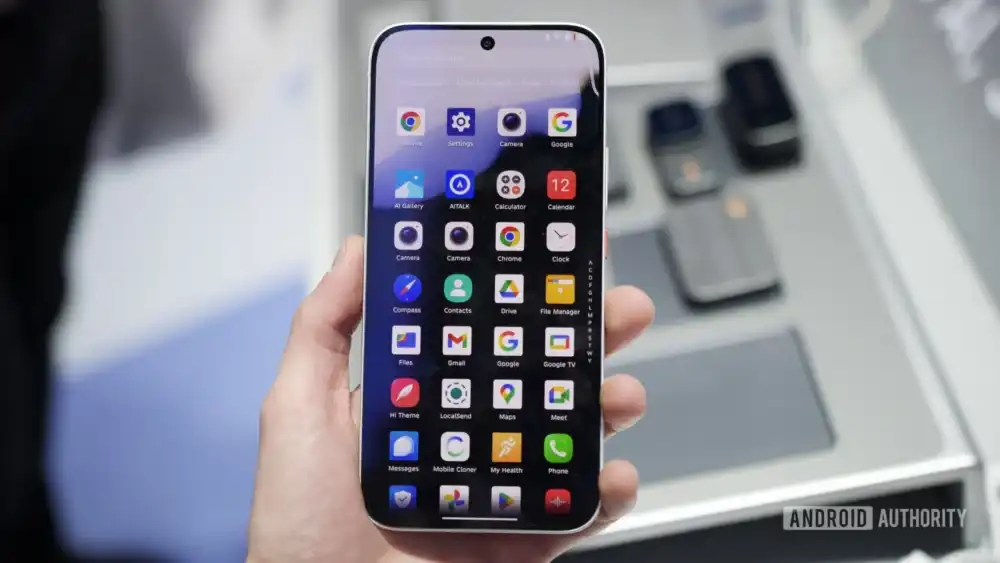
The relentless pursuit of thinness in smartphone design reached a fever pitch in 2025, exemplified by the arrival of devices like the Samsung Galaxy S25 Edge and the much-discussed iPhone Air. These flagship iterations prioritized wafer-thin profiles, often at the expense of core functionality—most notably, battery longevity and comprehensive camera systems. However, the recent Mobile World Congress (MWC) in 2026 unveiled a compelling counter-narrative: a concept device from TECNO that marries extreme thinness with genuine utility, immediately positioning it as a conceptual benchmark far exceeding the purely aesthetic goals of its thinner rivals.
At first glance, the TECNO concept, currently unnamed, exhibits a superficial resemblance to the iPhone Air. The layout of the rear camera housing and the general silhouette suggest a familiar design language. This initial impression might tempt observers to dismiss it as derivative. Yet, such a superficial judgment overlooks the profound engineering and philosophical divergence that TECNO has managed to embed within this chassis. This device is not merely a thinner phone; it is a strategic exploration of how to maintain portability while aggressively addressing the inherent limitations imposed by miniaturization.
The Physics of Impossibility: Sub-5mm Engineering
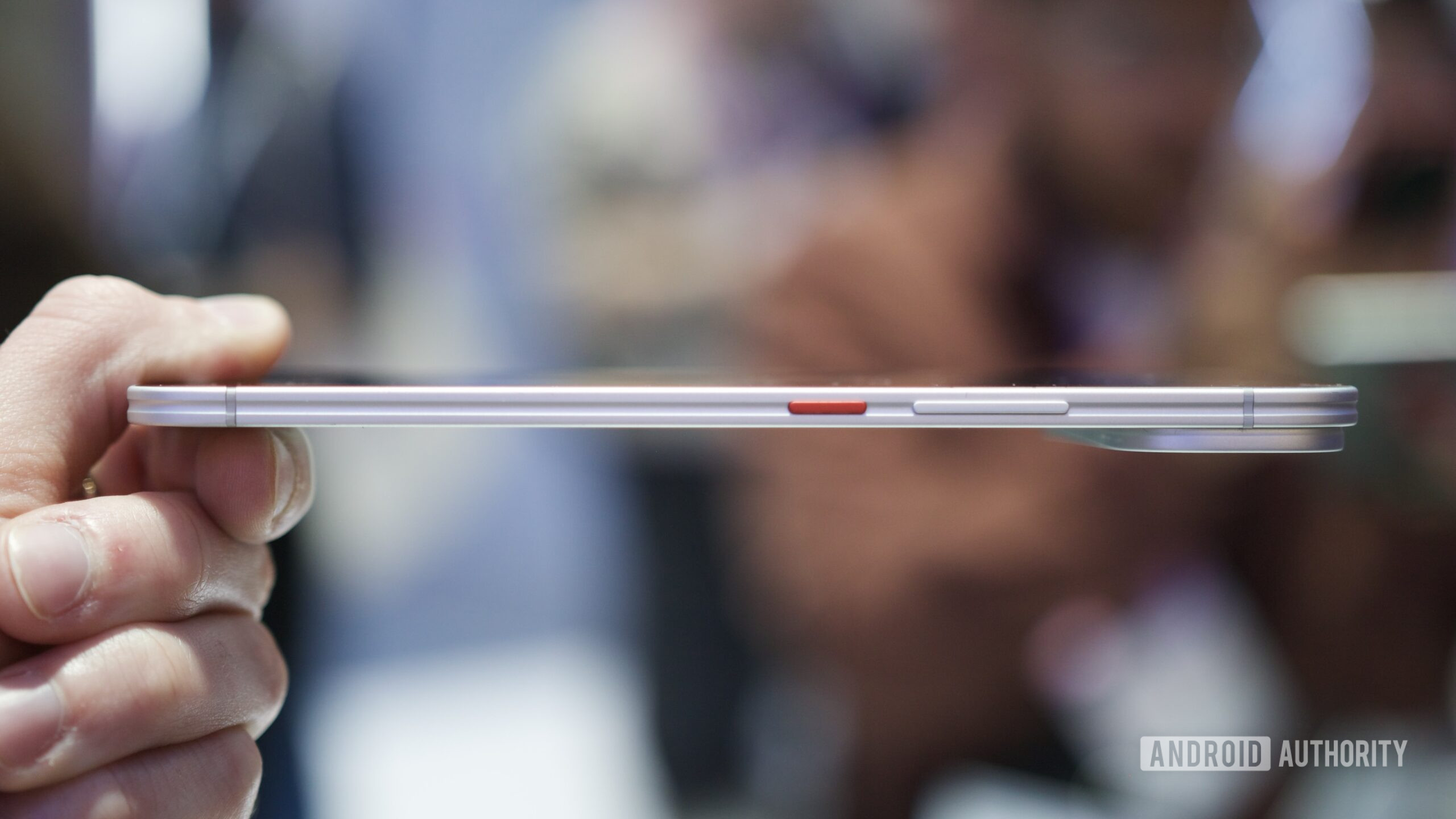
The most immediate and physically arresting feature of the TECNO concept is its astonishing thickness: a mere 4.9mm. To contextualize this, it eclipses the 5.8mm of the Galaxy S25 Edge and the 5.6mm of the iPhone Air. While a difference of less than a millimeter might seem negligible on paper, holding the device in hand transforms this statistic into a tangible reality. It possesses a tactile lightness that borders on illusory, feeling almost like a non-functional prototype or a meticulously crafted dummy unit, despite running a fully operational Android OS. This level of material and component compression challenges current manufacturing orthodoxy.
This radical reduction in volume necessitated significant compromises in standard port inclusion. In a definitive departure from contemporary design trends, the TECNO concept is entirely portless. There is no USB-C connector, no headphone jack—nothing. Power delivery is exclusively managed through advanced wireless charging protocols. While this creates an exceptionally clean aesthetic, it mandates complete reliance on wireless infrastructure, a significant dependency that would require robust ecosystem support for mainstream adoption.
The Return of Functionality: Magnetic Modularity as a Core Tenet
Where the TECNO device truly separates itself from the functionally compromised thin phones of 2025 is in its embrace of modularity. This is not a novel concept in the Android sphere; various manufacturers have attempted modularity before, often resulting in bulky or overly complex solutions. TECNO’s iteration, branded as Modular Magnetic Interconnection Technology (MMIT), feels far more integrated and purposeful, specifically designed to compensate for the inherent trade-offs made in achieving the 4.9mm profile.
The MMIT system relies on a sophisticated, high-strength magnetic array on the rear surface of the device. This allows for the seamless attachment and hot-swapping of specialized modules. The range of initial concepts demonstrated at MWC 2026 suggests a clear vision: the thin core is the baseline experience, and enhancements are added only as needed.
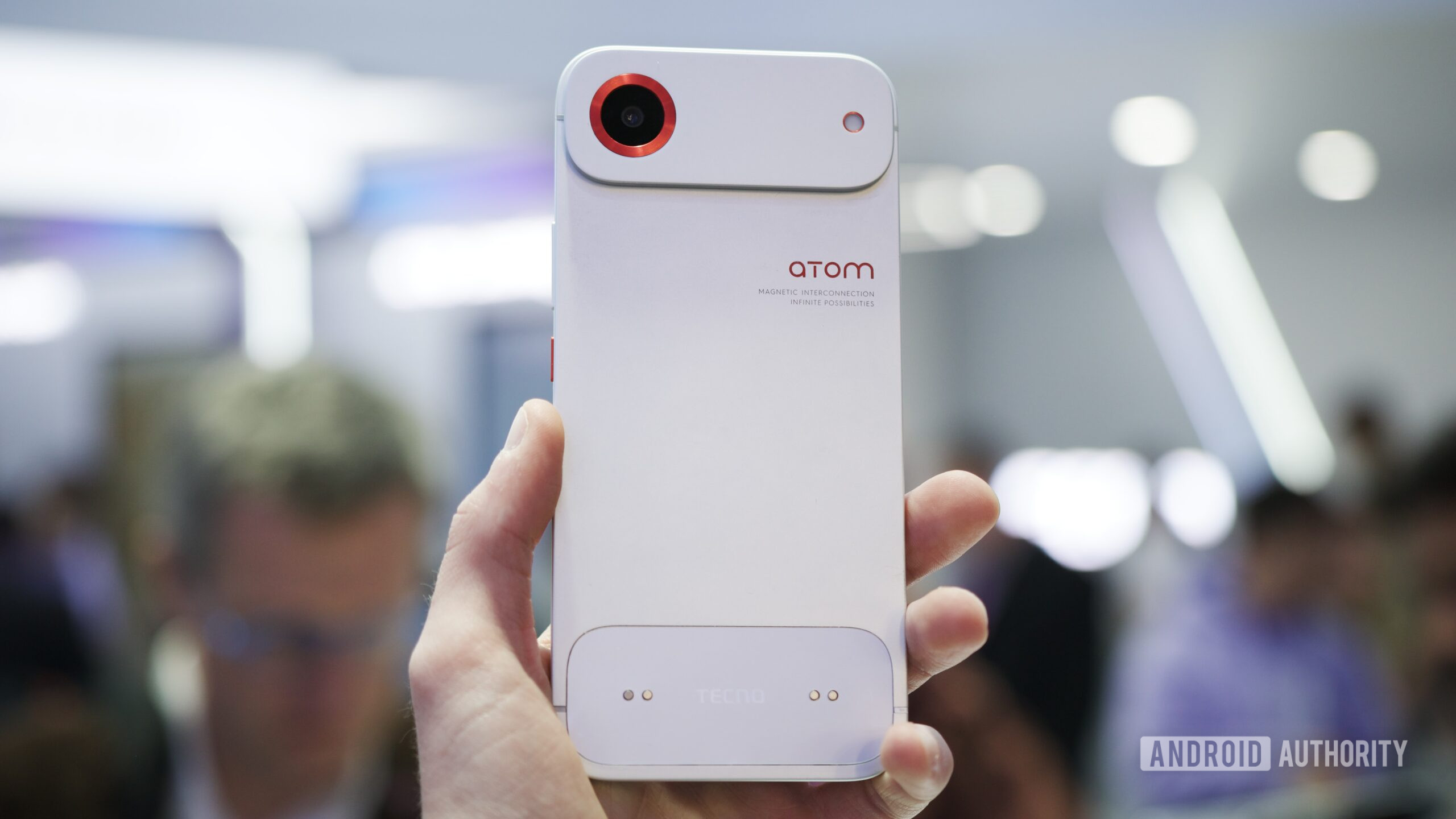
Basic modules include utilitarian accessories such as a slim card wallet and an integrated kickstand, addressing common daily needs without permanently bloating the device. More critically, TECNO showcased modules addressing the two most commonly sacrificed features in ultra-thin designs: power and imaging.
The power module is a substantial 3,000mAh battery pack. Crucially, the system appears designed for stacking. A user could attach the primary battery module and then affix another module—perhaps a secondary battery pack or an advanced camera array—on top of it, achieving an auxiliary capacity of up to 6,000mAh while maintaining a relatively manageable form factor compared to carrying an external power bank.
The imaging solutions are perhaps the most transformative. TECNO presented dedicated camera modules, one of which appears to be a comprehensive imaging body featuring enhanced optical elements and dedicated physical controls (shutter button, zoom toggle). Furthermore, specialized lenses were previewed, including distinct telephoto and action camera modules. This signifies a shift from the "one-size-fits-all" fixed sensor approach prevalent today to a dynamically configurable imaging rig.
Industry Analysis: Beyond MagSafe and Pixelsnap
While the magnetic attachment mechanism might draw comparisons to Apple’s MagSafe ecosystem or Google’s Pixelsnap accessories, TECNO’s implementation suggests a deeper level of system integration and functional expansion. MagSafe generally focuses on power delivery (charging mats, battery packs) and simple mounts, while Pixelsnap adds minor functionality like specialized grips or limited camera hardware.
TECNO’s MMIT system appears architecturally more ambitious. Because the base unit is so aggressively thin—deprived of even basic ports—the magnetic connection must handle high-speed data transfer and significant power draw simultaneously. If the interconnect technology is robust, it allows for genuine hardware augmentation, such as the swapping of optical sensors, which requires complex, instantaneous communication between the host processor and the peripheral hardware.
The industry implication here is profound. For years, manufacturers have been locked in a race to build monolithic slabs where every component is soldered in place, forcing users to accept compromises set by engineers two years prior to purchase. TECNO’s concept suggests a future where the smartphone becomes a core computing hub, adaptable to immediate needs. A professional photographer could dock a high-fidelity telephoto module for a shoot, while a casual user could maintain the featherlight 4.9mm profile for everyday use. This directly challenges the planned obsolescence model tied to static hardware specifications.
Engineering Hurdles and The Future Trajectory
It is imperative to frame this innovation within the context of a concept demonstration. Moving from a functional prototype displayed under controlled MWC conditions to mass-market viability involves navigating substantial engineering, logistical, and software hurdles.
Thermal Management: A 4.9mm chassis presents an extreme challenge for thermal dissipation, especially when running demanding applications or utilizing high-speed wireless data transfer. Any added module, particularly a high-powered battery or intensive camera sensor, introduces new heat loads. TECNO’s success in commercializing this would depend heavily on innovative thermal throttling or advanced, possibly module-integrated, heat sinking solutions.
Software Ecosystem and Interoperability: For the camera modules to function seamlessly, the Android kernel and the OEM skin must possess sophisticated, real-time hardware abstraction layers (HALs) capable of recognizing, initializing, and managing diverse external sensors as if they were internal components. This level of dynamic hardware management is far more complex than simply activating a standardized NFC or MagSafe charging coil. The potential for future modules—hypothetically including external storage arrays or even dedicated RAM boosters—further underscores the requirement for a highly adaptable software architecture.
Durability and Connection Integrity: Given the complete reliance on wireless charging and magnetic module attachment, the durability of the connection interface is paramount. If the magnetic system fails, the phone becomes entirely unusable for charging or basic enhancement. The engineering required to ensure thousands of connection cycles without degradation of alignment or data throughput is non-trivial.
A Paradigm Shift in Consumer Choice
The significance of TECNO’s approach is not just about being thinner than the competition; it’s about solving the problem that thinness creates. The mainstream approach adopted by Apple and Samsung is one of acceptance: users must accept reduced battery life and fixed camera capabilities in exchange for reduced thickness. TECNO flips this script, offering an uncompromisingly thin core that serves as a foundation for optional, task-specific augmentation.
This modular concept speaks to a growing consumer desire for longevity and customization that monolithic hardware design often stifles. If TECNO can translate this concept into a viable product—even if it debuts in niche markets before scaling—it sets a precedent for how manufacturers can decouple core device specifications from peripheral requirements. It suggests a future where the smartphone purchase is not the final word on device capability, but merely the beginning of a customizable hardware journey tailored to evolving user demands, whether those demands are an extended weekend trip requiring maximum battery or a specialized photography project demanding advanced optical zoom.
The MWC 2026 reveal by TECNO stands as a powerful philosophical statement in an industry increasingly focused on iterative refinement. By combining an extreme engineering feat (4.9mm thickness) with a pragmatic solution to its resulting deficiencies (advanced magnetic modularity), this concept phone demonstrates a path forward where ultra-portability and advanced functionality are not mutually exclusive trade-offs but complementary design goals. The industry will be watching closely to see if this vision translates from the concept showcase floor into a genuine market disruptor.
