

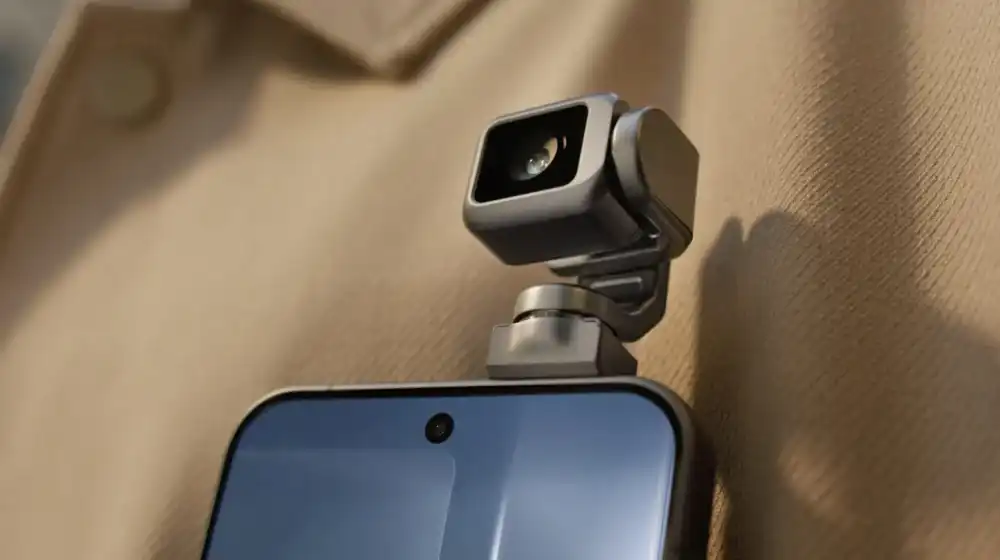
The landscape of mobile technology has long been characterized by incremental refinements—slimmer bezels, faster processors, and increasingly dense pixel counts. However, as the industry prepares for the annual showcase at Mobile World Congress in Barcelona, a more radical departure from the traditional slab-phone form factor has emerged. Honor, the global technology brand that has aggressively carved out a niche in the high-end foldable and imaging markets, has provided an exhaustive look at its most ambitious project to date: a "Robot Phone" equipped with an autonomous, multi-axis moving camera arm. This device represents a significant pivot toward kinetic hardware, suggesting a future where the smartphone is no longer a passive tool but an active, responsive participant in the user’s environment.
At the heart of this innovation is a sophisticated mechanical assembly that blends advanced robotics with high-end optics. The device features a 200-megapixel primary sensor mounted on a miniaturized three-axis gimbal system. While gimbal stabilization is common in external accessories used by professional videographers, integrating such a system directly into the chassis of a smartphone presents a monumental engineering challenge. To achieve this, Honor developed a proprietary micro-motor capable of executing precise, fluid movements without the bulk typically associated with motorized camera mounts. This system provides a "four-degree-of-freedom" range of motion, allowing the camera to tilt, pan, and rotate independently of the phone’s body.
The mechanical integrity of this robotic arm is rooted in Honor’s recent breakthroughs in materials science, particularly those developed for its foldable lineup. The company confirmed that the robotic assembly utilizes the same ultra-high-strength materials found in the hinge of the Honor Magic V6. With a tensile strength of 2800 MPa, the arm is designed to withstand the rigors of daily use, addressing the perennial concern that moving parts represent a significant point of failure in consumer electronics. By leveraging the metallurgical advancements of the foldable era, Honor is attempting to prove that mechanical complexity does not necessarily come at the cost of durability.
Beyond the raw specifications, the "Robot Phone" is defined by its integration of artificial intelligence and personification. Honor has infused the device with what it describes as a "personality," allowing the hardware to respond to social cues and environmental stimuli. In a demonstration of these capabilities, the company showcased the robot’s ability to "nod" or "shake its head" in response to user inquiries. For instance, when a user asks for fashion advice or apparel suggestions via the onboard voice assistant, the camera arm moves in a binary affirmative or negative gesture to provide feedback. Furthermore, the device is capable of "dancing"—synchronizing its movements to the rhythm and beat of music—effectively transforming the smartphone into a kinetic desk companion.

This shift toward personified hardware reflects a broader trend in the technology sector: the transition from artificial intelligence as a software layer to AI as an embodied presence. By giving the phone a physical way to express itself, Honor is tapping into the psychological concept of social robotics, where users form deeper emotional connections with devices that exhibit lifelike behaviors. This has profound implications for the future of virtual assistants. If a phone can physically look at a user or gesture during a conversation, the barrier between human and machine interaction becomes increasingly porous.
From a functional standpoint, the robotic camera offers capabilities that static sensors simply cannot match. One of the standout features is "Spinshot," a cinematic mode that allows the camera to rotate 90 or 180 degrees during filming, creating professional-grade transition effects that previously required expensive specialized equipment or complex post-production. The integration of AI-powered object tracking also elevates the video calling experience. Much like a more advanced version of Apple’s Center Stage, the Honor system uses the physical movement of the gimbal to keep the user perfectly framed, even as they move around a room. Because the camera moves physically rather than relying on digital cropping, the image quality remains uncompromised, maintaining the full resolution of the 200-megapixel sensor.
The implications for the creator economy are particularly noteworthy. For years, mobile content creators have relied on third-party gimbals and stabilizers to achieve cinematic motion. Honor’s integration of these tools directly into the hardware suggests a future where the smartphone is a self-contained production studio. The "Super Steady" mode, combined with the three-axis physical stabilization, promises to virtually eliminate handshake and jitter, providing a level of smoothness that electronic image stabilization (EIS) or standard optical image stabilization (OIS) struggle to achieve in low-light or high-motion scenarios.
However, the introduction of a camera that can move and track autonomously also raises inevitable questions regarding privacy and security. A device that can physically reorient its lens without user intervention requires a robust framework of transparency. Honor will need to convince a privacy-conscious public that the robotic arm is under the absolute control of the user and that its autonomous movements are governed by strict ethical guidelines. As we move into an era of "ambient computing," where devices are always on and always sensing, the physical movement of a camera lens serves as a visible reminder of the device’s capabilities—a double-edged sword that provides both utility and a heightened sense of surveillance.
The "Robot Phone" was not the only significant reveal at Honor’s pre-MWC event. The company also showcased its broader ecosystem, including the Honor Magic V6 foldable, which boasts a massive 6,600 mAh battery—a record-breaking capacity for the slim foldable category. This was accompanied by the MagicPad 4 tablet and the MagicBook 14 laptop, signaling Honor’s intent to compete across every tier of the premium consumer electronics market. Yet, it is the robotic device that has captured the industry’s imagination, serving as a "halo product" that demonstrates the company’s R&D prowess.

Industry analysts view Honor’s move as a necessary gamble in a maturing market. Smartphone replacement cycles have lengthened as consumers find fewer reasons to upgrade each year. By introducing a "category-defying" device, Honor is attempting to reignite the sense of wonder that characterized the early years of the mobile revolution. While the "Robot Phone" is slated for a commercial launch in the second half of 2026, its true value may lie in its role as a precursor. It paves the way for a new generation of devices that are increasingly autonomous, moving away from the "handheld computer" model toward something resembling a personal robotic companion.
The technical hurdles remain significant. Power consumption is a primary concern; driving micro-motors and processing real-time spatial AI tracking requires substantial energy. Honor will need to ensure that the kinetic features do not drastically undermine battery life, a metric that remains a top priority for most consumers. Furthermore, the software ecosystem will need to evolve to support this new hardware. For the robotic camera to be more than a gimmick, third-party developers—especially those in the social media and teleconferencing space—will need APIs that allow them to tap into the gimbal’s movement.
As we look toward the official launch, the "Robot Phone" stands as a testament to the fact that the smartphone’s evolution is far from over. It challenges our assumptions about what a phone should look like and how it should behave. By merging the fields of mobile photography, artificial intelligence, and robotics, Honor is not just releasing a new product; it is proposing a new philosophy of interaction. In this vision, our devices are no longer just windows into a digital world; they are physical actors in our physical world, capable of dancing, nodding, and seeing with a level of autonomy that was once the province of science fiction. The second half of 2026 will determine whether the world is ready for a phone that moves on its own, but one thing is certain: the era of the static smartphone is under siege.
