

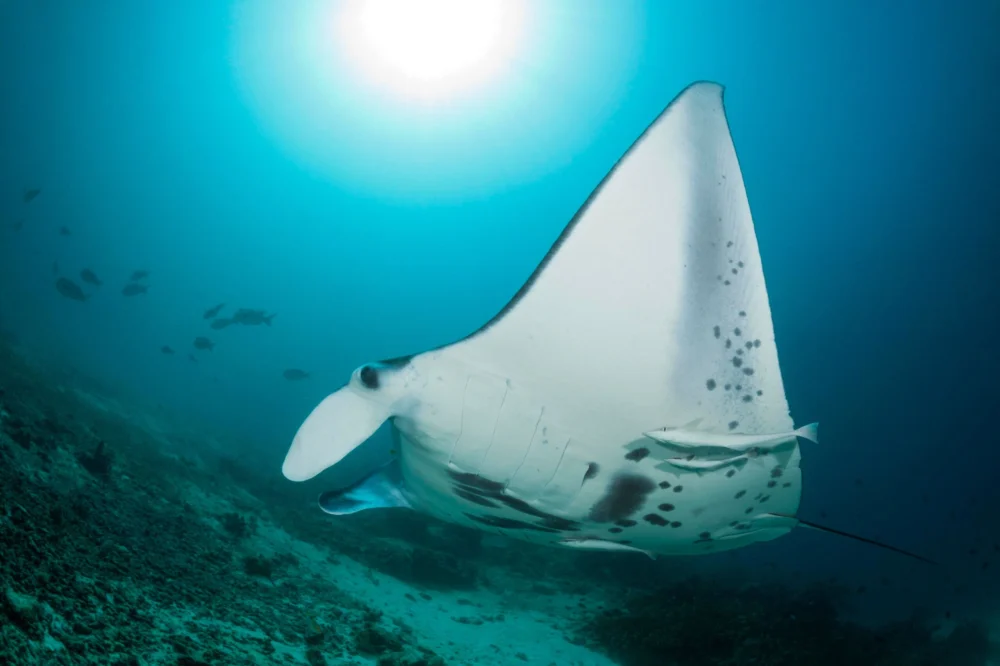
In the far eastern reaches of the Indonesian archipelago lies Raja Ampat, an area often described as the "crown jewel" of the Coral Triangle. This region, known as the Four Kings, represents the global epicenter of marine biodiversity, boasting a concentration of species that defies conventional biological expectations. Within its nutrient-rich currents, manta rays glide over sprawling reefs, and various shark species patrol the shadows of limestone karsts. However, the very splendor that defines Raja Ampat has created a modern conservation paradox: the global desire to witness these marine giants is placing unprecedented pressure on the ecosystems they inhabit. As the tourism industry rebounds and evolves, a new model of "conservation expedition cruising" is emerging, prompting a critical debate over whether high-end travel can serve as a legitimate tool for protection or if it is merely a sophisticated new form of environmental encroachment.
The biological vulnerability of the region’s flagship species—the reef manta (Manta alfredi) and various reef sharks—cannot be overstated. These animals have survived for millions of years, yet their life history strategies are ill-suited for the rapid changes of the Anthropocene. Unlike many fish species that produce thousands of offspring, manta rays and many sharks grow slowly, reach sexual maturity late in life, and produce only a few young over their long lifespans. In a stable, pre-industrial ocean, this strategy was highly effective. In the modern era, characterized by intensive fishing, habitat loss, and unregulated tourism, it is a recipe for rapid population collapse. While Indonesia has made significant strides in legal protection, including the declaration of a national shark and ray sanctuary, many populations remain data-poor, their long-term survival hanging in a delicate balance between policy and practice.
The rise of conservation-focused expeditions, led by operators like Rascal Voyages, attempts to bridge the gap between luxury travel and rigorous marine science. According to Yeray Moreno, Head of Experience and Conservation at Rascal Voyages, the success of this model hinges on a fundamental shift in how voyages are structured. The traditional tourism model prioritizes the guest experience above all else, often leading to "performance-based" wildlife encounters where animals are pursued for the perfect photograph. In contrast, a science-led expedition is built around the specific requirements of research organizations and local authorities. By working alongside NGOs like the Manta Trust, these voyages transform guests from passive observers into active participants in the scientific process, provided that strict boundaries are maintained.
One of the primary scientific contributions of these expeditions is the collection of photo-identification data. Every manta ray possesses a unique pattern of spots on its ventral side, functioning much like a human fingerprint. By documenting these patterns, researchers can track individual movements, assess site fidelity, and estimate population sizes over decades. On these specialized cruises, guests assist in capturing these images, which are then uploaded to global databases like MantaBase. However, a clear line is drawn when it comes to more invasive procedures. While guests may witness the deployment of acoustic or satellite tags, the physical handling of the animals remains strictly within the purview of trained scientists. This distinction is vital; manta rays are highly sensitive to human presence, and any disruption to their natural behavior—particularly at "cleaning stations"—can have cascading effects on their health.
The importance of cleaning stations is a cornerstone of Raja Ampat’s marine ecology. These specific sites on the reef are where mantas hover for extended periods while cleaner wrasses and other small fish remove parasites and dead tissue. It is a critical health service for the rays. Historically, popular sites like Manta Sandy in the Dampier Strait became victims of their own fame. At its peak of unregulated access, the site frequently saw nearly a dozen boats and over fifty divers simultaneously, leading to behavioral shifts where the mantas simply stopped appearing. The solution came through a coalition of local villages, NGOs, and government bodies that established a permanent ranger station. Funded by marine park fees and staffed by local community members, the station enforces strict visitor limits and boat protocols. The result has been a documented return of manta aggregations, proving that when tourism is secondary to ecology, the ecosystem can recover.

This success highlights a broader industry implication: the necessity of "luxury" as a function of scale rather than just opulence. Steve Ebsworth, co-founder of Rascal Voyages, argues that the only way to protect fragile regions like Raja Ampat is through high-value, low-impact models. By hosting no more than ten guests at a time and operating only during specific windows, the physical footprint of the voyage is minimized. This approach challenges the traditional tourism metric of "growth at all costs." In this context, luxury is redefined as the privilege of access to a pristine environment, maintained through high park fees, strict discharge regulations, and the employment of expert guides. Ebsworth contends that for conservation to be the primary goal, operators must be willing to scale back or even cease operations if ecological indicators suggest that the species are under stress.
However, the future of Raja Ampat’s marine giants is not dictated by tourism alone. The region faces the looming shadow of global climate change. Ocean warming and acidification are altering the very foundation of the Coral Triangle. Shifting productivity patterns affect the availability of plankton, the primary food source for manta rays, while rising temperatures threaten the coral reefs that serve as nurseries for sharks. In this narrowing window of time, the data collected during expedition cruises becomes even more critical. If tagging studies reveal that mantas frequently migrate outside the boundaries of protected areas into zones where they are vulnerable to commercial fishing, it provides the necessary leverage for scientists to lobby for expanded spatial protections. Data is the currency of conservation; without it, management strategies are merely guesswork.
Furthermore, the long-term viability of marine protection is inextricably linked to the socio-economic health of local communities. In regions like Raja Ampat and Komodo, where fishing has historically been a primary source of income, conservation can only succeed if it offers a viable alternative. This is where organizations like The SEA People play a pivotal role. Through initiatives such as community-driven coral gardening and education programs with Child Aid Papua, they create local employment that is tied to the health of the reef rather than its extraction. Conservation expeditions support this by funding reef restoration sites, such as the Yaf Keru project, where guests can see firsthand the labor-intensive process of rehabilitating a damaged ecosystem. This creates a feedback loop where the presence of the traveler directly funds the wages of the local conservationist.
The ultimate question remains: does the emotional impact of a face-to-face encounter with a manta ray justify the carbon footprint and physical presence required to facilitate it? Proponents of the expedition model argue that these experiences create "conservation ambassadors"—individuals with the financial means and social influence to fund long-term research and advocate for policy change. A documentary may inform, but hovering in the blue as a five-meter-wide ray glides inches above the reef can transform a person’s worldview. The real impact of such a trip is measured not by what happens on the boat, but by the sustained support for NGOs and the lifestyle changes adopted by the guest once they return home.
As we look toward the next decade, the model of travel in biodiverse regions must undergo a radical transformation. The era of mass-market "bucket list" tourism is increasingly incompatible with the survival of sensitive species. The future likely belongs to science-led, regenerative models that treat the traveler as a secondary beneficiary to the ecosystem. What is currently unfolding in Raja Ampat serves as a global case study for this transition. It is a reminder that conservation is not a final destination but a continuous negotiation between human ambition and biological reality. If managed with humility and a commitment to scientific integrity, tourism can indeed be a powerful tool for protection. If left to the whims of the market, however, it risks becoming the final pressure point for the very creatures it seeks to celebrate. The clear waters of the Four Kings still hold the answers, provided we are willing to listen to the data as much as the demand.
