

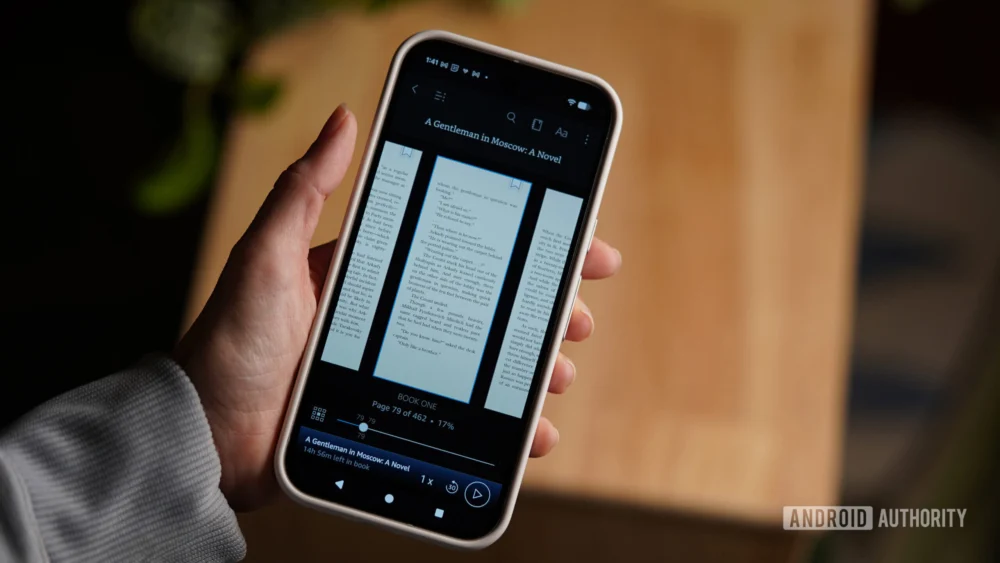
The digital literary landscape is undergoing a subtle but significant metamorphosis, driven by technological integrations that bridge the historical chasm between textual consumption and auditory engagement. The recent introduction of the Immersive Reading feature—a synchronized playback mechanism linking Kindle eBooks with their corresponding Audible audio counterparts—represents more than a mere convenience; it signifies a fundamental rethinking of how individuals interact with long-form content in a fragmented media environment. For years, dedicated readers have navigated a binary choice: the focused, static engagement of the eBook, or the portable, passive engagement of the audiobook. This new modality, which dynamically highlights the text as the narration plays, offers a compelling synthesis, potentially redefining accessibility, focus retention, and overall reading habits for a diverse user base.
The Contextual Shift: From Format Choice to Format Fusion
To fully appreciate the impact of Immersive Reading, one must first understand the pre-existing ecosystem. Ebooks, exemplified by the Kindle platform, offered unparalleled portability and customization (font size, spacing, backlight control), catering to traditional visual readers. Audiobooks, primarily centralized under the Audible banner, solved the problem of the "unoccupied mind"—allowing consumption during chores, commuting, or exercise. However, these modalities rarely complemented each other effectively beyond Amazon’s existing Whispersync technology, which simply allowed users to switch devices and resume at the last read/listened point without simultaneous interaction.
Immersive Reading flips this paradigm. It posits that the combination of sensory inputs—the visual confirmation of the words on the screen coupled with the auditory processing of the narrative—creates a superior cognitive pathway for comprehension and sustained attention. This is particularly crucial in an age defined by attention scarcity. The user experience described in testing suggests that when visual and auditory streams are perfectly aligned, the mind finds a stronger anchor against the drift of external stimuli. Where an audiobook alone can degrade into mere sonic wallpaper, and silent reading requires sustained, high-effort concentration, the synced experience provides a middle ground: guided focus.
Expert Analysis: Cognitive Load and Multimodal Learning
From a cognitive psychology perspective, this feature taps into principles of dual coding theory, which suggests that information processed through both verbal (auditory) and visual channels is remembered better than information processed through only one. For casual readers, this means improved recall and deeper immersion in fictional narratives.
However, the most profound implications lie in the realm of complex content, such as dense academic texts or challenging non-fiction. In these scenarios, traditional reading often necessitates multiple passes over difficult sections. Immersive Reading functions almost as an integrated, on-demand tutor. The narrator provides the semantic structure and pacing, while the visual highlighter offers immediate, low-effort recognition of the vocabulary and sentence structure. This multi-sensory scaffolding significantly lowers the cognitive barrier to entry for challenging material. If a user struggles with a complex paragraph, the simultaneous visual tracking reinforces the spoken word, making parsing quicker and less mentally taxing than rereading silently.
The professional environment will also see subtle shifts. Consider professionals reviewing technical documentation or complex legal briefs while commuting or during low-stakes administrative tasks. The ability to passively listen while visually scanning—ensuring that the eyes are engaged enough to catch subtle visual cues or highlighted keywords—allows for more effective information absorption during traditionally "wasted" time slots. This moves beyond simple multitasking to true time optimization of cognitive effort.
Industry Implications: The Future of Content Ownership and Delivery
The required prerequisite for this feature—owning both the eBook and the audiobook version—carries significant industry weight. Currently, publishers and rights holders often price these formats independently, sometimes leading to a situation where a consumer must pay a premium price twice for the same intellectual property solely to unlock a synergistic digital feature.
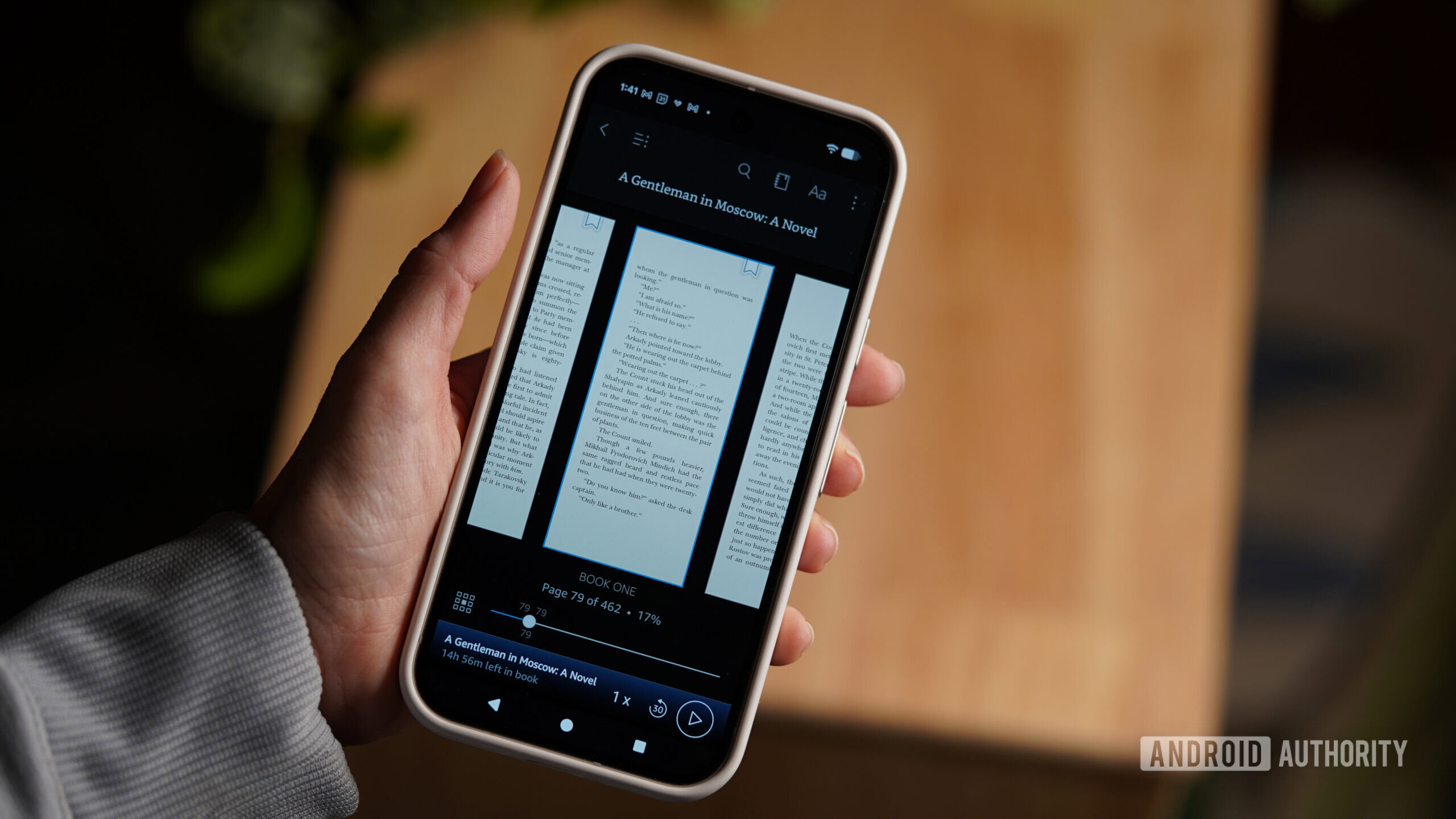
This dual-purchase requirement is the feature’s primary friction point. From a technological standpoint, it is a success; from a consumer adoption standpoint, it is an economic hurdle. If this feature proves to dramatically increase engagement time—a key metric for digital subscription services—Amazon/Audible has a strong incentive to negotiate with publishers to bundle the formats, perhaps under a single, slightly elevated subscription tier or a discounted cross-purchase price.
Furthermore, this move signals a clear strategic direction: the convergence of Amazon’s Kindle ecosystem (e-reading hardware/software) and Audible (audio content). Future digital reading platforms will likely compete not on the quality of their static text rendering, but on the sophistication of their integrated media experiences. We might see future competitors introducing features that incorporate interactive graphics, embedded video summaries, or even AI-generated contextual deep-dives that activate based on the spoken word. Immersive Reading is the first tangible step toward a true "media book" rather than discrete text and audio files.
Operational Nuances and the Road Ahead
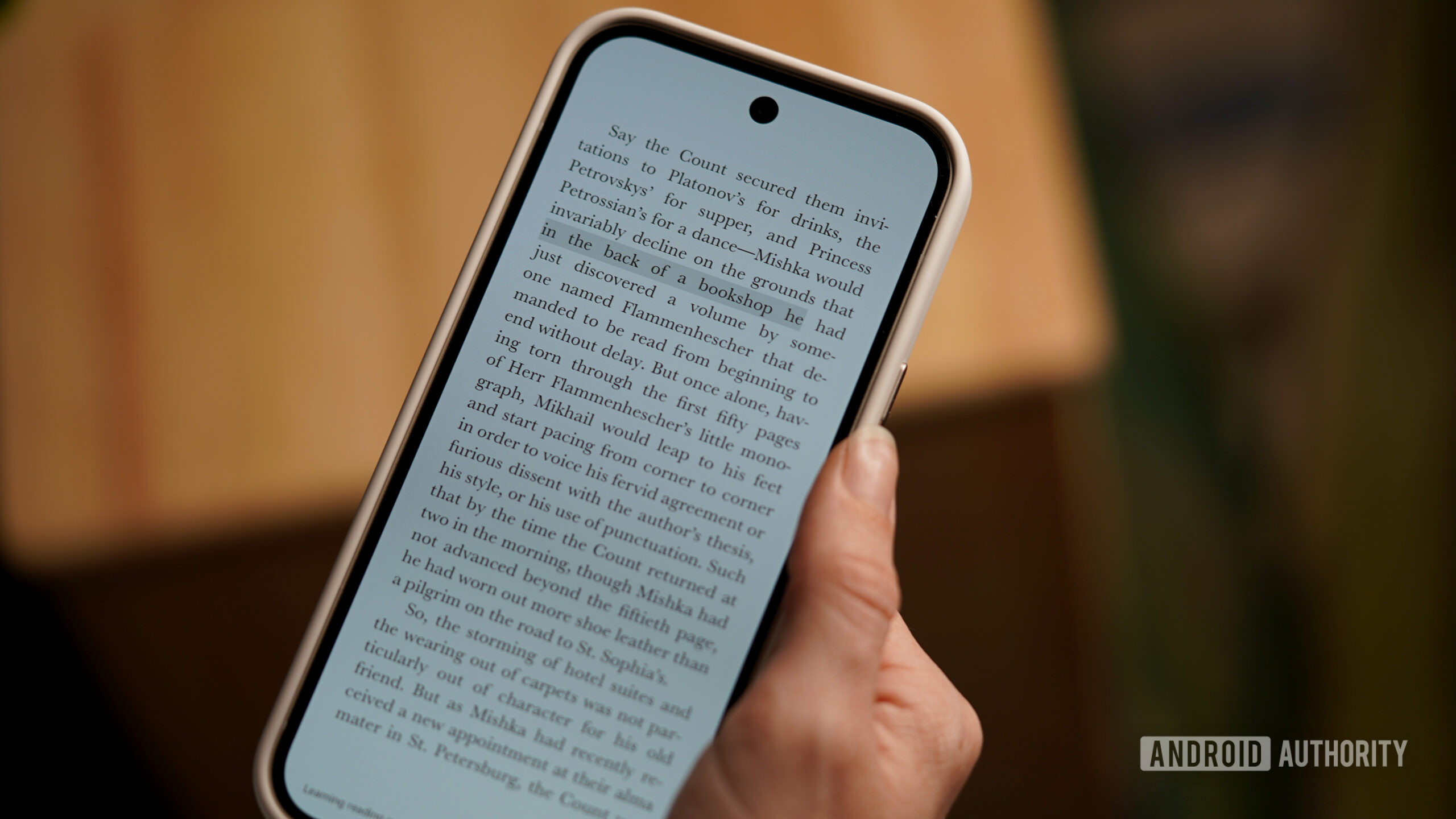
While the core utility is undeniable, practical implementation reveals areas ripe for iteration. The lag between narration and highlighting, when noticeable, disrupts the very flow the feature aims to create. Precise synchronization is paramount; even milliseconds of delay can force the reader’s brain to actively correct the sensory mismatch, reintroducing cognitive load. The observed instances of partial word highlighting suggest that the text segmentation algorithms need refinement to ensure phrase-level or word-level accuracy rather than character-level errors.
A crucial area for future development involves user control. The current passive nature, while beneficial for maintaining attention, lacks the fine-tuning available in pure audiobook players (like adjustable playback speed) or pure eBook readers (like text size adjustments). Allowing users to slightly offset the highlighting relative to the narration—for instance, anticipating the narrator by a word or two, or lagging slightly to allow for rapid silent reading before the audio catches up—would cater to different pacing preferences. The absence of this granular control limits its utility for highly skilled or extremely rapid readers who might otherwise find the feature too prescriptive.

Moreover, the subjective element of narration quality cannot be ignored. A poor or monotonous narrator can undermine the entire experience, even with visual reinforcement. Unlike traditional audiobooks where one can simply tolerate a less-than-ideal voice for the duration, the visual coupling means the narrator’s cadence becomes inextricably linked to the act of reading itself. This places a higher premium on high-quality, professional narration for books utilizing this mode.
Future Impact: Accessibility and Enhanced Consumption
The long-term impact of Immersive Reading extends significantly into digital accessibility. For individuals with certain reading disabilities, such as dyslexia, the simultaneous auditory and visual processing offers a proven aid for decoding and comprehension. While dedicated assistive technologies exist, integrating this functionality directly into a mainstream reading platform lowers barriers to entry and encourages wider adoption among those who benefit most from multimodal input. It normalizes a feature that inherently supports diverse learning styles.
Furthermore, this technology could catalyze a shift in how educational content is delivered digitally. Imagine standardized testing modules or corporate training manuals presented in this synchronized format, maximizing retention during mandatory compliance viewing or study sessions. The ability to transform potentially dry, text-heavy materials into an active, engaging experience holds immense pedagogical value.
In conclusion, the introduction of synchronized reading via Immersive Reading is a watershed moment in digital content consumption. It successfully addresses the modern paradox of desiring deep engagement while operating under constant distraction. While current constraints—particularly the dual-purchase model and minor technical latency issues—prevent it from being a universal replacement for solitary reading or listening, it has undeniably carved out a powerful niche. It provides a vital bridge for focused consumption in environments where traditional reading falters, positioning the combined eBook/audio experience not as a novelty, but as a potentially superior methodology for absorbing complex information and sustaining literary immersion. As the technology matures and pricing models evolve, this format fusion is poised to become a standard expectation rather than a specialized feature in the digital library of the future.
