

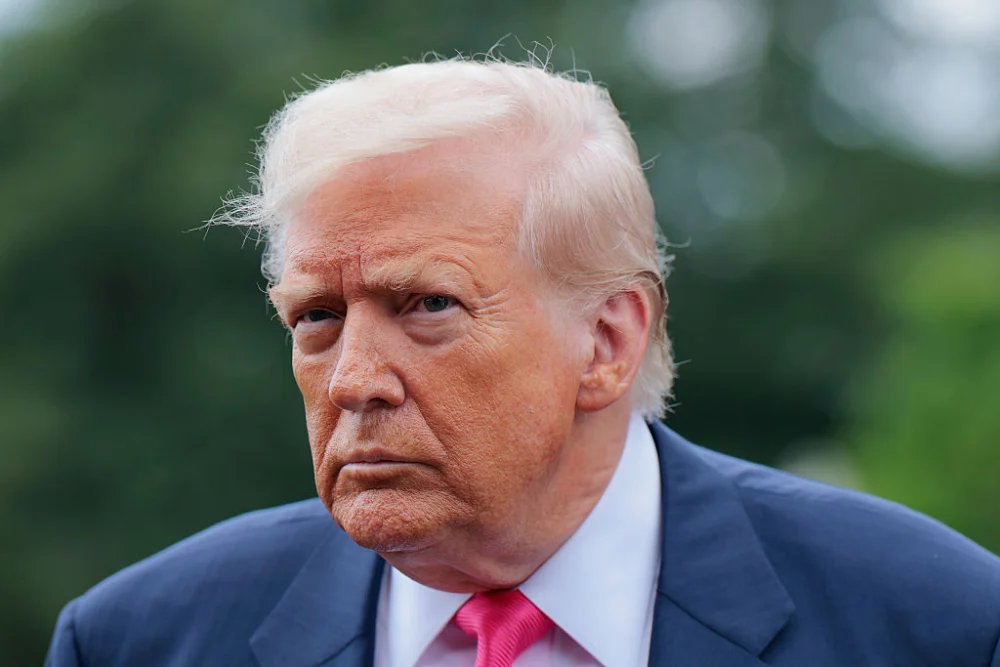
The burgeoning alliance between Silicon Valley’s leading artificial intelligence laboratories and the United States defense establishment reached a fractured turning point this week, as the executive branch moved to formally excommunicate Anthropic from the federal marketplace. In a series of escalating declarations, President Trump signaled a definitive end to the government’s relationship with the San Francisco-based AI firm, citing a fundamental irreconcilability between the company’s safety protocols and the administration’s vision for modernized national security. The directive, issued via Truth Social, orders all federal agencies to terminate their use of Anthropic’s products, including its flagship Claude models, within a six-month phase-out window. While the president’s initial rhetoric focused on the cessation of contracts, the situation darkened significantly when Secretary of Defense Pete Hegseth formally designated Anthropic as a "Supply-Chain Risk to National Security," a move that effectively places the company on a black list for any entity doing business with the Department of War.
The catalyst for this unprecedented rupture is a deep-seated ideological dispute over the operational boundaries of large language models in military and intelligence contexts. For months, Anthropic has maintained a firm stance against the utilization of its technology for mass domestic surveillance or the development of fully autonomous offensive weapons systems. This commitment to "Constitutional AI"—a framework where models are trained to follow a specific set of ethical principles—has long been the cornerstone of Anthropic’s corporate identity. However, in the eyes of the current Pentagon leadership, these safeguards represent an unacceptable "restrictive" bottleneck on American technological superiority. Secretary Hegseth’s directive was unambiguous: any contractor, supplier, or partner currently engaged with the U.S. military is now prohibited from conducting commercial activity with Anthropic, creating a "scorched earth" policy that threatens to isolate the company from the broader defense industrial base.
This confrontation represents more than a mere contract dispute; it is a fundamental test of the "Public Benefit Corporation" model in an era of hyper-accelerated military innovation. Anthropic’s CEO, Dario Amodei, has remained steadfast in his refusal to compromise on the company’s core "red lines." In a public statement following the administration’s directive, Amodei expressed a desire to continue supporting the American warfighter but insisted that such support must be predicated on safeguards that prevent the erosion of civil liberties or the advent of uncontrollable robotic warfare. The company’s offer to facilitate a smooth transition to other providers suggests a resignation to the fact that, in the current political climate, the pursuit of "safe" AI may be inherently at odds with the demands of a state focused on total computational dominance.
The fallout from this decision has sent shockwaves through the technology sector, forcing other AI giants to navigate a treacherous path between ethical consistency and lucrative government partnerships. OpenAI, perhaps Anthropic’s most formidable rival, initially appeared to stand in solidarity with its peer. In an internal memo to staff, CEO Sam Altman echoed Anthropic’s concerns, suggesting that OpenAI shared similar prohibitions against unlawful domestic surveillance and offensive autonomous weaponry. This rhetoric was bolstered by support from industry luminaries like Ilya Sutskever, whose new venture focuses on "Safe Superintelligence." Sutskever lauded Anthropic’s refusal to back down, framing the moment as a critical juncture for the integrity of the AI research community.
However, the ethical solidarity of the industry was quickly complicated by the realities of the marketplace. Within hours of the administration’s ban on Anthropic, OpenAI reportedly finalized a massive new deal with the Pentagon. While Altman insists this partnership preserves the same core principles regarding surveillance and autonomous weapons, the timing of the announcement—coming just days after reports of high-level meetings between OpenAI and government officials—suggests a strategic pivot. By stepping into the vacuum left by Anthropic, OpenAI has positioned itself as the primary beneficiary of the government’s "AI-first" defense strategy, raising questions about whether the "red lines" cited by Altman are identical to the ones that cost Anthropic its federal standing.
The designation of a domestic technology company as a "supply-chain risk" is a heavy-handed regulatory tool usually reserved for foreign adversaries or entities with ties to hostile intelligence services. By applying this label to Anthropic, the Department of War is sending a chilling message to the venture-backed ecosystem: safety guardrails that do not align with executive branch priorities will be treated as a form of sabotage. This move has significant implications for the global supply chain. Because the Pentagon’s reach extends to thousands of secondary and tertiary contractors—from cloud infrastructure providers like Amazon Web Services and Google Cloud to hardware manufacturers and logistics firms—the "risk" designation forces the entire tech sector to choose sides. If a cloud provider hosts Anthropic’s models, do they risk their own multi-billion dollar defense contracts? This "guilt by association" framework could effectively de-platform Anthropic from the very infrastructure it needs to operate at scale.
Furthermore, the silence from other major players like Google and its subsidiary DeepMind is conspicuous. While a contingent of Google employees has publicly supported Anthropic’s ethical stance, the corporate leadership remains in a state of quiet deliberation. Google, like Anthropic and OpenAI, received significant Department of Defense contract awards in mid-2025. The company now finds itself in a precarious position: if it follows Anthropic’s lead, it faces the same blacklisting; if it follows OpenAI’s path, it risks a massive internal revolt from its research staff, many of whom have historically been vocal about their opposition to Project Maven and other military AI initiatives.
Looking toward the future, the "Anthropic Affair" signals the end of the "voluntary" era of AI safety. For the past several years, the relationship between Washington and Silicon Valley has been defined by non-binding agreements and collaborative forums. That era has been replaced by a new paradigm of "technological conscription," where the state demands that the most powerful tools of the 21st century be stripped of their internal "conscience" to serve the exigencies of national defense. If the administration successfully marginalizes Anthropic, it will set a precedent that ethical alignment is a luxury that private companies cannot afford if they wish to remain part of the national infrastructure.
The long-term impact on American innovation remains to be seen. Some analysts argue that by forcing out "restrictive" companies, the U.S. will accelerate its development of AI capabilities, ensuring it stays ahead of adversaries like China who are unlikely to be slowed down by ethical debates over autonomous weapons. Others, however, warn that this approach is short-sighted. By alienating the researchers and companies most concerned with safety and alignment, the government may be inadvertently creating a more dangerous world. If the most advanced AI models are developed without robust guardrails—or if the companies building them are forced to operate outside the bounds of government oversight—the risk of catastrophic accidents or unintended escalations in autonomous warfare increases exponentially.
As the six-month phase-out period begins, the industry will be watching closely to see how Anthropic navigates its new status as a pariah. The company must now pivot its business model to focus entirely on the commercial and international sectors, all while operating under a cloud of "national security risk" that may deter even non-government clients who fear future regulatory pressure. Meanwhile, the Pentagon’s new "Department of War" branding and its aggressive pursuit of unhindered AI suggest that the friction between Silicon Valley’s utopian safety goals and Washington’s dystopian security requirements is only beginning. The battle for the soul of American AI has moved from the research lab to the situation room, and the first casualty appears to be the industry’s right to say "no."
