

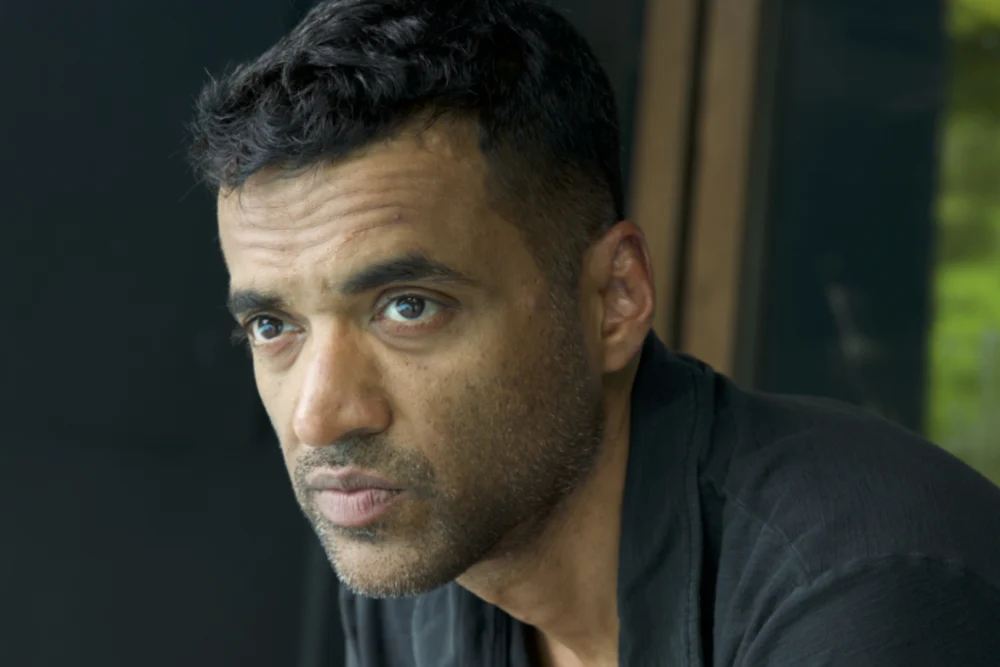
The landscape of Indian entrepreneurship is witnessing a tectonic shift as one of its most prominent figures, Deepinder Goyal, pivots from the logistical complexities of food delivery to the frontiers of human performance and neurotechnology. Just weeks after stepping down as the Chief Executive Officer of Zomato and its umbrella entity, Eternal, the 43-year-old founder has announced a significant $54 million funding round for his latest venture, Temple. This move marks the beginning of what Goyal characterizes as a phase of "higher-risk exploration," signaling a departure from the operational rigors of the consumer tech world toward the highly specialized domain of wearable brain-monitoring technology.
The capital injection, structured as a friends-and-family round, underscores the immense confidence Goyal’s long-term associates and early Zomato backers have in his visionary capabilities. With a post-money valuation already touching approximately $190 million, Temple is entering the market with a formidable war chest and a high degree of internal alignment. Notably, over 30 employees participated in the round at the same valuation, a move that suggests a culture of shared risk and high-stakes commitment within the fledgling startup. This internal backing is a rare signal in the early-stage tech ecosystem, highlighting a belief that Temple is not merely another gadget company but a foundational shift in how humans interface with their own biology.
The transition comes at a pivotal moment for Goyal. In January 2026, he officially handed over the reins of Zomato and Eternal to Albinder Dhindsa, the former chief of the quick-commerce powerhouse Blinkit. This leadership change concluded nearly two decades of Goyal’s stewardship over the company he co-founded in 2008. Under his guidance, Zomato evolved from a simple restaurant discovery platform into a publicly-traded conglomerate that reshaped the Indian urban economy through food delivery and rapid grocery fulfillment. By passing the baton to Dhindsa, Goyal has cleared his schedule to focus on "moonshot" projects that prioritize long-term scientific breakthroughs over quarterly earnings reports.
Temple represents the centerpiece of this new professional chapter. Unlike the ubiquitous fitness trackers that monitor heart rate, steps, or sleep cycles, Temple is aiming for a more elusive and critical metric: the brain. During a recent public discourse, Goyal revealed that the startup’s flagship device is a sensor designed to be worn on the temple—hence the company name—to continuously monitor cerebral blood flow. By tracking how blood moves through the brain’s vascular system, Temple intends to provide a window into cognitive load, mental fatigue, and peak performance states that have previously been accessible only through expensive laboratory equipment like fNIRS (functional near-infrared spectroscopy) or fMRI machines.
The ambition behind Temple is nothing short of creating "the ultimate wearable for elite performance athletes." Goyal’s vision targets a demographic where a 1% improvement in cognitive efficiency or recovery can mean the difference between victory and defeat. Existing market leaders like Whoop, Oura, and Garmin have dominated the "Quantified Self" movement by perfecting metrics related to the body’s autonomic nervous system. However, the brain remains a "black box" for most consumer-grade wearables. Temple seeks to bridge this gap, measuring data points that Goyal claims no other wearable in the world can currently capture with the necessary precision.
To achieve this, Temple has launched an aggressive recruitment campaign that highlights the interdisciplinary nature of the challenge. The startup is seeking specialists in embedded systems, computational neuroscience, and brain-computer interface (BCI) engineering. The inclusion of BCI in their hiring roadmap suggests that Temple’s long-term goals may extend beyond passive monitoring. While the initial product appears to be a diagnostic and optimization tool for athletes, the underlying technology could eventually evolve into more active interfaces between the human mind and digital systems. This puts Temple in a spiritual, if not direct, competitive orbit with global firms like Neuralink, though Goyal’s focus remains firmly on non-invasive, wearable solutions.
The market Temple is entering is both lucrative and increasingly crowded. The wearable technology sector has matured significantly over the last decade, transitioning from basic pedometers to sophisticated medical-grade health monitors. Companies like Ultrahuman—another firm Goyal has previously backed—have shown that there is a massive appetite for deeper biological insights, such as continuous glucose monitoring and metabolic tracking. By focusing on cerebral blood flow, Temple is betting on a "blue ocean" strategy, attempting to own a metric that is scientifically rigorous yet currently underutilized in the consumer market.
However, the technical hurdles are substantial. Measuring cerebral blood flow non-invasively through the skin and skull requires overcoming significant signal-to-noise ratios. Movement artifacts, skin temperature variations, and the sheer complexity of neurovascular coupling mean that Temple’s engineering team must deliver a breakthrough in sensor miniaturization and algorithmic processing. The $190 million valuation reflects not just Goyal’s reputation, but the high-cost, high-reward nature of deep-tech hardware development.
Temple is not an isolated interest for Goyal, but rather a component of a broader investment thesis centered on "human optimization." In late 2025, Goyal committed $25 million of his personal capital to Continue Research, a venture dedicated to longevity and the extension of the human lifespan. Furthermore, his involvement as a co-founder of LAT Aerospace—which recently pivoted into defense technology via the acquisition of Sharang Shakti—suggests a growing interest in the intersection of high-performance human capital and national security. Whether it is extending life, enhancing the brain, or securing the skies, Goyal’s post-Zomato portfolio is characterized by a fascination with the limits of human and technological potential.
The implications for the Indian startup ecosystem are profound. For years, the region’s tech successes were largely defined by "copy-paste" models or localized versions of Western platforms—e-commerce, ride-hailing, and food delivery. Goyal’s pivot toward computational neuroscience and longevity research marks a maturation of the ecosystem, where successful founders are now using their capital and experience to fund "hard tech" that has global applications. If Temple succeeds, it could establish India as a hub for neuro-engineering, moving the country’s tech narrative from service-oriented software to cutting-edge hardware and biotechnology.
Industry analysts are watching closely to see how Temple differentiates its value proposition to the "elite" segment it targets. For professional athletes, the ability to monitor brain fatigue could revolutionize training schedules, preventing burnout and optimizing the timing of high-intensity sessions. In the world of Formula 1, professional gaming (e-sports), or high-stakes finance, cognitive endurance is the primary currency. A wearable that provides real-time feedback on mental "fuel" levels could become as essential as a stopwatch was to the previous generation of competitors.
Despite the excitement, Goyal remains characteristically guarded about the specific timelines for Temple’s product launch. He has declined to offer further comments beyond his public social media updates, preferring to let the recruitment and development process speak for itself. This "heads-down" approach is a hallmark of his later years at Zomato, where he prioritized operational excellence over media visibility.
As Temple scales its operations, the primary challenge will be moving from a successful funding round to a functional, scalable product. The history of wearables is littered with companies that promised revolutionary metrics but failed to deliver clinical-grade accuracy or user-friendly form factors. However, with $54 million in the bank and a roster of "obsessive" talent currently being recruited, Temple is better positioned than most to navigate the "valley of death" that claims many hardware startups.
In the broader context of Goyal’s career, Temple is the ultimate test of his ability to build from scratch in a field where he is not a native expert. While Zomato was built on the back of operational grit and market consolidation, Temple will be built on scientific innovation and intellectual property. It is a gamble on the future of the human mind, and for Deepinder Goyal, it appears to be a risk well worth taking. The transition from delivering food to decoding the brain is a journey few would have predicted, but it is one that perfectly encapsulates the restless ambition of a founder who has already conquered one industry and now has his sights set on the very essence of human performance.
