

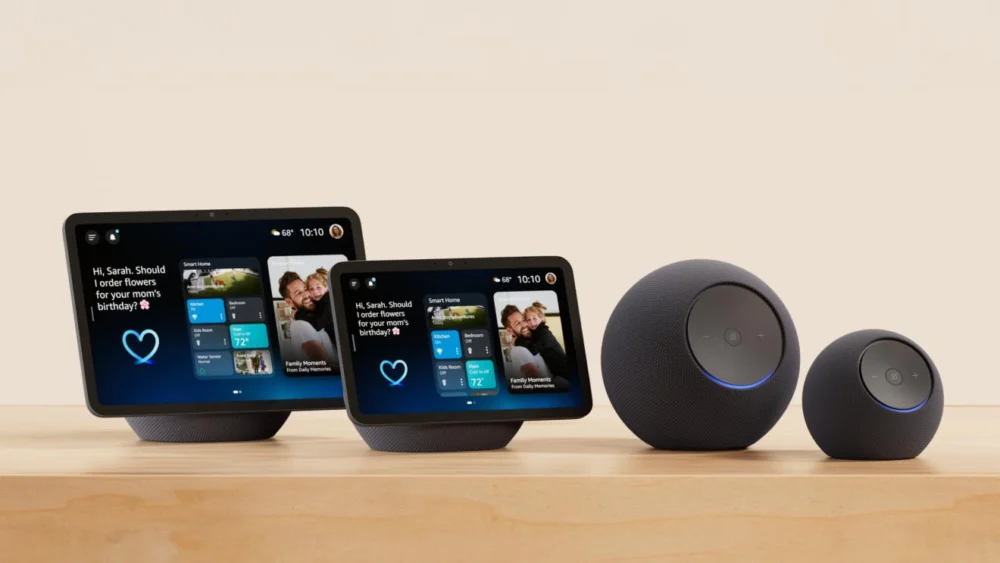
The relationship between humans and their digital assistants is undergoing its most significant transformation since the launch of the original Amazon Echo in 2014. Amazon has officially begun rolling out a sophisticated personality framework for Alexa+, its next-generation, AI-enhanced voice assistant. This update, currently debuting for users in the United States, moves beyond simple voice modulation or the addition of celebrity cameos. Instead, it introduces a fundamental shift in how the AI perceives and interacts with the user, offering a suite of "personality styles" designed to mitigate the friction that has long plagued voice-based computing.
For years, the primary criticism leveled against smart speakers has not been their lack of intelligence, but their lack of social awareness. Early iterations of Alexa were transactional—useful for setting timers or checking the weather, but prone to repetitive phrasing and a rigid, robotic cadence. As Amazon transitioned Alexa to a Large Language Model (LLM) foundation with the "Alexa+" branding, a new problem emerged: the assistant became too talkative. Early adopters often complained that the revamped AI was overly familiar, verbose, and occasionally intrusive. The new personality styles—specifically "Brief," "Chill," and "Sweet"—are Amazon’s direct answer to this feedback, representing a sophisticated attempt to solve the "annoyance factor" through granular user control.
The Anatomy of an AI Persona
The technical underpinnings of this update are more complex than they appear on the surface. According to Amazon, these personality styles are not just superficial filters; they are built upon five core psychological and linguistic traits: expressiveness, emotional openness, formality, directness, and humor. By adjusting the "sliders" on these five attributes, Amazon can generate vastly different conversational experiences.
The "Brief" mode is arguably the most anticipated feature for long-time power users. It is designed for maximum efficiency, stripping away the conversational fluff that often delays the execution of a command. In this mode, the AI is casual and direct, with a near-total reduction in humor and emotional openness. It is the digital equivalent of a professional assistant who provides the facts and then steps back, a necessary pivot for users who found the previous LLM-based Alexa to be too prone to "mansplaining" or offering unsolicited advice.
Conversely, the "Chill" style aims for a middle ground. It adopts a relaxed, easygoing tone intended to mimic the flow of a casual conversation with a friend. This mode leverages a higher degree of expressiveness and a moderate level of humor, making it ideal for users who view their smart speaker as a companion rather than just a tool. It represents the "Goldilocks" zone of voice interaction—not too robotic, yet not overbearing.
The "Sweet" style is perhaps the most controversial and experimental of the trio. It leans heavily into emotional openness and encouragement. It is designed to be warm, enthusiastic, and overtly positive. While Amazon positions this as a way to provide a more supportive interface, it has already drawn skepticism from tech critics who argue that an overly "sweet" AI can feel artificial or even condescending. However, for certain demographics—such as the elderly or those living alone—this high-warmth persona may fill a vital role in reducing the sterile feeling of home automation.
Industry Implications and the Competitive Landscape
Amazon’s move comes at a time when the "Big Three" of voice AI—Amazon, Google, and Apple—are locked in an arms race to define the future of the smart home. For a long time, Amazon held a dominant market share based on the sheer ubiquity of Echo devices. However, the rise of OpenAI’s ChatGPT and Google’s Gemini has shifted the goalposts. Users no longer want an assistant that can just "find" information; they want an assistant that can "reason" and "converse."
OpenAI recently made waves with its Advanced Voice Mode for ChatGPT, which offers incredibly low latency and high emotional range. Google is integrating Gemini Live into its Pixel and Nest ecosystems to provide a more fluid, multimodal experience. Apple, meanwhile, is betting on "Apple Intelligence" to make Siri more contextually aware of a user’s personal data.
In this environment, Amazon’s focus on "personality" is a strategic play to maintain its lead in the domestic sphere. By giving users the ability to toggle the "vibe" of their home, Amazon is acknowledging that the home is a private, emotional space. A one-size-fits-all voice assistant is no longer sufficient in a world where AI is becoming a constant presence. The ability to customize Alexa’s disposition is a form of "affective computing," where the machine attempts to align its emotional output with the user’s preferences.

The Psychology of Anthropomorphism
The debate over Alexa’s personality touches on a deeper psychological phenomenon: anthropomorphism. Humans have a natural tendency to attribute human characteristics to non-human entities. When a voice assistant sounds helpful, we tend to like it; when it sounds smug or talkative, we feel frustrated.
However, there is a risk in making AI too "human." Critics of the "Sweet" or "Chill" modes point to the danger of creating an "uncanny valley" of conversation, where the assistant is just human enough to be creepy, but not human enough to be genuine. There is also the ethical concern of "emotional manipulation." If an AI is programmed to be relentlessly positive and encouraging, could it subtly influence a user’s purchasing habits or emotional state? Amazon’s decision to make these styles optional and configurable via the app or voice command is a crucial safeguard, but it does not entirely resolve the debate over how "friendly" our machines should be.
Furthermore, the "Brief" mode highlights a growing segment of the population that is experiencing "AI fatigue." These users do not want a relationship with their toaster; they want their lights to turn off without a lecture on the benefits of energy conservation. By providing a "Direct" option, Amazon is respecting the boundaries of users who view technology through a purely utilitarian lens.
Technical Implementation and User Experience
For users in the US, accessing these new personalities is designed to be frictionless. One can simply say, "Alexa, change your personality," or "Alexa, talk to me in Brief mode." For more granular control, the settings are nested within the Alexa app under individual device settings.
This device-specific approach is noteworthy. It allows for a "multi-persona" household. A user might set the Echo Show in the kitchen to "Brief" for quick recipe checks and timer settings, while the Echo in a child’s bedroom might be set to "Sweet" for bedtime stories and educational queries. This level of customization suggests that Amazon envisions Alexa not as a single entity, but as a flexible interface that adapts to the room it inhabits.
Amazon has signaled that these three styles are only the beginning. The company plans to introduce more personas in the future, potentially opening the door for user-created personalities or even "licensed" personalities from popular culture. Imagine an Alexa that adopts the persona of a famous historian for homework help, or a dry, sarcastic wit for entertainment.
Looking Ahead: The Future of Personalized AI
The rollout of Alexa+ personality styles is a precursor to a more significant trend: hyper-personalization. As LLMs become more efficient and context-aware, the next step will likely be an AI that automatically adjusts its personality based on the user’s current mood or the time of day. Using acoustic sensors, Alexa could theoretically detect stress in a user’s voice and automatically switch from "Chill" to "Brief" to avoid being an additional source of irritation.
However, the path forward is not without hurdles. The primary challenge for Amazon remains the balance between capability and privacy. To make these personalities truly effective, the AI needs to understand the user’s history, preferences, and daily routines. This requires a level of data ingestion that continues to make privacy advocates uneasy.
As we move into 2025 and beyond, the success of Alexa+ will depend less on what the assistant can do and more on how it makes the user feel. The shift from a command-line interface in the sky to a customizable digital companion is a bold bet on the importance of the human element in technology. Whether "Sweet" mode becomes a beloved household staple or "Brief" mode becomes the default for a frustrated public remains to be seen, but one thing is clear: the era of the "one-size-fits-all" voice assistant is officially over. Amazon is no longer just selling a speaker; it is selling a digital roommate with a toggleable attitude.
