

The global wearable technology sector is currently witnessing one of the most sophisticated engineering and legal maneuvers in recent history as Bengaluru-based health-tech titan Ultrahuman attempts to navigate a complex regulatory and competitive landscape. With the official unveiling of the Ring Pro, its third-generation smart ring, Ultrahuman is not merely launching a new product; it is executing a strategic "design-around" intended to circumvent a debilitating U.S. International Trade Commission (ITC) ruling and re-establish its footprint in the world’s most lucrative consumer electronics market.
The Ring Pro arrives at a critical juncture for the startup. Priced at $479, the device represents a significant premium over its predecessor, the Ring Air, but it brings with it a suite of hardware advancements that push the boundaries of what is possible in the ultra-compact form factor of a finger-worn wearable. Chief among these is a staggering 15-day battery life, a nearly threefold increase over the four-to-six-day endurance typically seen in the smart ring category. This leap in power efficiency is paired with a completely overhauled sensing architecture and a dual-core processor, signaling Ultrahuman’s intent to compete not just on price, but on sheer technical superiority.
The Legal Chessboard and the Path to U.S. Re-entry
To understand the necessity of the Ring Pro, one must look back at the disruptive events of late 2025. In October of that year, the U.S. International Trade Commission ruled in favor of Oura, the Finnish pioneer of the smart ring category, in a high-profile patent infringement dispute. The ITC’s decision was a hammer blow to Ultrahuman’s operations, effectively banning the importation of new inventory into the United States. While existing retail stock in warehouses like those of Amazon or Best Buy could still be sold, the company was legally barred from bringing fresh units across the border.
The stakes could not have been higher. According to Ultrahuman co-founder and CEO Mohit Kumar, the United States accounted for approximately 45% of the company’s 700,000 daily active users. Losing access to this demographic threatened to stall the company’s rapid growth trajectory. The Ring Pro is the answer to this existential threat. Developed with a fundamentally different design philosophy and internal architecture, the device has been submitted to U.S. Customs and Border Protection (CBP) for a formal review. The goal is to prove that the Ring Pro is legally distinct from the products covered by the Oura patent, thereby allowing Ultrahuman to resume imports and compete head-to-head with Oura and newcomers like Samsung.
While the legal battle continues in the Delhi High Court—where Ultrahuman has filed its own countersuit against Oura—the Ring Pro represents a pragmatic "engineering-first" solution to a legal problem. By redesigning the hardware from the ground up, Ultrahuman is betting that it can innovate faster than the legal system can litigate.
Hardware Evolution: Beyond the Ring Air
The Ring Pro is a masterclass in miniaturization. The jump to a 15-day battery life is not achieved simply through a larger cell—which would make the ring too bulky for daily wear—but through the implementation of a more efficient dual-core processing unit and a refined heart-rate sensing architecture. This new architecture improves signal quality, particularly during sleep, which is the most critical period for biometric data collection.

Despite these upgrades, the Ring Pro remains remarkably lightweight, weighing only 5% to 6% more than the ultra-light Ring Air. This maintainence of a slim profile is essential for user retention; in the smart ring market, comfort is the primary driver of long-term compliance. Furthermore, the device now boasts enough internal memory to store up to 250 days of health data, a feature designed for users who may spend extended periods away from their smartphones or in environments with limited connectivity.
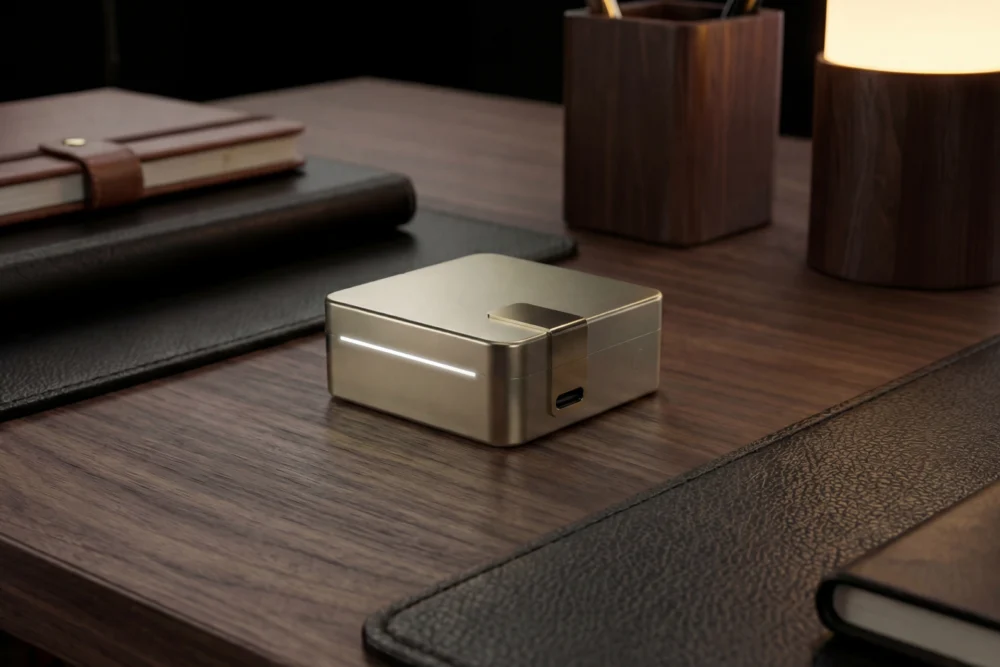
Accompanying the ring is the new Pro Charger, a portable charging case that provides up to 45 days of total power. This accessory addresses one of the lingering pain points of the wearable industry: "charging anxiety." By incorporating Qi-standard wireless charging, Ultrahuman allows users to charge their ring case using the same pads they use for their smartphones, integrating the device seamlessly into the modern tech ecosystem.
From Data to Intelligence: The "Jade" AI System
The launch of the Ring Pro also serves as the debut for "Jade," what Ultrahuman describes as a real-time "biointelligence" system. This software layer represents a paradigm shift in how health data is consumed. For years, wearables have functioned primarily as retrospective tools—telling users how they slept last night or how many steps they took yesterday. Kumar argues that this "look-back" approach is no longer sufficient for a consumer base that demands proactive guidance.
Jade is designed to analyze streams of data from the Ring Pro, as well as Ultrahuman’s other offerings like the M1 continuous glucose monitor and the "Blood Vision" metabolic panels, to provide real-time recommendations. If a user’s heart rate variability (HRV) drops or their glucose levels spike, Jade is intended to surface immediate, actionable advice—such as suggesting a specific breathing exercise or a short walk—rather than waiting for a weekly summary report.
Crucially, Ultrahuman is making Jade available to its entire user base, including those with older hardware, and currently offers it without a subscription fee. This move is a strategic play to build brand loyalty and differentiate itself from competitors like Oura and Fitbit, which have increasingly moved core features behind monthly paywalls.
Financial Resilience and Global Expansion
Despite the U.S. import ban, Ultrahuman’s financial health appears robust. The company is currently operating at an annualized revenue run rate of approximately $150 million, a significant jump from the $64 million in operating revenue reported for the fiscal year ending March 2025. While litigation costs, tariffs, and the R&D expenses associated with the Ring Pro redesign are expected to compress profit margins in the short term, the company remains profitable after tax.
The startup’s resilience is partly due to its success in diversifying its geographic footprint. While the U.S. remains a priority, markets such as the United Kingdom, Canada, Australia, and India have seen explosive growth. In India specifically, recent investments in localized customer support and manufacturing have seen the domestic market grow to represent nearly 10% of total revenue.

Ultrahuman’s revenue mix is also evolving. While hardware sales remain the primary driver, subscription-based services now contribute roughly 16% of total revenue. This includes the "PowerPlugs" recovery program and "Blood Vision," a service that integrates blood biomarker data with wearable metrics to provide a more holistic view of human health.
The Broader Market Context: A Smart Ring Renaissance
The timing of the Ring Pro launch coincides with a massive surge in interest in the smart ring category. According to data from Counterpoint Research, global smart ring shipments grew by nearly 80% year-over-year in 2025. This growth is fueled by a growing demographic of users who are suffering from "screen fatigue" and find traditional smartwatches too bulky or intrusive, especially for sleep tracking.
Analysts note that the market is currently a two-horse race, with Oura maintaining a dominant share of over two-thirds of the market and Ultrahuman firmly in the second position with approximately 25% of shipments. However, the entry of tech giants like Samsung—and the persistent rumors of an Apple Ring—suggest that the category is about to enter a period of hyper-competition.
In this environment, the winners will be those who can provide the highest degree of sensor accuracy and the most meaningful AI-driven insights. Ultrahuman’s focus on "biointelligence" through Jade and its aggressive hardware refresh cycle are designed to keep the company ahead of the curve as the market matures.
Future Outlook: The Ecosystem Play
Looking ahead, Ultrahuman’s strategy involves building a comprehensive "health stack" that goes far beyond a simple finger-worn tracker. By combining the Ring Pro with continuous glucose monitoring, blood testing, and home environment sensors (Ultrahuman Home), the company is positioning itself as a central hub for personalized preventative medicine.
The Ring Pro is more than just a gadget; it is the anchor for an ecosystem that seeks to quantify the human condition in real-time. If the company can successfully clear the U.S. Customs hurdle and resume imports, it will be well-positioned to capitalize on the increasing consumer demand for "invisible" technology that provides visible health benefits.
Founded in 2019 and backed by $55 million in venture capital from heavyweights like Alpha Wave Incubation and Nexus Venture Partners, Ultrahuman has transformed from a niche startup into a global contender. The success of the Ring Pro will determine whether the company can truly challenge Oura’s hegemony and define the next decade of human-computer interaction in the health space. For now, the world’s eyes are on U.S. Customs and Border Protection, as the fate of this Bengaluru-born innovation hangs in the balance of a regulatory decision.
