

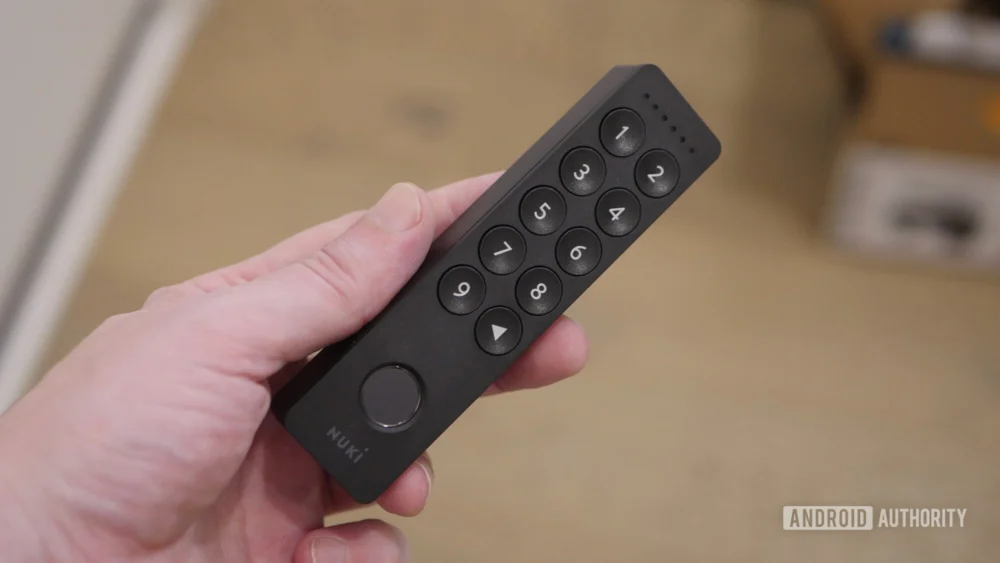
The landscape of residential and commercial access control is undergoing a profound transformation, shifting from traditional mechanical reliance to sophisticated digital authentication methods. At the forefront of this evolution, particularly within the DIY smart home sector, stands Nuki, a company renowned for its retrofittable Smart Lock solutions. While the core Nuki Smart Lock already provides considerable convenience through app-based control, geofencing-triggered unlocking via Bluetooth, and robust security management, the company is signaling a significant expansion of its physical access modalities. This week’s announcements confirm the impending arrival of the Keypad 2 NFC, an accessory poised to integrate Near-Field Communication (NFC) technology directly into the secure entry workflow, promising an even more seamless, contactless experience.
The Evolution of Access: Beyond the Smartphone
To fully appreciate the significance of the Keypad 2 NFC, one must contextualize the current state of the Nuki ecosystem. The foundational Nuki Smart Lock is celebrated for its ease of installation—it typically mounts directly onto the existing interior door hardware, maintaining the original physical key functionality while adding digital control. Initial smart access methods often relied heavily on the smartphone: Bluetooth Low Energy (BLE) for proximity unlocking (Auto-Unlock) or Wi-Fi connectivity (via the Nuki Bridge) for remote management.
However, true convenience often means not needing a smartphone present. This necessity drove the introduction of the original Keypad 2, which introduced two critical, non-phone-dependent access vectors: numeric passcodes and integrated fingerprint recognition. These methods cater perfectly to scenarios where a user might be jogging, has a dead phone battery, or needs to grant temporary access to service personnel or guests without issuing a digital key via the app.
The upcoming Keypad 2 NFC represents the next logical step in decoupling access from active device engagement. NFC technology, while not new, offers an unparalleled level of immediacy and low power consumption for short-range, secure communication. The promise of "Tap to Unlock" suggests a future where access credentials can be stored not just on a smartphone (via Apple Wallet or Google Pay, which Nuki may support), but potentially on dedicated, passive NFC tags or key fobs—eliminating the need to wake a phone, open an application, or even input a sequence of numbers.
Industry Implications: The Race for Credential Agnosticism
Nuki’s strategic move into dedicated NFC access points has broader implications for the smart home and physical security industries. For years, the primary battleground for smart locks has been interoperability and feature parity. Competitors offer various biometric, keypad, and remote access features. By adding native, hardware-level NFC support, Nuki is targeting two distinct but overlapping markets:
- The Convenience Seeker: Users who prioritize speed. Tapping an NFC card is generally faster and requires less deliberate action than fingerprint scanning (which can sometimes be finicky depending on ambient conditions) or code entry.
- The Institutional/Rental Market: Landlords, Airbnb hosts, and property managers require secure, easily revocable access methods that do not rely on the guest possessing a smartphone or knowing a complex code. NFC tags are ideal for check-in/check-out procedures, akin to hotel key cards but managed within a smart home framework.
Furthermore, the tease mentions Aliro support. Aliro, backed by the Connectivity Standards Alliance (CSA), is focused on fostering interoperability across smart home platforms, particularly concerning device provisioning and local control. Integrating support for Aliro suggests Nuki is future-proofing its hardware to ensure seamless integration with next-generation Matter-enabled hubs and security platforms, solidifying its position as a flexible component rather than a closed ecosystem lock-in solution. This commitment to open standards, even in an accessory launch, speaks to a mature understanding of the fragmented smart home market.
Expert Analysis: The Security Calculus of Contactless Entry
While "contactless" often equates to "convenient," security experts view any shift in authentication vectors through a lens of risk assessment.
NFC Security Considerations: The viability of the Keypad 2 NFC hinges entirely on its implementation of security protocols. Standard NFC communication is inherently short-range (a few centimeters), which mitigates risks associated with over-the-air interception common with longer-range protocols like traditional Bluetooth or Wi-Fi. However, sophisticated attackers could potentially use relay attacks or sophisticated skimming devices if the communication channel is not properly encrypted and authenticated.
For a high-security application like a front door lock, Nuki must be employing best-in-class cryptographic handshakes between the NFC tag/device and the keypad itself, likely utilizing mutual authentication. The "Tap to Unlock" functionality must trigger the secure command chain to the Nuki Smart Lock only after the Keypad verifies the credential against its stored, encrypted list of authorized tokens. If Nuki leverages industry standards—such as those used in secure element chips in payment systems—the security should be robust, perhaps even superior to relying on a smartphone’s operating system security layer alone.
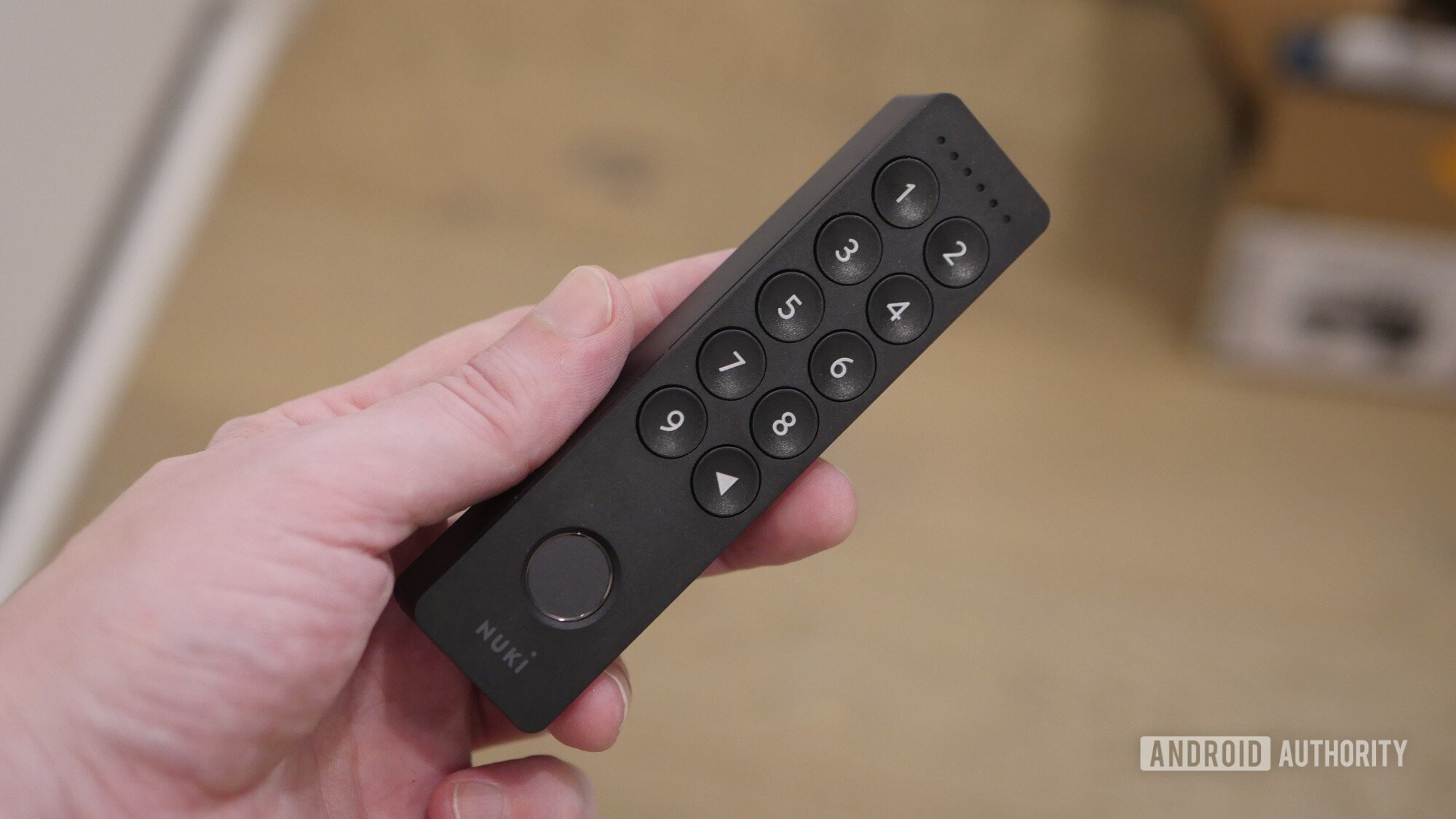
The Biometric vs. NFC Trade-off: The existing Keypad 2 offers fingerprint scanning. Fingerprints offer a high degree of personalization but can be spoofed (though modern capacitive sensors are difficult to fool) or fail due to dirt, moisture, or injury. NFC tokens (physical cards or fobs) are less personal but entirely immune to environmental degradation affecting biometric sensors. The inclusion of NFC alongside biometrics ensures that users can select the most reliable, context-appropriate method for any given moment.
Deep Dive into Anticipated Functionality and User Experience
Nuki has scheduled the formal unveiling for March 26th, giving the industry a month to speculate on the detailed feature set. Based on current smart access trends, several functional improvements beyond simple tapping can be anticipated:
1. Multi-Factor Tokenization: The Keypad 2 NFC may not just support a single tap. It could potentially facilitate two-factor authentication where a tap (something you have) is followed by a short delay and a PIN entry (something you know) for elevated security, perhaps for unlocking the door from "unauthorized" zones or for granting access to particularly sensitive areas.
2. Enhanced Guest Management: The ability to issue NFC credentials will revolutionize temporary access. Instead of instructing a house-sitter to download an app and set up an account, the homeowner could simply hand over a branded Nuki NFC fob upon arrival. This fob could be programmed via the Nuki app to expire automatically at a specified date and time, offering granular control superior to simply sharing a static code.
3. Power and Battery Life: NFC communication requires very little power when simply reading a passive tag. This efficiency is a major advantage over constant Bluetooth polling or maintaining an active Wi-Fi connection. If the Keypad 2 NFC maintains the long battery life characteristic of the existing Keypad 2 (which often lasts a year or more), the new NFC functionality will be virtually maintenance-free, a crucial factor for outdoor-mounted accessories.
4. Integration with Broader IoT Standards: As mentioned, Aliro support hints at deeper integration. In the future, this could mean that an NFC tap not only unlocks the door but also signals the broader smart home network (via Matter/Aliro) to execute a "Welcome Home" scene—turning on lights, adjusting the thermostat, and disarming the interior security system simultaneously. The keypad transitions from a simple lock actuator to a universal scene trigger.
Strategic Market Positioning and Pricing Trajectory
The current Keypad 2 retails around $159. Introducing a functionally superior accessory—one that adds a major new authentication method—usually results in a price increase. Industry analysts suggest that if Nuki aims to capture the high-end security market, the Keypad 2 NFC might see a price point closer to $180–$200, positioning it as a premium add-on.
The email registration campaign promising an "exclusive subscriber-only offer" is a standard, effective tactic designed to gauge early demand and build an initial launch list. This offer is crucial for generating immediate sales momentum and could be a modest discount or perhaps bundling the new keypad with a discounted Nuki Bridge, maximizing the perceived value proposition.
Nuki’s continued focus on enhancing physical access methods, rather than solely pushing app usage, indicates a mature product strategy. They understand that the smart lock’s ultimate success is measured by its utility when the smartphone is inconvenient or unavailable. By adding NFC, they are closing a gap in user accessibility, ensuring that the Nuki Smart Lock remains competitive against legacy electronic locksets that have long relied on key cards or fobs in commercial settings.
The next month leading up to March 26th will be critical. Details regarding battery specifications, the exact protocol used for NFC security, and confirmation of Aliro certification will be vital data points for security professionals and early adopters assessing the true "new dimension of smart home access" Nuki claims to be introducing. The transition toward credential agnosticism—where access is granted via biometrics, codes, smartphones, or passive NFC tokens—is not just a feature upgrade; it is a fundamental reshaping of how we interact with our physical boundaries in the digital age. Nuki appears strategically positioned to capitalize on this trend by incrementally enhancing, rather than revolutionizing, its already successful core product. The seamless, tap-and-go access enabled by NFC promises to set a new benchmark for effortless security in the connected dwelling.
