

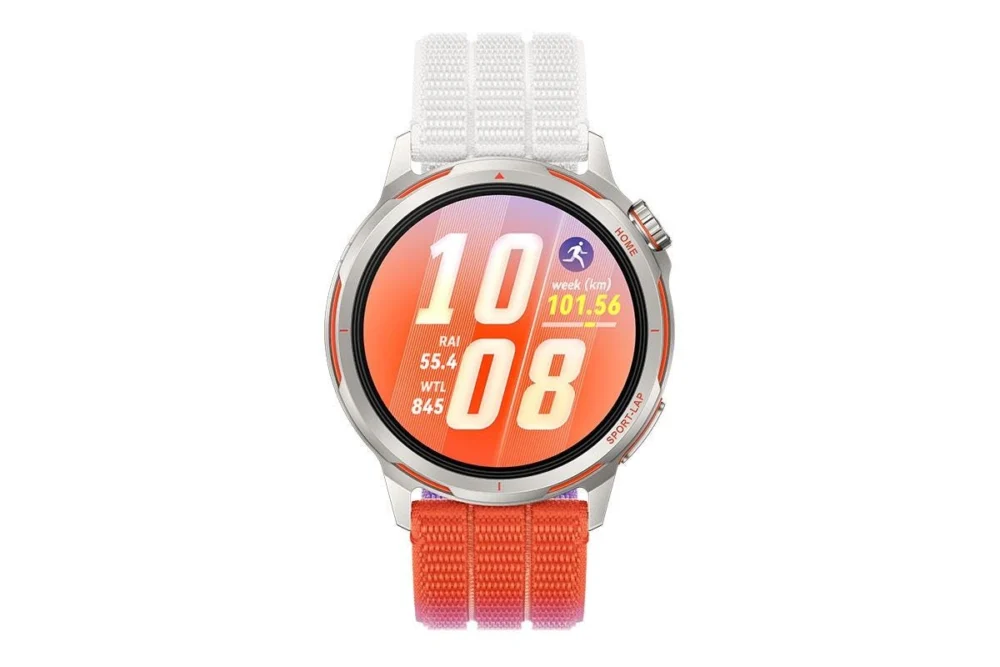
The landscape of high-performance wearables has undergone a seismic shift over the last half-decade. While general-purpose smartwatches have focused on becoming extensions of the smartphone, a specialized niche of "athlete-first" devices has carved out a loyal following by prioritizing data accuracy, battery longevity, and ruggedized ergonomics. It is into this fiercely competitive arena that Huawei has stepped with the official unveiling of the Watch GT Runner 2. This release marks a significant milestone for the company, arriving five years after the original Watch GT Runner debuted in 2021. In an industry where product cycles typically refresh every twelve to eighteen months, a five-year hiatus suggests more than just a simple iteration; it signals a fundamental ground-up redesign aimed at disrupting the dominance of established players like Garmin.
For years, Huawei has maintained a prolific presence in the wearable market with its "GT" and "Ultimate" series, watches often praised for their premium build quality and striking aesthetics. However, critics have frequently argued that these devices leaned more toward lifestyle accessories than dedicated sports tools. With the Watch GT Runner 2, the company is attempting to silence those critiques. By positioning the device as a direct rival to the Garmin Forerunner 970, Huawei is signaling that it no longer wishes to be viewed merely as a manufacturer of "pretty" watches, but as a serious contender in the world of sports science and physiological tracking.
The most striking technical hurdle in designing a high-end sports watch involves the conflict between premium materials and signal reception. Most dedicated running watches utilize plastic or reinforced polymer casings because these materials do not interfere with Global Navigation Satellite System (GNSS) signals. Huawei, however, has opted for a more sophisticated—and challenging—approach. The Watch GT Runner 2 features a titanium bezel and a largely metallic top casing, which would typically act as a Faraday cage, blocking GPS signals. To circumvent this, Huawei’s engineers have implemented what they term "3D floating antenna architecture." This design incorporates a non-metallic "dielectric" bezel layer and specialized cutouts in the metal frame, reminiscent of the antenna lines found on modern smartphones. This allows the internal antennas a clear "line of sight" to satellites while maintaining the structural integrity and premium feel of a metal watch.
This hardware innovation is paired with dual-band, five-system GNSS support. In theory, dual-band GPS allows the watch to receive signals on two different frequencies (L1 and L5), which significantly reduces the impact of multipath interference—the phenomenon where signals bounce off tall buildings or dense tree cover before reaching the wrist. While early independent testing suggests that the Watch GT Runner 2 is still fine-tuning its software to match the pinpoint precision of Garmin’s class-leading Forerunner series, the hardware foundation is undeniably robust. For the serious runner, this level of investment in signal architecture is a prerequisite for accurate pace and distance tracking, which in turn dictates the validity of every other training metric the watch provides.
Beyond the hardware, Huawei is leaning heavily into the "prosumer" athletic experience through its software ecosystem. The inclusion of "Marathon Mode" is a clear nod to the endurance community. This feature isn’t just a basic timer; it is a comprehensive race-day assistant that provides dynamic pace guidance based on real-time performance and historical training data. It also incorporates refueling reminders—a critical component for any runner tackling the 26.2-mile distance, where glycogen depletion and dehydration are the primary enemies of a successful finish. To bolster the credibility of these features, Huawei has leveraged its partnership with marathon legend Eliud Kipchoge, the first person to run a sub-two-hour marathon. By aligning with an athlete of Kipchoge’s stature, Huawei is making an emotional and professional appeal to the running community, suggesting that their algorithms are refined by the needs of the world’s elite.
The data suite provided by the Watch GT Runner 2 covers the full spectrum of modern sports physiology. Users have access to lactate threshold calculations, which identify the intensity level at which fatigue begins to accelerate, and VO2 Max estimates, a gold-standard metric for cardiovascular fitness. Furthermore, the watch tracks running power—a metric that measures the work rate of a runner in watts, offering a more stable way to gauge intensity on undulating terrain than heart rate alone. Post-exercise, the device calculates training load and suggests recovery times, helping athletes navigate the delicate balance between productive stress and overtraining.

In terms of physical specifications, the Watch GT Runner 2 adopts a 43mm diameter, making it a versatile "mid-size" option that avoids the bulkiness of many outdoor-focused watches. The centerpiece is a 1.32-inch OLED display with a resolution of 466 x 466 pixels. OLED technology remains a point of contention in the sports world; while it offers vibrant colors and deep blacks, it traditionally consumes more power than the Memory-in-Pixel (MIP) displays used by Garmin. However, Huawei has managed to extract up to 14 days of battery life from this device, a feat that places it far ahead of "full" smartwatches like the Apple Watch or Samsung Galaxy Watch, which struggle to last more than two days. This longevity is achieved through a highly optimized RTOS (Real-Time Operating System) that prioritizes efficiency over the resource-heavy app ecosystems found on Wear OS or watchOS.
An intriguing detail in the watch’s specification sheet is its water resistance. While it carries a standard 5ATM rating—typically signifying it is safe for surface swimming—Huawei has gone a step further by stating the device is suitable for dives up to 40 meters. This suggests a level of gasket engineering and pressure resistance that exceeds the industry standard for 5ATM devices, potentially positioning it as a "crossover" watch for triathletes and recreational divers who don’t want to switch devices when moving from the track to the water.
The global rollout of the Watch GT Runner 2 reflects the current geopolitical complexities of the consumer electronics market. As has been the case for several years, the device will not be officially available in the United States. However, it is making a significant push into European and Asian markets. In the United Kingdom, the watch is priced at £349.99, positioning it as a premium alternative that undercuts the MSRP of many top-tier dedicated sports watches while offering a more "luxe" aesthetic. Available in Dusk Blue, Dawn Orange, and Midnight Black, the color palette reflects a blend of traditional athletic "pop" and understated professional tones.
Accompanying the flagship runner’s watch is the global launch of the Huawei Band 11 and its "Pro" variant. The Band 11 features a 1.62-inch OLED screen and shares the impressive two-week battery life of its larger sibling. While the standard Band 11 relies on a tethered smartphone for GPS tracking, the Band 11 Pro includes an integrated GPS chip, offering a budget-friendly entry point for casual runners who want to leave their phones at home. The staggered release of these products—with the Band 11 arriving in March—suggests a multi-pronged strategy to capture both the high-end performance market and the entry-level fitness tracker segment.
Looking ahead, the release of the Watch GT Runner 2 signals a broader trend in the wearable industry: the "professionalization" of consumer tech. We are moving past the era where a step counter and a basic heart rate monitor are sufficient. Consumers are becoming increasingly literate in sports science, demanding deeper insights into their recovery, their form, and their physiological limits. Huawei’s return to this space after five years is a calculated bet that there is room for a third major player alongside Garmin and Apple—one that can offer the data depth of the former with the display quality and industrial design of the latter.
The success of the Watch GT Runner 2 will likely depend on the continued evolution of the Huawei Health app and the brand’s ability to foster a community of athletes. In the performance world, data is only as good as the ecosystem it lives in. As Huawei continues to refine its algorithms through software updates, the gap between "lifestyle wearable" and "athletic instrument" continues to blur. For the global running community, more competition in this space is a net positive, driving innovation in battery life, satellite accuracy, and health insights that were once the exclusive domain of laboratory testing. The Watch GT Runner 2 is not just a new product; it is a statement of intent from a company that refuses to be sidelined in the race for the athlete’s wrist.
