

The architecture of the internet is undergoing its most significant transformation since the advent of the mobile web. For decades, the primary gateway to digital commerce was the search bar, governed by the rigid hierarchies of Search Engine Optimization (SEO) and the dominance of "blue link" results. However, as large language models (LLMs) and conversational interfaces like ChatGPT, Gemini, and Perplexity become the primary research tools for a new generation of buyers, the mechanics of how businesses are discovered are being rewritten. Positioned at the center of this shift is Gushwork, an India-founded startup that has just secured $9 million in seed funding to build the infrastructure for what many are calling "Generative Engine Optimization" (GEO).
The funding round, which values the two-year-old company at $33 million post-money, was led by Susquehanna International Group (SIG) and Lightspeed. The participation of other prominent investors, including B Capital, Seaborne Capital, Beenext, Sparrow Capital, and 2.2 Capital, signals a growing consensus in the venture capital community: the traditional marketing tech stack is no longer sufficient in an era where AI agents, not just humans, are crawling the web to make purchasing recommendations. This latest injection of capital brings Gushwork’s total funding to $11 million, a rapid ascent from its $2.1 million pre-seed round just over a year ago.
From Outsourcing to AI-Driven Visibility
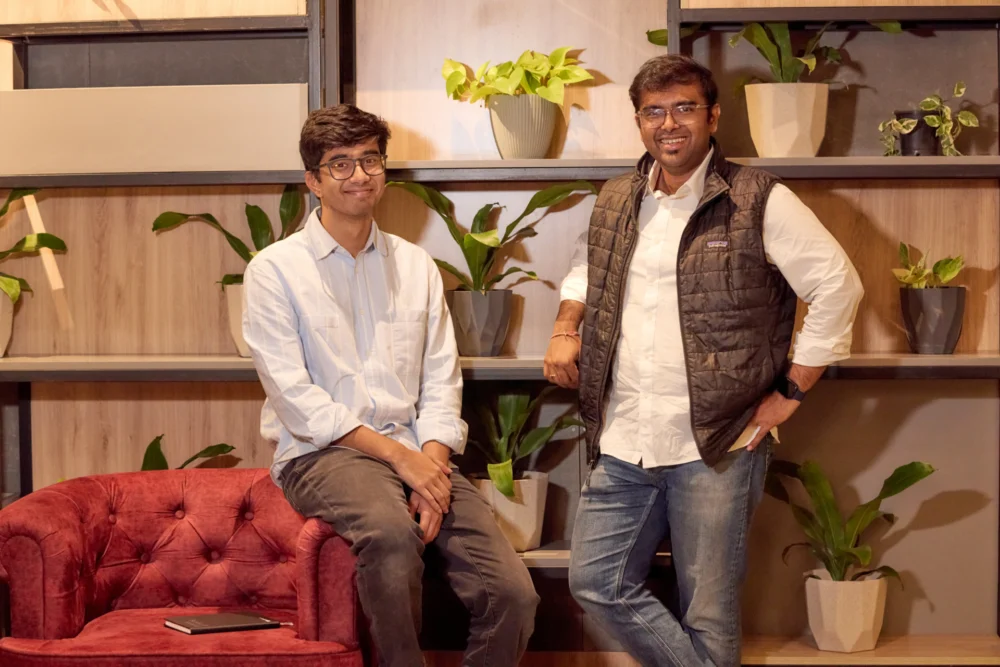
Gushwork’s journey began in 2023, founded by Nayrhit Bhattacharya and Adithya Venkatesh. Originally, the company focused on a hybrid model of human-in-the-loop outsourcing, helping small and medium-sized businesses (SMBs) streamline complex workflows. However, as the generative AI wave crested, the founders noticed a recurring pain point among their clients: the traditional methods of capturing leads were failing. Traffic from Google was becoming more expensive and less reliable, while potential customers were increasingly asking chatbots for vendor recommendations.
"When we started, we were focused on helping businesses outsource faster and better," Bhattacharya noted regarding the company’s evolution. But the market pull toward search-led marketing became an undeniable force. The startup pivoted, narrowing its focus to a specific, high-value problem: how does a B2B company ensure that when a user asks an AI, "Who are the best industrial distributors in the Midwest?", their name is the one the model generates?
The solution Gushwork developed is a sophisticated platform that deploys a network of specialized AI agents. These agents do not merely "write content" in the traditional sense. Instead, they operate across three critical pillars of modern digital visibility. First, they generate and dynamically update search-optimized content tailored for the semantic queries favored by LLMs. Second, they manage a complex network of backlinks—typically securing 10 to 20 per customer through a curated ecosystem of roughly 300 partner websites—to build the "authority" that AI models use as a proxy for trust. Finally, the platform integrates a lead-tracking content management system (CMS) to bridge the gap between an AI-generated mention and a closed contract.
The Rise of the High-Intent AI Lead
The most compelling evidence for Gushwork’s pivot lies in its internal data. While traditional search still drives the majority of raw web traffic, the quality of traffic coming from AI platforms is significantly higher. According to Bhattacharya, approximately 20% of their customers’ website traffic now originates from AI-driven search and chat platforms. Crucially, however, these sources are responsible for roughly 40% of all inbound leads.
This disparity suggests a fundamental shift in user behavior. Users who turn to tools like Perplexity or ChatGPT Search are often further along in the "buyer’s journey." They are not performing casual, top-of-funnel keyword searches; they are conducting deep research, comparing specifications, and seeking vetted recommendations. When an AI provides a cited answer that includes a specific business, the user perceives it as a curated recommendation rather than a paid advertisement.
The financial impact of this "high-intent" traffic is already manifesting. Gushwork reports that one professional services client closed contracts valued between $200,000 and $350,000 shortly after adopting the platform. This success has fueled an aggressive growth trajectory. With over 300 paying customers—95% of whom are based in the United States—Gushwork is currently operating at an annualized recurring revenue (ARR) of approximately $1.5 million. Remarkably, this has been achieved only three months after the rollout of its AI-search-focused product. The company is now targeting an ARR of over $3 million within the next quarter, supported by a month-over-month growth rate of 50% to 80%.
Navigating the "Zero-Click" Era
The context for Gushwork’s rise is the broader disruption of the search industry. For years, Google has been moving toward a "zero-click" reality, where answers are provided directly on the search results page, obviating the need for users to visit external websites. The introduction of Google’s AI Overviews has accelerated this trend, creating a defensive scramble among digital marketers.
Simultaneously, OpenAI’s launch of ChatGPT Search and the rapid growth of Perplexity—which reportedly handled 780 million queries in a single month recently—have introduced a new paradigm. In this environment, the goal of marketing shifts from "ranking #1 on Google" to "being the primary citation in an AI response."
Gushwork’s strategy focuses on high-ticket B2B service providers, industrial distributors, and contract manufacturers. These are sectors where the purchasing process is complex and information-heavy—exactly the type of data that LLMs excel at processing. For a contract manufacturer, being buried on page three of a search result is a death sentence; being the top recommendation in a ChatGPT-driven vendor analysis is a game-changer.
Technical Moats and Strategic Expansion
The $9 million in new funding is earmarked for a significant scaling of Gushwork’s technical capabilities. Headquartered in Delaware with a primary engineering hub in Bengaluru, India, the company currently employs about 70 people. A primary focus for the new capital will be expanding the engineering team to improve model accuracy and the sophistication of its automated agents.
One of the primary challenges in the "AI-optimizing" space is the black-box nature of LLMs. Unlike Google, which provides some level of transparency through its Search Console, AI models like GPT-4 or Claude do not offer a clear roadmap for how they select information for their responses. Gushwork’s "moat" lies in its ability to reverse-engineer these selection processes through massive data sets and its proprietary network of partner sites. By building a high-authority ecosystem, Gushwork ensures that its clients’ data is not just available to AI models, but prioritized by them.
Furthermore, the startup must navigate the ethical and technical boundaries of AI-generated content. As search engines and AI models become more adept at filtering out low-quality, "AI-slop" content, Gushwork’s emphasis on "human-in-the-loop" expertise remains a critical differentiator. The goal is to produce content that is semantically rich enough to satisfy an AI’s requirements for depth while remaining authoritative enough to convert a human buyer.
The Future of Digital Discovery
As Gushwork prepares to onboard a waitlist of more than 800 businesses, the broader implications for the marketing industry are profound. We are witnessing the birth of a new discipline that sits at the intersection of public relations, SEO, and data science. In this new world, "brand authority" is quantified by how frequently and favorably a company appears in the latent space of a foundational model.
The transition from a keyword-based economy to a conversation-based economy will likely produce new winners and losers. Traditional SEO agencies that rely on volume-based content strategies are increasingly vulnerable. Conversely, platforms like Gushwork, which provide the automated infrastructure to influence AI "reasoning" and citations, are positioning themselves as the new gatekeepers of digital discovery.
For the B2B sector, the stakes are particularly high. As OpenAI continues to report staggering usage numbers—reaching billions of prompts per month—the window for companies to establish their "AI footprint" is narrowing. Gushwork’s rapid growth and significant investor backing suggest that the race to dominate the AI search results is not just a future possibility, but a present-day commercial imperative. Whether this shift will lead to a more efficient marketplace or a new form of digital arms race remains to be seen, but for now, Gushwork is leading the charge into the post-search era.
