

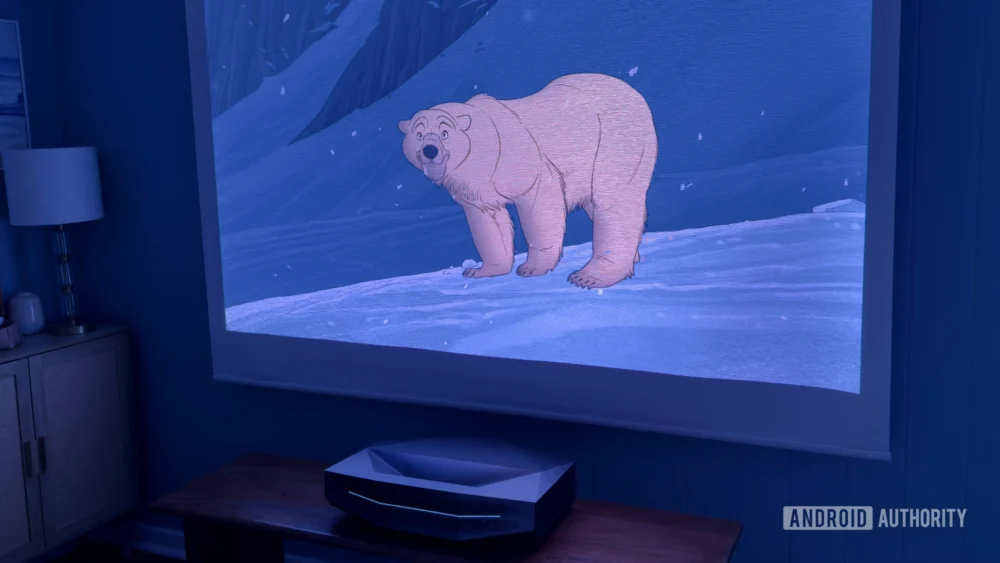
The relentless march of display technology has long favored the flat panel television, yet a compelling counter-narrative is emerging from the world of projection. After extensive evaluation of current imaging hardware, the Ultra-Short-Throw (UST) projector segment has proven itself to be the most effective solution for bridging the gap between the immersive scale of cinema and the practical realities of contemporary domestic environments. The elimination of numerous logistical headaches, coupled with increasingly sophisticated optical performance, has made the transition to a UST system feel less like a luxury upgrade and more like an inevitable evolution of the home entertainment hub.
The Context: Projectors vs. The Tyranny of Throw Distance
For decades, achieving truly cinematic screen sizes—say, 100 inches or larger—required a significant commitment: a dedicated, darkened room and a long-throw projector requiring precise, often complex, ceiling or rear-wall placement. This dependency on distance created inherent limitations for the average consumer. A projector situated 15 feet from the screen necessitates extensive cable management, often involving routing conduits through walls or ceilings, and dictates the entire furniture layout around a rigid "throw-distance chart." This arrangement is fundamentally antithetical to the flexible, multi-use nature of most modern living rooms.
Ultra-Short-Throw technology fundamentally rewrites this equation. By employing advanced Fresnel lenses or specialized mirror arrays, UST projectors can cast an enormous, high-quality image from a position mere inches away from the projection surface. This architectural shift liberates the user from the constraints of throw distance, positioning the display device directly below the screen, often resting unobtrusively on a standard media console.
Reason One: Unparalleled Installation Simplicity and Spatial Integration
The most immediate and persuasive advantage of the UST format is the dramatic simplification of installation. The traditional projector installation process is often fraught with difficulty—requiring careful calculation of ceiling mounts, alignment adjustments that can be fiddly even with advanced digital keystone correction, and the inevitable visual clutter of long-distance cable runs.
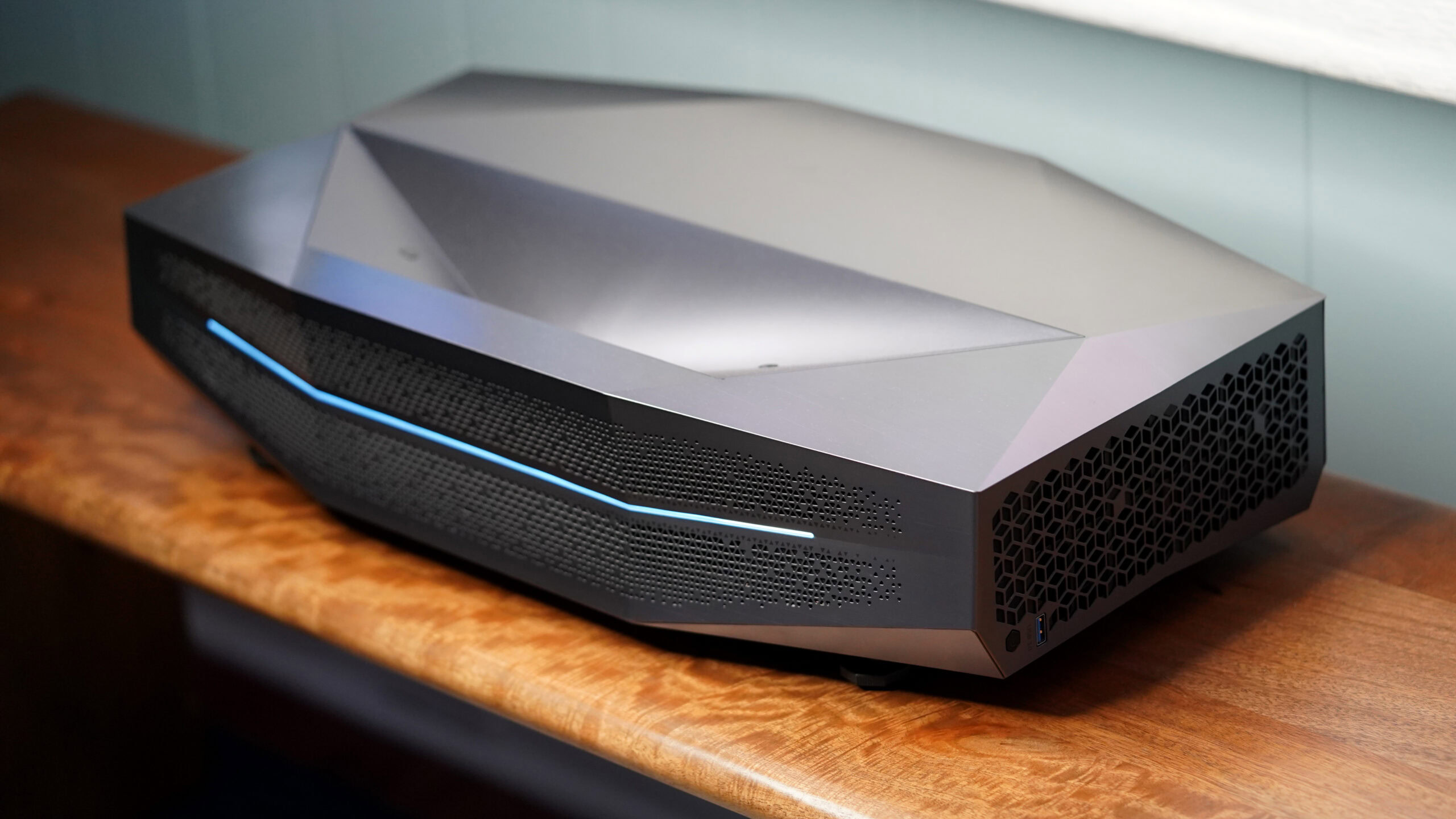
A UST unit, conversely, requires only a flat surface (the wall) and a nearby power outlet. The throw ratio, frequently around 0.2:1 or even lower in cutting-edge models, means that a 120-inch image can be generated from less than a foot away. This minimal spatial footprint is transformative. It means that homeowners are no longer forced to dedicate an entire wall or compromise room flow for the sake of a large display. Furthermore, many high-end USTs now integrate robust automatic focus and sophisticated geometric correction algorithms. These features allow the user to slide the unit slightly to accommodate minor surface imperfections or adjust the size, and the image snaps back into perfect rectilinear focus almost instantaneously. This level of plug-and-play usability contrasts sharply with the often frustrating calibration required for ceiling-mounted counterparts.
Reason Two: The Seamless Digital Living Room Replacement
The second crucial factor driving the adoption of USTs is their ability to function as a true, day-to-day television replacement without sacrificing aesthetic integration when powered down. A long-throw projector necessitates a screen that is either permanently visible or requires a motorized retraction system, which adds complexity and cost. A UST, sitting on a low piece of furniture, blends into the environment much like a contemporary television set.
The industry has recognized this consumer desire for invisibility. Several manufacturers now offer dedicated media consoles, often referred to as "console projectors," designed specifically to house the UST unit discreetly while providing convenient shelving for accompanying components like external soundbars or streaming devices. When the projector is off, the wall reverts to its original function, free from the stark black rectangle of an inactive TV panel.
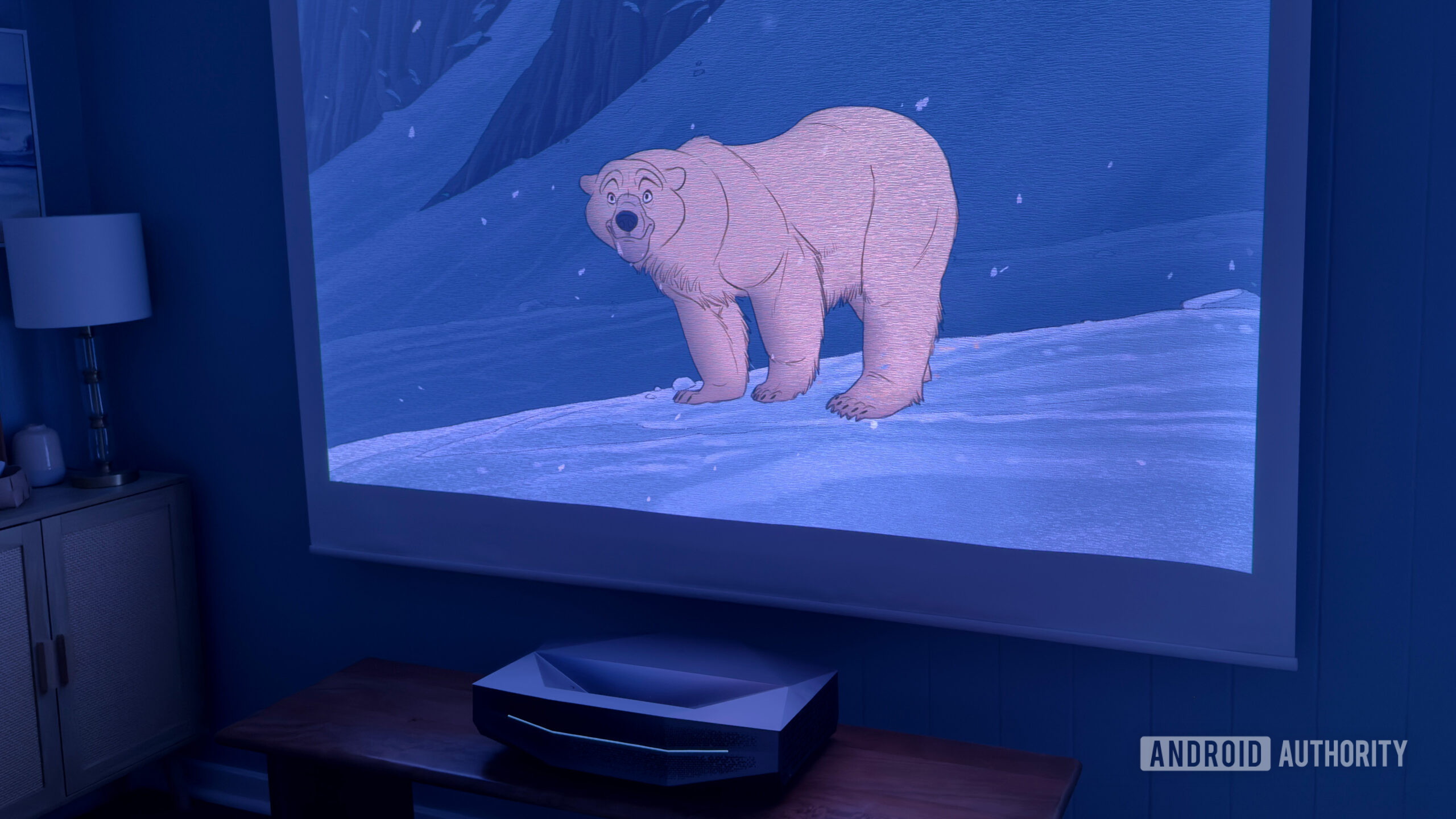
Moreover, the software experience has matured significantly. Unlike older projector models that relied on external streaming sticks, many modern USTs—particularly those leveraging Android TV or proprietary smart interfaces—include built-in operating systems, comprehensive smart functionality, and familiar TV-style remote controls. This parity in user experience ensures that switching from streaming Netflix to watching a live broadcast feels virtually identical to using a premium smart television, removing a significant barrier to entry for projection enthusiasts.
Reason Three: Conquering Cable Management Obscurity
The physical aesthetics of home entertainment systems are often ruined by the necessary infrastructure—specifically, cabling. Traditional setups demand HDMI, power, and often audio cables spanning significant distances, typically necessitating surface-mounted raceways or invasive in-wall wiring solutions. Even professionally installed systems struggle to completely hide these necessary lifelines.
The UST architecture inherently solves this issue. Because the projector sits directly beneath the screen surface, all required inputs—HDMI 2.1 for gaming consoles, audio connections for advanced soundbars, and the main power cord—are concentrated in a very small physical area: the media console surface. This localized connection point allows for extremely neat cable routing, often contained entirely within the console itself or hidden by careful placement behind the unit. This clean, centralized connectivity zone dramatically elevates the perceived sophistication and tidiness of the entertainment setup.
Reason Four: Maximizing Immersive Scale in Confined Spaces
While UST projectors are adept at replacing televisions, they offer a scale of image that no standard flat-panel display can economically match. A 75-inch television is the current sweet spot for many living rooms, but a UST can comfortably produce 120 to 150 inches of dynamic, high-resolution image without requiring the room to be cavernous.
Crucially, the spatial requirement is not about the length of the room, but the width of the usable wall space. A small apartment or a narrow room can still accommodate a massive screen size because the projector itself occupies minimal depth. Conversely, a long-throw projector requires a certain minimum distance to prevent the image from becoming too dim or distorted, meaning smaller rooms are immediately disqualified from achieving the largest cinematic options. The UST flips this constraint: the image size is inversely related to the distance, allowing the user to dial down the screen size slightly (by moving the unit closer to the wall) to perfectly suit the room dimensions, all while maintaining superior brightness uniformity compared to a ceiling-mounted unit struggling to fill a short distance.
Reason Five: Preserving the Integrity of the Viewing Experience
One of the most frustrating, yet frequently overlooked, aspects of traditional front projection is the potential for interruption. A beam of light traversing the length of a living room is an open invitation for accidental obstruction. A pet wandering by, a guest retrieving a drink, or even the subtle shift of a ceiling fan can cast a momentary, disruptive shadow across the focal point of the movie or game.
The physics of the UST projection angle renders this problem nearly obsolete. Since the light source is aimed almost vertically at the screen from immediately below, the area where viewers are seated is generally clear of the projection path. This localized light cone ensures that the viewing plane remains consistently illuminated, providing a more stable and less interruptible experience. This spatial security is a major qualitative improvement, particularly in high-traffic family areas where dedicated theater conditions are impossible to enforce.
Reason Six: Uncompromised Cinematic Fidelity Through Advanced Illumination
The final, and perhaps most technically exciting, reason for the migration to USTs lies in the advancements in their core illumination technology, particularly the widespread adoption of laser light sources. Early UST models often struggled with color accuracy or overall brightness, frequently requiring specialized Ambient Light Rejecting (ALR) screens to perform adequately in non-theater settings.
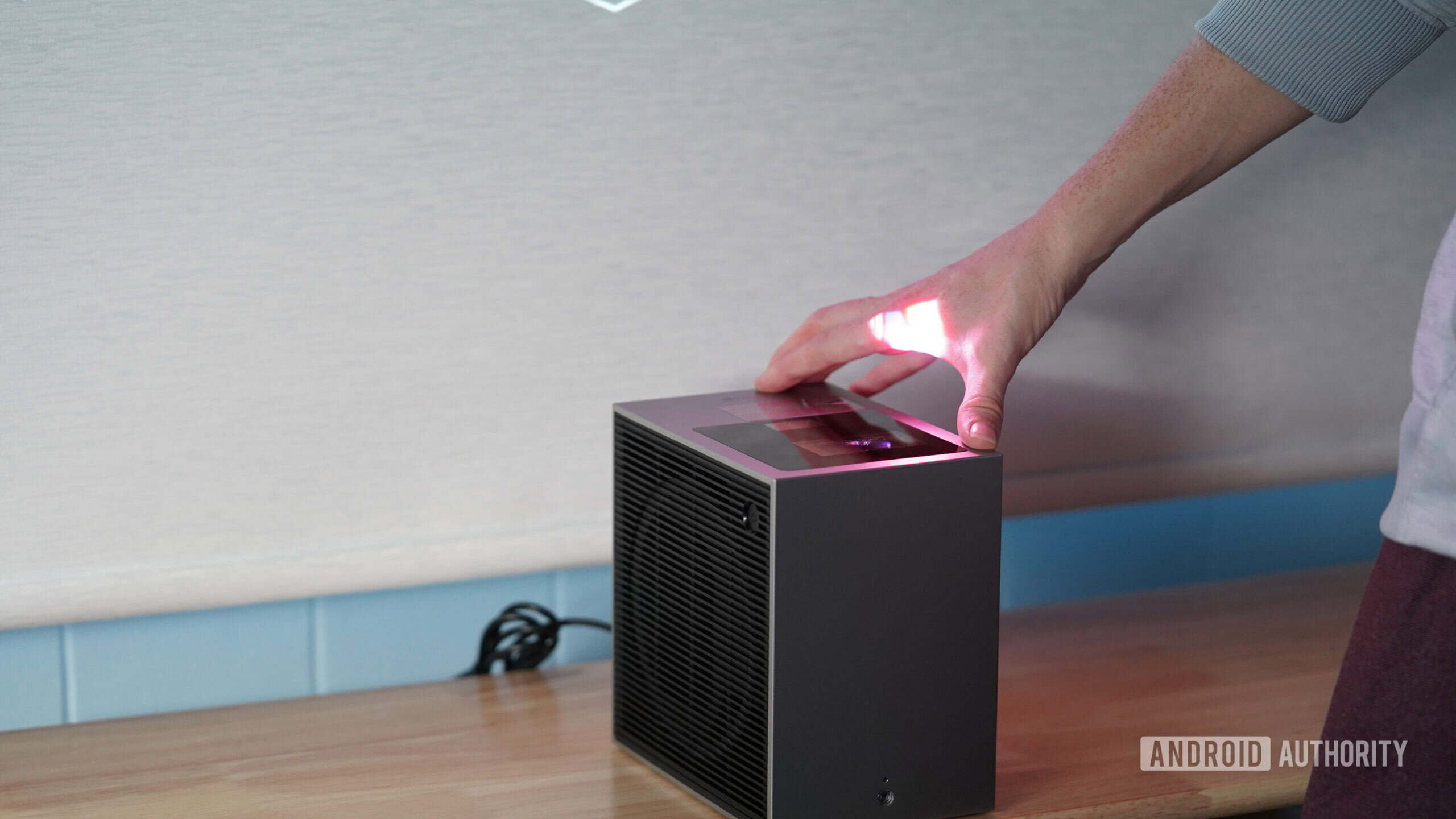
Modern USTs, especially those targeting the premium segment (like high-end models from manufacturers such as AWOL Vision or LG), utilize advanced RGB or RGBY laser arrays. These light sources offer several key benefits over traditional lamp or even standard LED DLP/LCD systems:
- Brightness and Longevity: Lasers provide significantly higher sustained brightness (often exceeding 2,500 ANSI lumens), which is critical for viewing in rooms with ambient light. Furthermore, laser light sources boast operational lifespans measured in tens of thousands of hours, effectively eliminating the recurring cost and hassle of lamp replacement.
- Color Volume: Modern laser USTs can achieve near-perfect coverage of wide color gamuts, often exceeding 100% of the DCI-P3 space, enabling true HDR and Dolby Vision rendering capabilities that rival premium OLED panels.
- Image Quality: The convergence of high brightness, deep contrast ratios (aided by excellent ALR screen pairing), and precise color management means that the UST experience is no longer a pale imitation of a TV; it is a genuinely premium visual event that benefits profoundly from its sheer scale.
Industry Implications and Future Trajectory
The rapid evolution and increasing consumer acceptance of UST technology represent a significant inflection point in display manufacturing. This trend is not merely about niche enthusiasts; it signals a fundamental market shift away from the perceived supremacy of the flat-panel TV in the 85-inch-plus category.
Competition and Convergence: The success of USTs is forcing TV manufacturers to reassess their pricing structures for ultra-large OLED and MicroLED displays, which remain prohibitively expensive at sizes exceeding 100 inches. USTs offer a compelling performance-per-dollar ratio for massive screen real estate. We anticipate further technological convergence, with more emphasis placed on miniaturization of the optical engine and integration of more sophisticated, AI-driven image processing to automatically optimize contrast and color based on room lighting conditions.
The Screen Ecosystem: The future of UST relies heavily on specialized screens. The development of high-gain, precision-engineered ALR materials designed specifically for the extreme upward angle of UST light is crucial. Future innovations will likely focus on "ambient-aware" screens that dynamically adjust reflectivity based on the time of day or room activity, further blurring the line between projector and ambient display.
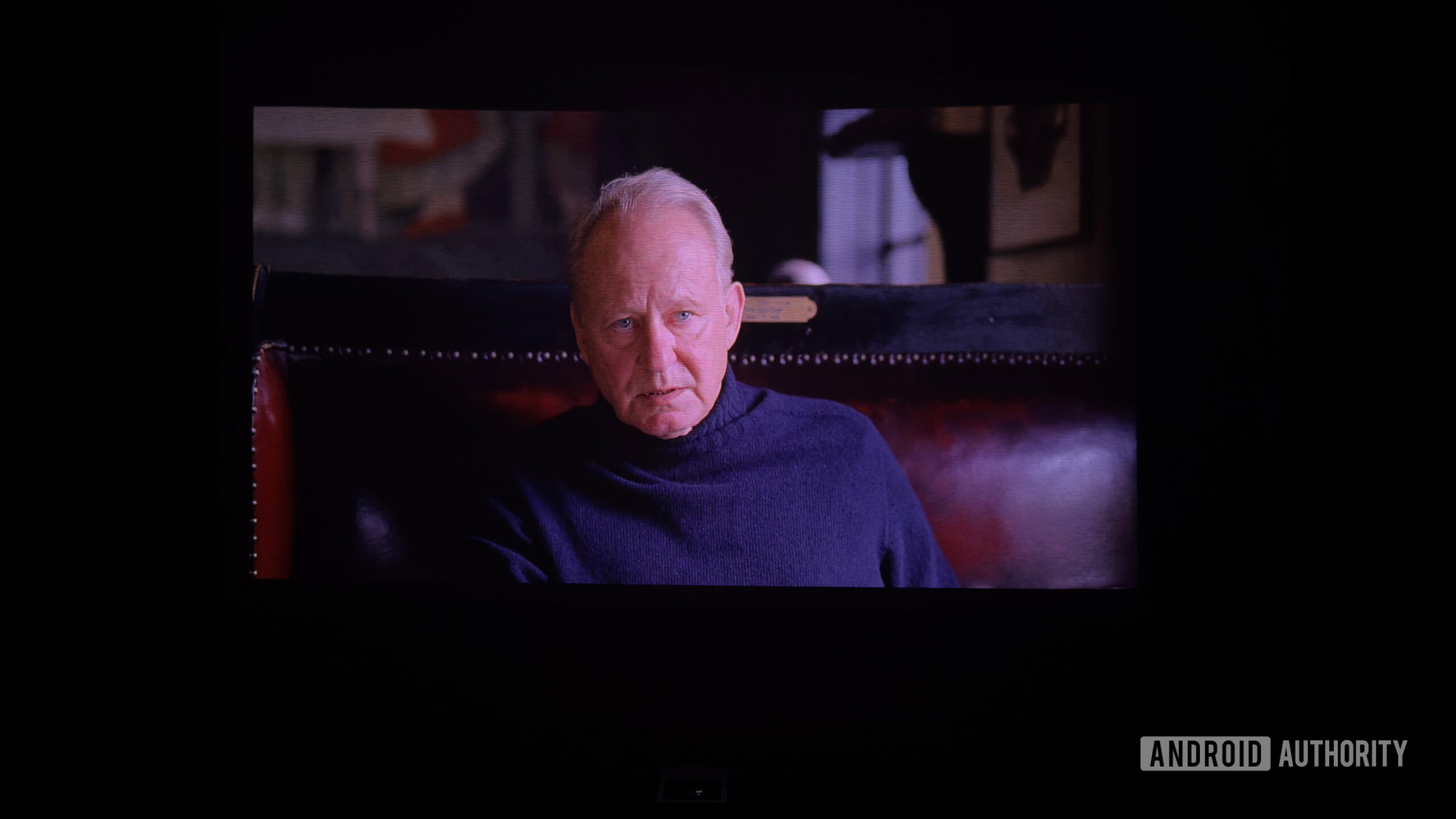
Gaming Performance: Input lag has historically been a weakness for projectors. However, the latest generation of gaming-focused USTs now routinely offers 120Hz refresh rates at 4K resolution with input lag approaching 10ms—a figure competitive with many mid-range gaming monitors and televisions. This makes the UST a viable primary display for serious console and PC gamers who crave an expansive battlefield.
In conclusion, the decision to invest in an ultra-short-throw projector is driven by a pragmatic assessment of modern living requirements. It resolves the perennial conflicts between screen size ambition and architectural reality. By delivering superior setup ease, centralized connectivity, excellent performance in ambient light, and an end to path obstructions, the UST moves beyond being a novelty home cinema accessory to become the most versatile and scalable display solution for the contemporary media consumer. The time for compromise between size and convenience is over.
