

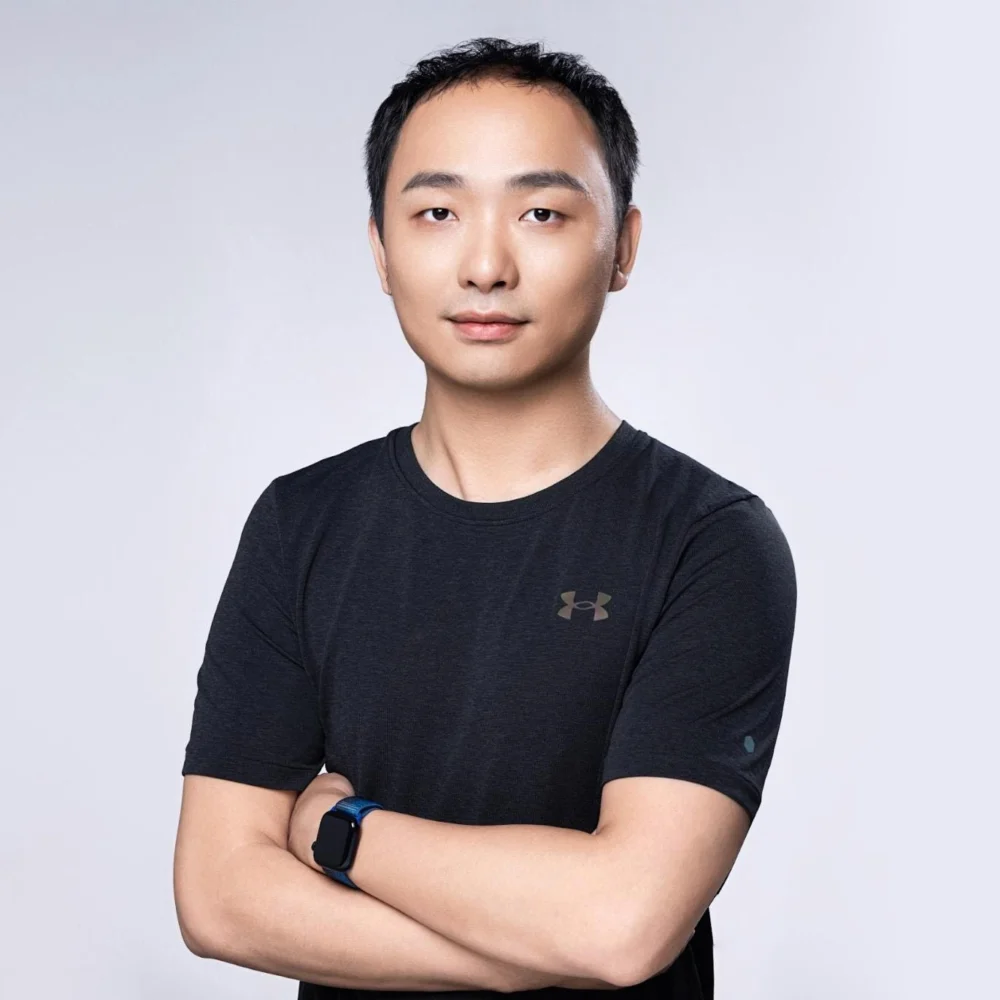
Luyu Zhang moved from China to the United States last year, and today, he can barely speak English. For most immigrants, language proficiency is the first hurdle to integration, but for Zhang, it is a secondary concern, a task relegated to a "later" that has not yet arrived. Sitting in a temporary office in Menlo Park—the heart of the global venture capital ecosystem—Zhang communicates through a translator, his focus entirely consumed by the lines of code and architectural diagrams that define his life’s work.
"I’m too busy with work right now to improve my English," Zhang says. "That requires time, and right now I don’t have a day to lose."
Zhang is the CEO of Dify, an artificial intelligence startup that has rapidly become one of the most significant players in the burgeoning field of LLM (Large Language Model) orchestration. He is also the face of a complex, high-stakes migration: a growing cohort of Chinese AI founders who are uprooting their families and their companies to establish roots in Silicon Valley. On the surface, the move appears to fly in the face of geopolitical reality. Washington has tightened export controls on the advanced semiconductors necessary to train AI; Beijing has tightened its grip on data outflow; and lawmakers in both capitals speak incessantly of "decoupling."
Yet, for Zhang and his peers, the gravity of Silicon Valley remains irresistible. His bet is as simple as it is ambitious: if you intend to build the foundational infrastructure for the global AI era, you must be present where the world’s fiercest competition resides.
The Prodigy from Anhui
Zhang’s path to Menlo Park did not follow the traditional trajectory of a tech elite. He did not graduate from Tsinghua or Stanford. In fact, he is a middle-school dropout. Growing up in China’s Anhui province, Zhang was a coding prodigy who found the country’s notoriously rigid education system suffocating. By the time he was in his early teens, he was already earning roughly $1,000 a month building websites—a sum that exceeded the salary of his father, a career civil servant.
This early financial independence granted him a rare leverage over his future. Unable to tolerate the classroom, he left school to pursue a career in the trenches of the Chinese tech boom. By 2018, his self-taught expertise had landed him a leadership role at Tencent, one of the world’s largest internet conglomerates. However, it was the emergence of generative AI in 2022 that provided the spark for his most significant venture. After attending Nvidia’s GTC conference and feeling the palpable shift in the industry’s center of gravity, Zhang knew he had to move.
Dify began as an open-source project designed to solve a specific, nagging problem: the immense difficulty of building and deploying AI applications. While models like GPT-4 are powerful, integrating them into a functional enterprise workflow involves complex backend engineering. Dify provides a "low-code" interface that allows developers to orchestrate these models, manage data, and deploy applications without writing exhaustive code.
The market response has been nothing short of explosive. Dify currently ranks 52nd among the most-starred repositories on GitHub, a testament to its popularity within the global developer community. The company now employs 100 people, has reached profitability, and serves over 280 enterprise giants, including the likes of Volvo, ThermoFisher Scientific, and Novartis. This momentum recently culminated in a $30 million funding round at a $180 million valuation, led by HSG (formerly Sequoia Capital China) with participation from Hillhouse Capital, 5Y Capital, and Mizuho Leaguer Investment.
The "China Origin, Global Operation" Blueprint
Zhang’s strategy is part of an emerging corporate architecture he calls the "China origin + overseas operation" model. It is a pragmatic response to a world where the tech ecosystem is fracturing into two distinct spheres.
"If you’re an elite athlete, you don’t play only to win local matches. You train to compete in the Olympics," Zhang explains. "For a technology company building infrastructure for the AI era, Silicon Valley is our Olympic arena. We want to compete at the highest level."
This model seeks to combine the best of both worlds: the unparalleled speed and cost-efficiency of Chinese engineering with the market access, capital, and prestige of the American tech hub. However, this path is fraught with regulatory and political landmines. Zhang points to the case of Manus—an AI startup that originated in China, moved to Singapore, and was recently the subject of a proposed $2 billion acquisition by Meta. The deal has become a lightning rod for scrutiny, with U.S. regulators examining the ties of American venture capital firms to the startup, and Chinese regulators reportedly investigating whether to block the sale entirely.
For Chinese founders, the specter of TikTok looms large. The social media giant’s years-long battle with U.S. lawmakers over its ownership and data practices serves as a cautionary tale. To avoid being "labeled prematurely," many startups are adopting a posture of strategic neutrality. They emphasize their product’s utility and their open-source transparency rather than their founders’ nationality.

A Shifting Venture Landscape
The migration of founders like Zhang is being accelerated by a dramatic shift in the venture capital climate. Lake Dai, a former head of product at Alibaba and founder of Sancus Ventures, notes that the trend is much broader than a few high-profile cases. In the last two years, she has been approached by at least 100 Chinese entrepreneurs seeking advice on relocating to the United States.
The reasons are twofold. First, foreign capital has significantly pulled back from the Chinese domestic market, leaving a vacuum in early-stage funding. Second, the Chinese tech ecosystem has become increasingly self-contained. Software developed within the "Great Firewall" often struggles to gain traction internationally due to different user behaviors, regulatory requirements, and technical standards. For a founder with global ambitions, staying in China often means being confined to a domestic market that, while massive, is increasingly isolated from the global frontier.
"Chinese founders are moving to the US now," Dai says. "We’ve seen more and more of that in the last few years. They want to build the next generation of AI companies here, and that benefits all of us."
This movement creates a unique hybrid structure. Dify, for instance, maintains a core open-source engineering team of 60 people in China, while Zhang aggressively hires for sales, customer success, and executive roles in the San Francisco Bay Area and Tokyo. Other startups, such as OpusClip and HeyGen, have gone even further, fully relocating their operations outside of China to mitigate political risk and better align with Western markets.
The Talent Paradox
While the political rhetoric in Washington often focuses on the risks of "technology transfer" to China, a deeper look at the AI industry reveals a profound interdependence. The American AI revolution is, in many ways, fueled by Chinese talent.
A study from the Carnegie Endowment for International Peace tracked 100 of the top Chinese AI researchers who were working at U.S. institutions and companies in 2019. By late 2023, 87 of those researchers remained in the United States; only ten had returned to China. Similarly, the founding team of Meta’s Superintelligence Labs, an 11-person group of elite immigrants, included seven individuals born in China.
This "brain drain" from China to the U.S. suggests that while the two nations’ governments may be decoupling, the scientific and entrepreneurial communities remain deeply intertwined. Zhang argues that the current discourse lacks nuance. He contends that not all AI products carry the same national security risks. Dify, as an open-source infrastructure tool that customers typically host on their own private servers, operates in a fundamentally different category than a consumer-facing social platform with algorithmic influence or a firm developing export-controlled frontier chips.
"People go to CES and don’t have a problem buying Chinese-made consumer electronics," Zhang notes. He suggests that software infrastructure should be viewed through a similar lens of utility rather than ideology.
The Future of the Arena
The road ahead for Dify and its contemporaries is hardly guaranteed. Silicon Valley is increasingly sensitive to the origins of both talent and capital. Some American venture funds have begun quietly blacklisting startups with significant Chinese backing to avoid future regulatory headaches. Meanwhile, a simmering anti-China sentiment in some corners of the tech world has led to internal friction; recently, a Chinese researcher at the high-profile AI safety firm Anthropic resigned, citing the company’s "anti-China statements" as a primary reason for his departure.
Yet, the pragmatic reality of the AI race may eventually force a more sophisticated approach to these tensions. If the United States is to maintain its lead in AI, it must remain the most attractive destination for the world’s best builders, regardless of where they were born.
For Luyu Zhang, the calculation remains strictly professional. He is not a political actor, and he expresses no desire to take sides in a "Cold War 2.0." He is an entrepreneur who dropped out of school because he wanted to build things that worked, and he moved to Menlo Park because that is where the most important things are being built today.
"Entrepreneurs coming from China to the US are not political," Zhang says, his translator conveying the intensity of his conviction. "We just want to build great products that people use. We want to be in the arena."
As the AI era matures, the success or failure of companies like Dify will serve as a bellwether for the global tech industry. It will determine whether Silicon Valley remains a universal "Olympic arena" for innovation, or whether the hardening borders of the physical world will finally succeed in fragmenting the digital one. For now, Zhang is betting on the former, one line of code at a time, even if he still hasn’t found the time to learn the local language.
