

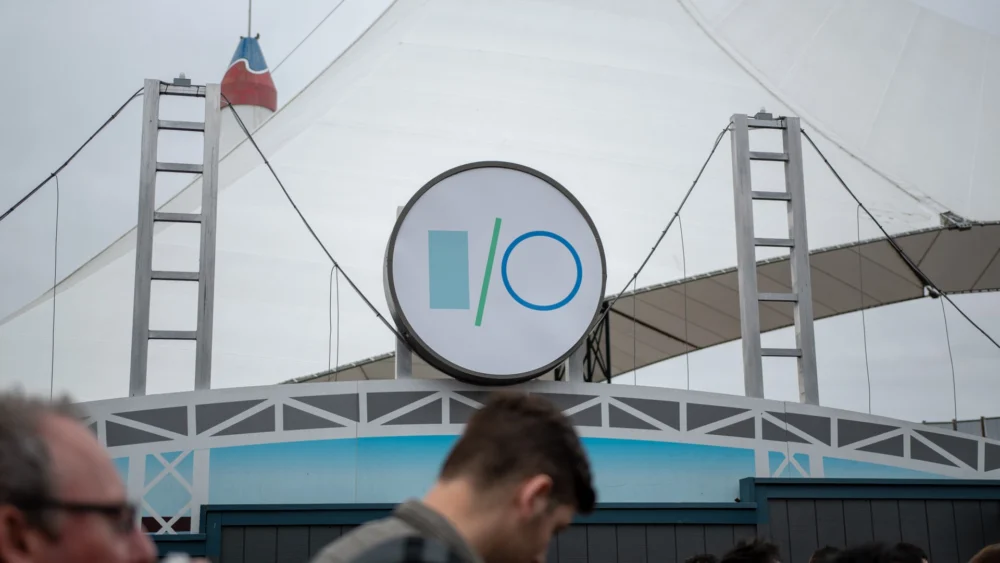
The perennial calendar marker for the global developer community, Google I/O, has officially been penciled in for 2026. The Mountain View titan has confirmed that its flagship annual developer conference will convene from May 19th through May 20th, returning to the familiar, expansive grounds of the Shoreline Amphitheatre in Mountain View, California. This seemingly routine announcement, traditionally preceded by an engaging, often complex digital puzzle designed to reward community engagement, carries significantly more weight this year, given the current velocity of technological disruption, particularly in the realm of artificial intelligence.
Google I/O is far more than just an industry gathering; it functions as the annual inflection point where the company dictates the strategic direction for its vast ecosystem. While the primary audience remains the legion of software developers who build upon Android, ChromeOS, and Google Cloud, the announcements emanating from the main stage inevitably cascade into consumer expectations, enterprise adoption, and the broader competitive landscape against rivals like Apple, Microsoft, and Meta. The two-day format, while concise, is meticulously engineered to maximize impact, focusing heavily on keynote presentations that outline philosophical shifts, followed by deep-dive technical sessions, hands-on workshops, and crucial product demonstrations.
The Significance of Timing and Tradition
The established cadence of holding I/O in the late spring serves a critical strategic purpose. It positions Google to preview the next major iteration of Android (typically designated by a numerical or codename version for the upcoming fall release) well ahead of the competitive pressure cooker of the holiday season. For developers, these early previews are essential for integrating new APIs, optimizing applications for underlying OS changes, and ensuring compatibility across the diverse spectrum of Android hardware.
The unique pre-announcement ritual—releasing an interactive game or challenge whose completion unlocks the dates—is a masterclass in community cultivation. It transforms a dry administrative announcement into an interactive event in itself, fostering immediate buzz and rewarding early adopters and dedicated followers. In the age of information overload, this deliberate, playful obfuscation ensures that the date reveal itself becomes a piece of organic news, rather than merely a press release staple. The rapid mobilization required to solve the puzzle speaks volumes about the pent-up anticipation surrounding Google’s roadmap, especially as the company navigates its most aggressive pivot toward generative AI integration across all product tiers.
Industry Implications: The AI Imperative
The official confirmation of the May 2026 dates arrives at a juncture where Google’s identity is being aggressively reshaped by advancements in large language models (LLMs) and multimodal AI. The brief official statement hinting at showcasing the “latest AI breakthroughs and updates in products across the company” is a significant understatement of the gravity of the expected content.
For the technology industry, I/O 2026 is anticipated to be the venue where Google solidifies its position as an AI-first organization, moving beyond the foundational announcements of previous years. Analysts will be closely scrutinizing several key areas:
- Android Integration at the Kernel Level: We expect to see Android 17 (or its equivalent) deeply infused with Gemini or its successor models. This isn’t just about smarter assistants; it means on-device AI processing for enhanced privacy, real-time contextual awareness integrated into system alerts, notification prioritization algorithms that learn user intent dynamically, and potentially entirely new interaction paradigms that supersede traditional touch navigation.
- Developer Tooling for Ambient Computing: The focus will shift from building apps for defined screens (phones, tablets) to building for continuous, ambient computing environments. This requires Google to roll out sophisticated, unified SDKs that allow developers to deploy AI agents and services seamlessly across Wear OS, Android Auto, ChromeOS, and the burgeoning AR/VR ecosystem (including future hardware announcements). The success of these platforms hinges on how easy Google makes it for third-party developers to leverage proprietary models securely.
- Cloud and Enterprise AI Dominance: While consumer platforms generate headlines, the financial engine of Google often rests with Google Cloud Platform (GCP). I/O serves as a crucial platform to showcase enterprise-grade AI tools, specialized TPU hardware accessibility for custom model training, and significant updates to Vertex AI. Demonstrations of industry-specific solutions, particularly in finance, healthcare, and manufacturing, will signal where Google intends to challenge AWS and Azure most aggressively in the coming years.
Expert Analysis: Deciphering the Two-Day Structure
The two-day structure remains a testament to the sheer volume of information Google needs to disseminate. Day one is invariably dominated by the main keynote, led by Sundar Pichai and key product heads (Android/Search/AI). This sets the overarching narrative—the "why" behind Google’s current trajectory. It is during this keynote that major hardware unveilings, such as significant Pixel line updates or foundational changes to ChromeOS architecture, typically occur.
Day two transitions into the technical deep dives. This is where the real meat for developers resides. Sessions will likely dissect new privacy sandboxes, advancements in machine learning frameworks optimized for mobile silicon (e.g., improved TensorFlow Lite performance), and crucial updates to cross-platform development tools like Flutter. The effectiveness of the conference is measured by how well these technical sessions translate high-level AI ambition into tangible, usable code libraries for the global developer base.
A crucial area for analysis this cycle will be Google’s response to ongoing regulatory scrutiny across various global markets. While technical presentations avoid explicit legal discussion, the way new features are architected—especially concerning data handling, cross-service integration, and privacy controls—will be closely watched for signals regarding compliance and market adaptation strategies.
Future Impact and Emerging Trends
Looking beyond the immediate announcements, I/O 2026 will serve as a litmus test for Google’s long-term bets.
The Evolution of Search: The traditional model of web search is fundamentally being disrupted by generative AI. If the keynote focuses heavily on conversational AI interfaces that bypass traditional search result pages, it signals a critical shift in monetization strategy and user engagement. How Google balances the presentation of these generative capabilities with the need to sustain the ad-supported web ecosystem will be a central theme. Developers need to understand whether their content will still be discoverable through established SEO practices or if indexing will shift toward direct AI synthesis.
Hardware Synergy: Google’s historical challenge has been creating seamless synergy between its software platforms and its self-manufactured hardware. With the Pixel line increasingly serving as the reference device for the latest Android features, I/O 2026 will likely showcase hardware capabilities (e.g., specialized Tensor chip features) that are explicitly designed to maximize the performance of the new AI models, creating a distinct competitive moat against third-party manufacturers who may lag in silicon integration.
Sustainability and Responsibility in AI Development: Modern tech conferences increasingly feature tracks dedicated to Responsible AI. Given the computational cost of training and running massive models, Google is expected to dedicate significant time to demonstrating efficiency gains, energy-conscious development practices, and frameworks for bias mitigation. For a company operating at this scale, demonstrating leadership in AI ethics and sustainability is not optional; it is a core component of corporate reputation management.
The confirmation of the May 19-20 dates, secured through the community’s collective effort on the digital puzzle, officially sets the countdown clock. For everyone invested in the future of mobile technology, operating systems, and artificial intelligence, the early summer of 2026 in Mountain View will be mandatory viewing. The anticipation is palpable, as this specific iteration of I/O promises to reveal not just incremental updates, but potentially the next foundational layer of the digital experience. Prospective attendees can already begin their journey by visiting the dedicated portal, io.google/2026/, to monitor for registration windows and the eventual release of the detailed technical agenda. The quiet anticipation surrounding the puzzle’s resolution has now erupted into full strategic planning mode across the industry.
