

The clinical trajectory of KJ Muldoon began with a terrifying ambiguity that remains the nightmare of every new parent. Born in August 2024, the infant was gripped by a profound lethargy, refusing to eat and slipping into a metabolic crisis. When doctors discovered his ammonia levels were skyrocketing, the diagnosis was grim: a rare metabolic disorder that historically served as a death sentence. In previous decades, KJ’s story might have ended in tragedy. Instead, it became a high-stakes race against the clock, involving a coalition of the world’s leading geneticists and physicians.
In a feat of modern biotechnology that would have been unthinkable a generation ago, a team spearheaded by Jennifer Doudna’s Innovative Genomics Institute (IGI), in collaboration with the Children’s Hospital of Philadelphia and Penn Medicine, began a "sprint" to rewrite the infant’s biological destiny. Using CRISPR-based gene editing, researchers designed a custom DNA correction, secured emergency FDA authorization, and manufactured a personalized therapy in a staggering six-month window. On February 25, 2025, KJ received his first infusion. Today, he is a thriving toddler, serving as a living testament to the transformative power of programmable medicine.
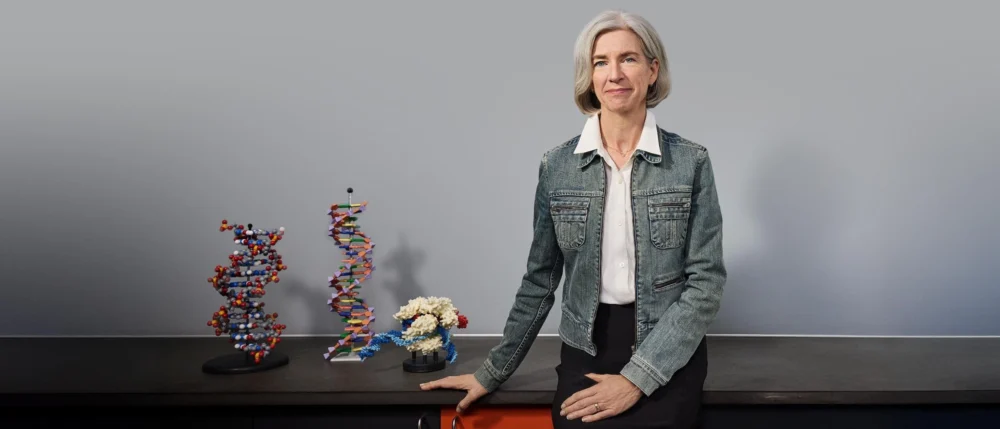
While KJ’s recovery is a triumph of human ingenuity, it also highlights a glaring paradox in the biotech sector. Despite the scientific "miracles" being performed in laboratories, the commercialization of CRISPR technology has been fraught with systemic failures, market volatility, and structural hurdles. Jennifer Doudna, the Nobel Laureate whose work laid the foundation for this field, is now embarking on her most ambitious mission yet: a $1 billion plan to bridge the "valley of death" between academic breakthrough and mass-market accessibility.
The Architect of the Genetic Revolution
To understand the current stakes, one must look back at the genesis of the technology. Jennifer Doudna, now 61, didn’t just discover a tool; she helped define a new era of biology. Her 2012 research, conducted alongside French biochemist Emmanuelle Charpentier, revealed how a bacterial defense system called CRISPR-Cas9 could be repurposed as programmable "molecular scissors." This discovery, which earned the duo the Nobel Prize in Chemistry in 2020, allowed scientists to cut, replace, or repair genetic code with unprecedented precision.
Since joining the faculty at the University of California, Berkeley, in 2002, Doudna has transformed her laboratory into a global epicenter for genetic innovation. In 2015, she founded the Innovative Genomics Institute (IGI), a collaborative powerhouse involving UC Berkeley, UCSF, and UC Davis. Funded by philanthropic heavyweights like the Chan Zuckerberg Initiative and the Li Ka Shing Foundation, the IGI currently operates on a $40 million annual budget, focusing on health, agriculture, and climate change.
Doudna’s influence extends far beyond the ivory tower. She and the IGI have facilitated the launch of 31 companies, a portfolio now valued at approximately $9 billion. These ventures employ over 2,500 people, with Doudna herself serving as a co-founder for seven of them. Yet, despite this impressive ecosystem, the road to profitability and widespread clinical adoption has been rockier than anyone anticipated.
The CRISPR "Hype Cycle" and the Market Correction
In the late 2010s, CRISPR was often described as the "AI of biotech." Investors poured billions into startups, betting that the ability to edit the human genome would lead to a rapid succession of blockbuster drugs. Venture funding for U.S. gene-editing firms surged from $2.4 billion in 2016 to a staggering peak of $12.2 billion in 2021.
However, the reality of drug development—defined by decade-long timelines, stringent regulatory requirements, and high failure rates—eventually collided with investor expectations. By 2024, the sector faced a brutal correction. Funding dropped to $5.2 billion, and some of the industry’s earliest pioneers found themselves in survival mode.
Caribou Biosciences, the first startup to emerge from Doudna’s lab in 2011, saw its stock price plummet by 91% from its post-IPO highs, leaving it with a modest market capitalization of $150 million. Editas Medicine, another early leader, was forced to lay off 65% of its workforce and shelf its flagship program for sickle cell disease. Perhaps most illustrative of the volatility was the collapse of Tome Biosciences; despite raising $200 million, the MIT spin-off shuttered operations entirely in 2024.
Janice Chen, the co-founder and CSO of Mammoth Biosciences and a former student of Doudna’s, notes that the Nobel Laureate had long warned of this "hype cycle." The expectations were gargantuan, but the scientific and financial infrastructure required to deliver on them was still being built.
A Turning Tide: Strategic Successes and Big Pharma’s Entry
Despite the wreckage of several high-profile startups, the underlying science has continued to mature. In late 2023, the FDA granted its first-ever approval for a CRISPR-based therapy: Casgevy, a treatment for sickle cell disease developed by Vertex Pharmaceuticals and CRISPR Therapeutics. While the $2.2 million-per-patient price tag remains a barrier to access, the approval proved that the technology could clear the highest regulatory hurdles.
This success has reignited interest from "Big Pharma." Last year, Eli Lilly acquired Verve Therapeutics for $1.3 billion, gaining access to gene-editing medicines aimed at cardiovascular disease—the world’s leading cause of death. Similarly, Doudna’s Mammoth Biosciences secured a $100 million upfront deal with Regeneron, signaling that large-scale pharmaceutical players are finally ready to integrate CRISPR into their long-term pipelines.
For Doudna, these milestones are necessary but insufficient. She is acutely aware that if CRISPR remains a "curio"—an expensive academic interest that only benefits a handful of wealthy individuals—it will have failed its ultimate mission.

The $1 Billion Vision: Scaling the Innovative Genomics Institute
Doudna’s "next act" is a strategic pivot toward institutional stability and long-term scalability. Her goal is to raise $1 billion for the IGI, providing a guaranteed budget of $100 million per year for the next decade. This capital is intended to insulate the next generation of scientists from the whims of the venture capital market, allowing them to pursue high-risk, high-reward research that might not yield immediate profits but could redefine medicine.
"I don’t want it to be a topic of academic interest that maybe impacts a few people on the planet," Doudna says. "We want to make sure the work we’re doing ultimately benefits everybody."
Central to this plan is the democratization of gene editing. Currently, many CRISPR treatments are "ex vivo," meaning cells must be removed from the patient, edited in a lab, and then reinjected—a process that is both invasive and prohibitively expensive. Doudna is championing "in vivo" editing, where the CRISPR machinery is delivered directly into the patient’s body via a simple injection. Startups like Azalea Therapeutics, which launched with $82 million in funding, are already working on these delivery mechanisms, which could revolutionize cancer treatment and rare disease management.
Regulatory Evolution and the "N-of-1" Framework
One of the greatest obstacles to commercializing gene editing is the traditional regulatory model. The FDA’s approval process is designed for mass-market drugs intended for millions of people. Genetic diseases, however, are often hyper-specific; a mutation in one child may be slightly different from a mutation in another, even if they share the same disease name.
Under the old rules, each unique mutation would require its own separate, multi-year clinical trial—an impossible burden for rare diseases. However, a new regulatory philosophy is emerging. FDA officials, including Commissioner Marty Makary, have proposed a "platform" approach. This would allow drugmakers to gain approval for the CRISPR "delivery vehicle" and "editing machinery" once, and then simply swap out the "genetic guide" for different mutations without restarting the entire trial process.
Doudna and her colleague Fyodor Urnov have already launched Aurora Therapeutics to capitalize on this emerging framework. By focusing on rare genetic diseases that have been ignored by traditional pharma, Aurora aims to prove that personalized medicine can be a viable, sustainable business model.
Beyond Human Health: The Climate Frontier
While medical breakthroughs dominate the headlines, Doudna’s vision for CRISPR extends to the very health of the planet. One of the IGI’s most "futuristic" projects involves using gene editing to combat climate change.
Methane is a potent greenhouse gas, and a significant portion of global methane emissions comes from livestock. Using a $70 million grant from the TED Audacious project, IGI researchers are testing a way to use CRISPR to edit the microbiomes of cows. By subtly altering the genetic makeup of the bacteria in a cow’s gut, they hope to significantly reduce the methane produced during digestion.
The beauty of this approach, according to Doudna, is its potential for scale. If the treatment can be delivered once and maintained through minor dietary adjustments, it could provide a cost-effective solution for farmers worldwide, addressing a massive environmental challenge without requiring a radical overhaul of global agriculture.
A Legacy of Empowerment
As Jennifer Doudna moves forward with her billion-dollar plan, her colleagues describe her as possessing a "Navy Seal" focus—a calm, mission-driven intensity that comes out when the stakes are highest. Reed Jobs, who sits on the IGI board, compares her potential impact to that of Marie Curie. Like Curie’s work with radiation, Doudna’s contribution to genomics is a fundamental shift in human capability that will take generations to fully manifest.
Doudna herself is increasingly focused on the "people" side of the equation. She understands that her greatest legacy will not be a single drug or a specific company, but the ecosystem of scientists she has empowered. By providing the funding, the confidence, and the institutional support to young researchers, she is ensuring that the CRISPR revolution doesn’t stall in the face of market turbulence.
"The best I can do," Doudna reflects, "is not to make the next breakthrough myself, but to enable other scientists to do it."
As the world watches the progress of children like KJ Muldoon, it is becoming clear that the struggle to commercialize gene editing was not a sign of the technology’s failure, but rather the growing pains of a nascent industry. With a billion-dollar war chest and a refined regulatory roadmap, Doudna is betting that the second decade of CRISPR will be defined not by hype, but by a steady, life-saving reality. The renaissance of genetic medicine has begun, and this time, it is being built to last.
