


The current digital ecosystem is overwhelmingly dominated by a handful of monolithic platforms. These giants, due to their massive user bases and inherent network effects, often dictate the standards for usability, feature sets, and data handling. For the average consumer, defaulting to the market leader—whether it’s the default browser, the most popular productivity suite, or the ubiquitous streaming service—is the path of least resistance. However, this convenience often comes at a cost: diminished privacy, feature stagnation, and a homogenized user experience. For the technologically astute, the most compelling innovation frequently originates from the periphery, driven by agile, user-centric competitors who must excel to survive. This is the world of the digital underdog, where necessity breeds superior utility and a refreshing commitment to individual user sovereignty.
These smaller players are not merely clones with lower price points; they often represent thoughtful architectural decisions that the market leaders, burdened by legacy code and shareholder expectations, cannot easily replicate. Embracing these alternatives is an investment in technological diversity and often yields a more powerful, customized, and ethically aligned digital toolkit. The selection process for these tools requires a deeper dive into feature parity, underlying philosophy, and long-term roadmap viability. The following applications exemplify this dynamic, offering robust, feature-rich alternatives to their overexposed counterparts, and deserve serious consideration for any discerning user.
The Browser Wars Beyond Chrome: Vivaldi as the Power User’s Bastion
Google Chrome currently commands the lion’s share of the web browsing market, largely due to its deep integration with the Android operating system and its synchronization capabilities powered by the Google account infrastructure. While this ubiquity is convenient, it places users firmly within a data collection paradigm that prioritizes advertising revenue over user anonymity. Furthermore, Chrome’s development often seems reactive rather than proactive, lagging behind competitors in implementing crucial features like advanced tab management or granular privacy controls.
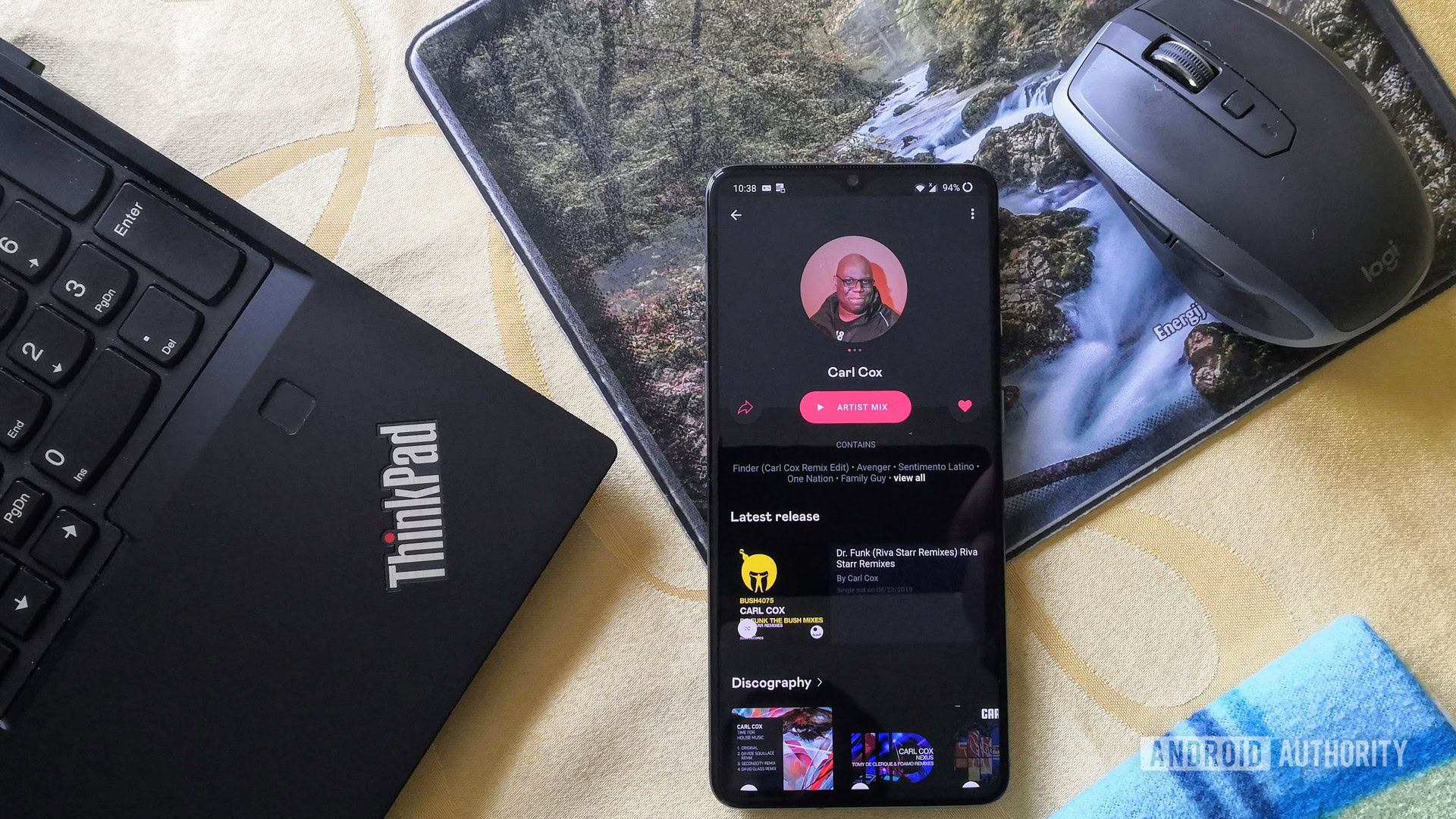
Vivaldi emerges as the definitive counter-narrative. Built by former Opera developers, Vivaldi is fundamentally committed to user customization and data minimization. Its architectural foundation on Chromium ensures near-perfect compatibility with existing web standards and extensions, mitigating the common migration friction associated with switching browsers.
Expert Analysis on Feature Parity and Architecture:
Vivaldi’s advantage lies in its feature density baked directly into the core application, rather than relying on extensions. Its implementation of Tab Stacks and Tiled Tabs fundamentally alters how complex research and multi-tasking are managed in a browser—a capability Chrome only approaches clumsily. Furthermore, Vivaldi actively champions user agency through its comprehensive settings panel. Users can configure everything from mouse gestures to the placement of the address bar and UI elements. From an industry perspective, Vivaldi represents a crucial check on browser monopoly; by offering a fully featured, non-tracking alternative based on an open standard (Chromium), it keeps pressure on Google to improve privacy features within its own flagship product, even if reluctantly. The long-term trend suggests increasing user awareness of digital footprints, positioning Vivaldi strongly for growth among professionals and privacy advocates who require maximum control over their browsing environment.
Rethinking Digital Architecture: Anytype vs. Notion’s Centralized Cloud
Notion rapidly transformed the landscape of all-in-one workspace software, blending databases, wikis, and document editing into a single, highly flexible platform. Its success stems from its ability to create linked, relational data structures. However, this power is predicated on a cloud-centric model where all user data resides on Notion’s servers, creating inherent single points of failure regarding data control and persistent connectivity.
Anytype directly challenges this centralized premise by advocating for a "data ownership first" philosophy, heavily inspired by the local-first principles popularized by applications like Obsidian, but integrating a more structured, relational database approach reminiscent of Notion.

Industry Implications: The Rise of Local-First Software:
The shift toward local-first applications like Anytype signals a maturing digital consciousness among sophisticated users who recognize the long-term risks of vendor lock-in and opaque data policies. Anytype’s architecture stores data locally, encrypted, allowing users to selectively share data via peer-to-peer (P2P) synchronization when connectivity is available. This is not merely an offline mode; it is a fundamental design constraint that prioritizes user autonomy. For enterprise environments concerned with data sovereignty, this model offers significant compliance advantages over fully cloud-hosted solutions. The learning curve associated with these powerful, structured systems remains a barrier to mass adoption, but as interfaces become more intuitive—blending the block-based editing Notion perfected with the security framework of local storage—these platforms are poised to capture the high-value segment of knowledge workers.
Elevating Audio Curation: Deezer’s Superior Algorithmic Discovery
In the realm of digital music streaming, Spotify’s market saturation is undeniable. Its dominance is often attributed to aggressive marketing and early mover advantage, creating a user base entrenched by playlists and social sharing features. While functional, Spotify’s interface can feel overwhelming, and its core discovery mechanisms sometimes default to predictable patterns dictated by massive user clusters.
Deezer, often overshadowed in Western markets, presents a compelling, technically refined alternative, particularly concerning deep music engagement.
Future Trends in Music Experience:
Deezer’s strength lies in features that cater to the enthusiast, not just the casual listener. The Flow feature, an evolving, intelligent stream, is often cited by long-term users as significantly more accurate at surfacing genuinely new music that aligns with subtle personal tastes, rather than merely echoing what is currently popular within the user’s immediate social graph. Furthermore, Deezer has historically been quicker to adopt high-fidelity audio formats, often offering superior audio quality tiers earlier than competitors. The platform’s integration of local event tracking based on listening history elevates it from a passive consumption platform to an active cultural connector. As streaming economics continue to squeeze artist payouts, platforms that offer more robust engagement tools (like quizzes, detailed artist pages, and local event integration) may gain traction by fostering deeper community bonds around music, moving beyond simple passive playback.

Precision in Inquiry: Perplexity as the Research AI Layer
The generative AI space is currently defined by the duopoly of OpenAI’s ChatGPT and Google’s Gemini. These tools excel at creative generation, summarization, and general conversational tasks. However, in scenarios requiring factual accuracy, comprehensive citation, and verifiable research synthesis—critical for professional or academic work—their tendency toward confabulation (hallucination) introduces unacceptable risk.
Perplexity positions itself not as a generalized chatbot, but as an Answer Engine designed explicitly for grounded research.
Expert-Level Analysis of AI Grounding:
Perplexity’s methodological differentiator is its mandatory sourcing architecture. Every substantive claim generated is linked directly to its originating web source, providing immediate traceability for fact-checking. This shifts the user experience from blindly trusting an LLM’s output to actively reviewing the evidence base. Moreover, the Pro tier’s unique feature—acting as a unified front-end to multiple cutting-edge models (Claude, Gemini, GPT, etc.)—is a profound strategic move. This flexibility bypasses the need for users to maintain multiple, expensive subscriptions to access the best model for a specific task. In the evolving landscape of large language models, where performance benchmarks constantly shift, Perplexity offers a future-proof interface that aggregates the best available technology, serving as an essential layer of verification in an increasingly synthetic information environment. This commitment to verifiable output places it leagues ahead for any task requiring high informational integrity.
Next-Generation Task Management: Superlist’s AI-Augmented Workflow
The productivity sector is saturated with established list managers like Todoist, which excel at simple, reliable list creation and recurring tasks. However, the next frontier in productivity is moving beyond manual input and toward contextual automation, driven by advanced conversational AI. Superlist, developed by the original team behind the beloved Wunderlist, is making this transition aggressively.

Superlist integrates deep natural language processing (NLP) not just for task creation but for active workflow management, particularly in collaborative or meeting-heavy environments.
Impact on Collaborative Productivity and The Future of Work:
The application’s ability to function as an AI Meeting Scribe—listening to a conversation, parsing action items, assigning them to individuals mentioned, and structuring the output—fundamentally changes the administrative burden of meetings. This is more than simple transcription; it’s intelligent synthesis and immediate delegation. While a $5 per month Pro tier offers the full utility, the presence of a functional free tier allows users to integrate its core features without immediate financial commitment. The industry implication is clear: productivity software must evolve from being mere digital repositories for tasks to becoming active participants in the workflow itself. Superlist’s success hinges on its ability to maintain the elegant simplicity of its predecessors while layering sophisticated, yet unobtrusive, AI functionality, appealing directly to users who find current organizational tools insufficient for modern, dynamic work styles.
The Philosophy of Choosing the Challenger
The common thread uniting Vivaldi, Anytype, Deezer, Perplexity, and Superlist is an uncompromising focus on user utility over vendor convenience. They operate on the principle that the user, not the platform’s advertising model or cloud infrastructure dependency, should be the primary beneficiary of the technology.
This inclination toward the underdog is more than a stylistic preference; it reflects a strategic alignment with the principles of technological self-determination. Mainstream applications often suffer from "feature bloat"—the accumulation of tangential tools designed to satisfy the widest possible demographic, often resulting in cluttered, slow, and overly complex experiences for power users. Underdogs, conversely, must laser-focus on core competencies and user feedback loops to carve out their niche. They are typically more responsive to specific, high-value feature requests because satisfying that niche translates directly into survival and growth.

Analyzing Market Dynamics and Future Trends:
The continued existence and success of these specialized applications signal a crucial diversification in the software market. As regulatory scrutiny increases globally regarding data privacy (GDPR, CCPA, etc.), platforms offering strong, verifiable privacy guarantees—like Anytype and Vivaldi—will gain institutional relevance. Simultaneously, the rapid advancement in AI necessitates tools that can manage and verify the flood of synthetic information, making source-grounded engines like Perplexity indispensable research partners. This shift suggests a future where digital toolsets are highly modular: users will select the best-in-class tool for each specific function—a specialized browser, a dedicated research AI, a privacy-first note-taker—rather than relying on an all-encompassing, but ultimately compromised, ecosystem provided by a single tech titan.
The journey away from the default setting is a deliberate act of optimizing one’s digital life for efficiency, security, and control. While adopting these tools may require an initial time investment for setup and learning, the resulting gains in privacy, customization, and specialized functionality often provide a long-term return that the frictionless, yet restrictive, mainstream defaults simply cannot match. The digital landscape is richer for these challengers, and discerning users benefit most from exploring their robust offerings.
