

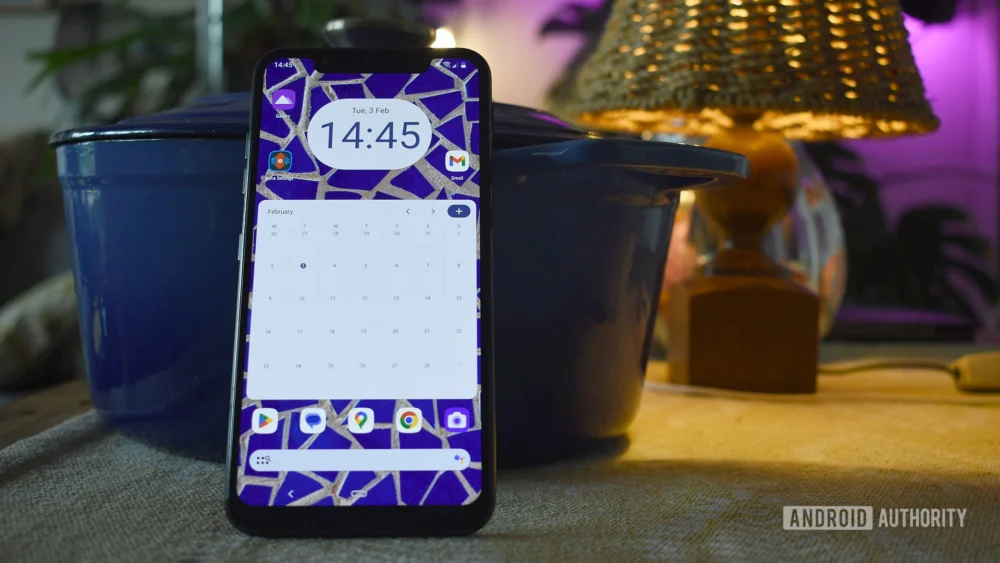
The narrative surrounding Nova Launcher, a foundational application in the Android customization ecosystem, has been anything but stable over the last half-decade. For a significant portion of the Android user base, Nova Launcher represents the zenith of home screen personalization, offering granular control that stock operating system interfaces often deliberately obscure. Yet, this long-standing digital darling has navigated a treacherous period marked by ownership transfers, extended periods of perceived stagnation, and recent, highly scrutinized shifts in its monetization strategy. Despite these turbulent waters, emerging data from recent reader surveys strongly suggests that the core user base remains deeply entrenched, demonstrating a level of brand loyalty rarely seen in the fast-moving world of mobile software.
To fully appreciate the significance of this sustained popularity, one must contextualize Nova Launcher’s history. Launched by its original creators, it rapidly became the gold standard for power users craving aesthetic flexibility and functional depth beyond what Google and device manufacturers provided. It pioneered many features now commonplace in modern launchers, from sophisticated gesture controls to comprehensive theme integration. This legacy, however, was severely tested when the original developers sold the application in 2022. The subsequent tenure under the new ownership structure, identified as Branch, was characterized by a noticeable deceleration in feature development and public communication, leading many long-time adherents to fear the application was effectively abandoned or in maintenance mode only. This perception culminated in widespread speculation near the close of the previous year that the project had reached its natural conclusion.
The sudden pivot in January, confirming the acquisition and subsequent revitalization by a new developer entity, Instabridge, injected a jolt of adrenaline into the community. This resurrection was cause for celebration, particularly for those who had archived their previous investments in the premium version or simply missed the application’s unique interface capabilities. However, the immediate post-acquisition updates have been double-edged. The introduction of advertisements into the formerly pristine free tier, coupled with the detection of new tracking mechanisms within the application code, immediately raised red flags across privacy-conscious segments of the community. In the current digital climate, where user data vigilance is paramount, these moves are typically accelerators for user attrition.
However, the initial findings from two distinct reader polls paint a remarkably resilient picture of Nova Launcher’s standing. The first poll focused on current usage patterns. The results indicate that a significant majority—approximately 63.2% of surveyed participants—still utilize Nova Launcher in some capacity. This figure encompasses both dedicated, full-time adopters and those who switch between Nova and other launchers based on specific needs or device configurations.
The depth of this commitment is perhaps the most telling metric. A substantial 35.8% of those utilizing the launcher expressed an unwavering dedication, reporting no intention of migrating away in the foreseeable future. This figure speaks volumes about the application’s core utility and the inertia built up by years of personalized configuration. Even acknowledging the recent headwinds, this cohort is willing to weather the monetization changes, suggesting that the perceived value proposition of Nova Launcher still outweighs the introduction of in-app advertising.
Interestingly, the data also provides a clear timeline of recent dissatisfaction. Approximately 22% of current users admitted to "growing concerned about recent developments." While the survey design does not exclusively attribute this concern to the ads or trackers, the timing strongly implies that the new business model is a primary driver of this apprehension. Furthermore, the data isolates those who departed during the previous ownership era: 14.3% abandoned the app following the most recent, commercially disruptive updates, while a slightly larger 13.5% defected immediately after the 2022 sale. This segmentation confirms that while some users are deeply rooted, the ownership instability and subsequent strategic shifts have demonstrably caused measurable attrition, albeit not enough to dethrone it from its popular perch.
The second survey delved into the qualitative assessment of the app’s status: Is Nova Launcher still the definitive best Android launcher available? The community sentiment here remains largely affirmative, although tinged with the reality of modern competition. Nearly 60% of respondents offered some degree of endorsement for its top-tier status. Breaking this down further reveals a crucial split: roughly 30.5% firmly believe Nova Launcher remains the unparalleled choice on the Android platform, effectively viewing its foundational strengths as timeless. In sharp contrast, 28.3% admitted that while they recognize its historical greatness, recent development lethargy and the current commercial shifts have forced them to question its continued supremacy.
This 28.3% segment represents the critical battleground for the new ownership. They are not disloyal; they are simply pragmatic. They adhere to the principle that the "best" application must not only perform impeccably but also demonstrate active, forward-looking stewardship. For these users, an application that was "once the best" is insufficient if it fails to evolve or, worse, introduces features that compromise the user experience they initially paid for or trusted.
The competitive landscape is evident in the counter-arguments. A significant 23.8% of respondents indicated they have already transitioned to superior alternatives, even if they hold nostalgic regard for Nova’s past achievements. The article notes the author’s own migration to competitors like Kvaesitso, Niagara, and AIO Launcher, highlighting the rise of specialized, often leaner, alternatives that prioritize either minimalist design or hyper-specific functionality over Nova’s traditional feature-stack breadth.
Perhaps the most surprising data point is the minimal segment—a mere 5.4%—who claim Nova Launcher was never the best option available. Given the app’s decades-long dominance in enthusiast circles, this small percentage underscores how deeply entrenched the perception of its superiority was, making the current 60% approval rating all the more potent by comparison.
Industry Implications and Expert Analysis
The resilience of Nova Launcher holds significant implications for the broader Android customization and third-party application market. In an era dominated by monolithic, manufacturer-controlled experiences (like Samsung’s One UI or Google’s Pixel Launcher), Nova Launcher represents the enduring spirit of user agency on Android. Its survival indicates a persistent, non-trivial segment of the user base that prioritizes deep system customization over seamless, manufacturer-mandated integration.
From an industry analyst’s perspective, the situation presents a classic dilemma: balancing the necessity of revenue generation with the maintenance of a loyal, technically demanding user base. The decision by Instabridge to introduce ads into the free version is a strategic maneuver aimed at stabilizing the application’s financial footing after years of perceived under-monetization. However, this move risks alienating the very users who provide the application’s cultural capital and positive word-of-mouth marketing.
Expert analysis suggests that the continued high usage rate (63.2%) is not merely about inertia; it reflects the difficulty in replicating Nova Launcher’s feature parity elsewhere. Many modern launchers, while aesthetically pleasing, lack the depth in settings management, icon pack support, and gesture scripting that Nova perfected. This functional superiority acts as a high barrier to entry for competitors looking to poach users. The user who has spent hours tuning their grid size, icon scaling, animation speeds, and gesture maps is highly resistant to starting that calibration process anew on a different platform.
The introduction of trackers, however, is a far more perilous undertaking in the current privacy climate. While the data collected may be essential for targeted advertising or performance analytics, the optics are terrible for an app historically viewed as an open-source adjacent, enthusiast-driven project. Instabridge must demonstrate unequivocally what data is being collected, how it is being used, and, critically, how this contrasts with the more transparent operations of its founder-led era. The 22% of users "growing concerned" are likely those who will actively seek out privacy-focused alternatives if the situation is not managed transparently.
Future Impact and Trends
The immediate future of Nova Launcher will serve as a crucial case study in the viability of legacy Android applications under modern, commercially aggressive ownership models. Instabridge has inherited an asset with immense brand equity, but one that requires delicate handling.
Trend 1: The Bifurcation of the User Base. We are likely to see the current user base cleave into distinct segments. The 35.8% committed core will likely remain, perhaps reluctantly accepting the ads, provided feature development resumes robustly. The 28.3% who are questioning its status will be highly sensitive to any further erosion of the experience (e.g., mandatory feature gating behind a new, expensive paid tier or intrusive advertising implementation). These users will actively test competitors.
Trend 2: The Value of Configuration Lock-in. Nova Launcher’s long-term survival hinges on configuration lock-in. If Instabridge can develop robust, one-click backup and restore functions that seamlessly migrate complex setups between Android versions or even future acquisitions, the switching cost remains prohibitively high for the established user base.
Trend 3: The Privacy Test. The success of this new chapter depends heavily on establishing a clear, verifiable privacy policy that directly addresses the new trackers. If Instabridge can successfully reframe the narrative—perhaps by positioning the ad revenue as the necessary engine to fund significant, highly requested feature updates—they might mitigate the initial privacy backlash. However, any perceived obfuscation will result in a swift exodus to platforms like Lawnchair or specialized minimalism launchers.
In conclusion, the survey results emphatically confirm that Nova Launcher is far from obsolete. It retains a commanding presence and a reservoir of goodwill that few other third-party Android applications can claim. The challenge for its new custodian is no longer proving relevance; it is demonstrating that commercial sustainability does not necessitate sacrificing the core principles of user control and transparency that initially elevated Nova Launcher to its hallowed status in the Android pantheon. The platform has the foundation; now it must execute a strategy that respects its passionate, battle-tested audience while securing its financial viability for the next decade of Android evolution.
