

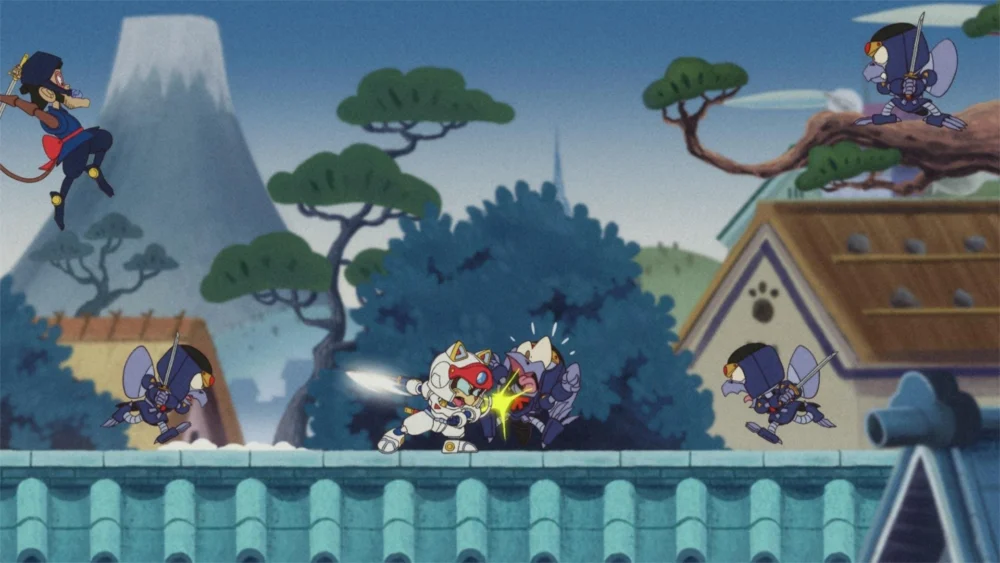
The landscape of modern gaming is currently undergoing a transformative period defined by "renaissance development." This trend, characterized by the high-fidelity revival of cult-classic intellectual properties from the 1980s and 90s, has seen the triumphant return of franchises like Streets of Rage, Teenage Mutant Ninja Turtles, and Double Dragon. However, few projects represent as deep a dive into niche cultural nostalgia as the upcoming Samurai Pizza Cats: Blast from the Past!. Developed by Blast Zero, this title seeks to do more than simply offer a playable experience; it aims to function as a digital time capsule, meticulously recreating the aesthetic and tonal idiosyncrasies of a show that defined a very specific era of globalized animation.
The project is the brainchild of Dave Baljon, CEO of Blast Zero, whose journey toward this specific IP began not with a licensing pitch, but with the success of the studio’s previous endeavor, Jitsu Squad. Released in 2021, Jitsu Squad was a frantic, four-player beat-em-up that wore its influences on its sleeve, utilizing a visual style that echoed the exaggerated proportions and vibrant kineticism of late-era cel animation. It was this specific artistic pedigree that caught the attention of the Japanese firm exA-Arcadia. Known for their high-end arcade hardware and their commitment to bringing modern titles back to the coin-op format, exA-Arcadia approached Blast Zero for an arcade port of Jitsu Squad. During the collaborative process of enhancing the game for its arcade debut, the idea of a guest character emerged. The Samurai Pizza Cats—known in Japan as Kyatto Ninden Teyandee—were at the top of the developers’ wish list.
The history of the Samurai Pizza Cats is itself a fascinating case study in international media distribution. Produced by Tatsunoko Production in 1990, the original Japanese series was a parody of the "sentai" and "ninja" tropes prevalent at the time. When the series was licensed by Saban Entertainment for Western audiences, the localization team famously found themselves without translated scripts or detailed plot summaries. In a move that would later mirror the creation of Ghost Stories, the Western writers essentially invented their own scripts based solely on the visuals, leaning heavily into fourth-wall-breaking humor, pop-culture references, and a self-aware sarcasm that earned the show a dedicated cult following. This dual identity—a Japanese action-parody and a Western meta-comedy—created a unique challenge for any developer looking to revive the brand: the game had to satisfy two distinct fanbases with different expectations of what the franchise "is."

Baljon and his team at Blast Zero recognized that the only way to bridge this gap was through absolute fidelity to the source material’s visual language. In an era where many retro revivals opt for 2.5D graphics or modernized pixel art, Samurai Pizza Cats: Blast from the Past! takes the significantly more labor-intensive route of hand-drawn 2D animation. The goal was to make the game look indistinguishable from the 90s anime. This required more than just matching character designs; it required replicating the technical limitations and artistic flourishes of the era, including the specific "film grain" and the slightly desaturated color palettes associated with 16mm broadcast masters.
This commitment to authenticity extended beyond the visuals and into the very voice of the project. For a property like Samurai Pizza Cats, the audio experience is as vital as the gameplay. Baljon’s team achieved a rare feat in the industry by securing the participation of both the original Japanese and English voice casts. In Japan, the reunion featured legendary talents like Kappei Yamaguchi (the voice of Yattarou/Speedy Cerviche), who is perhaps best known globally as the voice of Usopp in One Piece and L in Death Note. The involvement of original story writer Satoru Akahori ensured that the Japanese script maintained the biting wit of the 1990 original.
Simultaneously, Blast Zero tracked down the original Canadian voice cast who defined the show for North American and European audiences. The return of Rick Jones (Speedy Cerviche), Terrence Scammell (Guido Anchovy), Sonja Ball (Polly Esther), and Dean Hagopian (The Big Cheese) represents a monumental moment for fans of the Saban-era dub. For these actors, many of whom had not occupied these roles for over three decades, the recording sessions served as a professional time machine. The chemistry between the cast members, according to Baljon, remained intact, allowing them to recapture the frantic, improvisational energy that made the English dub a standout of the early 90s Saturday morning cartoon block.
From a gameplay perspective, Blast from the Past! seeks to modernize the side-scrolling action-platformer genre while retaining the "pick-up-and-play" accessibility of the 8-bit and 16-bit eras. While the 1991 NES game developed by Tecmo is remembered fondly for its character-swapping mechanics, Blast Zero is expanding the scope significantly. The game introduces a fully explorable overworld, a departure from the linear stage progression of traditional retro titles. This hub-world allows players to interact with the residents of Little Tokyo, engage in side missions, and immerse themselves in the series’ world-building.

One of the more sophisticated additions to the formula is the integration of an extensive RPG card system. This mechanic allows players to customize their characters’ combat capabilities and utility through cards collected via exploration, mission completion, and shop purchases. This adds a layer of strategic depth often missing from the beat-em-up genre, encouraging players to experiment with different builds to tackle specific bosses or environmental puzzles. By blending traditional platforming with modern progression systems, Blast Zero is positioning the title to appeal to both the aging demographic that grew up with the show and a younger generation of players accustomed to the depth of modern indie action titles.
The implications of this project for the broader gaming industry are significant. It highlights a growing shift in how legacy IPs are managed. Historically, major Japanese studios like Tatsunoko Production were notoriously protective of their catalogs, often letting classic brands sit dormant rather than risking a low-quality revival. The success of Blast Zero in securing this license suggests a new era of trust between traditional Japanese IP holders and specialized Western indie developers. By demonstrating a deep understanding of the "soul" of the property—evidenced by the meticulous mockups and the insistence on original voice talent—Blast Zero has provided a blueprint for how other "forgotten" franchises might be brought back to life.
Furthermore, the technical approach of Samurai Pizza Cats: Blast from the Past! contributes to the ongoing debate regarding the "preservation of style." As AI-driven upscaling and automated animation become more prevalent, the choice to use manual, hand-drawn techniques becomes a statement of artistic intent. It argues that the "warmth" of 90s animation cannot be faked; it must be reconstructed through a combination of modern software and traditional draftsmanship.
Looking toward the future, the release of this game on Steam—and its subsequent arrival on consoles—could act as a catalyst for a broader revival of the Tatsunoko library. The studio, which also owns properties like Gatchaman (Battle of the Planets) and Speed Racer, has a wealth of content that occupies a similar nostalgic space. If Blast from the Past! succeeds, it may signal to the market that there is a sustainable demand for high-effort, stylistically faithful adaptations of niche anime properties.

Ultimately, Dave Baljon and the team at Blast Zero are not just building a game; they are performing an act of cultural restoration. By aligning the original creators, the original performers, and a modern design philosophy, they are ensuring that the Samurai Pizza Cats do not remain a mere footnote in animation history. As the project nears its launch later this year, it stands as a testament to the power of fan-driven development and the enduring appeal of characters who, despite being robotic felines in a pizza parlor, possess a human-like charm that transcends the decades. For those who remember the 4:00 PM dash from the school bus to the television, Blast from the Past! isn’t just a title—it’s a promise kept.
