

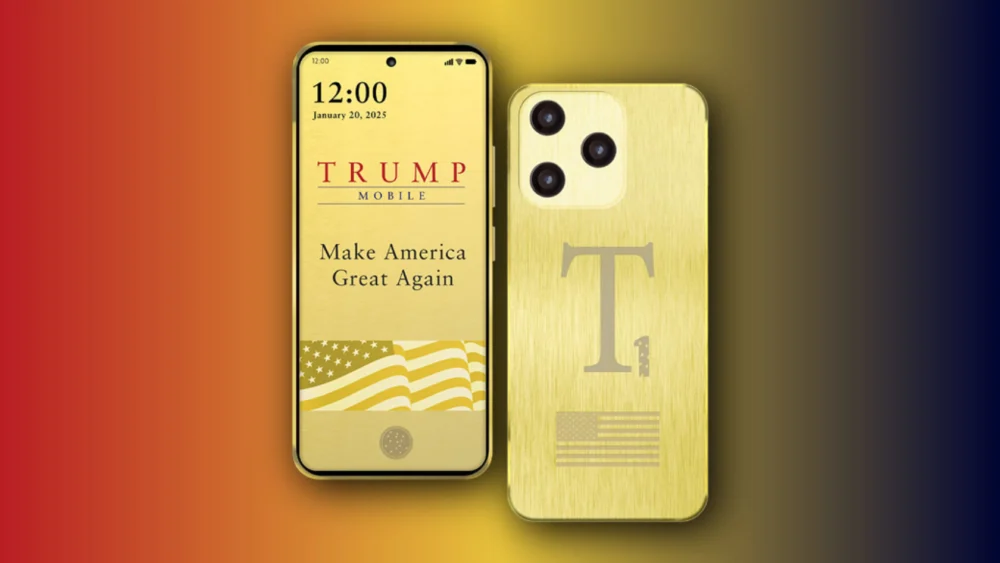
The protracted public unfolding of the Trump Phone—officially dubbed the T1—has been a spectacle of shifting technical specifications, repeated launch delays, and finally, the tantalizing, if somewhat underwhelming, appearance of what seems to be a near-finalized hardware unit. For months, observers have tracked this venture with a mixture of curiosity and skepticism, wondering about the true genesis of a mobile offering tied so intimately to a political figure. However, recent disclosures have pulled back the curtain, revealing an origin story far removed from a direct executive mandate within the Trump Organization. The lineage of this specific brand of celebrity-endorsed mobile service traces not to Mar-a-Lago, but to the world of professional boxing, specifically to the enterprise surrounding superstar Saul “Canelo” Alvarez.
This surprising connection emerges from the operations of Liberty Mobile, a relatively niche Mobile Virtual Network Operator (MVNO). According to investigative reports, the team steering Liberty Mobile—comprising principals Don Hendrickson, Eric Thomas, and Pat O’Brien—developed the initial blueprint for a celebrity-centric wireless service before securing the high-profile endorsement of the Trump brand. The operational template they first deployed was centered on Canelo, one of the world’s most recognized and highest-earning athletes in combat sports.
Canelo Mobile debuted around 2020, positioning itself as a distinct offering within the fragmented MVNO landscape. Its strategy was not revolutionary but pragmatic: leverage a massive, dedicated fanbase through branded service plans and bundled perks, supported by entry-to-mid-level Android hardware. The hardware component itself was largely unremarkable. The lineup reportedly consisted of three devices—The Legend, The Champ, and The Contender—manufactured by a lesser-known entity, Hotpepper. Crucially, these devices, while branded conceptually under the Canelo umbrella, conspicuously lacked any overt, printed celebrity iconography, relying instead on the association built through the service plan marketing. The venture, however, failed to gain significant market traction or sustained public visibility. Evidence of its decline is now apparent: the dedicated domain, canelomobile.com, is currently listed for public auction, suggesting the project has effectively dissolved.
The structural and operational similarities between the aborted Canelo Mobile and the nascent Trump Mobile are significant, suggesting that the Trump partnership was less an invention and more an application of a pre-existing, tested business model. Liberty Mobile executives themselves have characterized their relationship with the Trump venture as "umbilically connected," even if the consumer-facing branding obscures this foundational link. The core architecture remains consistent: affix a highly recognizable, polarizing name to a bespoke wireless plan, and package it with a corresponding handset. This echoes a pattern seen in numerous niche market entries where licensing a name is the primary value driver, rather than technological innovation.
The most illuminating insight derived from this lineage is the core business philosophy of the architects behind both operations. Don Hendrickson articulated this strategy succinctly, stating, "We’re in the razor blade business, we’re not in the razor business.” In the context of telecommunications, this is a classic framing: the hardware (the razor) is a necessary, low-margin entry point, whereas the enduring, high-margin revenue stream resides in the recurring subscription fees (the razor blades). For Liberty Mobile, the celebrity endorsement—whether Canelo or Trump—functions primarily as a potent, specialized customer acquisition tool, designed to draw loyalists into the perpetual monthly contract cycle. The phone itself becomes almost secondary, a tangible symbol of affiliation that unlocks the recurring revenue stream.
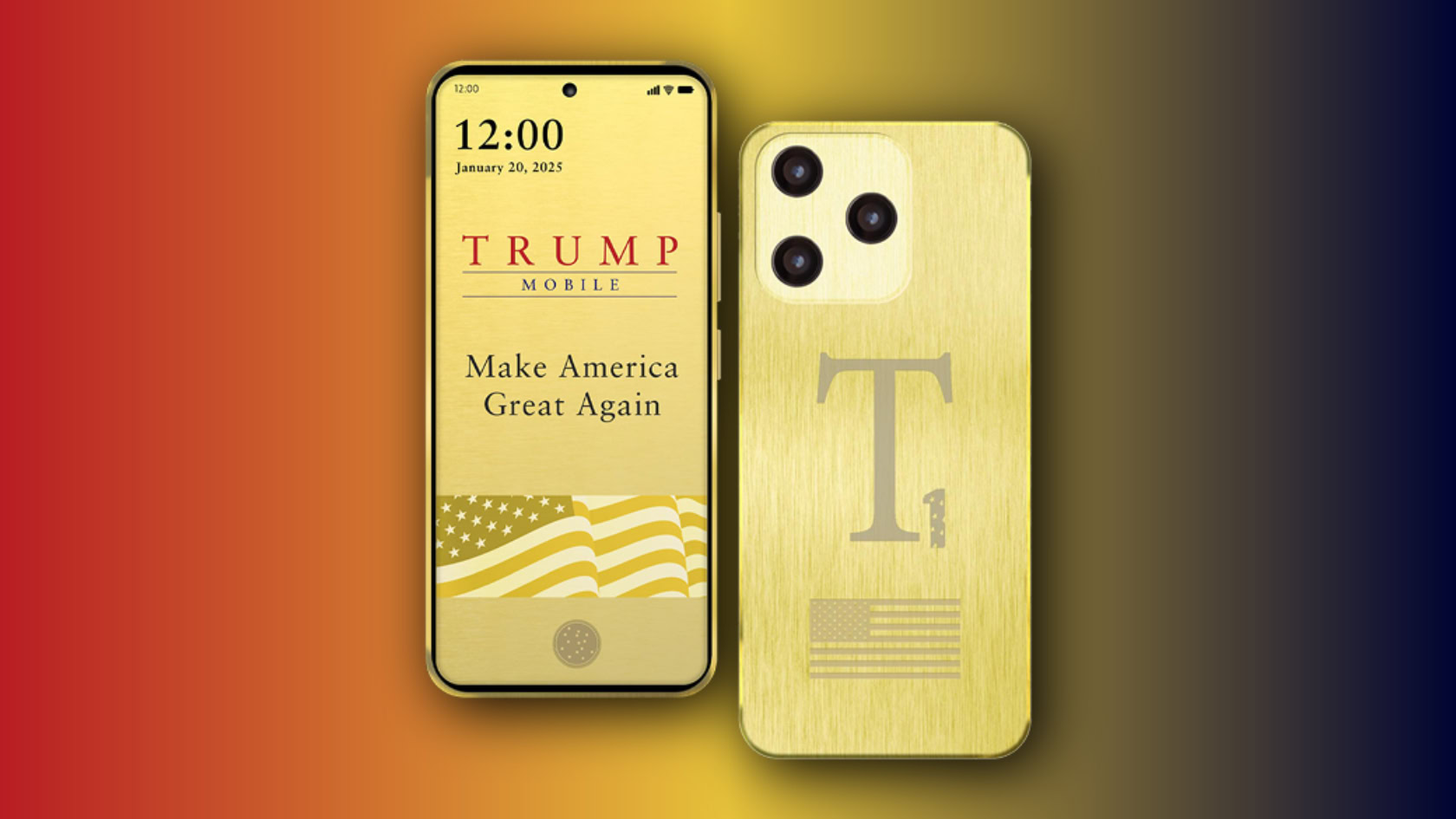
Analyzing the tactical shift in market positioning between the two celebrity ventures reveals an interesting calibration based on the target demographic’s perceived spending power. Canelo Mobile aimed for accessibility, launching with budget-conscious plans starting around $15 per month, with the accompanying hardware priced near $199. This strategy targeted a broad, value-seeking segment of boxing enthusiasts. Trump Mobile, conversely, has adopted a decidedly premium positioning. It currently advertises a singular monthly plan at $47.45, coupled with the T1 Phone carrying an initial sticker price of $499—a price point subject to potential increases upon final release. This elevated pricing structure suggests an assumption that the political base being targeted possesses a higher disposable income or is willing to pay a premium for perceived exclusivity and alignment with the brand.
This comparison offers an important framework for understanding the smartphone industry’s peripheral markets. The MVNO space, particularly when intertwined with celebrity licensing, operates on the principles of community aggregation rather than mass-market appeal. While major carriers compete on network quality, coverage maps, and subsidized flagship devices, MVNOs built on personality thrive on tribal loyalty. The failure of Canelo Mobile to sustain momentum underscores the difficulty of maintaining engagement purely through brand association when the underlying service proposition or hardware quality fails to meet expectations or when the initial fervor subsides.
The industry implications of this model—the celebrity-as-MVNO template—are multifaceted. For established telecommunications players, these ventures represent low-risk avenues to test niche market segmentation without diverting core resources. They serve as controlled experiments in leveraging cultural capital. For emerging technology providers and small hardware manufacturers like Hotpepper, these projects offer crucial, albeit fleeting, opportunities for exposure and volume production orders. However, the sustainability challenge remains acute. Unlike platform ecosystems (like Apple’s iOS or Google’s Android) that lock users in via software and service integration, these personality-driven MVNOs rely almost entirely on the continued relevance and stability of the celebrity’s public persona. Any shift in the public perception of the endorser can rapidly erode subscriber loyalty, leading to high churn rates—a phenomenon likely contributing to Canelo Mobile’s swift disappearance.
The T1 Phone saga, therefore, is not just a political curiosity; it is a microcosm of the broader challenges facing the secondary smartphone market, particularly when attempting to monetize identity politics. The technical specifications of the T1—whatever they ultimately settle upon—are secondary to the success of the subscription sales funnel. If the hardware is perceived as merely a rebranded, outdated, or overpriced Android device (a common pitfall in these arrangements), the high-cost monthly subscription becomes a liability rather than a commitment, driving users back to mainstream carriers offering superior value propositions.
Furthermore, the strategic pivot from budget-focused Canelo to premium-positioned Trump reveals a crucial understanding by Liberty Mobile regarding their respective audiences. The boxing audience, while dedicated, is often price-sensitive, demanding high value for their dollar. Conversely, the political alignment driving the Trump base often prioritizes affirmation and exclusivity, potentially overriding typical consumer concerns about price-to-performance ratios in consumer electronics. This implies a risk assessment: the political base might tolerate a lower hardware ceiling if the monthly fee grants access to a perceived "in-group" communication channel or service environment.
The looming question for the Trump Mobile venture is whether the perceived political urgency and cultural momentum can generate enough initial sign-ups to establish the necessary recurring revenue base before the inevitable attrition sets in. The Canelo project serves as a stark warning: a compelling celebrity endorsement is insufficient if the operational execution falters or if the initial hype fails to translate into long-term, profitable subscriber retention.
The future impact of such ventures on the mobile landscape is unlikely to involve market disruption on the scale of a new major carrier launch. Instead, these celebrity MVNOs will continue to function as specialized marketing vehicles. Their existence reinforces the established industry reality that network infrastructure—the real capital expenditure—remains the domain of the incumbent giants. For Liberty Mobile and similar operations, the game is about licensing, marketing efficiency, and maximizing Customer Lifetime Value (CLV) through subscription lock-in, using famous faces as the bait. Should the Trump Phone succeed where the Canelo variant faded, it will not signal a triumph of hardware engineering, but rather a highly effective, albeit niche, exploitation of political polarization as a mechanism for customer acquisition in the fiercely competitive telecommunications sector. The technology underpinning the device will be largely irrelevant; the brand identity attached to the service plan will be the sole determinant of its commercial longevity. Observers must therefore continue to monitor not the phone’s specs, but the stability of the subscription metrics underpinning this peculiar, dual-branded MVNO strategy.
