

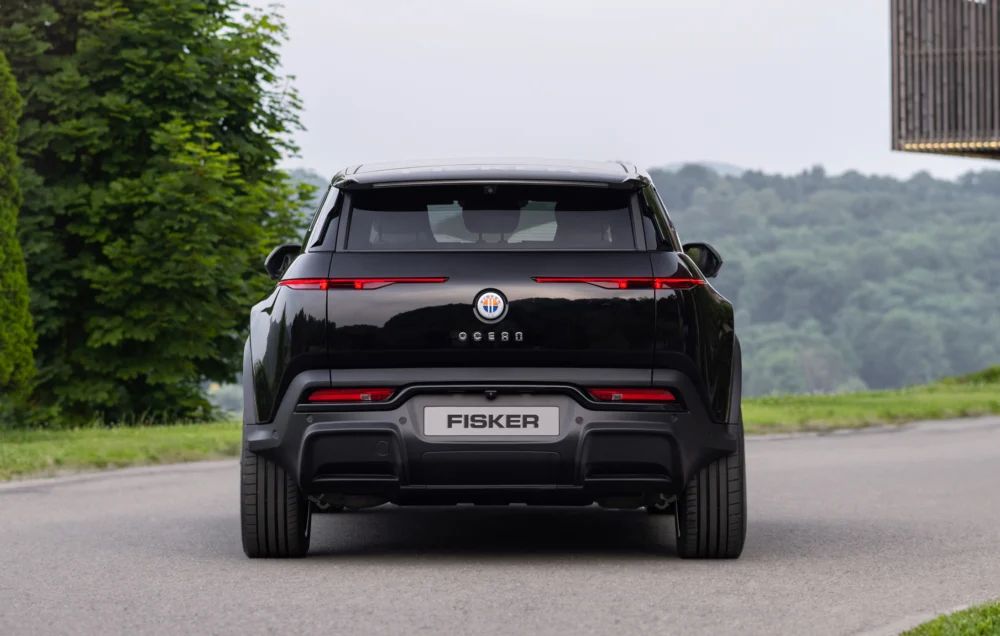
The United States Securities and Exchange Commission (SEC) has officially terminated its investigation into Fisker Inc., the beleaguered electric vehicle startup that filed for Chapter 11 bankruptcy protection in mid-2024. The closure of the probe, which occurred in September 2025, marks the end of a year-long federal effort to scrutinize the financial conduct and public disclosures of the company during its final, turbulent months of operation. The resolution of this inquiry, discovered through a Freedom of Information Act (FOIA) request processed in early 2026, signals a quiet conclusion to one of the most high-profile failures in the second wave of the electric vehicle revolution.
While the SEC has historically been reticent to discuss the specifics of ongoing investigations, the FOIA response revealed a massive digital paper trail. The agency identified approximately 21.7 gigabytes of electronically maintained records associated with the Fisker file. Under standard operating procedures, the commission does not release such records or confirm the status of an inquiry until it is formally shuttered. In a follow-up communication, the agency confirmed that the matter was officially resolved in the third quarter of 2025. This timeline suggests that after nearly twelve months of examining subpoenas and internal corporate documents, the commission chose not to pursue enforcement actions or civil penalties against the entity or its leadership.
The investigation was first signaled to the public in October 2024, when the SEC filed a notice in the United States Bankruptcy Court for the District of Delaware. At that time, the regulator noted it had already issued several subpoenas to Fisker and indicated that more could follow as it dug into the company’s books. The probe appeared to focus on the period leading up to the company’s insolvency, a time characterized by missed production targets, dwindling cash reserves, and a series of technical failures regarding its flagship product, the Ocean SUV.
The decision to close the Fisker case without a formal enforcement action is not an isolated event; rather, it reflects a broader shift in the American regulatory landscape. Data from the 2025 fiscal year indicates a significant retrenchment in SEC enforcement activities. According to a detailed year-in-review analysis by the law firm Paul, Weiss, the commission initiated only 313 enforcement actions in 2025. This figure represents the lowest volume of regulatory litigation in a decade and a 27% decline from the final year of the previous administration. Furthermore, only four of these actions were directed at public companies, and total monetary settlements plummeted by 45% year-over-year. This environment of deregulation or "regulatory cooling" likely played a role in the SEC’s determination that pursuing a bankrupt entity—one with no remaining assets to pay substantial fines—was no longer a prudent use of taxpayer resources.
To understand the weight of the SEC’s withdrawal, one must look at the broader context of the electric vehicle (EV) sector’s recent history. Fisker was part of a cohort of startups that utilized Special Purpose Acquisition Companies (SPACs) to bypass the traditional IPO process and reach public markets during the 2020-2021 investment frenzy. Many of these companies eventually found themselves in the crosshairs of federal investigators. Nikola, Lordstown Motors, Canoo, and Hyzon Motors all faced SEC charges ranging from misleading investors about pre-order numbers to outright fraud regarding technology readiness. Most of those cases ended in multi-million dollar settlements.
Lucid Motors, another prominent player in the luxury EV space, saw its own SEC investigation closed in 2023 without a lawsuit. Fisker now joins Lucid in the category of companies that survived federal scrutiny without a formal indictment, though Fisker’s survival is purely legal, as the company itself has been liquidated. The only major investigation from that era that remains active involves Faraday Future. That probe, which has dragged on for nearly four years, reached a critical juncture in July 2025 when the SEC issued "Wells notices" to the company and several of its executives. A Wells notice is a formal notification that the SEC staff has made a preliminary determination to recommend an enforcement action. As of early 2026, Faraday Future has yet to respond to these notices in its regulatory filings, leaving it as the final outlier in a decade-long crackdown on EV startups.
The collapse of Fisker Inc. was as much a failure of product as it was a failure of finance. Founded by renowned automotive designer Henrik Fisker—who had previously seen his first venture, Fisker Automotive, fail in 2013—the company promised to revolutionize the industry with an "asset-light" business model. Rather than building its own factories, Fisker outsourced manufacturing to Magna Steyr in Austria. This strategy was intended to reduce capital expenditure and speed up the time to market for the Ocean SUV.
However, the Ocean SUV was plagued by software glitches and mechanical reliability issues from the moment it reached consumers. Early adopters reported "phantom" braking, key fobs that failed to unlock the vehicle, and sudden losses of power while driving. Internally, the company was in disarray. Henrik Fisker and his wife, Geeta Gupta-Fisker, who served as the company’s CFO and COO, struggled to maintain a stable executive team. The company’s accounting practices were also called into question when it was revealed that Fisker had struggled to track millions of dollars in customer payments, leading to delays in financial reporting that ultimately spooked the markets.
By the time the company filed for bankruptcy in June 2024, its stock price had cratered, and it had failed to secure a life-saving investment from a major legacy automaker. The bankruptcy process was swift and clinical. Unlike some Chapter 11 filings that aim for reorganization, Fisker’s path was one of liquidation. The company’s remaining inventory of several thousand Ocean SUVs was sold at a steep discount to a firm that specializes in leasing vehicles to ride-hail drivers in New York City. This ignominious end saw a vehicle once marketed as a luxury competitor to the Tesla Model Y repurposed as a fleet car for Uber and Lyft drivers.
Industry analysts suggest that the SEC’s closure of the Fisker probe provides a definitive post-mortem on the "SPAC boom" era of the automotive industry. The period between 2020 and 2022 saw billions of dollars poured into companies that promised radical technological breakthroughs—such as solid-state batteries or fully autonomous platforms—without the manufacturing infrastructure to back them up. The SEC’s initial aggressive stance was an attempt to signal to the market that the "fake it till you make it" culture of Silicon Valley would not be tolerated in the capital-intensive world of car manufacturing.
However, the shift in enforcement priorities in 2025 suggests that the regulator may now be focusing its limited resources on emerging threats, such as artificial intelligence fraud or cryptocurrency volatility, rather than the "ghosts" of the EV boom. With Fisker’s assets sold and its corporate structure dissolved, there is no "deep pocket" left for the SEC to tap for settlements. Pursuing Henrik Fisker or other executives individually would require a high burden of proof regarding intent to defraud, a hurdle that the agency likely decided was not worth the litigation risk.
The legacy of Fisker Inc. serves as a cautionary tale for the next generation of automotive entrepreneurs. It demonstrated that design prowess and a famous name are insufficient to overcome the immense logistical and software hurdles of modern vehicle production. The closure of the federal investigation allows the principals of the company to move on without the threat of looming litigation, but the reputational damage to the Fisker brand is likely irreparable.
As the industry moves into 2026, the focus has shifted from the survival of startups to the consolidation of legacy players. The era of the "Tesla-killer" startup appears to have ended, replaced by a market dominated by established giants and well-capitalized Chinese entrants. For the thousands of investors who lost money in Fisker’s collapse, the SEC’s decision to walk away offers no financial restitution, but it does provide a sense of finality. The books are closed, the files are archived, and the 21.7 gigabytes of evidence gathered by the government will remain a digital monument to one of the most ambitious and ultimately flawed ventures in the history of the electric car.
