

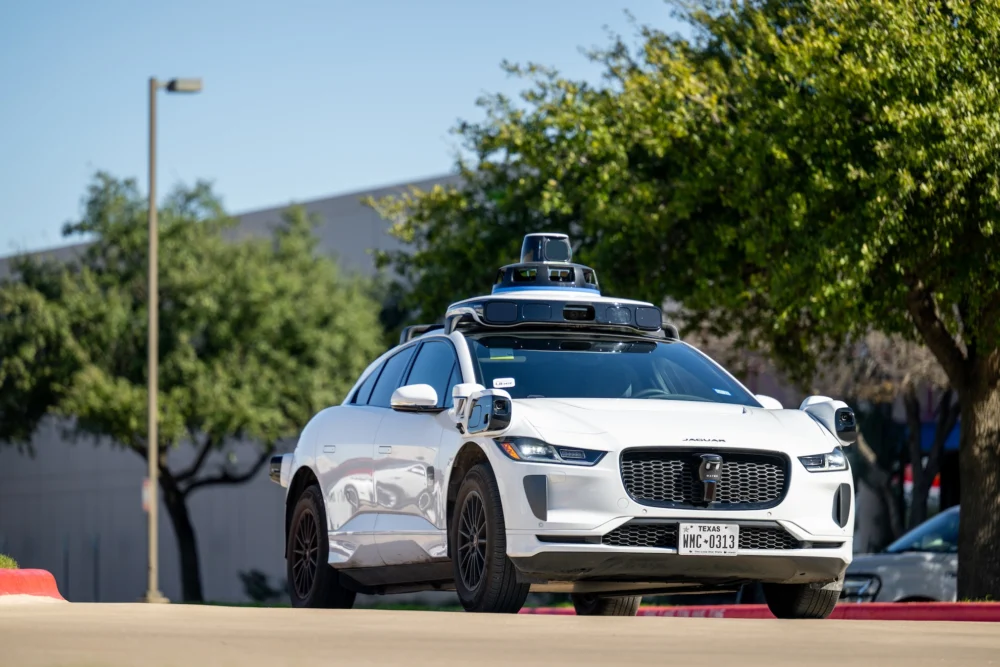
The promise of the autonomous vehicle revolution has always been centered on the elimination of human error and the streamlining of urban mobility. Alphabet’s Waymo has emerged as the clear frontrunner in this space, successfully deploying fully driverless commercial fleets across six major U.S. cities and recently securing a staggering $16 billion in fresh capital to fuel its international expansion. Yet, for all the sophisticated LiDAR sensors, neural networks, and millions of miles of simulated testing, the cutting edge of transportation technology has encountered a surprisingly low-tech Achilles’ heel: a simple open door.
In a striking intersection of the high-tech autonomous future and the boots-on-the-ground gig economy, Waymo has begun enlisting DoorDash drivers to perform a task that the world’s most advanced artificial intelligence cannot yet manage—physically closing a car door. This development, confirmed by both Waymo and DoorDash, highlights a fascinating "autonomy gap" where the digital brains of a robotaxi are rendered powerless by a physical oversight left by a human passenger.
The $11.25 Solution to a Billion-Dollar Problem
The reality of this operational friction surfaced recently when a DoorDash driver in Atlanta received an unconventional request in their delivery queue. Rather than picking up a meal or a grocery order, the driver was offered $6.25 to travel less than a mile to a stationary Waymo vehicle. The objective was singular: close the door. Upon "verified completion" of the task, the driver was promised an additional $5 bonus.
While the internet quickly dubbed the task a literal "door dash," the underlying logic for Waymo is entirely pragmatic. When a passenger exits a Waymo vehicle and accidentally fails to pull the door shut, the vehicle’s safety protocols trigger an immediate lockout. For an autonomous vehicle, an open door is not merely an inconvenience; it is a critical system failure. The car cannot legally or safely navigate traffic while a door is ajar, as it risks striking other vehicles, cyclists, or pedestrians. Furthermore, an open door exposes the interior of the expensive, sensor-laden vehicle to the elements or potential vandalism.
By leveraging the existing density of DoorDash’s independent contractor network, Waymo has found a way to resolve these "inert" vehicle incidents faster than it could by dispatching its own dedicated fleet technicians. In the high-stakes world of robotaxi scaling, every minute a vehicle sits idle is a minute of lost revenue and a potential traffic hazard that could draw the ire of local regulators.
The Atlanta Pilot and the Evolution of Gig Labor
This door-closing initiative is currently being tested as a pilot program in Atlanta, a city that has become a vital laboratory for Waymo’s expansion. According to joint statements from the companies, the program is designed to enhance "AV fleet efficiency." When a vehicle’s sensors detect that a door has been left ajar, the system identifies the nearest available "Dasher" and sends out a notification.
This is not the first time Waymo has sought external help for its physical maintenance needs. In Los Angeles, the company has historically partnered with Honk, an on-demand towing and roadside assistance app. Interestingly, the economics of the "rescue" vary significantly by region and platform. Reports have indicated that Honk users in Southern California have been offered as much as $24 to perform the same door-closing task—nearly double the compensation offered to the Atlanta DoorDash driver.
The discrepancy in pay highlights the experimental nature of these partnerships. Waymo is clearly searching for the most cost-effective way to maintain a fleet that, by definition, lacks a human operator to handle minor physical contingencies. As Waymo moves into more cities, the demand for this "shadow work"—human labor that supports and enables automated systems—is likely to grow.
The "Shadow Work" of Artificial Intelligence
The Waymo-DoorDash partnership serves as a potent metaphor for the current state of artificial intelligence. Across the tech industry, "automated" systems are often propped up by a vast, invisible workforce of humans. Whether it is data labelers in overseas click-farms teaching vision systems how to recognize a stop sign, or remote assistance operators who take over a robotaxi’s steering when it becomes confused by a construction zone, the "driverless" future remains deeply dependent on human intervention.

In this case, the intervention is physical rather than digital. It underscores a fundamental limitation of the current generation of autonomous hardware. Most of Waymo’s current fleet consists of modified Jaguar I-PACE SUVs. These vehicles were designed for human owners, not for a 24/7 driverless ride-hailing service. While they are outfitted with Waymo’s "Driver" technology—including a massive array of cameras and LiDAR—they lack the specialized actuators required to pull a heavy door shut against the wind or an incline.
Waymo has acknowledged this limitation, noting that future iterations of its vehicles will feature automated door-closure systems. The company’s next-generation platform, developed in collaboration with Geely’s Zeekr brand, is expected to be a purpose-built "mobility-as-a-service" vehicle. These vans will likely include power-sliding doors and other features designed specifically for a world where no driver is present to check the "door ajar" light on the dashboard.
Strategic Alliances in the Mobility Sector
The door-closing pilot is just one facet of a deepening relationship between Waymo and DoorDash. In October, the two companies launched a pilot in Phoenix where Waymo vehicles are used to deliver food and groceries to DoorDash customers. This creates a symbiotic ecosystem: Waymo provides the long-haul autonomous transport, while DoorDash provides the logistics platform and the human "last-inch" labor required to get a bag of food from the car to a customer’s front door.
For DoorDash, this partnership is a hedge against the future. As autonomous delivery becomes more viable, DoorDash needs to ensure its platform remains the central hub for local commerce, regardless of whether the "driver" is a human or a computer. For Waymo, DoorDash offers a ready-made workforce that can handle the messy, physical realities of the urban environment—realities that are much harder to solve with code than with a pair of human hands.
The Road Ahead: Operational Challenges of Scaling
As Waymo utilizes its $16 billion investment to scale, the frequency of these "edge case" failures will inevitably increase. Scaling a robotaxi service is not just about perfecting the software; it is about managing the logistics of thousands of unmanned machines operating in unpredictable environments.
Beyond open doors, autonomous fleets face a litany of physical challenges:
- Cleaning and Sanitation: Without a driver to monitor the backseat, how does a company ensure the vehicle remains clean between rides?
- Minor Obstructions: What happens when a bird leaves a deposit on a critical LiDAR sensor, or when a piece of road debris becomes lodged in a wheel well?
- Vandalism and Safety: How does a vehicle protect itself—and its passengers—from external threats when there is no human in the "captain’s chair" to drive away from trouble?
The solution to these problems currently involves a mix of centralized depots and mobile response teams. However, the DoorDash partnership suggests a shift toward a more decentralized, gig-based maintenance model. In the future, we may see the rise of "AV Pit Crews"—independent contractors who spend their days roaming the city, cleaning, sensor-wiping, and door-closing for various autonomous fleets.
Conclusion: The Awkward Adolescence of Autonomy
The sight of a gig worker being paid $11 to rescue a multi-million dollar autonomous vehicle is a perfect snapshot of the "awkward teenage years" of the self-driving industry. We have reached a point where the software is capable of navigating complex four-way stops and merging onto high-speed freeways, yet it remains vulnerable to the simplest of human errors.
Waymo’s willingness to confirm and discuss this pilot program reflects a maturing industry that is becoming more transparent about its operational hurdles. The goal is no longer just to prove that the car can drive; it is to prove that the business model can survive the friction of the real world.
For now, the "driverless" future still requires a human touch. Whether it’s a Dasher in Atlanta or a technician in a remote monitoring center, the ghost in the machine is still very much human. As we move toward a world of purpose-built robotaxis with self-closing doors and self-cleaning sensors, these human-centric workarounds will eventually fade. But for the moment, if you leave your Waymo door open, don’t be surprised if the person who comes to fix it is also carrying someone’s dinner.
