


The Russian Federation appears to be significantly accelerating its efforts to establish comprehensive domestic control over digital communication channels, with the latest maneuvers targeting widely used encrypted messaging platforms WhatsApp and Telegram. This aggressive push signals a strategic pivot toward isolating the nation’s digital sphere from externally managed services, a trend that has profound implications for personal privacy, commerce, and the very infrastructure of digital exchange within the country.
WhatsApp confirmed the escalating restrictions imposed upon its services via a statement on X, unequivocally labeling the move a "backwards step" that inherently compromises user security within the Russian Federation. The platform pledged to its user base that it remains committed to exhausting all available avenues to maintain connectivity, underscoring the critical role these services play in daily life. This official condemnation frames the government’s actions not as regulatory adjustments but as deliberate impediments to secure communication.
The technical implementation of these restrictions, as reported by Russian media outlets, reveals a layered approach. The national internet regulator, Roskomnadzor, initially targeted the primary operational domains—whatsapp.com and web.whatsapp.com—by systematically excluding them from the National Domain Name System (DNS). This initial step effectively rerouted domestic traffic, rendering the services inaccessible without the use of circumvention technologies such as Virtual Private Networks (VPNs) or alternative external DNS resolvers. This strategy targets the foundational addressing mechanism of the internet, transforming access from a default state to an actively managed exception.
However, the current measures represent a reported hardening of these restrictions, moving beyond DNS manipulation toward more comprehensive blocking protocols. This escalation is set against the backdrop of Meta, WhatsApp’s parent company, having been officially designated as an "extremist" organization within Russia since 2022. This classification provides a legal and administrative framework for heightened regulatory scrutiny and punitive action against its services.
The current phase of restriction follows a discernible timeline of increasing pressure. The first notable intervention occurred in August 2025, when Roskomnadzor began selectively throttling voice and video call functionalities, signaling an intent to degrade service quality rather than immediate outright prohibition. This was followed in October 2025 by attempts to obstruct the registration of new users, aiming to halt the organic growth of the user base. The current, broader blockage of core domains suggests a shift toward forcing user migration.

In response to inquiries regarding the availability of these platforms, Presidential Press Secretary Dmitry Peskov reportedly indicated that the authorities maintain an openness to reinstating full service for WhatsApp, contingent upon Meta’s willingness to adhere strictly to stipulated national legislation. This establishes a clear ultimatum: compliance with domestic legal frameworks, which often include mandates for data localization and access for state security services, is the prerequisite for continued operation.
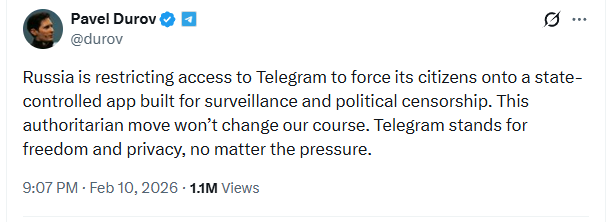
Crucially, the tightening noose around WhatsApp coincided closely with severe throttling measures directed at Telegram, another massively popular encrypted messenger. Telegram reportedly faced aggressive performance degradation earlier in the week. Pavel Durov, the founder of Telegram, publicly addressed the situation, positing that the Kremlin’s strategy is overtly designed to channel the Russian populace toward domestic alternatives, specifically naming the MAX messenger application.
The MAX messenger platform is developed by VK, a major Russian technology conglomerate. Its ascendancy has been institutionally mandated; since September 2025, MAX has become a required pre-installation or mandatory application on all electronic devices sold within the country. While MAX is marketed by state actors as a secure conduit designed to shield national communications from foreign intelligence monitoring—a narrative emphasizing digital sovereignty—independent security audits have raised substantial alarms. Analysts point to documented encryption vulnerabilities, the inherent risk of government backdoors, and expansive, potentially intrusive data collection practices associated with the platform. This juxtaposition—mandating a domestic, state-adjacent application while throttling globally utilized, end-to-end encrypted alternatives—forms the core of the current digital control strategy.
For the average Russian user, the immediate recourse remains the utilization of circumvention tools, primarily VPNs. However, this lifeline is itself under siege. The government has actively pursued the removal of VPN applications from official application stores, notably pressuring platform holders like Apple to delist dozens of such services. This indicates a concerted effort to close off all easy avenues for bypassing state-imposed digital firewalls, forcing users into a continuous, resource-intensive game of cat-and-mouse with regulators.
Background Context: The Evolution of Digital Sovereignty
This latest action is not an isolated event but the culmination of a long-term geopolitical strategy focused on achieving ‘digital sovereignty’—a concept that, in this context, translates to insulating the national information space from Western technological and ideological influence. Since the early 2020s, Russia has progressively implemented legislation, such as the "Sovereign Internet Law," aimed at increasing state control over internet infrastructure, traffic routing, and data management.
The primary driver behind these restrictions, beyond the stated aims of combating crime and fraud (which often serve as public justification), is the state’s desire for assured access to communication data and the prevention of decentralized, unmonitored organizing platforms. Encrypted messaging apps like WhatsApp and Telegram, by default, utilize protocols that shield content from state interception without the cooperation of the service provider. When service providers are headquartered outside the jurisdiction and refuse to comply with data access requests—especially concerning user data linked to politically sensitive activities—they become strategic liabilities to centralized control.

The designation of Meta as "extremist" effectively nullifies any perceived neutrality, painting the platform as inherently hostile to the state’s interests. This legal sledgehammer allows regulators to act decisively against the infrastructure supporting these services. The phased throttling observed between August and October 2025 was likely a testing phase, designed to gauge public and technical reaction before committing to a full, high-impact block.
Industry Implications: Fragmentation and the Splinternet
The sustained efforts to dismantle access to global platforms have severe implications for the broader technology industry and the digital economy. For multinational technology firms, Russia represents an increasingly untenable market. The constant threat of legal designation, asset seizure, or operational shutdown forces companies to choose between substantial operational concessions (which often violate their own privacy commitments) or complete withdrawal.
The fragmentation of the global internet—the "splinternet"—is visibly accelerating in regions prioritizing state control. When domestic alternatives like MAX are mandated, it creates an artificial ecosystem. This environment breeds technical dependency on a few state-sanctioned entities, limiting competition and innovation in the private sector. Economically, businesses that rely on the efficiency and global reach of platforms like WhatsApp for internal or external communication face heightened operational risk, increased latency, and the necessity of maintaining costly, multi-layered circumvention solutions, which itself introduces new security vectors.
Furthermore, the successful blocking of major platforms sends a chilling signal to developers globally regarding the risks associated with operating in restrictive jurisdictions. It reinforces the idea that the value proposition of end-to-end encryption can be instantly nullified by sovereign mandate, thereby eroding user trust in the security model of the application itself, even if the underlying cryptographic principles remain sound.
Expert-Level Analysis: The Technical Efficacy of Blocking
From a purely technical standpoint, fully isolating a country from global internet services is becoming increasingly difficult but technologically feasible through deep packet inspection (DPI) and sophisticated traffic management systems employed by state-controlled internet service providers (ISPs).
The initial DNS exclusion is a relatively blunt instrument. Advanced users, IT departments, and tech-savvy citizens easily bypass this by switching to public resolvers (like Google’s 8.8.8.8 or Cloudflare’s 1.1.1.1) or utilizing VPNs. The subsequent move toward more aggressive blocking likely involves application-layer inspection. Modern DPI systems can analyze the characteristics of encrypted traffic streams (metadata, handshake protocols, traffic volume patterns) to identify and block connections to specific service endpoints, even if the IP addresses change frequently.
.png)
The challenge for the government lies in the agility of these global services. WhatsApp, for instance, constantly evolves its connection protocols to evade such filtering. The ongoing battle is one of resource allocation: the state must continually update its blocking signature database against the developers’ continuous efforts to obfuscate traffic.
Pavel Durov’s assertion regarding the promotion of MAX is a crucial analytical point. The state is not merely blocking; it is engaged in a coordinated effort of substitution. By making the incumbent, superior alternatives difficult to access and mandating a domestic replacement, the government engineers a captive user base. This substitution strategy is far more effective in the long run than intermittent blocking, as it co-opts the infrastructure and habit of communication itself.
Future Impact and Trends: The Digital Iron Curtain
The current trajectory suggests an intensification of the ‘digital iron curtain’ effect. We can anticipate several key trends emerging from this escalation:
-
Mandatory Encryption Backdoors: The ultimate goal for states seeking complete surveillance capacity is not just blocking, but mandated access. If WhatsApp and Telegram refuse full decryption capabilities, they will be permanently exiled. The viability of the MAX platform hinges on its perceived—or real—ability to provide state access, making it the benchmark for communication acceptable within the jurisdiction.
-
The Rise of Decentralized and Peer-to-Peer Networks: As centralized, global messengers become unreliable, there will be an inevitable migration toward more resilient, decentralized communication protocols that are harder to target via traditional infrastructure choke points. Technologies leveraging mesh networking or blockchain-based communication layers might see increased adoption among dissidents or those prioritizing absolute privacy, though these tools often come with steeper learning curves and performance limitations.
-
Increased Legal Scrutiny on VPNs: The current crackdown on VPNs is a clear signal that state regulators understand the importance of these tools. Future efforts will likely involve collaboration with global operating system providers (if possible) or aggressive ISP-level firewalling to block known VPN server IP ranges, making the acquisition and maintenance of functioning VPNs a specialized, high-risk activity.
-
Impact on Cross-Border Commerce: The reliance on easily accessible, reliable communication for international trade, supply chain management, and financial transactions will be severely hampered. Businesses operating within Russia will face increased operational friction, forcing many to adopt the slower, less secure, or state-monitored domestic channels, potentially leading to reduced efficiency and increased compliance costs.
The Russian government’s systematic dismantling of access to platforms like WhatsApp and Telegram represents a high-stakes maneuver in the global contest for control over the digital domain. It prioritizes state oversight and information control above the internationally recognized standards of private, encrypted communication, setting a precedent that other authoritarian-leaning regimes may observe and potentially emulate. The long-term consequences will be measured not only in blocked messages but in the structural integrity of the open internet ecosystem accessible to Russian citizens.
