

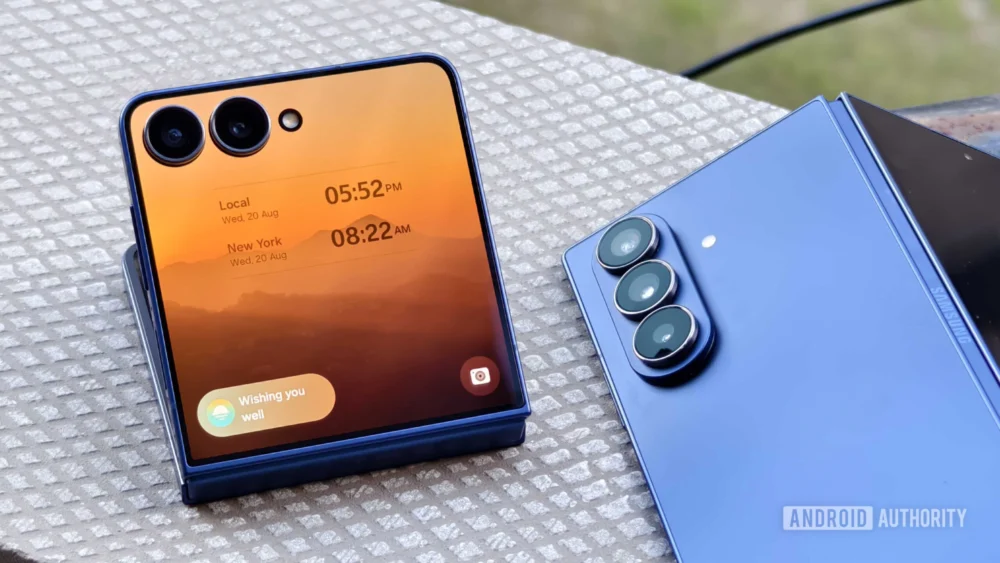
The relentless pace of technological iteration within the mobile industry is underscored by recent indications that Samsung has already commenced internal testing for One UI 9, specifically targeting the upcoming Galaxy Z Fold 8 and Galaxy Z Flip 8 handsets. This early stage of firmware development, identified through external reporting channels, suggests an aggressive timeline for refining the user experience that will power Samsung’s next generation of foldable devices, expected to debut in the latter half of the current year. While the Galaxy S26 lineup is anticipated to launch with One UI 8.5 pre-installed, the rapid transition to One UI 9 for the Z series highlights Samsung’s strategy of deploying tailored, perhaps even more feature-rich, software builds for its premium, form-factor-defining hardware.
This discovery, attributed to leaks shared across social media platforms, points to specific firmware identifiers associated with the testing builds. For the Galaxy Z Fold 8, the reported version string is F976USQU0AZB1, while the clamshell counterpart, the Galaxy Z Flip 8 (model SM-F776U), is associated with F776USQU0AZB1. The presence of these builds signifies that the core software architecture is maturing in tandem with hardware validation processes, a crucial step before public beta programs or official releases.
The Context of Samsung’s Software Cadence
To fully appreciate the significance of testing One UI 9 now, it is vital to understand Samsung’s established software release cycle. Samsung typically aligns major One UI updates with the rollout of new Android versions, though it often layers significant proprietary features and design overhauls onto the base operating system. One UI 8.5, expected with the Galaxy S26 series (likely early in the following calendar year), will be based on Android 15. If One UI 9 is indeed already in testing for the second-half foldables, this suggests one of two possibilities: either the foldables will launch running a refined version of One UI 8.5 that Samsung internally labels the next iteration, or, more intriguingly, these devices will launch alongside or shortly after the Android 16 release cycle, which would position One UI 9 as the version built atop that next-generation Android foundation. Given the typical launch window for the Z series (usually August), basing the software on a version designed for a subsequent year’s Android release suggests a significant leap in planned functionality or a desire to differentiate the foldable software experience immediately upon launch.
This early preparation also reflects Samsung’s increased commitment to software longevity and rapid iteration, especially in the competitive foldable space where user experience—particularly regarding multitasking, hinge functionality, and cover screen optimization—is paramount. The company understands that the software is the primary differentiator between a novelty device and a truly productive tool.
Analyzing Hardware Rumors and Software Synergy
While definitive specifications for the Galaxy Z Fold 8 and Z Flip 8 remain under strict confidentiality, the concurrent software testing provides fertile ground for speculation regarding potential hardware capabilities that One UI 9 will need to support.
For the Galaxy Z Fold 8, persistent leaks have painted a picture of significant camera upgrades. Reports have suggested a massive shift toward computational photography dominance, potentially featuring a 200MP primary sensor, complemented by a high-resolution 50MP ultrawide lens, and a 12MP shooter offering 3x optical zoom. Such high-megapixel sensors require robust image processing pipelines and advanced memory management—areas where One UI optimizations, particularly those targeting the larger canvas of the main display, would be essential. One UI 9 might introduce entirely new gallery viewing modes, advanced Pro mode controls tailored for the Fold’s aspect ratio, or improved integration with external accessories utilizing these enhanced camera capabilities.
The Galaxy Z Flip 8 rumors are equally transformative, focusing heavily on performance and form factor refinement. One highly anticipated element is the potential debut of a Samsung-developed chipset, possibly branded as the "Snapdragon 8 Elite Gen 5" (or a similarly branded internal silicon). If Samsung is moving to its own high-end silicon, One UI 9 testing would be critical for ensuring complete compatibility, thermal management, and performance tuning that an in-house chip demands. Furthermore, rumors suggesting a concerted effort to reduce the weight and thickness of the Flip 8 imply hinge mechanism changes or battery optimization. One UI 9 would likely incorporate new power-saving profiles or perhaps even visual feedback mechanisms related to the new hinge structure, such as refined Flex Mode interactions.
Industry Implications: Setting the Bar for Foldables
Samsung’s proactive testing of a new One UI version for its foldables has broad implications for the entire market segment. As the established leader, Samsung’s software advancements often set the baseline expectation for competitors like Google (with the Pixel Fold series), Motorola, and Chinese manufacturers.
The commitment to One UI 9 suggests Samsung is not resting on iterative updates. Instead, they appear to be engineering a user experience designed to fully exploit the next generation of hardware advancements—thinner designs, potentially more durable hinges (perhaps utilizing new materials or water-repellency standards), and more powerful, customized silicon. In an industry where foldable screens are still subject to scrutiny regarding longevity and crease visibility, software optimization plays a huge role in user perception of durability and polish. One UI 9 could house significant under-the-hood changes related to screen panel management, refresh rate stability across the fold, and improved touch sampling rates, all of which contribute to a perception of premium build quality.
Moreover, the development of a distinct One UI version specifically for the foldables, rather than simply scaling One UI 8.5 (for the S26) down or up, signals Samsung’s recognition that the utility of a book-style or clamshell phone requires a fundamentally different interaction model than a traditional slate phone. Multitasking layouts, drag-and-drop functionality across different screen states (folded vs. unfolded), and optimized notification handling on the cover screen are areas ripe for One UI 9 innovation.
Expert Analysis: The Role of Software in Hardware Evolution
From an analytical standpoint, this early software seeding aligns with Samsung’s strategy to maintain its competitive moat in the foldable sector. The hardware races—better hinges, thinner profiles—are expensive and difficult to execute perfectly. The software, however, can bridge gaps and maximize existing capabilities.
If the Flip 8 is targeting significant weight reduction, it might necessitate a slightly smaller battery capacity than its predecessor, the Flip 7. In this scenario, One UI 9 would be indispensable for implementing aggressive, yet intelligent, power management algorithms that offset any potential decrease in endurance, ensuring that the real-world battery life meets or exceeds user expectations. The firmware version F776USQU0AZB1, if tied to a new power management architecture related to the custom SoC, suggests deep-level integration between the kernel and the user interface layer.
Similarly, for the Fold 8, integrating a 200MP sensor is not just about marketing megapixels; it requires significant computational overhead. One UI 9 must efficiently manage the processing of these massive files without introducing shutter lag or excessive heat generation, particularly in a device that folds and can potentially trap heat. We might anticipate new AI-driven photographic features within the One UI 9 camera app that leverage the superior processing power, perhaps real-time computational bokeh or advanced video stabilization modes that are currently impossible on existing hardware generations.
Future Impact and Trend Forecasting
The trajectory indicated by this One UI 9 testing points toward a future where the software experience on foldables becomes increasingly decoupled from that of traditional smartphones. This suggests a future where Samsung might eventually release distinct "Fold OS" or "Flip OS" interfaces, even if they retain the One UI branding umbrella.
The early testing phase implies that Samsung is likely focusing heavily on stabilizing the foundation for features that will define the next three to four years of their foldable roadmap. This includes tighter integration with DeX (desktop experience) for the Fold series, perhaps allowing for more complex windowing management that mimics a true desktop OS, or enhanced cross-device continuity features that recognize the specific form factor being used.
Furthermore, the naming convention—jumping from the expected One UI 8.5 (for S26) directly to One UI 9 for the foldables—could signal a major philosophical shift in the interface, potentially a significant visual redesign akin to the shift from One UI 3 to One UI 4, or even the initial introduction of One UI itself. This would mark the foldables not just as the premium hardware tier, but as the leading edge for Samsung’s entire software vision. By developing this potentially major revision specifically for the Z Fold 8 and Z Flip 8, Samsung is positioning these devices as the definitive showcases for the company’s capabilities in mobile computing for the coming year. The industry will be watching closely to see if this foundational work translates into a seamless, powerful, and truly indispensable user experience when these devices officially arrive later this year.
