

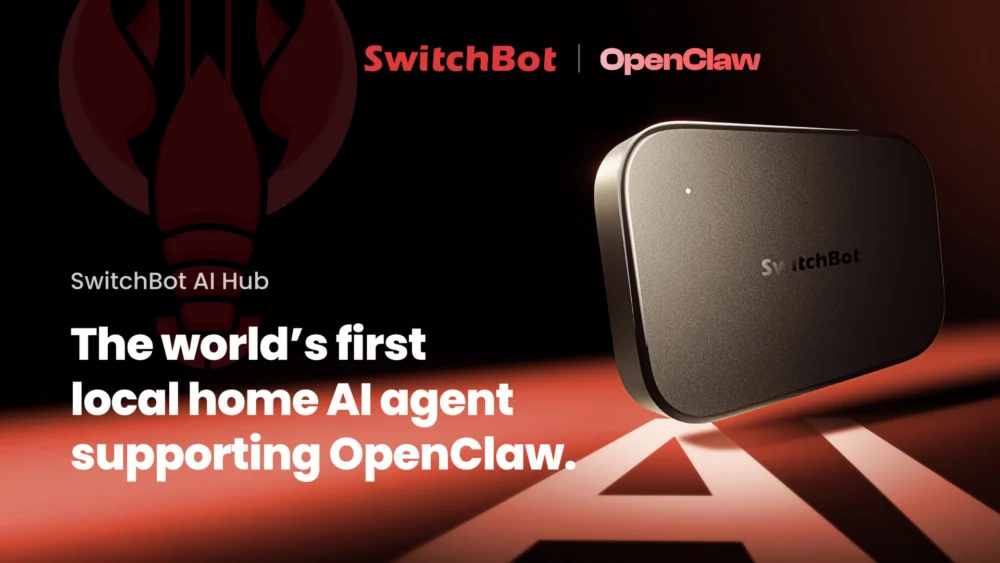
The modern residential environment is rapidly evolving from a collection of disparate "smart" gadgets into a genuinely intelligent ecosystem. Convenience, security, and energy efficiency are the pillars of this evolution, yet the management overhead—coordinating lighting, climate control, security cameras, door locks, and appliances—has often resulted in fragmentation and user frustration. Traditional smart home solutions frequently rely on cumbersome rule-based routines or vulnerable cloud processing. Enter SwitchBot, a company recognized for its accessible entry points into home automation, which has now launched a device poised to shift this paradigm: the AI Hub. Marketed as the world’s inaugural local home AI agent boasting native OpenClaw support, this device signals a significant maturation in the consumer IoT space, moving artificial intelligence processing closer to the data source.
Contextualizing the Shift: From Cloud to Edge AI in the Home
For years, the backbone of sophisticated smart home commands resided in the cloud. Whether instructing Amazon Alexa, Google Assistant, or Apple Siri to dim the lights, the instruction traveled from the user’s device, across the internet, to remote servers for interpretation, and then back down to the relevant device. This architecture, while scalable for basic commands, introduces inherent latency, necessitates constant internet connectivity, and raises significant privacy concerns regarding the continuous transmission of household data.
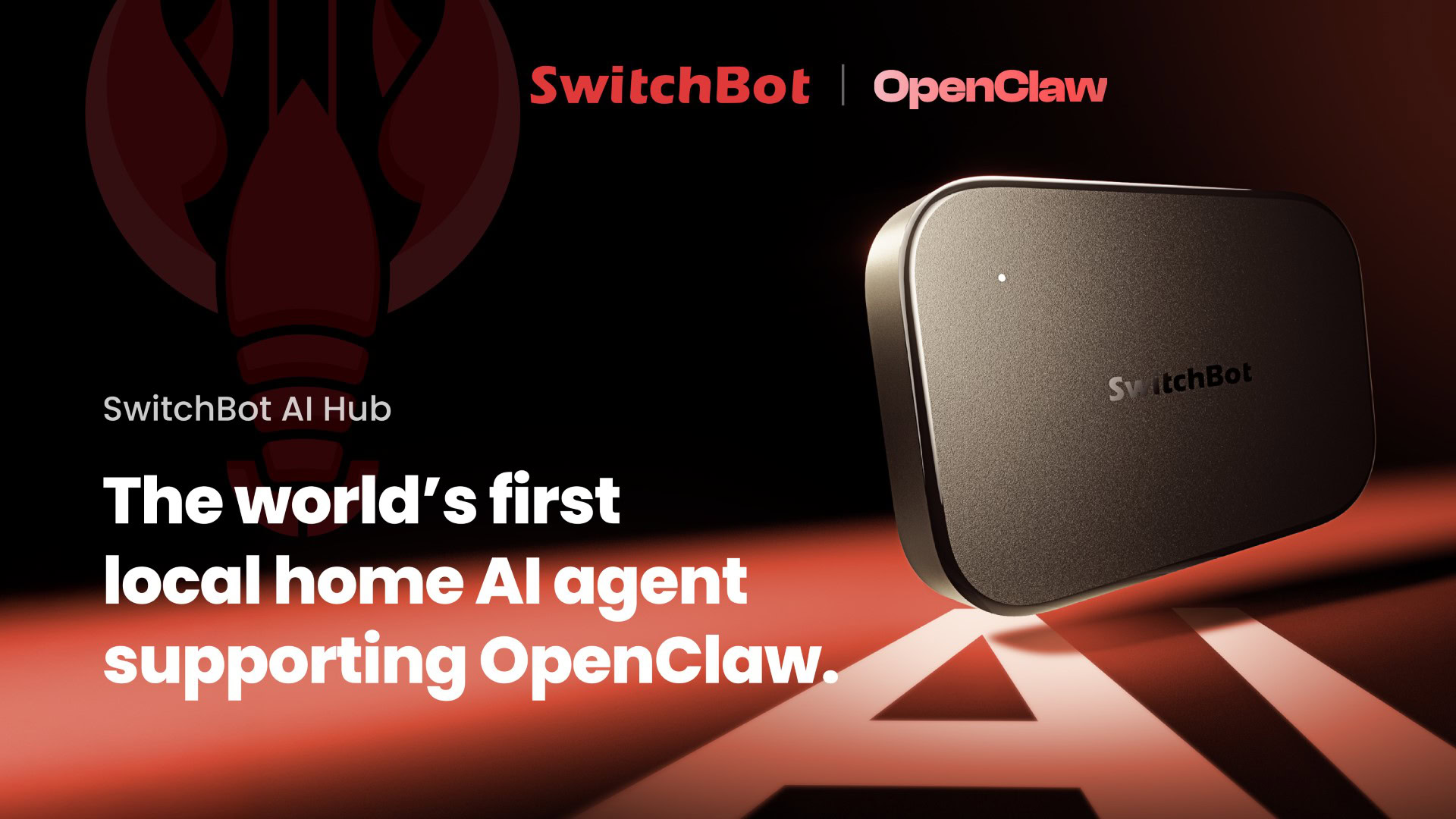
The industry has been searching for robust "edge computing" solutions—processing data locally on a dedicated device—to address these shortcomings. The SwitchBot AI Hub appears to directly target this need by embedding substantial local AI capabilities. By functioning as a local agent, the Hub promises near-instantaneous response times for complex automations and, critically, keeps sensitive data—such as video feeds or routine patterns—secured within the physical confines of the user’s home network.
SwitchBot, positioning itself as a pioneer in "AI-enabled embodied home robotics systems," is leveraging this hardware platform to integrate OpenClaw, an open-source AI assistant framework known for its real-world task management capabilities beyond simple conversational responses. This integration is the core innovation, transforming the Hub from a simple communication bridge into an autonomous local intelligence layer.
Deep Dive into OpenClaw Synergy
OpenClaw is distinguished in the crowded AI landscape because it is fundamentally designed not just to chat, but to act. While general-purpose Large Language Models (LLMs) excel at text generation, OpenClaw’s architecture emphasizes the execution of multi-step, real-world tasks—managing digital workflows, accessing application interfaces, and now, interfacing with physical hardware.
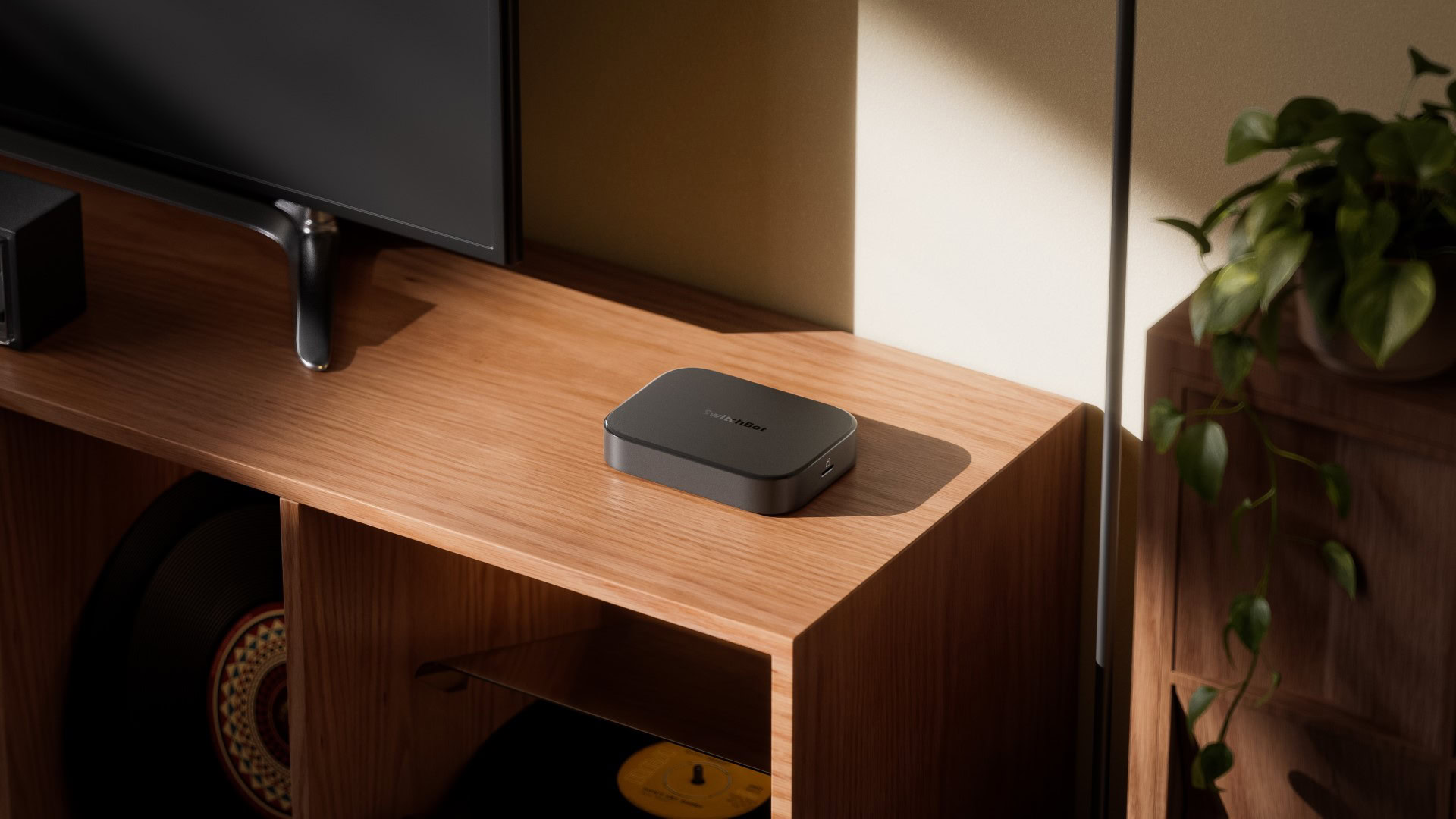
The implementation timeline suggests a phased rollout. While the AI Hub is immediately available, the critical OpenClaw functionality is slated to arrive via an Over-The-Air (OTA) update near the close of February. Once activated, users gain the ability to connect to a spectrum of large-language AI models through an OpenClaw bot contact. This accessibility is noteworthy: the contact operates across more than 50 popular messaging applications, including WhatsApp, iMessage, and Discord. This strategy bypasses the need for proprietary voice hardware or specific apps, enabling users to command their home using the communication channels they already inhabit daily.
The technical benefit here is substantial. Deploying sophisticated AI models locally on a dedicated hub, rather than taxing a personal computer (PC) with cloud-based processing or resource-intensive local downloads, democratizes access to advanced automation. For users intimidated by the configuration complexity often associated with setting up advanced open-source agents on a PC, the SwitchBot AI Hub offers a pre-configured, secure environment. This significantly lowers the barrier to entry, providing the power of system-level AI task management without the associated technical friction or the security vulnerabilities of granting deep system access to a general-purpose machine. The Hub acts as a hardened sandbox for AI operations, prioritizing data isolation and rapid deployment.
The Next Frontier: Contextual Awareness via VLM Integration
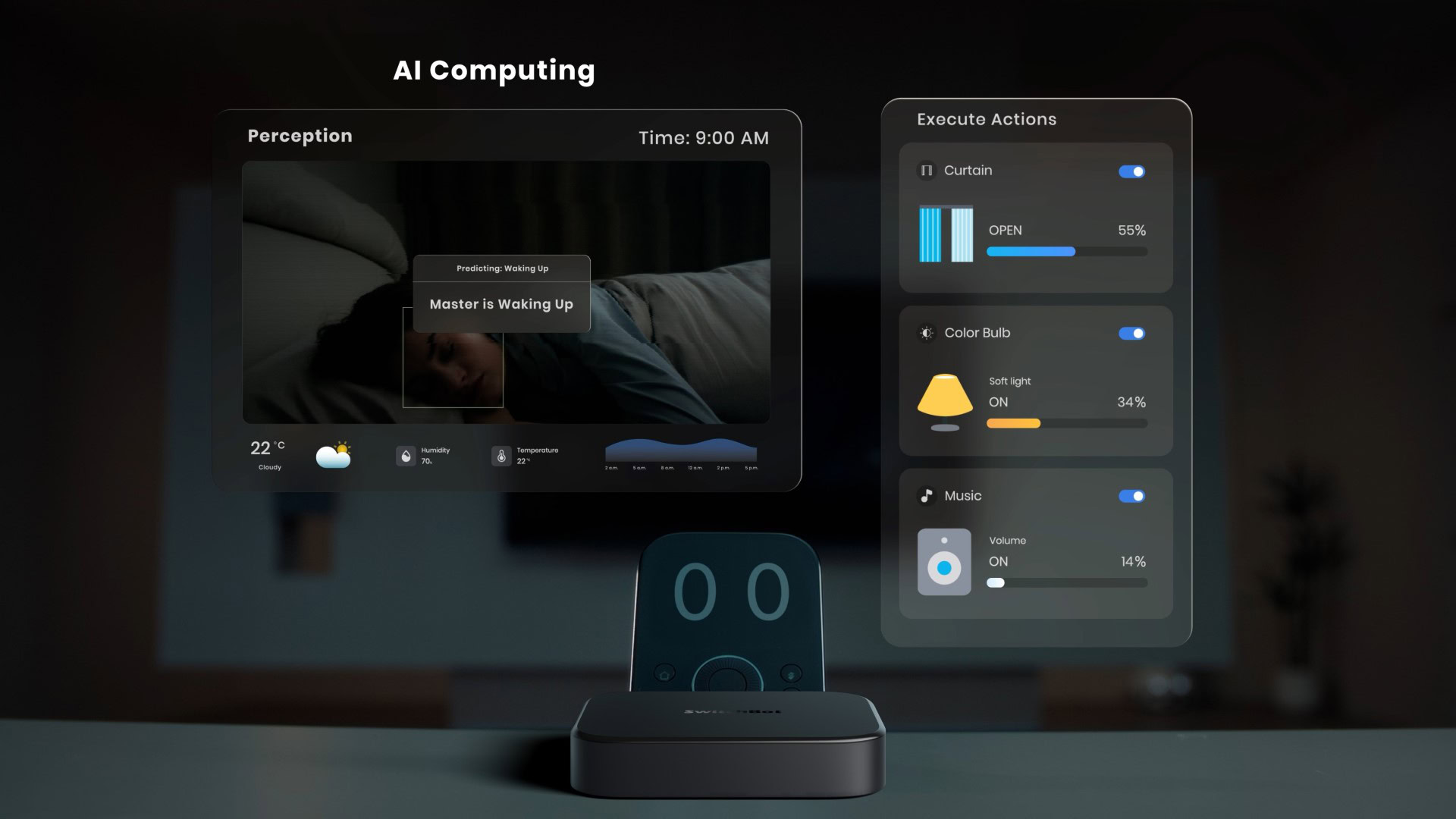
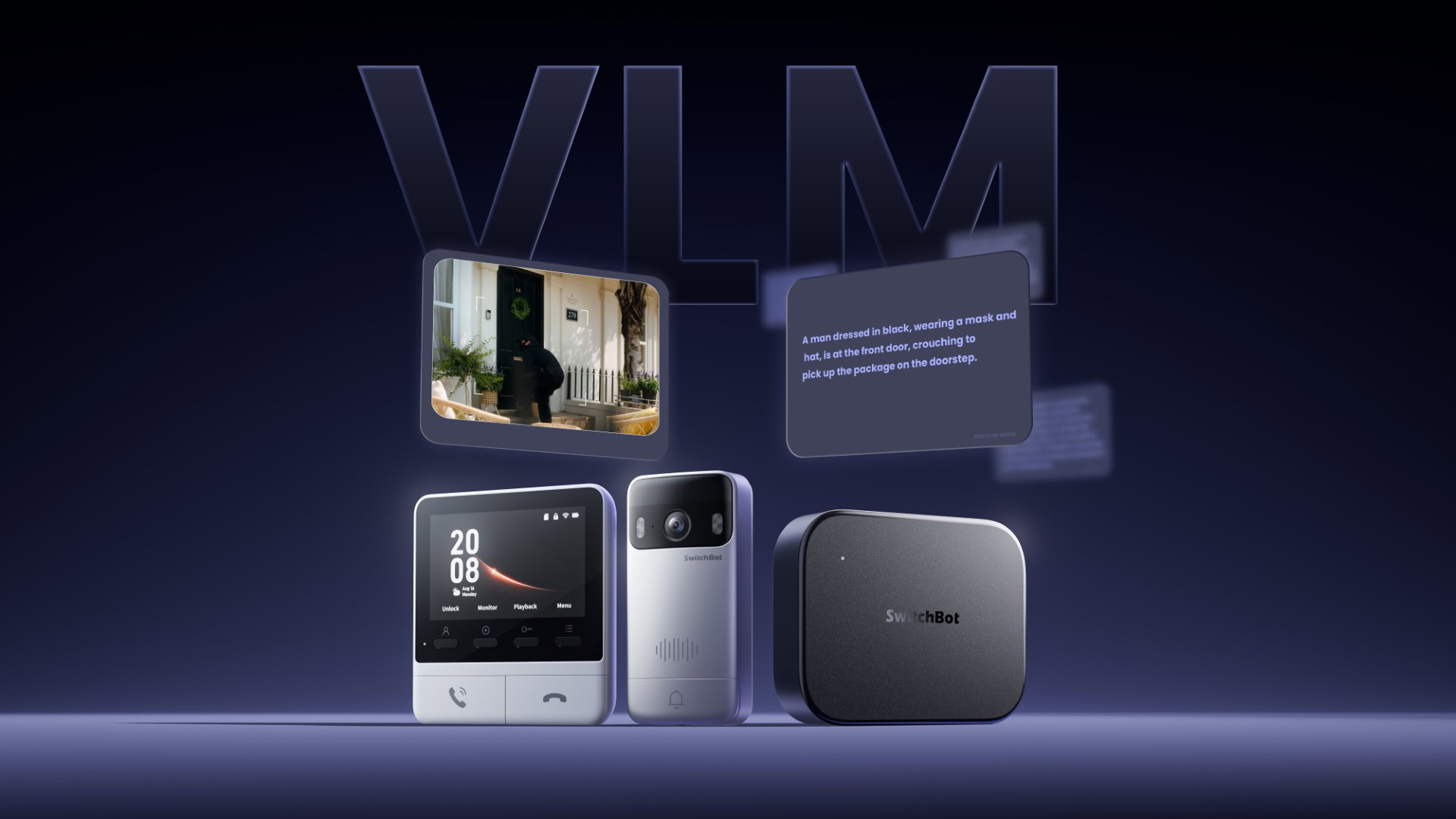
Perhaps the most significant technological leap embodied by the AI Hub is its claim to be the first edge hub featuring integrated Visual-Language Model (VLM) capabilities. This moves the system beyond simple binary triggers (motion detected/not detected) into the realm of contextual understanding, which is transformative for home security and proactive automation.

By pairing the Hub with compatible SwitchBot security hardware—such as the Pan/Tilt Cam Plus (2K/3K) or the Smart Video Doorbell, as well as supporting standard RTSP cameras—the AI Hub can ingest visual data and process it locally. VLMs bridge the gap between visual input and natural language understanding. Instead of merely reporting "motion at 3:05 PM," the VLM analyzes the scene and reports, "An unfamiliar individual wearing a dark jacket approached the front gate at 3:05 PM."
This level of granularity enables far more sophisticated and relevant automation. Users can define triggers based on complex scenarios: "Alert me if the dog leaves the backyard," or "Initiate the ‘Welcome Home’ scene only if a known family member is detected at the door after 6 PM." This specificity reduces notification fatigue, a major pain point in existing smart home systems.
The proactive capabilities extend this intelligence further. The system is designed to learn household routines. For instance, if the doorbell identifies a familiar face, the Hub could automatically prompt the user via their messaging app: "John Doe is at the door. Unlock the smart lock?" If the system observes children entering wearing muddy footwear, it could contextually suggest, "Shall I initiate the floor cleaning routine?" The ability to execute these proactive suggestions through familiar messaging apps ensures the interface remains frictionless, blending into existing communication habits.
Expanding Ecosystem Control with SwitchBot Skills
The integration timeline extends into late March with the introduction of SwitchBot Skills for OpenClaw. This feature set is crucial for breaking down the silos that plague multi-platform smart homes. While OpenClaw itself can manage digital tasks independently, the Skills layer acts as the interpreter and translator for physical devices across different protocols and ecosystems.
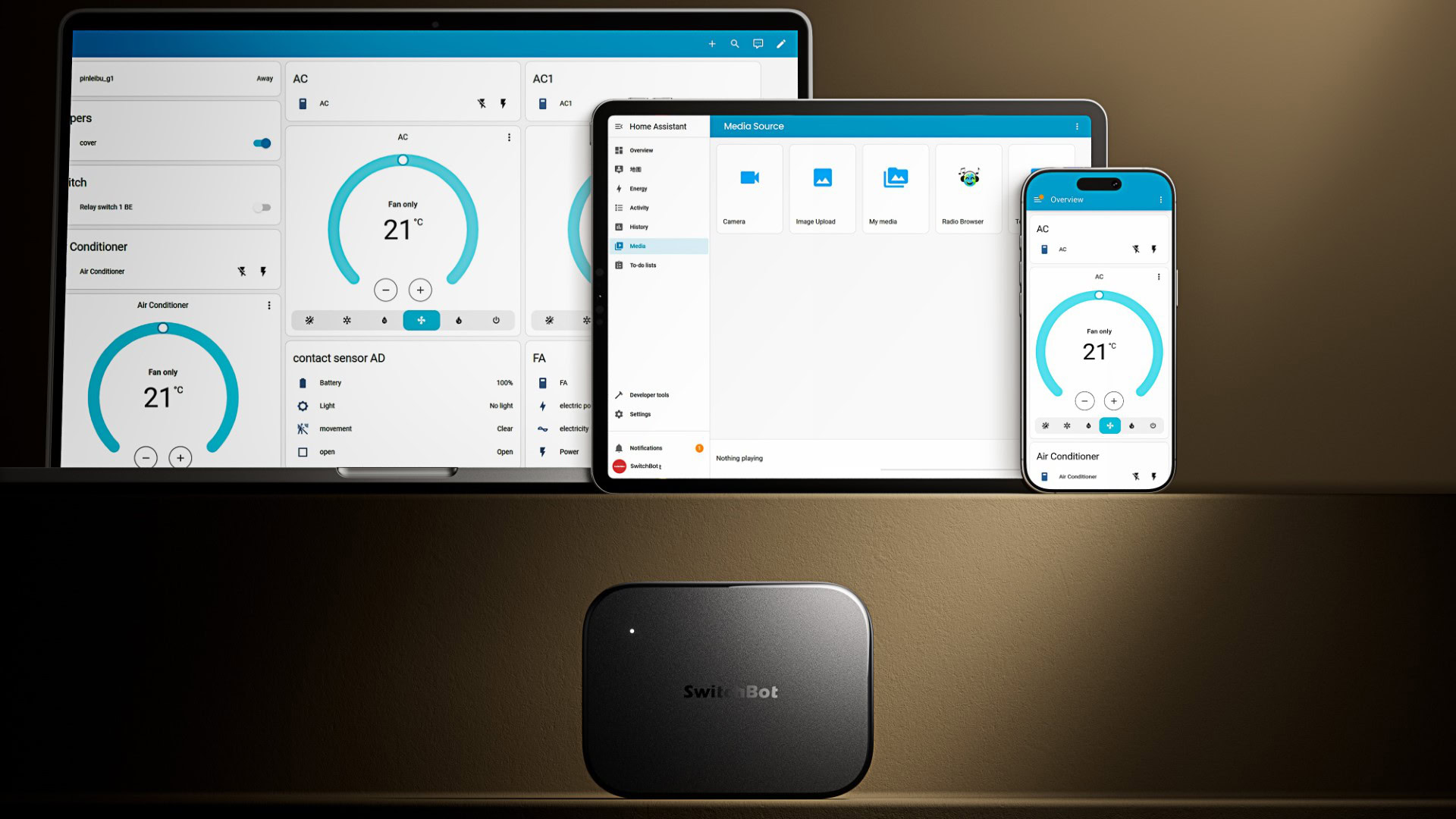
The promise is ambitious: OpenClaw, powered by the AI Hub’s Skills, will gain the capacity to read and manage smart home data aggregated from various major platforms, including Home Assistant, Apple HomeKit, and Google Home. This means a single, natural language command sent via WhatsApp—"OpenClaw, ensure the living room is set for movie night and check if the garage door is closed"—can orchestrate actions across devices managed by three different foundational systems.
This cross-platform orchestration capability is where the Hub moves beyond merely managing SwitchBot products (of which it supports over 100 directly, plus 30 via Matter bridging) and asserts itself as a true universal controller. The underlying hardware specifications—dual-band Wi-Fi and extended Bluetooth range—are vital for maintaining the stable, low-latency communication required for this complex task execution, especially since local automations execute faster than any cloud-dependent sequence.
Industry Implications: The Future of Local AI and Data Sovereignty
The SwitchBot AI Hub, particularly with its emphasis on local processing and OpenClaw integration, represents a tangible step toward user data sovereignty in the smart home sector. For too long, consumers have traded data for convenience. A hub processing VLMs and executing complex logic locally provides a compelling alternative.
Expert Analysis: From a technological standpoint, this is a significant deployment of edge AI. Running sophisticated models like VLMs locally requires considerable onboard processing power, suggesting the Hub contains specialized silicon or a highly optimized chipset capable of inference tasks without prohibitive energy consumption. This validates the trend toward specialized hardware accelerators for consumer AI tasks, a movement paralleling advancements seen in mobile computing.
Industry Impact: If successful, this model pressures established giants. Amazon, Google, and Apple have built their smart home empires on cloud connectivity. A viable, affordable, and functionally rich local AI alternative forces these incumbents to either improve their local processing capabilities dramatically or risk being relegated to providing only basic device connectivity, while the genuine "intelligence" resides on third-party hardware like the AI Hub. Furthermore, the adoption of OpenClaw, an open-source framework, promotes interoperability and transparency, which is a direct counterpoint to the proprietary ecosystems that dominate the market today.

Future Trends: The trajectory suggests that future home hubs will not just connect devices; they will understand the environment. We can anticipate future iterations focusing on predictive maintenance (e.g., "The dishwasher filter needs cleaning based on water usage patterns") or highly nuanced energy management driven by real-time, localized environmental analysis rather than generalized schedules. The adoption of VLM for security analysis, as seen here, will likely become standard, shifting security from simple anomaly detection to genuine event interpretation.
Unpacking the Value Proposition and Deployment
The AI Hub’s capabilities extend deeply into network video recording (NVR) functionality through seamless Frigate integration. Supporting up to eight cameras and featuring integrated face recognition, it centralizes monitoring onto a single dashboard. The commitment to local storage—allowing expansion up to 16TB via external drives—eliminates ongoing subscription fees entirely, a major long-term cost saving for security-conscious users. AI-powered video search functionality, allowing users to query recordings based on descriptive elements ("Show me when the delivery driver arrived yesterday"), complements the VLM analysis happening in real-time.
This combination—real-time VLM event interpretation, integration with multiple external smart home platforms via Skills, and the privacy-first approach of local processing—creates a compelling proposition for the advanced home automation enthusiast and the privacy-aware consumer alike. The ability to manage sophisticated tasks ("If the humidity in the basement spikes above 60% and the back door is unlocked, send me a detailed status report") via simple text inputs in common messaging apps represents the pinnacle of accessible automation design.
Currently priced at $259.99, the SwitchBot AI Hub is positioned as a premium central component, yet it remains accessible relative to high-end custom home server builds that attempt to replicate this functionality manually. By bundling proprietary hardware optimization with leading open-source AI frameworks, SwitchBot is not just selling a hub; it is selling a pathway to a genuinely intelligent, responsive, and privately managed home ecosystem. The next few months, as the promised OTA updates roll out, will be critical in demonstrating the robustness and versatility of this localized artificial general intelligence for the home environment.
