

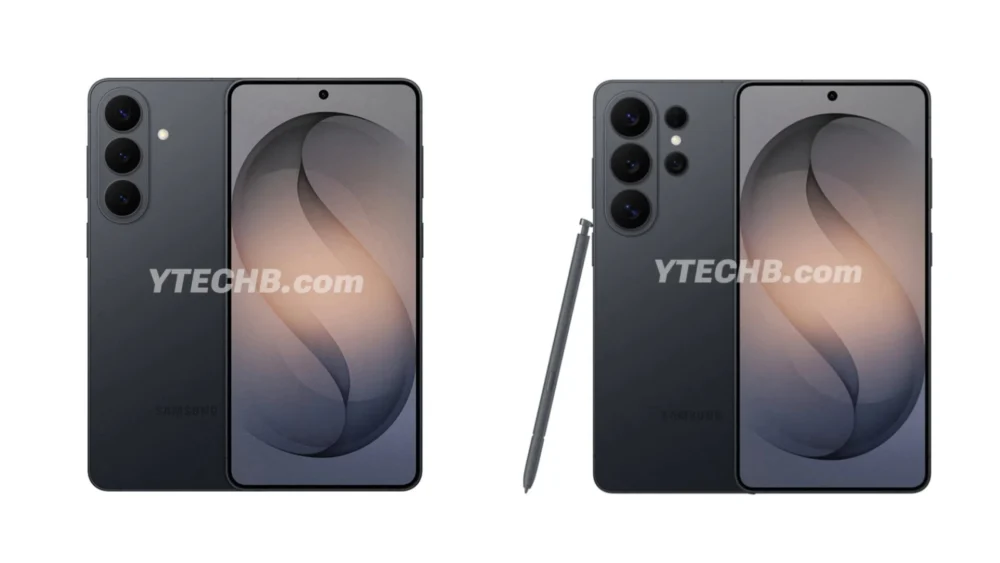
The annual cadence of flagship smartphone releases is often preceded by an intense period of speculation, rumor aggregation, and, ultimately, pre-launch visual confirmation. For the Samsung Galaxy S26 Plus and the pinnacle S26 Ultra, this preparatory phase appears to be reaching its zenith. Recent visual assets, offering multi-angle perspectives of both devices, are not merely iterative updates but signal a significant, albeit calculated, design pivot for Samsung’s primary Android offering. This leakage suggests a strategic convergence of design language across Samsung’s diverse portfolio, aiming for both aesthetic refinement and functional consolidation.
The most immediately striking alteration concerns the rear camera housing, a critical identifier for any modern smartphone. For several generations, Samsung has experimented with camera module aesthetics, moving from the integrated "Contour Cut" of the S21 series to the individual lens surrounds seen in the S23 and S24 generations. The emerging visuals for the S26 Ultra indicate a decisive departure from these ring-style cutouts. Instead, the devices are adopting a unified, raised camera island—a design ethos conspicuously borrowed from the higher-end, form-factor-pushing Galaxy Z Fold 7. This integration is more than superficial; it represents a deliberate harmonization of design DNA between Samsung’s traditional slab phones and its foldable hardware. While the core silhouette—characterized by flat side frames, a centered, unobtrusive punch-hole selfie camera, and subtly softened corner radii—retains the familiar premium feel established by the S24 Ultra, the new camera block serves as the primary visual differentiator, suggesting a refreshed identity that feels both evolutionary and immediately contemporary.
This move toward a singular camera plinth has several underlying implications. From an engineering standpoint, consolidating the lenses into a more defined unit can simplify manufacturing tolerances and potentially improve ingress protection against dust and moisture, as fewer seams are exposed around individual lenses. Aesthetically, it streamlines the rear panel, lending a cleaner, more monolithic appearance that contrasts sharply with the busy lens arrangements favored by some competitors. By mirroring the design language of the Z Fold series, Samsung subtly reinforces the aspirational positioning of its entire flagship lineup, suggesting that the S series benefits from the design breakthroughs achieved in its more experimental foldable division.
The visual documentation primarily showcases a robust matte black finish. In the realm of premium devices, matte surfaces are increasingly favored not just for their understated elegance but for their superior tactile experience and resistance to smudging. In a market where the "fingerprint magnet" effect of high-gloss glass can quickly degrade perceived quality, the practical advantage of a matte finish, especially on a high-use device, is significant. However, history dictates that Samsung rarely limits its palette to monochrome. Earlier intelligence has consistently pointed towards a broader spectrum of available colors for the Ultra variant, including core options like white, deep violet, and a cool blue. Furthermore, the persistent rumor mill suggests the inclusion of limited or online-exclusive finishes—potentially pink gold or silver variations—designed to stimulate initial sales velocity and cater to niche aesthetic preferences, a common strategy to extend the marketing lifecycle of a product.
Beyond the superficial redesign, the leaked specifications paint the picture of an uncompromising performance behemoth, positioning the S26 Ultra squarely at the apex of the Android ecosystem. The core processing power is anticipated to be anchored by Qualcomm’s next-generation silicon, likely branded as the Snapdragon 8 Elite Gen 5, or, depending on geopolitical and manufacturing considerations, Samsung’s own homegrown Exynos 2600 in select territories. Regardless of the specific SoC, the expectation is a substantial leap in thermal management and sustained peak performance, critical factors as mobile applications and AI processing demands continue to escalate.
The memory and storage configuration suggests future-proofing. Leaks point toward a maximum configuration boasting 16GB of high-speed RAM, ensuring seamless multitasking even under the heaviest loads, coupled with storage options extending up to 1TB. This capacity is essential for users leveraging advanced computational photography features, high-resolution video capture, and on-device large language models (LLMs) that require significant local storage for rapid inference. Display technology is expected to remain best-in-class: a 6.9-inch Dynamic AMOLED panel maintaining the crucial 120Hz adaptive refresh rate, promising unparalleled clarity and fluidity for both media consumption and gaming.
A far more nuanced, and potentially disruptive, shift highlighted in the preliminary data relates to the wireless charging standard. Reports suggest Samsung may elect to omit the integrated magnetic ring apparatus associated with the Qi2 standard in the base internal design of the S26 series. This is a subtle but significant technical deviation. The Qi2 standard, which incorporates magnets for perfect alignment, is designed to enhance charging efficiency and stability, mirroring the functionality of Apple’s MagSafe ecosystem. If Samsung indeed skips the integrated magnets, users desiring the convenience and optimal efficiency of magnetic wireless charging accessories will be mandated to utilize specialized magnetic cases. This decision could be driven by component cost management, internal space constraints imposed by other hardware upgrades (such as battery size or cooling systems), or a strategic move to keep the initial bill of materials lower, pushing ancillary magnetic accessories as an additional revenue stream through partnerships or proprietary offerings. From an industry perspective, this non-compliance with the full Qi2 specification—even if the underlying inductive charging protocols are compatible—could fragment the burgeoning third-party accessory market slightly, demanding greater consumer diligence when selecting wireless chargers.
The context surrounding this hardware evolution is critical. The smartphone industry is currently navigating a plateau in meaningful year-over-year innovation for traditional form factors. Differentiation is increasingly found in iterative refinements to camera systems, the sophistication of on-device AI integration, and subtle ergonomic adjustments. Samsung, as the dominant global Android manufacturer, faces the dual challenge of maintaining its market share against aggressive competition while simultaneously justifying the premium price point of its Ultra devices. The S26 series, therefore, is not just a new phone; it represents Samsung’s thesis on where premium mobile hardware is heading in the mid-to-late 2020s.
The design convergence, specifically borrowing from the foldables, suggests Samsung believes that the future aesthetic of its high-end devices is inherently more utilitarian and consolidated, moving away from the sometimes-ornate complexity of previous designs. This streamlining implies that the major technological advancements will be internal—centered on the NPU (Neural Processing Unit) performance within the new chipsets to power more sophisticated on-device AI features that transcend simple cloud queries. If the hardware design signals stability, the underlying performance must signal revolutionary capability to capture consumer imagination.
Analyzing the performance trajectory, the inclusion of potentially up to 16GB of RAM speaks directly to the industry trend of "PC-like" mobile computing. As Samsung continues to refine DeX capabilities and as applications become more complex—especially augmented reality tools and advanced creative suites—the memory ceiling must rise. A 16GB base for the Ultra variant sets a new standard, forcing competitors to either match this capacity or convincingly argue why less memory suffices for their optimized software environment.
Furthermore, the timing of the official unveiling is rapidly approaching. In the technology journalism landscape, the period immediately preceding a major launch is often the most volatile in terms of information release. Confirmed leaks serve to manage consumer expectations, pre-empting negative surprises, and allowing the manufacturer to control the narrative arc leading up to the announcement. When detailed renders and specification summaries surface this thoroughly, it strongly suggests that Samsung’s internal marketing teams are nearing the final stages of their public relations rollout strategy. The transition from leaked renders to confirmed product specifications will be swift, solidifying the roadmap for the remainder of the fiscal year and setting the stage for how the S26 Ultra will be benchmarked against its immediate rivals entering the next product cycle. The industry watches closely, as the design choices made here by Samsung often dictate the direction of Android hardware design for the subsequent 18 to 24 months. The integration of the Fold aesthetic and the potential strategic ambiguity around Qi2 magnets are not minor details; they are calculated engineering and marketing moves that will define the reception of this generation of Samsung’s flagship hardware.
