

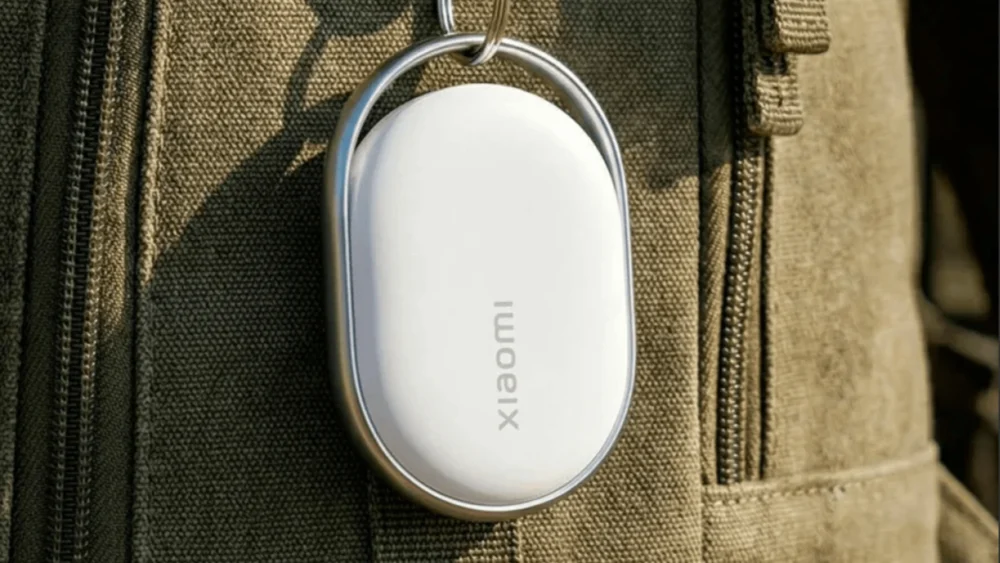
The landscape of personal item tracking, long dominated by Apple’s ecosystem integration and premium pricing, is experiencing a significant competitive realignment. Following Apple’s recent iteration of the AirTag, which focused heavily on enhancing Ultra Wideband (UWB) capabilities for superior precision finding and improved acoustic alerts, a formidable challenger has surfaced from the Asian technology giant Xiaomi. This anticipated device, tentatively dubbed the Xiaomi Tag, appears to be strategically positioning itself not as a feature-for-feature equivalent to the latest AirTag, but as a compelling, value-driven alternative leveraging established, wide-reaching network infrastructure. Early appearances in European retail channels and on localized Xiaomi storefronts suggest an imminent, if somewhat unofficial, market debut, signaling a shift toward commoditizing fundamental tracking functionality.
The Context of Ubiquitous Location Services
To fully appreciate the significance of Xiaomi’s entry, one must first understand the foundational technology driving the modern item tracker market. Since the introduction of the original AirTag, the industry has coalesced around leveraging existing crowdsourced network infrastructure—the vast array of smartphones carried by the general populace. Apple’s Find My network, built upon hundreds of millions of active iPhones, iPads, and Macs, provides unparalleled global reach for passive tracking. Samsung responded with SmartTag and the SmartThings Find network, securing a powerful foothold within the Android ecosystem, particularly among Galaxy device owners.
The critical technological differentiator that Apple introduced with its second-generation device was the refinement of UWB. While Bluetooth Low Energy (BLE) allows for general proximity awareness (e.g., "it’s in this room"), UWB facilitates "Precision Finding"—an arrow-guided interface that uses the precise spatial awareness of the UWB chip to direct the user to the item within inches. This premium feature commands a premium price point, currently established by Apple at $29 for a single unit.
Xiaomi’s move appears to be a calculated decision to bypass the high R&D and component costs associated with advanced UWB chips, instead focusing on maximizing accessibility through established, ubiquitous BLE networks. The core promise of any Bluetooth tracker—that an anonymous, passing phone running the correct network application can relay its location—is now being offered at a fraction of the market leader’s cost.
Unpacking the Xiaomi Tag Specifications and Pricing Strategy
The leaked specifications paint a picture of a device built for mass adoption rather than bleeding-edge precision. Reports from European distributors indicate the Xiaomi Tag is slim, measuring approximately 7.2mm in thickness, making it comparable to existing tracker formats. It relies on a standard, user-replaceable CR2032 coin cell battery, a feature that offers excellent longevity (cited around one year) and simplicity for the end-user, contrasting with proprietary or sealed battery solutions. Key connectivity features noted are Bluetooth 5.4, signaling support for the latest low-energy standards, and the inclusion of Near Field Communication (NFC).
The pricing strategy is the most aggressive element of this rollout. Listings in France suggest a single unit retails for €17.99, with a four-pack dropping to €59.99. Furthermore, some reports indicate potential retail availability below the €15 threshold. This places the Xiaomi Tag comfortably below the $29 baseline set by Apple and positions it competitively against other established budget trackers.
Perhaps the most significant technical revelation is the device’s purported network compatibility. The listings strongly suggest that the Xiaomi Tag is designed to operate across both major crowdsourced tracking ecosystems: Apple’s Find My network and Google’s upcoming Find Hub (or equivalent Android network functionality). If this dual-network compatibility proves true—a feature that would require adherence to specific cross-platform standards currently being developed—it would shatter the existing ecosystem lock-in that has defined the market. A tracker that works equally well for an iPhone user and an Android user fundamentally alters the value proposition for consumers invested in multiple platforms or those hesitant to commit fully to one brand’s ecosystem.
However, the current listings conspicuously lack any mention of Ultra Wideband technology. If this iteration is purely BLE-based, users will benefit from global location updates when near an active phone, but they will lose the directional guidance and pinpoint accuracy that the latest AirTag offers indoors or in dense urban areas. This suggests a deliberate tiered approach by Xiaomi: offering universal accessibility via BLE networking at a low price, while potentially reserving UWB for a future, higher-margin "Pro" model.
Industry Implications: Democratization vs. Feature Fragmentation
Xiaomi’s aggressive pricing and potential network agnosticism have several profound implications for the broader accessory and connected device industries.
1. Pressure on Pricing Structures: The primary effect will be deflationary pressure on the mid-to-low tier of the tracking market. Competitors like Tile, which have struggled to maintain relevance against the integrated power of Apple and Samsung, may find their market share further eroded unless they can swiftly match Xiaomi’s price point or significantly enhance their own network capabilities. For Apple, while the high-end user segment valuing Precision Finding may remain loyal, budget-conscious consumers or those needing multiple trackers for luggage or non-essential items will see a compelling, nearly half-price alternative.
2. The Rise of Network Interoperability: The rumored support for both Find My and Google’s network (assuming the latter materializes as a robust crowdsourced system) represents a significant step toward standardization. For years, the promise of item tracking was fragmented: an iPhone user couldn’t track an item left in a friend’s Android-heavy environment effectively, and vice versa. If Xiaomi successfully implements a mechanism allowing its tags to broadcast securely to both major platforms, it sets a powerful precedent for future third-party accessory makers. It forces the industry to move beyond proprietary walled gardens toward open, secure tracking protocols.
3. Shifting Value Proposition: This launch redefines what consumers expect from a basic tracker. The new baseline expectation shifts from merely "I can find it if it’s far away using a large network" to "I can find it globally, regardless of my phone brand, for the price of a coffee." The value is migrating away from the hardware itself and toward the network infrastructure, which Xiaomi is cleverly tapping into rather than building from scratch.
Expert Analysis: The UWB Conundrum
The absence of UWB in the initial Xiaomi Tag release is the most telling detail from an engineering perspective. UWB technology, while crucial for pinpoint accuracy, requires specialized silicon (like Apple’s U1 or U2 chip) and complex calibration, driving up component costs significantly.
From a strategic standpoint, Xiaomi is prioritizing market penetration over feature parity. They are effectively saying, "We will capture the 80% of users who simply need to know their keys are not in the house, but in the airport terminal." The remaining 20%—those needing sub-meter accuracy to find a specific key fob in a cluttered drawer—will still opt for the more expensive, UWB-equipped devices. This two-pronged approach allows Xiaomi to establish a massive user base quickly through low-cost deployment while retaining the option to launch a premium UWB model later, perhaps when UWB component costs decline further.
Furthermore, the inclusion of NFC is a clever addition. NFC allows for quick pairing and potentially for a "lost mode" tap by any NFC-enabled smartphone, providing an alternative, highly standardized way for a good Samaritan to interact with the lost tracker, irrespective of their phone’s primary operating system or tracking app allegiance.
Future Trajectories and Market Evolution
The launch of the Xiaomi Tag, even as an unofficial market entry, signals the maturation of the personal tracking sector. We are moving past the novelty phase and into the utility and commoditization phase.
1. Standardization Wars: The success of this dual-network compatibility will heavily influence future industry standards. If Apple and Google find that third-party manufacturers like Xiaomi are successfully bridging their networks securely and efficiently, it may accelerate the adoption of industry-wide, privacy-preserving tracking standards (similar to the ongoing collaboration between Apple and Google regarding anti-stalking measures).
2. Ecosystem Deepening: For Xiaomi, this device is not just a standalone sale; it is an anchor point for their entire IoT ecosystem. Consumers who purchase a Xiaomi tracker are more likely to integrate it with other Xiaomi smart home products, enhancing brand loyalty within the Android/Xiaomi sphere. Conversely, by supporting Find My, they may attract curious Apple users who are looking for cheaper accessory solutions.
3. The Anti-Stalking Imperative: As the tracking network expands via third-party devices, the burden of security and anti-stalking measures becomes more complex. Both Apple and Google have implemented robust measures to prevent their respective networks from being used maliciously. Any device like the Xiaomi Tag, designed to operate on both, must meticulously adhere to these security protocols—ensuring that location data is anonymized, encrypted end-to-end, and that the tracker emits periodic, rotating identifiers that can be detected by network-connected phones without revealing the owner’s identity to bystanders. The success of the Xiaomi Tag will depend heavily on its seamless, secure integration into these complex security frameworks.
While formal announcements and confirmation of full feature sets remain pending, the premature listings in Europe suggest that the era of the high-cost, single-ecosystem item tracker is rapidly giving way to a highly competitive environment dominated by value, ubiquity, and, potentially, cross-platform interoperability. The arrival of the sub-€15 Xiaomi Tag is less about beating the AirTag in specifications and more about making high-utility tracking accessible to the global mass market.
