

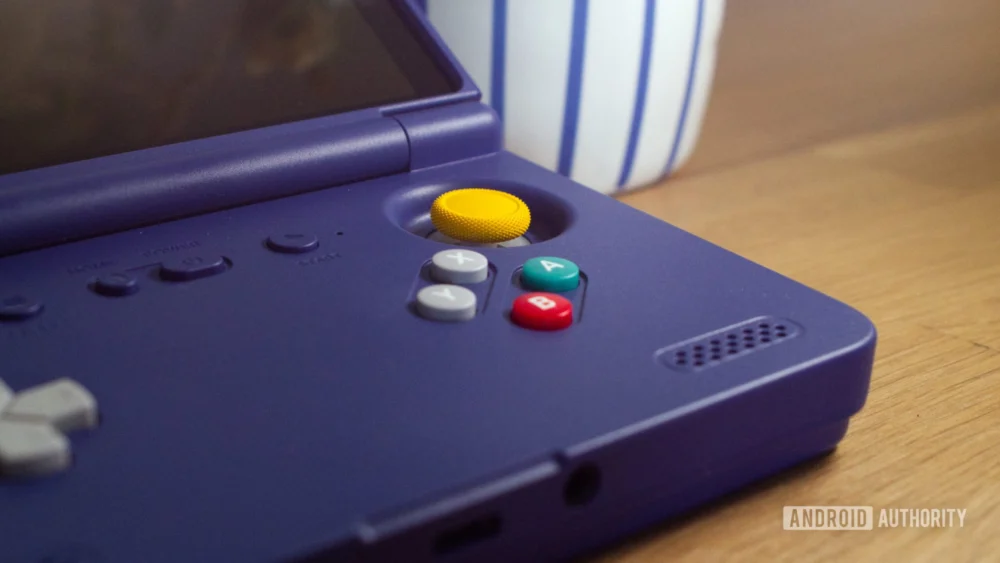
The landscape of portable retro gaming emulation has undergone a significant transformation over the last few years. While the market has been saturated with traditional, candy-bar-style handhelds—devices akin to elongated smartphones featuring built-in controls—a niche but dedicated segment of enthusiasts continues to yearn for the form factor popularized by the Nintendo Game Boy Advance SP. This clamshell design, which prioritizes screen protection and inherent portability through its folding mechanism, has seen intermittent attention, most recently highlighted by the Retroid Pocket Flip 2. However, fresh visual intelligence suggests a new contender is emerging from an established, Linux-focused manufacturer, potentially reshaping expectations for pocketable emulation.
Leaked conceptual renders, purportedly originating from the creators of popular Linux-based devices such as the TrimUI Smart Pro and the TrimUI Brick, showcase a device tentatively dubbed the "TrimUI Flap X1." This introduction is significant because it signals a potential diversification away from the currently dominant form factors and addresses a hardware design that has historically been underrepresented in the enthusiast-grade emulation space.
Deconstructing the Leaked Design Philosophy
The leaked schematics depict a device centered around a 4.7-inch display, notably utilizing a 16:9 aspect ratio. This choice immediately positions the Flap X1 as a direct competitor, aesthetically and functionally, to the aforementioned Retroid Pocket Flip 2, which currently stands as the singular prominent widescreen clamshell option in this high-performance segment. The 16:9 ratio is crucial; it perfectly accommodates the native resolution of many classic systems (like the PlayStation 1 and Nintendo 64) without requiring awkward scaling or letterboxing common on devices with taller 16:10 or 4:3 screens.
Ergonomically, the renders suggest a thoughtful layout. The primary control scheme features a symmetrical dual analog stick configuration situated on the lower half of the device—a layout favored by many modern mobile gamers for comfort during extended play. Surrounding the standard navigation controls (Start, Select, and the dedicated TrimUI menu button) is an unexpected abundance of auxiliary buttons. Specifically, four additional function buttons are visible positioned along the top bezel when the device is open. The purpose of these inputs remains speculative, but in the context of advanced emulation front-ends or compatibility layers, they could be mapped for quick access to save states, shader toggling, or even system-level shortcuts, offering a layer of customization rarely seen on mainstream handhelds.
Further inspection of the profile views reveals critical hardware details that inform performance expectations. The device appears exceptionally slim, a hallmark of TrimUI’s design philosophy that often prioritizes portability over raw power—a philosophy that contrasts sharply with many of the high-wattage Android-based competitors. Crucially, the visible external components include a standard 3.5mm headphone jack and visible stereo speaker grilles integrated into the bottom chassis. Perhaps most telling is the presence of a physical toggle switch mounted on the side. In the ecosystem where TrimUI operates, such a switch frequently serves as a hardware-level performance regulator, allowing users to cycle between power-saving (fanless) modes and higher-performance profiles, perhaps even acting as a physical trigger for overclocking or throttling the System on Chip (SoC). The absence of a visible cooling fan strongly suggests that the Flap X1 is targeting mid-range emulation—capable of smoothly handling PS1, Dreamcast, and perhaps lighter Nintendo 64 titles, but likely avoiding the demanding performance requirements of the PSP or GameCube era without thermal throttling.
Contextualizing the Clamshell Niche
To fully appreciate the potential impact of the Flap X1, one must understand the current dichotomy in the handheld market. Since the rise of the Steam Deck and its subsequent Android-based progeny, the industry has gravitated toward "slate" designs—large, flat devices optimized for modern AAA gaming and high-end emulation. Clamshells, however, represent a nostalgic and utilitarian counterpoint.
The appeal of the clamshell design is multifaceted. First, it offers inherent physical protection. When folded, the screen and the sensitive analog sticks are shielded from keys, dust, and accidental pressure within a pocket or bag, mitigating the need for bulky carrying cases. Second, the folding mechanism inherently dictates a certain level of compactness. While modern Android handhelds often boast high specifications, they frequently suffer from being too large for comfortable "everyday carry" (EDC) status. The alleged thinness of the Flap X1 positions it as a true pocketable device, satisfying users who prioritize discretion and immediate accessibility.
The current market leader in this specific subgenre, the Retroid Pocket Flip 2, has paved the way by proving demand exists. However, that device has been notoriously plagued by a significant durability concern: hinge fragility. Reports of hinge cracks appearing after relatively minor use have been a persistent Achilles’ heel for Retroid’s clamshell designs. If TrimUI, known for its generally robust, if sometimes minimalist, hardware construction, can engineer a reliable hinge mechanism for the Flap X1, it could immediately capture a significant portion of the market segment actively seeking a premium, durable folding device.
Industry Implications and the Linux Factor
TrimUI’s positioning within the emulation ecosystem is distinct from many of its competitors. While many high-profile handhelds run on Android—offering broad app compatibility and access to the Google Play Store—TrimUI has built its reputation on native Linux operating systems. This choice often appeals to a more technically inclined user base who prioritize open-source software, direct hardware access, and streamlined emulation environments free from Android overhead.
The introduction of a clamshell running Linux presents several interesting industry implications:
- Software Optimization: Linux-based handhelds often rely on customized front-ends (like EmulationStation or RetroArch configurations optimized for specific chipsets). A new Linux clamshell forces core emulation developers to ensure their compatibility layers are finely tuned for its unique hardware profile, potentially leading to highly efficient performance for the targeted emulation tiers.
- Challenging Android Hegemony: While Android offers convenience, Linux offers control. If the Flap X1 offers superior battery life or a cleaner software experience due to its lighter OS footprint, it could pull users away from Android-centric devices for pure retro gaming purposes, asserting that dedicated hardware platforms are superior to smartphone-adjacent systems for this specific use case.
- Design Iteration Pressure: If the Flap X1 proves successful, it will place immediate competitive pressure on other manufacturers, notably Retroid, to either iterate rapidly on their own clamshell hinge designs or risk losing market share in a category they currently dominate by default.
Expert Analysis: Form Factor vs. Performance Trade-offs
The critical analytical pivot point for the TrimUI Flap X1 rests entirely on the trade-off between its compact form factor and the implied limitations of its cooling solution. The absence of active cooling (a fan) is a definitive indicator that the device will not be competing in the high-end emulation space occupied by contemporary handhelds utilizing powerful chipsets like the Unisoc T618 successor chips or equivalent modern SoCs.
A fanless design generally caps performance within thermal envelopes suitable for systems up to the sixth generation of consoles (PS2, GameCube, Wii). For a device targeting EDC, this is arguably a strategic decision rather than a limitation. Most users seeking a truly pocketable device are primarily concerned with perfecting the 8-bit, 16-bit, and 32/64-bit eras, often augmented by simpler, native Linux-based indie titles.
The inclusion of a dedicated performance toggle switch suggests the hardware designers anticipated this balancing act. Users can likely engage a "low-power" or "clamshell" mode for battery conservation during less demanding emulation (like GBA or SNES) and switch to a "performance" mode only when necessary for more taxing systems (like late-era N64 or Dreamcast), accepting the subsequent throttling. This level of user control over thermal dynamics is a feature that sophisticated emulation enthusiasts value highly.
The rumored 4.7-inch screen size is also noteworthy. It strikes a balance: large enough to feel substantial for extended play sessions, yet small enough to maintain the pocketability that the clamshell format promises. It avoids the often cumbersome size creep seen in larger handhelds where the screen size ballooned while the chassis struggled to keep pace ergonomically.
The Path Forward: Renders to Reality
It is essential to temper excitement with the reality that these are currently renders, as the article source correctly notes. The journey from concept visualization to a mass-market product is fraught with manufacturing hurdles, cost adjustments, and final hardware revisions. However, the sheer level of detail in the purported leak—from the placement of the stereo speakers to the inclusion of non-standard function buttons—suggests a high degree of commitment from the design team.
Should the TrimUI Flap X1 materialize as depicted, its impact will be measured not by benchmark scores, but by its utility as a perfect companion device. In an era where many handhelds feel like secondary computers requiring dedicated carrying solutions, a durable, slim, 16:9 clamshell running a streamlined Linux OS could redefine the "everyday carry" standard for retro gamers. It speaks to a maturity in the market where consumers are demanding specialized tools for specialized tasks, rather than a single device attempting to conquer every emulation tier simultaneously. The potential success of the Flap X1 hinges on whether TrimUI can deliver on durability, particularly concerning the hinge, while maintaining the compact footprint that makes the clamshell form factor fundamentally appealing. If they succeed, this device may not just be an alternative; it could become the definitive answer for portable, protected, widescreen retro gaming.
