

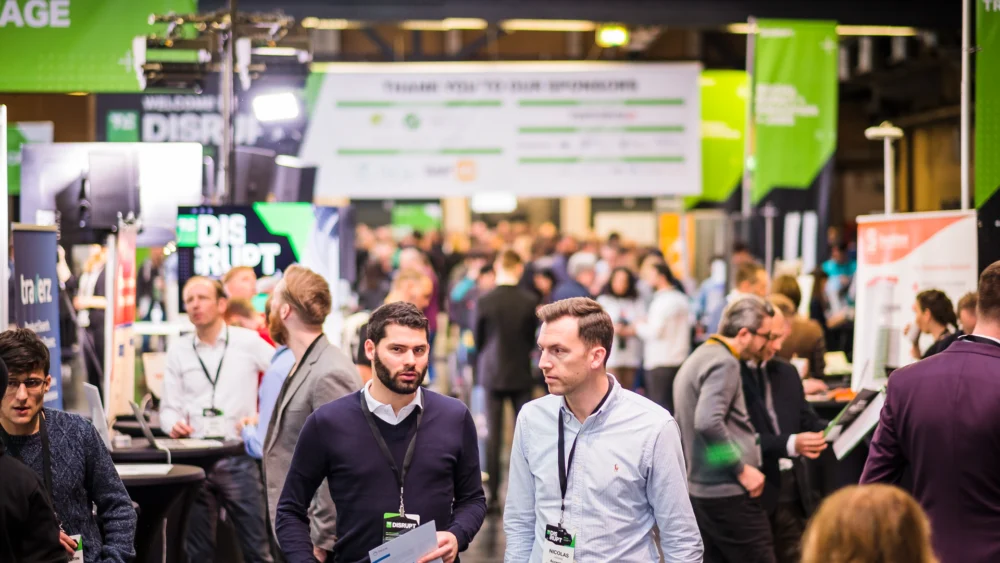
The landscape of venture capital and enterprise technology has undergone a profound transformation over the last several years, moving away from the frantic, growth-at-all-costs mentality toward a more disciplined, results-oriented paradigm. As we look toward the final quarter of 2026, the necessity for high-fidelity, in-person engagement has never been more apparent. From October 13–15, the tech world will center its attention on San Francisco’s Moscone West, where more than 10,000 founders, institutional investors, and corporate decision-makers are set to convene for the year’s most pivotal gathering of innovation and capital. This three-day summit represents far more than a traditional industry conference; it is a high-density environment designed for concentrated deal flow, where the abstract concepts of "brand awareness" are traded for the tangible metrics of signed term sheets and integrated partnerships.
For the modern startup, the decision to occupy a physical footprint on the exhibition floor is a strategic move that signals market readiness and operational maturity. In an era where digital noise has reached a saturation point, the ability to demonstrate a product in real-time to a captive audience of stakeholders is an incomparable advantage. An exhibit table at a premier event like this functions as a localized headquarters, providing a home base for a team to execute a multi-channel growth strategy that encompasses sales, fundraising, and talent acquisition.
The Shift from Awareness to Conversion
For years, the startup ecosystem was enamored with "top-of-funnel" metrics—social media impressions, website hits, and general brand recognition. However, the 2026 market demands a harder currency. Investors and enterprise buyers are no longer satisfied with polished pitch decks delivered over video calls; they are looking for the "founder signal" that can only be captured through direct interaction. By securing an exhibit space, a company shifts its narrative from "seeking attention" to "facilitating transactions."
The Expo Hall serves as a specialized marketplace where the friction of the traditional sales cycle is significantly reduced. When a founder stands behind an exhibit table, they are not just showing a demo; they are engaging in a vetting process. Operators and decision-makers walk these halls specifically looking for tools that solve immediate operational bottlenecks. The presence of a dedicated exhibit space allows for instant lead capture, often integrated directly into the event’s proprietary digital infrastructure, ensuring that a single conversation in October can become a cornerstone of a company’s Q4 revenue pipeline.

Shortening the Fundraising Cycle through Proximity
Fundraising remains one of the most time-intensive activities for any leadership team. The traditional "roadshow" model is often inefficient, characterized by weeks of travel and disjointed follow-ups. In contrast, a high-density tech summit provides a unique "investor proximity" that can compress months of outreach into a few days of intensive networking.
At the Moscone West gathering, the proximity between the exhibition floor and the main stage sessions creates a fluid environment where casual introductions frequently evolve into deep-dive discussions. For an exhibiting startup, the table acts as a proof-of-concept laboratory. Instead of describing a breakthrough, founders can showcase it. This face-to-face momentum is often the catalyst needed to turn a "cold" investor lead into a "hot" prospect. When an investor sees a crowd gathered around a particular exhibit, the social proof is immediate and powerful, often leading to on-the-spot meetings that bypass the standard gatekeepers of the venture world.
The Halo Effect: Brand Credibility and Association
In the competitive technology sector, trust is a primary differentiator. Association with a globally recognized platform for innovation provides a "halo effect" that bolsters a startup’s credibility. When a company is featured in the official event directory, included in closing ceremonies, and visible across the event’s digital ecosystem, it gains a level of institutional legitimacy that is difficult to manufacture through independent marketing efforts.
This credibility extends beyond just the three days in San Francisco. The professional documentation, press access, and sponsor listings associated with an exhibitor package provide a library of content and social proof that can be leveraged for the remainder of the fiscal year. For a seed-stage or Series A company, being seen alongside industry giants and the next wave of unicorns reinforces a narrative of success that resonates with customers and prospective hires alike.
Strategic Team Deployment and Operational ROI
One of the most overlooked aspects of high-level event participation is the ability to leverage a team strategically. Many exhibitor packages, such as those offered for the 2026 summit, include a significant number of full-access passes—often up to ten. This allows a startup to treat the event as a multi-disciplinary mission.

A well-organized team can divide and conquer the 10,000-person crowd with surgical precision. While two members handle the high-traffic demonstrations at the exhibit table, others can be deployed to attend breakout sessions for competitive intelligence, engage in curated networking events to find strategic partners, or scout the next generation of engineering talent. This "split-focus" strategy maximizes the return on investment for every hour spent onsite. It transforms the event from a passive experience into an active execution of the company’s broader business goals.
The San Francisco Factor and the Future of Innovation
Hosting this convergence at Moscone West is a deliberate choice that taps into the historical and future significance of San Francisco as the world’s premier innovation hub. Despite the rise of remote work and distributed teams, the "gravity" of the Bay Area remains a fundamental force in the tech industry. The concentration of wealth, talent, and intellectual capital in this region creates a "force multiplier" effect for any event held within its borders.
As we look toward 2027 and beyond, the trends suggest that the "hybrid" model of business—digital-first but physical-final—will become the standard. The most successful companies will be those that use digital tools for scale but rely on high-stakes physical gatherings to close their most important deals. The 2026 summit is positioned at the vanguard of this trend, offering a glimpse into a future where the "exhibit" is not just a display, but a sophisticated node in a global network of commerce.
Navigating the Competitive Landscape
Space on the Expo Hall floor is a finite resource, and in the high-stakes world of Silicon Valley, timing is everything. The first-come, first-served nature of exhibit table availability creates a competitive environment even before the doors open. Startups that act early to secure their position are often rewarded with better placement—near high-traffic "anchor" sponsors or adjacent to the networking lounges where investors tend to congregate.
Furthermore, for companies looking to elevate their presence beyond a standard exhibit, the path toward full-scale sponsorship offers even deeper integration into the event’s fabric. This can include branded activations, speaking opportunities, and exclusive access to VIP functions. Whether a company is a lean startup or a scaling enterprise, the choice of how to engage with the 10,000-strong audience is a reflection of its current trajectory and its future ambitions.

Conclusion: The 72-Hour Growth Strategy
Ultimately, the three days from October 13–15 represent a rare window of opportunity. In the fast-moving world of technology, a single quarter can define the success or failure of a venture. By placing themselves at the center of the 2026 tech ecosystem in San Francisco, founders are doing more than just attending a conference; they are taking control of their company’s destiny.
The result of a successful exhibition is measured in more than just business cards or scanned QR codes. It is measured in the acceleration of the sales cycle, the strengthening of the cap table, and the opening of doors that were previously barred. As the industry prepares to descend upon Moscone West, the message is clear: the future belongs to those who show up, stand out, and engage directly with the people shaping the next decade of human progress. Securing a spot on the floor today is the first step toward closing the deals of tomorrow.
