

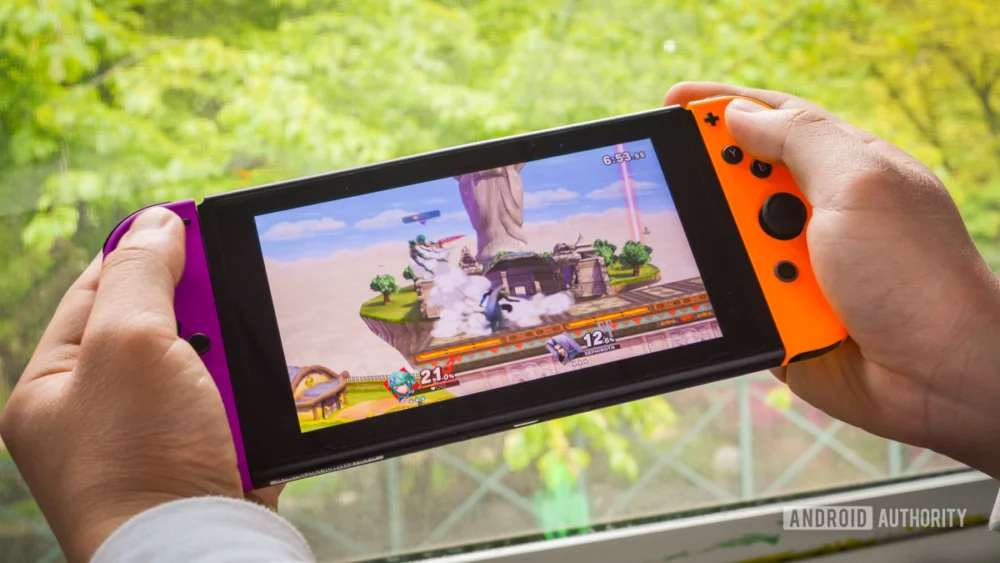
The landscape of mobile emulation is undergoing a rapid, transformative evolution, nowhere more evident than in the dedicated efforts to bring Nintendo Switch functionality to Android devices. Among the most compelling contenders in this specialized field is Kenji-NX, a project that distinguishes itself by serving as a direct fork of the highly respected Ryujinx codebase. While the emulation scene thrives on incremental progress, the recent deployment of version 2.1.0, released as a pre-production snapshot, signals a substantial leap forward, particularly for users leveraging the cutting-edge silicon powering high-end smartphones. This update doesn’t just patch minor issues; it fundamentally refines the core experience, focusing heavily on hardware compatibility and user-centric features.
The context surrounding Kenji-NX’s development is crucial to understanding the significance of these recent changes. The Nintendo Switch, despite its aging internal architecture compared to contemporary flagship mobile processors, presents a unique emulation challenge. Its custom NVIDIA Tegra X1 chipset requires sophisticated translation layers to map its proprietary APIs and hardware instructions onto the vastly different instruction sets and GPU architectures prevalent in modern Android flagships, such as Adreno (Qualcomm) or Xclipse (Samsung/AMD). The Ryujinx project, from which Kenji-NX derives its foundation, has long been a benchmark for accuracy and performance on PC platforms. Porting such complex software to the volatile, resource-constrained, and diverse environment of Android demands engineering finesse, making forks like Kenji-NX vital testing grounds for mobile-specific optimizations.
The most headline-grabbing aspect of the 2.1.0 pre-release is the targeted enhancement for Qualcomm’s latest and greatest silicon, specifically the Snapdragon 8 Gen 3 (often referred to in development circles by its precursor nomenclature, the "Elite" tier). Emulators are inherently sensitive to memory latency and GPU command processing bottlenecks. For these high-tier chips, developers have implemented a suite of targeted fixes addressing GPU stability and memory management, which traditionally plague initial high-fidelity emulation attempts. These include crucial refinements to GPU synchronization mechanisms, which ensure that the timing between the emulated Switch GPU and the host Android GPU remains consistent, thereby mitigating graphical glitches, tearing, and unexpected frame drops. Furthermore, addressing startup and shutdown crashes specific to these powerful SoCs indicates a deeper integration with the low-level driver interfaces provided by Qualcomm, moving beyond generic API compatibility toward true hardware acceleration.
This focus on top-tier hardware isn’t merely about speed; it’s about establishing a baseline of stability that trickle-downs to older, less powerful chips. When developers solve memory allocation issues for the most demanding hardware configurations, the resulting code is generally cleaner and more efficient for all supported devices. The reported 40% reduction in application size further supports this narrative of efficiency, suggesting aggressive code optimization, removal of redundant libraries, or improved asset packaging, leading to a leaner application footprint.
Beyond the silicon-specific tuning, the user experience enhancements in Kenji-NX v2.1.0 are substantial. A long-standing frustration in mobile emulation is the interruption of gameplay when switching focus—a common occurrence when fielding a quick call or checking a notification. The introduction of background persistence, allowing emulated games to continue running even when the application is minimized or placed in the background, is a quality-of-life feature that brings the mobile emulation experience closer to native console behavior. This implies robust handling of Android’s lifecycle management, ensuring the emulator can pause and resume its state accurately without corrupting the running game session.
The adjustments for modern form factors are equally noteworthy. The explicit fix for the game screen rendering on tablets and foldable devices addresses a persistent challenge in the Android ecosystem. These devices often feature non-standard aspect ratios or dynamic screen folding mechanisms that can confuse legacy rendering pipelines. Ensuring proper scaling and display integrity on these larger canvases is critical for attracting users who invest in premium mobile hardware specifically for media consumption and gaming.
Controller support, the bedrock of any serious emulation effort, also receives a significant overhaul. The resolution of issues where Xbox controller shoulder triggers failed to register is a vital fix for compatibility, as Xbox controllers remain one of the most widely adopted Bluetooth gamepads among Android users. Complementing this fix is the introduction of a virtual controller customization suite: a scale slider and six distinct layout configurations. This acknowledges that while physical controllers are preferred, the on-screen virtual gamepad remains a necessary fallback for quick sessions or when external hardware is unavailable. Providing granular control over the layout and size allows users to tailor the overlay to their specific screen size and hand placement, optimizing touch responsiveness.
The option to disable threaded rendering, while seemingly technical, speaks volumes about the emulator’s commitment to broad compatibility. Threaded rendering, while generally boosting performance on multi-core CPUs by offloading tasks, can sometimes introduce timing inconsistencies or driver conflicts, especially on devices with less optimized GPU drivers. Providing a toggle—even if it results in slightly lower peak frame rates—allows users to bypass compatibility black holes, ensuring that a wider variety of games can launch and run successfully, even if not at their absolute maximum potential speed.
The ease of access improvements, such as streamlined home screen shortcuts for launching specific games, reflects an understanding that for many users, the emulator is transitioning from a technical curiosity to a primary gaming portal. Reducing the friction between deciding to play a game and actually playing it is a key metric for sustained user engagement in the mobile space.
Industry Implications and the Arms Race in Mobile Emulation
The continuous advancement seen in Kenji-NX, alongside concurrent updates from rivals like Eden and Citron, paints a clear picture of an escalating arms race within the mobile emulation sector. This competition is not just beneficial for the end-user; it acts as a powerful catalyst for broader mobile hardware innovation.
When an emulator developer targets the bleeding edge—like the Snapdragon 8 Elite—they are effectively stress-testing the limits of the hardware and its accompanying software stack (drivers, OS kernel scheduling). Successes in this area often indirectly benefit native Android gaming by providing valuable feedback to silicon vendors about real-world performance bottlenecks in high-demand scenarios. The drive for better GPU synchronization, for instance, has direct parallels to optimizing high-fidelity native 3D titles.
Furthermore, the evolution of these emulators forces a re-evaluation of the Android platform’s suitability for dedicated, high-performance gaming. For years, the perception was that mobile gaming was largely confined to touch-based casual titles or platform-specific cloud streaming. Projects like Kenji-NX challenge this perception by demonstrating that flagship Android devices possess the raw computational power—and increasingly, the software support—to handle console-quality emulation, effectively turning premium smartphones into versatile emulation powerhouses capable of handling software generations older than their own hardware cycle.
This development has significant implications for hardware manufacturers. Devices like gaming-focused smartphones (e.g., ASUS ROG Phone series, RedMagic) thrive on providing superior cooling, dedicated trigger buttons, and optimized performance profiles. The success of Switch emulation becomes a crucial marketing point for these niche manufacturers, as the ability to run demanding emulators smoothly differentiates them from general-purpose flagships.
Expert Analysis: The Forking Strategy and Code Inheritance
Kenji-NX’s lineage from Ryujinx is a double-edged sword that developers must manage carefully. On one hand, inheriting the vast library of compatibility fixes and core logic from a mature PC emulator provides a massive head start. On the other hand, the architecture optimized for Windows/Linux desktop environments, which benefit from unified memory access and vastly superior thermal headroom, must be meticulously refactored for Android’s mobile constraints.
The decision to specifically address GPU stability and memory management on Snapdragon 8 Elite devices points toward an acknowledgment that the default Ryujinx settings or initial Android ports were not optimally handling the nuances of the Adreno GPU driver stack under heavy load. In emulation, "stutter" is often caused by inefficient synchronization primitives or excessive memory thrashing. The performance uplift (up to 10% general improvement) combined with specific fixes suggests the developers have successfully implemented platform-specific threading models or perhaps even customized shader caching routines tailored for the specific memory hierarchies of Qualcomm’s latest offerings.
The decision to make this a pre-release build is also indicative of mature development practices. Releasing under a -pr tag allows the core community (like the dedicated users on Reddit who flagged the update) to conduct large-scale, real-world testing across a spectrum of custom device firmwares and unique hardware configurations before committing the changes to the main stable branch. This crowdsourced validation is essential in the fragmented Android ecosystem.
Future Impact and Trends in Mobile Emulation
Looking ahead, the trajectory set by this update suggests several key trends will dominate the mobile emulation space:
-
Hyper-Specific Hardware Targeting: Developers will increasingly move away from generalized Android compatibility toward writing tailored optimizations for specific flagship SoCs (Snapdragon, MediaTek Dimensity, Exynos). This specialized approach yields greater performance gains than broad compatibility layers. We can anticipate future updates focusing on AMD RDNA-based mobile GPUs (like those expected in future Exynos or Snapdragon variants) mirroring the current focus on Adreno.
-
The Pursuit of Vulkan Dominance: While many emulators rely on OpenGL ES or older Vulkan implementations, achieving true parity with modern console performance requires near-direct access to the GPU pipeline. Future versions of Kenji-NX and its competitors will likely feature more advanced, low-level Vulkan implementations, possibly leveraging proprietary extensions where available, to reduce CPU overhead in drawing calls.
-
Integrated Cloud/Streaming Features: As mobile networks mature, the line between local emulation and cloud streaming will blur. While Kenji-NX is focused on local execution, the robustness achieved in its background processing and input handling sets a strong foundation for integrating remote play features or even hybrid execution models, where complex shaders might be offloaded to a remote server farm while core logic runs locally.
-
Legal and Ecosystem Pressure: The success of these emulators puts continued pressure on console manufacturers. As the emulation accuracy improves, the appeal of the original hardware diminishes for dedicated gamers seeking higher resolutions or frame rates. This pushes the entire console industry to innovate faster in their next hardware iterations to maintain a technological lead that emulation cannot immediately overcome. The community around Kenji-NX, built on forks and open-source collaboration, represents a persistent, decentralized challenge to proprietary ecosystems.
In conclusion, the deployment of Kenji-NX v2.1.0 is more than just an update; it is a marker of maturity. By addressing crucial areas—from background process management and controller parity to deep optimization for the most powerful mobile silicon available—the project solidifies its position as a serious contender in the race to deliver high-fidelity Nintendo Switch gaming on pocket-sized devices. The ongoing iterative refinement ensures that the promise of console-quality gaming untethered from dedicated hardware remains an increasingly tangible reality for Android users.
