

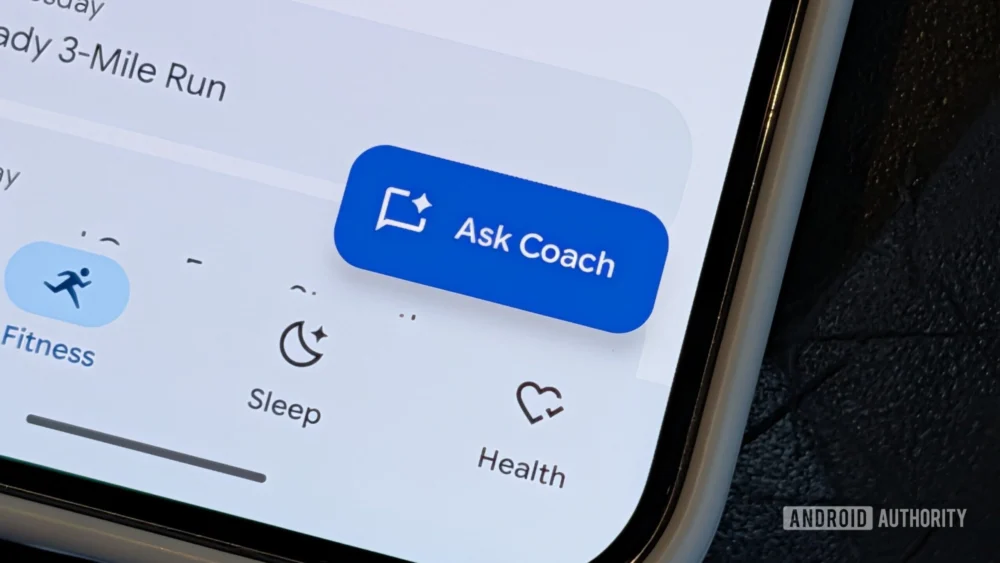
The recent, phased global rollout of Fitbit’s Artificial Intelligence (AI)-driven personal health coach marks a significant inflection point for the established wearable brand and, more broadly, for the digital health and wellness technology sector. What began as a limited public preview for Android users in the United States in the late autumn has now broadened its scope considerably, encompassing new geographic territories and, critically, bringing the feature to the iOS user base. This expansion, announced by Google, signals a firm commitment to embedding sophisticated, large language model (LLM)-based interaction directly into the daily health routines of millions of Fitbit users worldwide.
The Genesis of an AI Health Companion
To fully appreciate the magnitude of this expansion, one must revisit the context of the initial launch. Fitbit, now firmly under the operational umbrella of Google’s hardware division, has long been a pioneer in consumer-grade activity tracking. Its foundation was built on passive data collection—steps counted, calories estimated, and sleep patterns logged. While this raw data provided valuable insights, the step between observation and actionable, personalized intervention often required the user to interpret complex charts or subscribe to human coaching services.
The introduction of the "Personal Health Coach" feature directly addresses this interpretative gap. Functioning through a conversational chat interface within the Fitbit application, this AI tool acts as an accessible, always-on virtual consultant. It moves beyond mere visualization of data points to actively synthesize metrics—including heart rate variability, training load, recovery status, and sleep efficiency—to generate bespoke guidance. Early iterations demonstrated capabilities such as dynamically building workout routines based on recent performance or explaining the physiological correlation between intense training days and subsequent rest requirements. This shift represents Fitbit’s evolution from a sophisticated data logger to an intelligent, proactive health platform.
Geographic and Platform Accessibility: A Strategic Unlocking
The latest announcement details a concerted effort to democratize access to this advanced feature. The public preview is extending to Fitbit Premium subscribers in key international markets: the United Kingdom, Canada, Australia, New Zealand, and Singapore. While the current iteration remains exclusively in English, this geographical spread covers major English-speaking consumer technology markets, allowing Google to gather crucial performance data and user feedback across diverse lifestyle patterns and fitness cultures.
Perhaps more impactful than the country expansion is the parity being established across mobile operating systems. Previously siloed to Android, the health coach is now being rolled out to eligible iOS users within these expanded territories, as well as the original US market. This platform harmonization is essential. For a service reliant on deep integration with a physical device (the Fitbit tracker or smartwatch), ensuring a consistent, high-quality user experience across both major mobile ecosystems is paramount for maximizing adoption and retaining subscribers who may switch between Android and iOS devices over time. Users meeting the Premium subscription criteria are expected to see the update pushed through the standard Fitbit application update cycle over the coming weeks.
Industry Implications: The Competitive Landscape Reshapes
This aggressive integration of conversational AI into a mainstream wearable platform has substantial ripple effects across the competitive digital health industry. Competitors like Apple Health, Garmin Connect, and various dedicated health application providers are already investing heavily in machine learning to refine their recommendations. Fitbit’s move, powered by Google’s vast AI infrastructure, positions it at the forefront of this trend.
Firstly, it raises the bar for subscription value propositions. Fitbit Premium is increasingly defined not just by advanced metrics (like Daily Readiness Scores) but by interpretable and interactive coaching. If users begin relying on the AI coach for genuine fitness planning—a service previously requiring a human professional—the perceived value of the subscription fee escalates significantly. This forces rivals to accelerate their own generative AI integrations or risk appearing technologically stagnant.
Secondly, it accelerates the trend toward "proactive health management." Traditional wellness apps often rely on reactive alerts ("You haven’t moved in an hour"). An AI coach, however, promises proactive, context-aware suggestions ("Based on your low sleep score last night, perhaps swap today’s HIIT session for a Zone 2 recovery walk, and here is a route suggestion"). This subtlety in interaction is crucial for long-term user adherence, which is the ultimate metric for success in preventative digital health.
Thirdly, the integration sets a new standard for data utilization. The AI isn’t just trained on general fitness models; it is ostensibly fine-tuned using the vast, longitudinal data streams generated by the Fitbit user base (while adhering to strict privacy protocols, which will be a central area of scrutiny). The ability to cross-reference training loads with recovery metrics across millions of users provides an unparalleled training ground for the model, potentially leading to hyper-personalized advice unmatched by smaller competitors relying on less diverse datasets.
Expert Analysis: The Challenge of Contextual Fidelity and Trust
From an expert standpoint, the success of this AI coach hinges on two primary factors: contextual fidelity and user trust.
Contextual fidelity refers to the AI’s ability to understand the nuances of a user’s life that are not explicitly captured by the tracker. For example, a user might report high stress due to a significant work deadline. A less sophisticated AI might simply recommend more sleep. A high-fidelity AI coach, leveraging conversational context, might suggest stress-reduction techniques, adjust workout intensity downward, and recommend specific breathing exercises integrated into the tracker. The quality of the chat interface and its ability to handle complex, multi-variable queries will determine whether it feels like a genuine coach or a glorified chatbot answering FAQs.
User trust is arguably the more delicate challenge. Health advice carries inherent risk and responsibility. If the AI suggests a workout that leads to overtraining or injury, or if it misinterprets a subtle physiological signal, the backlash can be severe, eroding the hard-won trust consumers place in the Fitbit brand. Google must transparently communicate the boundaries of the AI—clarifying that it is a guidance tool, not a diagnostic medical device—while simultaneously demonstrating accuracy through verified outcomes. The move to a public preview suggests Google is acutely aware of this, using real-world data collection to iteratively refine the model’s safety parameters before a full commercial release.
Furthermore, the ethical implications surrounding the use of highly personal biometric data to train and refine a commercial AI product cannot be overstated. While Google assures adherence to data protection regulations, the perception of "data harvesting" for proprietary AI refinement can be a significant deterrent for privacy-conscious consumers, especially in markets like Europe or those newly onboarded to the preview.
Future Trajectory: From Coaching to Clinical Support
The expansion of this AI coach is not an endpoint; it is a strategic staging ground for Fitbit’s long-term vision within the broader Google Health ecosystem. The immediate future likely involves refining the current scope—adding multilingual support, integrating more nuanced inputs (like nutrition tracking from third-party apps), and potentially offering specialized coaching tracks (e.g., marathon training, hypertension management).
Looking further ahead, the trajectory points toward greater integration with clinical pathways. As the AI coach becomes adept at spotting subtle, persistent anomalies in user data—perhaps early markers of fatigue syndrome or irregular cardiac rhythms that warrant medical attention—Fitbit could transition from a wellness tool to a validated preliminary triage system. Imagine the AI coach flagging a concerning pattern and seamlessly generating a summary report for the user to share with their primary care physician. This convergence of consumer wearables, advanced AI analysis, and clinical integration represents the ultimate frontier in personalized, preventative healthcare, a space where Google is clearly aiming to dominate using its powerful Fitbit asset. The global rollout is merely the first step in scaling that ambition.
