

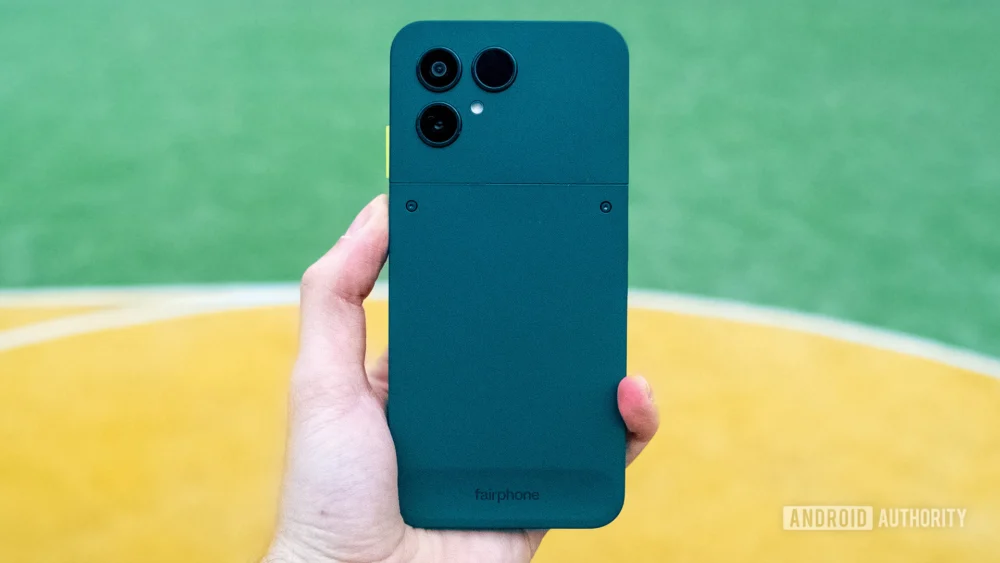
The digital landscape is perpetually fraught with the specter of data breaches. For consumers, every unexpected communication from a previously trusted vendor triggers an immediate, visceral anxiety regarding the security of their personal and financial information. This was precisely the atmosphere surrounding a recent flurry of confusing emails directed at Fairphone customers, a company positioned uniquely in the technology sector due to its strong ethical and sustainability commitments. Initial reports circulating through community forums suggested a potentially serious security incident, raising immediate alarms among users accustomed to prioritizing data privacy. However, a swift internal investigation by Fairphone, culminating in official confirmation, has definitively characterized the event not as a malicious cyberattack, but as a significant internal automation failure within their third-party communication infrastructure.
The Genesis of User Concern
The episode began subtly, manifesting as anomalous order confirmation emails arriving in the inboxes of select Fairphone clientele. One user, identified in community discussions as Nicoolas, detailed receiving a duplicate order confirmation for a component—specifically a battery replacement for a Fairphone 3 purchased nearly a year prior, in January 2025. This second notification, arriving almost exactly on the one-year anniversary of the initial transaction, immediately raised red flags. The divergence was twofold: the originating email address was not the expected Fairphone domain but rather one associated with Bloomreach, a known enterprise marketing automation platform, and the embedded hyperlinks directed users toward unfamiliar web destinations.
In the current security climate, such deviations are textbook indicators of phishing attempts or credential harvesting scams exploiting compromised vendor lists. Consequently, forum discussions quickly escalated from simple inquiries to genuine expressions of security concern, with several other users corroborating similar experiences involving phantom transaction notifications. The central fear was that an unauthorized third party had gained access to Fairphone’s customer relationship management (CRM) or transaction database, enabling them to spoof official correspondence or redirect users to malicious sites.
The Bloomreach Connection and Initial Hypothesis
Crucially, the presence of the Bloomreach sender address offered an immediate, albeit tentative, avenue for de-escalation. Bloomreach is a legitimate, widely used platform for personalized customer experiences, encompassing email marketing, personalization, and commerce solutions. Cybersecurity incidents involving third-party service providers are common; a vendor’s system malfunction or misconfiguration can inadvertently trigger mass communications, often testing environments spilling into live customer streams.
Savvy community members pointed toward the possibility that the strange links—some containing "test" subdomains—indicated an administrative error rather than a hostile intrusion. When marketing or customer service teams utilize platforms like Bloomreach, they frequently configure testing protocols. A configuration error, perhaps a faulty trigger set to rerun a legacy test campaign or a synchronization error between Fairphone’s primary database and the marketing engine, could easily explain the re-sending of historical order data through the platform’s infrastructure.
Official Confirmation: Malfunction Over Malice
Fairphone’s response to the growing community concern was relatively swift, a crucial element in modern incident response. An official representative engaged directly on the community forum, acknowledging the reports and immediately initiating an internal review. The initial statement confirmed the suspicion that the emails were originating from Bloomreach, their officially contracted emailing tool, but framed the cause as an "internal malfunction" rather than a "data breach."
This distinction is vital. A data breach implies unauthorized external access leading to exfiltration or compromise of sensitive customer data. An internal malfunction, while embarrassing for the company and disruptive for customers, suggests a failure in process, configuration, or software logic—a controllable, albeit significant, operational error.
The final confirmation arrived several days later, solidifying the operational failure narrative. Fairphone explicitly stated: "Following our internal check, we can confirm that the unwarranted emails were caused by an internal automation malfunction within our emailing system, as originally suspected. We can assure you that no data breach has occurred." This provided necessary closure, alleviating the immediate threat perception among the user base.
Industry Context: The Perils of the MarTech Stack
This incident serves as a valuable case study in the contemporary risk profile of e-commerce and direct-to-consumer technology companies. Modern operations rely heavily on complex, interconnected Marketing Technology (MarTech) stacks. A typical flow involves data passing from ERP systems to CRM databases, which then feed into personalization engines like Bloomreach, which finally executes outbound communications.
For a company like Fairphone, which cultivates a brand identity centered on transparency and ethical production, maintaining customer trust is paramount. A perceived security failure, even if later proven false, can disproportionately damage their reputation because it contradicts their core values.
The risk here highlights the concept of "supply chain vulnerability" in the digital realm. While Fairphone’s primary infrastructure may have been secure, the security posture of their service providers—in this case, the configuration management of the Bloomreach integration—becomes an extension of their own security perimeter. Any vulnerability or human error within Bloomreach’s client-side configuration instantly translates into a risk exposure for Fairphone’s customers. For enterprises managing multiple SaaS vendors, auditing and monitoring the output of these integrated platforms is a continuous, demanding task. Failures in integration testing—ensuring that staging or test environments are properly isolated from production—are recurring culprits in these types of public-facing errors.
Expert Analysis: Automation Failure vs. Breach Response
From a technical perspective, the nature of the emails—re-sent order confirmations—is telling. True account takeover or database breaches usually result in more direct attempts at credential harvesting, password reset abuse, or the mass mailing of promotional spam to monetize the stolen list. The specific, targeted re-sending of old order data strongly suggests an automated script, perhaps one designed for internal reconciliation or year-over-year comparison testing, was mistakenly deployed to the live customer segment via the Bloomreach interface.
The success of Fairphone’s initial response, despite the initial panic, lay in rapid acknowledgment and clear communication, even before the final confirmation. By immediately addressing the issue on the community forum, they controlled the narrative flow. Delaying confirmation, conversely, would have allowed speculation to metastasize into a full-blown trust crisis. This agility in communication contrasts sharply with many large corporations that often adhere to protracted, legalistic disclosure timelines, which only exacerbate customer fear during the critical first 24 hours of an incident.
Future Impact and Lessons for Digital Trust
While the immediate threat was neutralized, the residual impact on customer perception must be managed. Fairphone will need to demonstrate tangible improvements in their deployment and testing protocols for their MarTech integrations. This incident underscores several crucial trends impacting consumer technology providers:
- Increased Scrutiny on Third-Party Risk: Customers are becoming increasingly aware that interacting with a brand means interacting with its entire vendor ecosystem. Companies must adopt more rigorous auditing standards for all integrated platforms, focusing particularly on outgoing communications protocols.
- The Value of Operational Transparency: Fairphone’s commitment to resolving the issue publicly, even when the news was merely "no breach," reinforces the value proposition for their ethically conscious customer base. In the sustainability and repairability space, transparency is a core product feature; extending that to operational security failures is necessary for holistic brand integrity.
- The Automation Double-Edge: As companies rely more on sophisticated automation for personalization and efficiency, the potential impact radius of a single coding or configuration error grows exponentially. A simple typo in a deployment script can now reach millions of inboxes instantly, making robust "kill switches" and pre-deployment checks non-negotiable necessities.
In conclusion, the brief scare experienced by Fairphone customers served as a stark reminder that in the digital economy, operational competence is inseparable from data security perception. The resolution—a confirmed software glitch rather than a malicious hack—is a significant relief, especially for a brand whose reputation is built upon trust and ethical fortitude. However, the episode underscores the persistent, underlying fragility inherent in managing complex, interconnected digital service chains. For Fairphone, the path forward involves not just maintaining product integrity, but rigorously hardening the automated processes that communicate with their dedicated community.
