

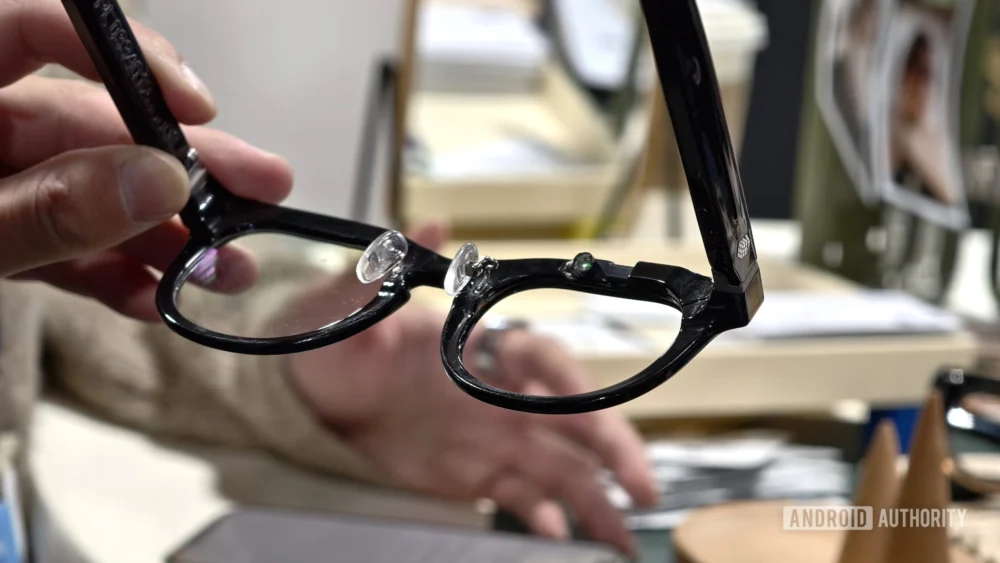
The contemporary technological landscape is characterized by an aggressive proliferation of Artificial Intelligence solutions, which are rapidly integrating into nearly every facet of digital and physical life. From sophisticated cloud-based models to localized on-device processing, AI capabilities are expanding exponentially. However, this expansion is not uniform; it is marked by a fierce competition among developers to define the next essential form factor for human-computer interaction, moving beyond the smartphone. A crucial battleground in this evolution involves wearable AI devices. Currently, the discourse pits minimalist, clip-on "AI pins" against more immersive, display-equipped smart glasses. A rigorous analysis of usability, data capture potential, and established user behavior strongly suggests that the latter, exemplified by advanced AI eyewear projects, represents the more sustainable and valuable trajectory for ambient computing, even when compared to hypothetical premium offerings from dominant players like Apple.
The Fundamental Flaw of the AI Pin Paradigm
The appeal of a device like the much-discussed AI pin—a small, magnetically attachable gadget meant to serve as an omnipresent, non-screen-based assistant—is rooted in a desire to escape screen addiction. Proponents argue it offers a dedicated conduit for AI, free from the distractions inherent in a smartphone. Yet, this approach fundamentally misinterprets established principles of human-technology interaction, as codified by design thinkers like Donald Norman. Successful technology adoption hinges on minimizing the cognitive load required for adaptation. Users naturally gravitate toward interfaces that extend existing mental models rather than forcing radical behavioral shifts.
The transition to touchscreen interfaces, for instance, was relatively swift because it mirrored the pre-existing dexterity users developed typing on physical keyboards; it was an optimized substitution, not an invention of a new language. Conversely, the nascent failures of early AI pin prototypes demonstrate the high friction associated with introducing entirely novel interaction methods. When users are compelled to learn esoteric gestures or rely exclusively on voice commands in diverse acoustic environments, the utility curve plummets, leading to high rates of user disengagement and product abandonment—a pervasive issue already plaguing the broader wearables market.
A hardware device must offer a capability that existing, ubiquitous technology cannot feasibly replicate. If an AI pin’s primary functions are limited to voice transcription, simple queries, and ambient audio processing, its value proposition is immediately undermined by the fact that modern smartphones and sophisticated earbuds already execute these tasks, albeit through different physical means. The pin introduces complexity (attachment, battery management, separate connectivity) without delivering commensurate functional advantage. It risks becoming a novelty—a high-priced accessory used primarily for signaling early adoption—rather than an indispensable tool.
Multimodality: The Crucial Differentiator in Ambient AI
The core limitation of the pin architecture lies in its severely restricted sensory and output modalities. An AI pin is inherently visually blind in the context of the user’s immediate experience; it relies on ambient microphones for input and voice synthesis for output. This confines the interaction to a narrow, purely auditory bandwidth.

The future of effective AI, especially in contextual scenarios, demands multimodal input and output. We are moving toward an era where AI must understand what we see, where we are looking, and what we are interacting with in real-time. This is where display-equipped smart glasses, particularly those integrating Augmented Reality (AR), present a vastly superior framework.
Consider navigation: receiving spoken directions on a pin is cumbersome and requires conscious attention away from the environment. In contrast, AR glasses can project turn-by-turn cues directly into the user’s field of view, maintaining contextual awareness without demanding the user constantly check a handheld device. Similarly, for real-time translation or object identification, visual input processed by the AI and overlaid onto the real world provides immediate, actionable intelligence that voice alone cannot match.
Furthermore, the optimal interaction model is rarely singular. A user in a loud, crowded setting (like a subway car) will find voice commands ineffective or socially inappropriate. Smart glasses, when integrated with supplementary wearables like a smartwatch, unlock a layered interaction system: voice when appropriate, discrete gestures detected by the glasses or watch when necessary, and perhaps even simple touch controls on the wrist. This ecosystem approach—a synchronized suite of wearables—offers resilience and utility across the full spectrum of real-world environments. An AI pin, tethered to a single, limited interface, cannot compete with this rich, adaptable multimodal experience.
Google’s Strategic Advantage: Deep World Modeling
When evaluating which technological ecosystem is best positioned to deliver this superior multimodal AI experience, Google holds a distinct, if sometimes controversial, advantage rooted in its decades-long accumulation of environmental data. While concerns regarding data privacy are valid and must be addressed through robust regulatory frameworks, the sheer breadth of Google’s mapping and visual data provides an unparalleled foundation for contextual AI.
Google’s Street View initiative created a persistent, high-fidelity 3D map of the planet, constantly refreshed. This massive dataset provides the necessary baseline understanding of global geography, signage, and architecture required for accurate real-world spatial computing. Layered upon this is Google Lens, which has spent years refining object recognition and visual search across billions of user queries. When coupled with the established conversational intelligence refined through the Google Assistant and now embodied in Gemini, the result is an AI system with a deeply ingrained, practical understanding of the physical world.
This is not merely academic knowledge; it translates directly into practical utility for an AR/AI eyewear product. An AI assistant leveraging this infrastructure can accurately identify a specific storefront based on visual cues, recall previous interactions related to that location, and overlay contextually relevant information—a feat that requires visual grounding far beyond the capabilities of an audio-only device.
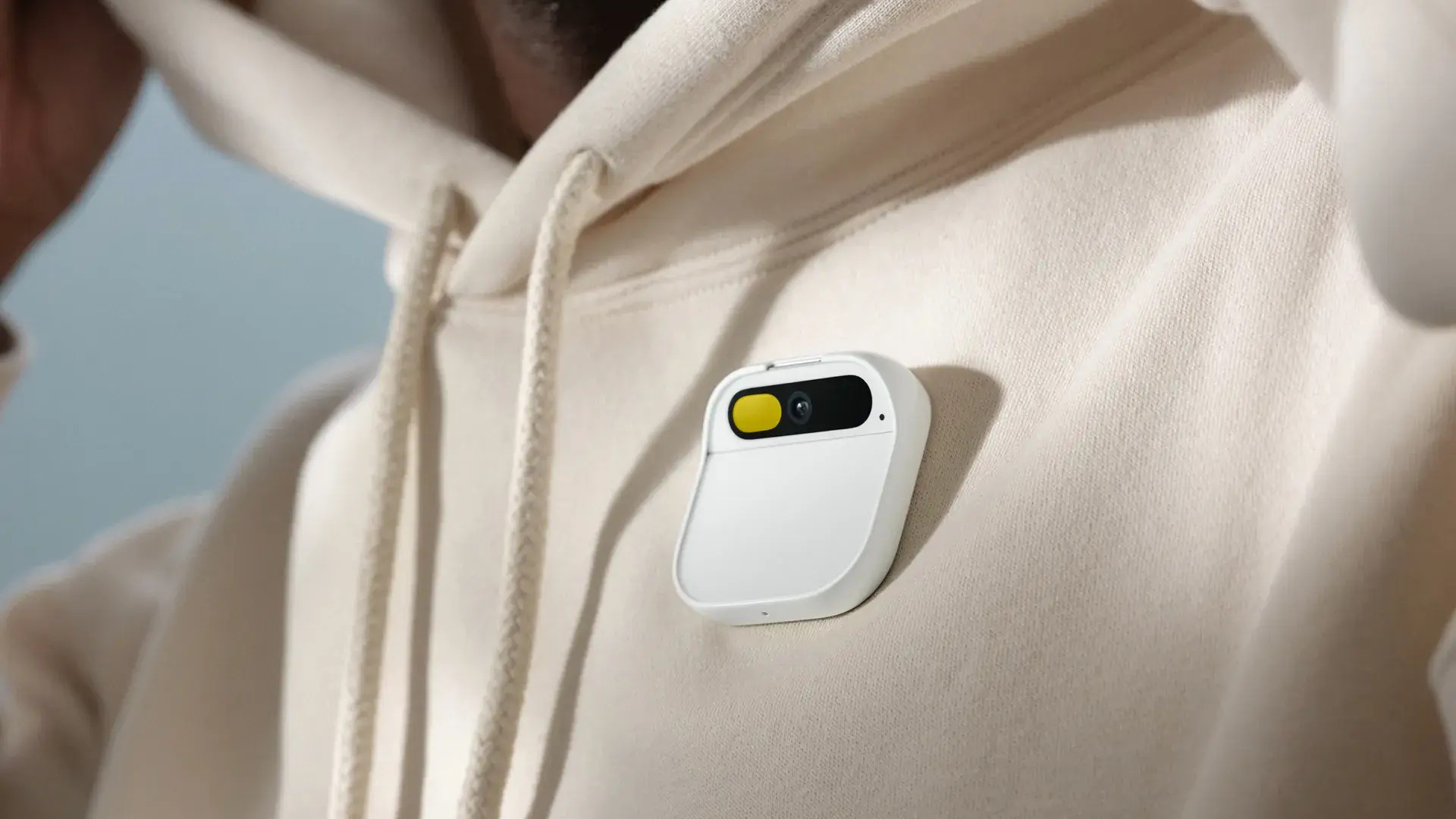
Conversely, while Apple possesses significant computational resources and user ecosystem control, its grounding in real-world spatial data is less public and arguably less comprehensive than Google’s dedicated mapping efforts. While Apple’s Visual Intelligence efforts are significant, the sheer scale of Google’s foundational environmental data collection gives the Android ecosystem a significant, potentially insurmountable, head start in building the truly context-aware AI companion that eyewear promises.
The Inevitability of Iterative Improvement Over Revolutionary Disruption
The history of consumer electronics teaches a clear lesson: enduring success comes from evolutionary refinement, not abrupt, disruptive replacement. The smartphone has not been summarily discarded; it has been augmented and supplemented by increasingly capable wearables like watches and headphones. The next logical step involves embedding AI directly into the most visually central accessory: eyewear.
The trajectory suggests that AI capabilities will be incrementally integrated into conventional or subtly augmented glasses (like existing smart spectacles that prioritize audio and basic capture) before a full-scale AR platform takes hold. This iterative path reduces market shock and allows for user habit formation—the very mechanism that the AI pin attempts to bypass through forced novelty.
For a product like Apple’s rumored pin to gain widespread adoption, it would require consumers to willingly adopt a form factor that is both aesthetically conspicuous (the "cyborg" effect that plagued early smart glasses) and functionally limited compared to what they already carry. This sets an impossibly high bar for novelty to sustain interest beyond the initial marketing cycle.
Eyewear, by contrast, has been slowly normalizing. Products from Meta and Ray-Ban have demonstrated that users will accept technology embedded in glasses if the aesthetic compromise is minimal. When this visually acceptable form factor is then imbued with powerful, multimodal AI—the kind Google has the infrastructure to support—the transition becomes one of enhanced capability rather than behavioral overhaul. The integration of AI into eyewear feels like the natural next step in the continuum of mobile computing, following smartphones and smartwatches.
Industry Implications and Future Trends
The divergence in approach between the pin concept and the glasses concept reveals a deeper schism in how technology companies view the future of personal AI.

The Pin represents a philosophy of Digital Minimalism: An attempt to distill interaction down to the bare essentials—voice and perhaps limited projection—aimed at users who prioritize disappearing the technology. This is a niche market, appealing to those seeking a specific counter-culture stance against screen dependence.
The Glasses represent a philosophy of Contextual Augmentation: An aim to seamlessly blend digital information with the physical world, maximizing utility through richer sensory data capture and output. This appeals to the broader consumer desire for efficiency, information access, and enhanced perception.
For hardware manufacturers, the glasses pathway presents a more robust long-term revenue strategy. AR/XR glasses require complex optics, advanced micro-displays, sophisticated spatial mapping hardware, and continuous software updates—all areas ripe for sustained R&D investment and feature segmentation (e.g., prescription integration, prescription lenses, enterprise models). The pin, by contrast, is a simpler, audio-centric peripheral whose core functionality can be rapidly replicated by existing accessories.
Furthermore, the industry trend is heavily skewed toward visual intelligence. Generative AI thrives on visual context. As models become increasingly capable of interpreting complex scenes, understanding human intent through body language, and overlaying graphics that interact with real-world physics, the necessity of an integrated visual capture system becomes paramount.
If Apple chooses to enter this space with a highly focused, aesthetically refined AI pin, it will likely carve out a loyal, high-end niche. However, if Google commits its resources to evolving its existing AR prototypes into a consumer-friendly, visually rich platform deeply integrated with the Android operating system, it will capture the larger, more pragmatic segment of the market that values functional enhancement over philosophical statement. The choice for the pragmatic technologist, the one seeking genuine utility over fashionable restraint, clearly favors the device that can see, display, and interact across multiple dimensions. Eyewear is simply a more complete computational platform than a glorified voice recorder clipped to one’s lapel.
