

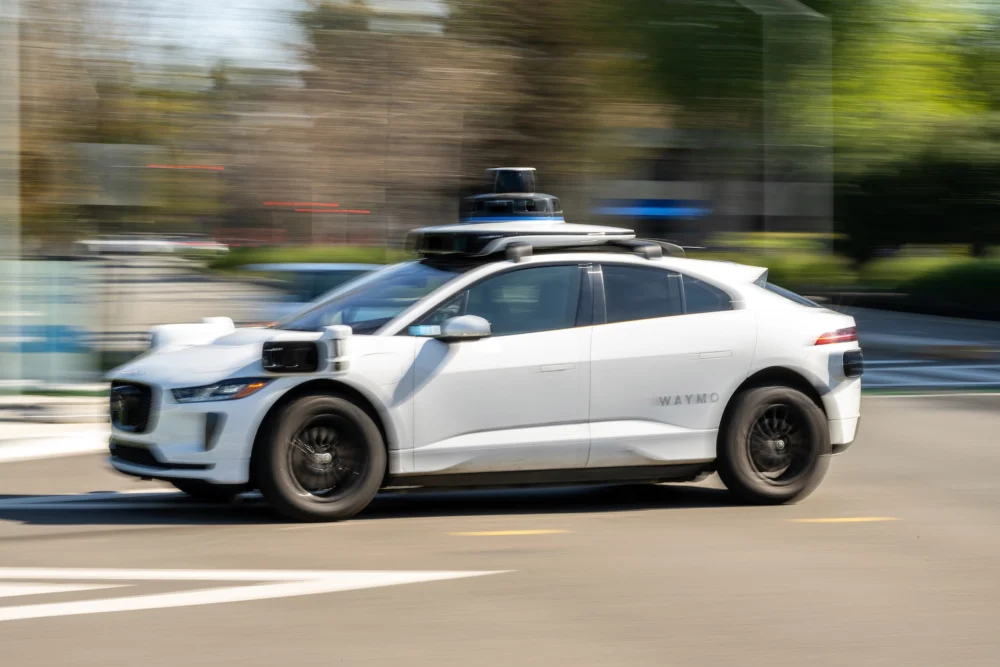
The trajectory of Waymo, the autonomous driving subsidiary of Alphabet, has entered a new phase defined by aggressive expansion and immense capital backing. Over the past 18 months, the company has transformed from a primarily R&D-focused entity into a genuine commercial operator, deploying services across half a dozen major metropolitan areas in the United States, including key hubs like the San Francisco Bay Area, Phoenix, Los Angeles, Austin, Atlanta, and Miami. This domestic footprint is set to go global, with announced intentions to scale its driverless fleet into more than a dozen new international markets this year, prominently featuring major global cities such as London and Tokyo.
To sustain this ambitious global rollout, Waymo recently secured a staggering $16 billion in fresh funding. The central question reverberating across Silicon Valley and Detroit is whether this massive infusion of capital truly represents the financial tipping point necessary to transition the complex, cash-intensive robotaxi model from technological feasibility into sustainable, mass-market profitability.
Conversations with leading venture capitalists and mobility sector analysts reveal a consensus that is decidedly nuanced, often summarized as "sort of" or "it depends." The immediate bullish argument rests heavily on the unwavering support of Alphabet. Unlike many competitors—who rely on the often-fickle backing of legacy automakers prone to strategic pivots or independent AV startups vulnerable to dry funding cycles—Waymo enjoys the status of a strategic, primary investment within one of the world’s most stable corporate structures. This institutional commitment provides a crucial shield, allowing Waymo to absorb developmental costs and regulatory delays that would prove fatal to less capitalized rivals.
Furthermore, operational metrics indicate genuine momentum. Waymo’s ridership and logged autonomous miles are escalating exponentially. The company currently facilitates approximately 400,000 weekly rides across its six operational U.S. markets. In 2025 alone, its annual ride volume more than tripled, reaching an impressive 15 million completed trips. These numbers demonstrate successful initial product-market fit and the ability to handle high-frequency operations in increasingly complex urban environments.

The Profitability Paradox: Capital, Cost, and Control
However, raw ridership volume does not automatically equate to financial viability. The ultimate measure of success for any self-driving enterprise, particularly one with a multi-billion dollar valuation, is sustained profitability. Waymo still faces systemic obstacles, chief among them the immense operational cost structure and intensifying regulatory scrutiny.
The issue of cost is multifaceted. Deploying a commercial robotaxi service requires continuous investment in three key areas: R&D refinement (improving the AI stack), specialized hardware (Lidar, radar, custom compute), and fleet maintenance (servicing highly complex, high-utilization vehicles). Even with $16 billion, the runway for these expenditures remains finite, especially when factoring in the slow, high-friction process of regulatory approvals city by city, country by country.
A fundamental strategic challenge for Waymo, setting it apart from its most formidable competitor, Tesla, is the lack of vertical integration in manufacturing. Waymo operates through strategic partnerships with established automotive manufacturers. While this strategy accelerates fleet deployment without the burden of building assembly lines, it introduces friction and cost inefficiencies. Waymo does not possess the inherent financial leverage or the ability to dictate design optimizations that a vertically integrated player like Tesla enjoys. Tesla’s ability to design its vehicles from the ground up—optimizing for autonomous operations, minimizing hardware costs, and simplifying maintenance—offers a structural advantage in driving down the Total Cost of Ownership (TCO) at scale, a metric critical for robotaxi economics.
Navigating the Regulatory Minefield
Regulatory attention is the second critical hurdle. As Waymo scales, it moves from a technological experiment to a central component of urban infrastructure, inevitably inviting oversight. Recent incidents involving autonomous vehicles, even those operated by competitors, have intensified public skepticism and led to direct governmental intervention. This scrutiny was recently highlighted by the testimony of Waymo’s chief safety officer in a critical Senate Commerce hearing, where the balance between innovation and public safety was fiercely debated.
The rising regulatory pressure forces Waymo into a challenging strategic dichotomy: should it remain the operator of its robotaxi fleet, or should it pivot to becoming solely a licensor of its proprietary autonomous vehicle (AV) technology?

Remaining the operator ensures maximum control over the technology deployment, crucial for managing safety, collecting high-fidelity data, and maintaining brand reputation in a nascent field under intense scrutiny. However, this path is capital-intensive, liability-heavy, and inherently slow. Conversely, pivoting to a licensing model—selling the AV stack to automakers or third-party fleet operators—allows for rapid scaling and reduced operational expenditure, but necessitates relinquishing critical control over how the technology is deployed, potentially risking safety standards and brand integrity. Given the current technological maturity and the high stakes of public trust, maintaining operational control appears to be the necessary, albeit expensive, default position.
The Pivot to Physical AI and Diversified Autonomy
While the robotaxi segment draws the most headlines, the broader autonomous vehicle technology landscape is rapidly diversifying. The difficulty and expense associated with achieving Level 4 autonomy in complex urban settings have prompted a significant pivot among founders and investors toward applications of AV systems in less regulated, more specialized domains. This trend is fueling the rise of "Physical AI" startups that apply advanced automation to industrial, agricultural, and defense sectors.
The deal flow this week underscored this dynamic shift, with massive funding rounds targeting specialized autonomy.
Bedrock Robotics, a Silicon Valley startup founded by Waymo and Segment veterans, exemplifies this trend. Bedrock is focusing on retrofitting self-driving systems onto heavy construction equipment, a sector ripe for efficiency gains through automation. The company recently closed a substantial $270 million Series B funding round, co-led by CapitalG and the Valor Atreides AI Fund. The round attracted a diverse syndicate of investors, including NVentures (Nvidia’s VC arm), 8VC, and the Massachusetts Institute of Technology.
This raise is significant not just for its size—Bedrock has accumulated over $350 million shortly after its 2024 founding—but because it signals strong investor confidence in targeted, practical automation rather than generalized consumer mobility. This focus on industrial application is also attracting top-tier talent; Bedrock recently secured Vincent Gonguet, who previously led AI safety and alignment for Meta’s Llama models, as its head of evaluation, alongside John Chu, a key hire poached from Waymo.

Other notable capital injections highlight the breadth of the current mobility funding environment:
- Overland AI, dedicated to developing self-driving systems for complex military and off-road defense operations, raised $100 million in a round led by 8VC, illustrating the high valuation placed on robust automation for specialized, high-stakes environments.
- Skyryse, an El Segundo-based aviation automation startup focused on simplifying flight controls for helicopters, secured over $300 million in Series C funding, catapulting its valuation to $1.15 billion. This investment shows the extension of automation principles beyond ground transport into aerial mobility, backed by firms like Fidelity Management & Research and the Qatar Investment Authority.
- The mobility fintech sector also saw action, with GoCab, an African startup focusing on scaling electric mobility and financial inclusion, raising $45 million in a combination of equity and debt, demonstrating the growing intersection of clean energy transition and financial technology in emerging markets.
Shifting Corporate Strategies and Ethical Concerns
Beyond funding, corporate maneuvers indicate deep strategic planning for the autonomous future. Uber, despite its initial tumultuous foray into in-house AV development, is now cementing its long-term strategy of leveraging partnerships. The promotion of Balaji Krishnamurthy, a key advocate for Uber’s AV partnership ecosystem, to Chief Financial Officer, is a significant signal. Krishnamurthy’s role has been central to structuring agreements involving equity investments, offtake agreements, and infrastructure support for AV software partners, including holding a board seat at AV company Waabi. This move solidifies Uber’s commitment to eventually integrating driverless economics into its core profitability model.
Meanwhile, the shadow of past mobility funding exuberance lingers. Recent revelations surrounding the association between David Stern, a former advisor connected to Prince Andrew and an early investor in defunct EV startup Canoo, and convicted sex offender Jeffrey Epstein, underscore the ethical complexities and often opaque funding sources that fueled the mobility boom years. Court files released by the Department of Justice confirmed Stern’s close business partnership with Epstein, detailing pitches for investment opportunities in high-profile EV companies like Faraday Future, Lucid Motors, and Canoo during the peak of speculative mobility funding. This historical footnote serves as a potent reminder of the sometimes-unsavory intersection of high finance, technology, and celebrity during periods of intense capital flow.
On the regulatory front, global standards are beginning to converge, often focused on safety and accessibility. China’s Ministry of Industry and Information Technology recently announced a ban on concealed electronically actuated car door handles, commonly popularized by Tesla for their aesthetic and aerodynamic benefits. The ruling mandates that all new vehicles sold in China must incorporate mechanical releases by January 1, 2027, prioritizing emergency access over design novelty. Industry observers suggest that Europe is likely to adopt similar safety-driven measures, forcing a global reconsideration of vehicle design standards influenced by autonomy and electrification.
The consensus remains that Waymo’s $16 billion war chest, while enormous, is not a guarantee of profitability, but rather a necessary prerequisite for continuing the most expensive and complex challenge in modern transportation. Success hinges not just on technological perfection, but on navigating the regulatory landscape, optimizing operational costs through aggressive efficiency, and achieving scale faster than its rivals can develop their own competitive solutions. The true test of whether $16 billion is "enough" will be measured in years, against the backdrop of an industry rapidly fragmenting into specialized, high-value autonomous niches.
