

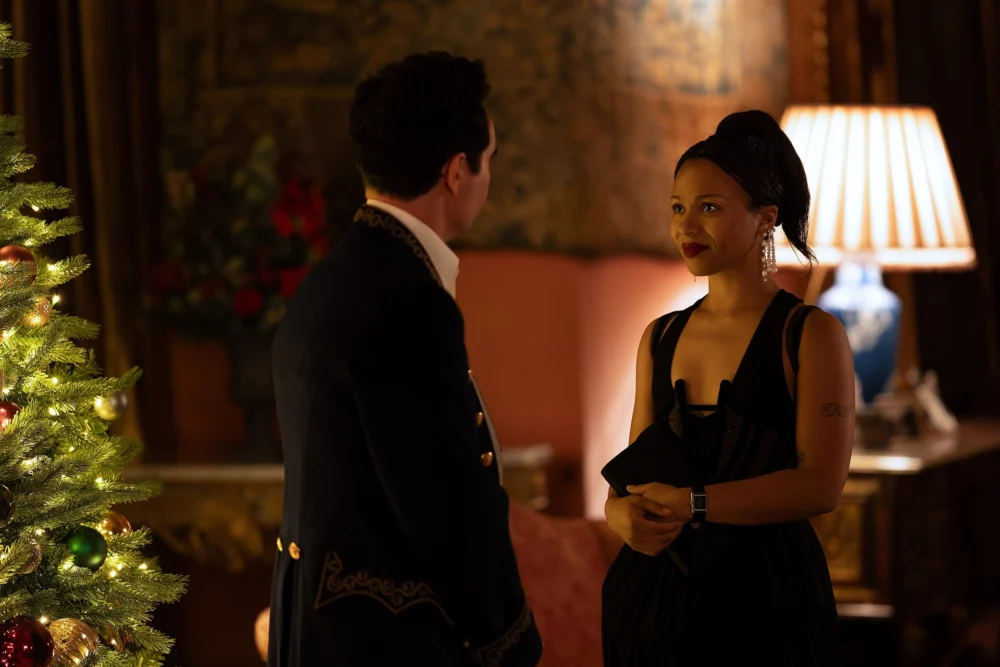
HBO’s searing financial drama, Industry, has always excelled at capturing the raw, amoral energy of high finance, but its latest season achieves a new level of journalistic precision by dissecting a fraud scenario ripped directly from the headlines of the contemporary tech world. The central narrative arc revolves around the audacious takedown of a supposed fintech unicorn named Tender, providing a compelling, high-stakes exploration of fabricated valuation, regulatory arbitrage, and the blurred lines between ambitious entrepreneurship and outright criminal deception.
The investigation into Tender is spearheaded by Harper Stern, the series’ anti-heroine, who has successfully launched her own investment vehicle. Having been marginalized and dismissed by the traditional, insular UK financial establishment—including enduring the cynical label of a "DEI plant" by her former mentor—Harper is seeking not just profit, but vindication and institutional destruction. Her strategy is to short Tender, a sophisticated bet that requires proving the company is fundamentally worthless.
The initial suspicion is validated quickly. Following a crucial tip from a financial journalist—highlighting the vital, often unsung role of the media in uncovering corporate rot—Harper dispatches her trusted associates, Sweetpea and Kwabena, on a covert operational deep dive, ultimately leading them to Ghana. Their findings are starkly revealing and terrifyingly simple: the entire infrastructure is a mirage. As Sweetpea summarizes the fraudulent feedback loop, "Fake users drive fake revenue drives fake cash." This observation is the core mechanism of modern tech fraud, where the illusion of exponential growth substitutes for actual value creation, sustained by a capital market desperate for the next high-growth narrative. The final verdict on Tender is that its perceived multi-billion-dollar valuation is built upon a foundation of absolute zero: "The thing is nothing."
The Regulatory Pressure Cooker and Forced Pivots
What makes the Tender storyline particularly timely is the background context that necessitates the company’s fraudulent pivot. Tender began as a payment processing platform specifically catering to the adult content industry. This sector, lucrative but often politically precarious, suddenly faces existential threat due to the implementation of the UK’s real-world and highly controversial Online Safety Bill. This legislation mandates stringent age verification and enhanced content governance, directly threatening Tender’s original business model and revenue stream.

The regulatory environment thus becomes the catalyst for fraud. Facing the classic tech imperative—"pivot or die"—Tender’s leadership chooses a desperate and illegal path. The company’s CFO-turned-de facto leader, Whitney Halberstram, orchestrates a rapid and aggressive transformation, aiming to repackage Tender as a fully licensed, mainstream digital bank. Whitney embodies the worst clichés of the modern tech baron: ruthless, utterly convinced of his own exceptionalism, and governed by the credo of "move fast and break things," even if those "things" include financial regulations and investor trust. He deploys aggressive lobbying tactics to secure a banking license while simultaneously seeking advantageous merger opportunities to mask the hemorrhaging core business. Henry, the nominal CEO and face of the pivot, becomes the pliable front man for Whitney’s machinations.
The pressure cooker scenario sets up a fascinating conflict within Harper’s social sphere. Her decision to short Tender pits her directly against her former friend, Yasmin, who is married to Henry and is actively involved in managing Tender’s critical communications and political lobbying strategy. This intricate web of personal and professional antagonism—where ideological conviction clashes with marital loyalty and financial self-interest—elevates the corporate drama into something intensely human and morally complex.
Industry Implications: Echoes of Real-World Collapse
The narrative surrounding Tender is not merely fictional; it serves as a highly accurate, dramatized composite of several major financial scandals that have rocked the fintech and startup ecosystem in recent years. The phenomenon of founders employing sophisticated deception to inflate user metrics and overstate cash reserves is a recurring theme in modern financial history.
The most potent real-world parallel to the Tender collapse is the staggering implosion of Wirecard, the German payment processing giant. Wirecard, much like Tender, was highly successful in presenting a narrative of explosive growth until auditors discovered that €1.9 billion in cash, which the company claimed was held in trust accounts in the Philippines, simply did not exist. The fraud involved complex, multi-jurisdictional accounting trickery and regulatory obfuscation—a playbook Tender seems to follow meticulously.
Furthermore, the show draws thematic links to other infamous collapses, such as the defrauding of JPMorgan Chase by Charlie Javice of Frank, and the colossal, systemic failure of the FTX crypto exchange. These cases illustrate a crucial trend: the sheer velocity of capital injection into private tech markets often outpaces the due diligence capacity of investors and regulators. This creates a fertile environment where charismatic founders—like Whitney—can exploit the momentum economy, prioritizing public narrative over fiscal reality.

This context also elevates the role of the short seller. Harper’s mission to expose Tender is presented by her mentor, Eric, not just as a profitable trade, but as an adversarial, almost ideological crusade: "Short-only work is ugly, hard, investigative," he states, labeling it "anti-status quo, anti-establishment, anti-power." In the context of Wirecard, the short sellers who consistently raised alarms were often dismissed, harassed, and even accused of market manipulation, yet they ultimately proved to be "alternative whistleblowers" when regulators and institutional investors failed to heed the warning signs. Harper, by embracing this "ugly" work, positions herself as a necessary disruptive force against systemic market failures.
Expert Analysis: The Technocratic Elite and Moral Decay
Beyond the financial mechanics, Industry offers sharp sociological and political commentary on the modern elite. The show deftly critiques the culture of consequence-free living that defines the UK’s upper class, particularly in how they interface with government and media.
The show accurately depicts the media playbook of a crisis-ridden startup. The fact that the fictional Tender specifically targets technology publications as part of its strategic defense underscores the reality that favorable press is often weaponized to maintain investor confidence, regardless of underlying metrics.
A darker political current is explored through the character of Moritz, a German banker hesitant to sell his family’s traditional institution to Whitney. Moritz’s vocal lobbying against "Western liberalism" and the globalist financial ethos of Silicon Valley highlights the rising criticism of "technofascism"—the notion that certain tech barons are amassing unprecedented power and wealth, often advocating for anti-democratic or hyper-libertarian ideals, shielded by their financial empires. By giving Whitney a Jewish-sounding surname (Halberstram) and contrasting him with the conservative, quasi-reactionary European Moritz, the show introduces complex, uncomfortable layers of cultural and ideological friction within the global financial oligarchy.
Harper Stern’s exceptional rise, however, forces a moment of pause in the show’s realism. As a shrewd, calculating Black American woman who successfully navigates and ultimately competes against the notoriously insular, exclusionary, and predominantly white British establishment, her ascent strains credulity for some observers. As one Black British founder noted, the character’s appeal transcends strict realism: "Who needs realism when she’s such a great character?" This dynamic allows the show to both critique the lack of diversity within the elite (via the "DEI plant" insult) while also indulging in the fantasy of a marginalized figure achieving ultimate power through sheer, amoral force.

The pervasive moral rot is not limited to the workplace. The show consistently portrays a profound lack of professional boundaries, characterized by rampant nepotism, hedonistic excess, and the exchange of sexual favors for trade secrets—dynamics that veteran European investors confirm are alarmingly common in real-life high-stakes environments.
Yasmin’s descent into extreme hedonism, highlighted by her involvement in an organized ménage à trois and her overall increasingly erratic behavior, serves as a devastating portrait of the corrosive nature of proximity to unchecked wealth and power. Her arc suggests that the moral vacuum created by immense financial power pulls everyone, regardless of their background, into a dark vortex of self-destruction and complicity, even drawing comparisons from critics to figures like Ghislaine Maxwell—emblems of the hidden, enabling roles played by certain individuals in sustaining vast systems of corruption.
The Future Trajectory of Financial Drama
As Industry barrels toward its conclusion for Tender, the audience anticipates the inevitable "Icarus moment" for Whitney and his team. The historical precedents—Wirecard’s CEO being arrested, while the COO went on the run and was later accused of espionage—suggest that the fictional downfall will be spectacular, messy, and likely involve criminal charges.
The show’s genius lies in its breakneck pacing and relentless audacity, capturing the contemporary reality that financial markets often move too fast for ethical frameworks to catch up. By centering its narrative on the exposure of sophisticated, internationally coordinated fintech fraud, Industry serves as more than mere entertainment; it functions as a critical mirror reflecting the anxieties surrounding the modern venture capital bubble and the systemic risks inherent in valuing potential over profit.
In an era defined by economic uncertainty, regulatory fatigue, and a deep public cynicism regarding corporate ethics, Industry provides the visual embodiment of the absence of ethical capitalists. It is a thrilling, albeit disturbing, portrayal of how money and power operate in the 21st century—a rush that, much like the real-life scandals it mimics, we find ourselves unable to look away from. The demand for such narratives underscores a crucial contemporary truth: the most compelling fiction about the financial world is often only marginally more exaggerated than the truth.
