

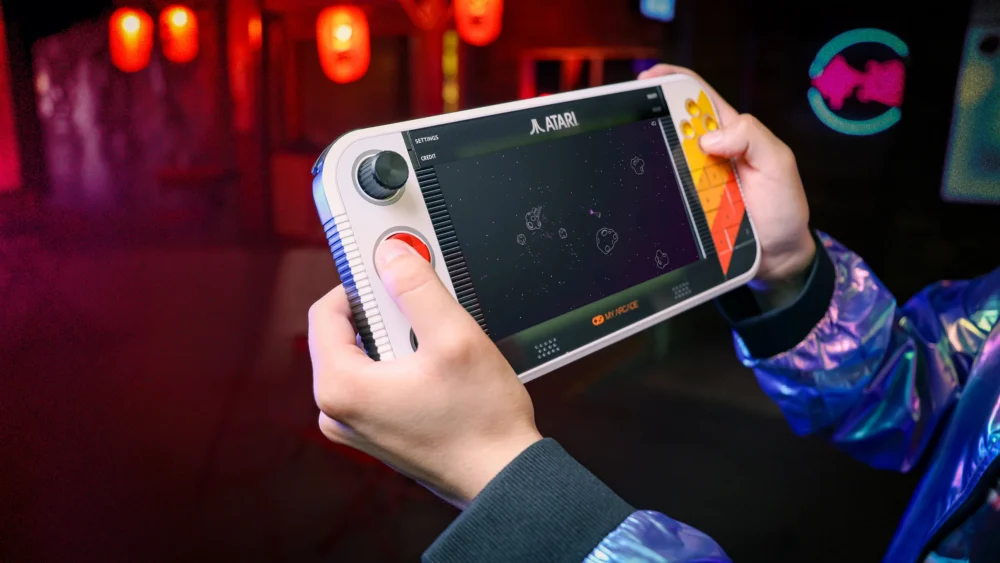
The landscape of consumer electronics, particularly within the gaming sector, is constantly oscillating between groundbreaking innovation and deliberate nostalgia. In recent years, the convergence of these two forces has spawned a robust market for retro-inspired hardware, capitalizing on the enduring affection for 8-bit and 16-bit eras. Central to this movement is the My Arcade Atari Gamestation Go, a device that attempts to distill the essence of the pioneering Atari experience into a contemporary, portable form factor. Currently, a substantial promotional window has opened, offering this comprehensive package at a considerable reduction, marking it as a notable acquisition for enthusiasts and casual gamers alike.
This particular promotional event, facilitated through the Amazon-owned deals platform Woot, presents the Gamestation Go at a compelling price point of $129.99, which represents a reduction of approximately $50 from its standard retail valuation. While the inherent appeal of this device is tied to its historical lineage, understanding the context of this deal requires an examination of its features, the current state of the emulation market, and the long-term implications for hardware manufacturers leveraging legacy intellectual property (IP). Prospective buyers must note the standard transactional constraints associated with Woot, specifically the one-unit-per-customer limitation and the inclusion of a 90-day limited warranty provided by the vendor, which underscores the nature of this offering as a time-sensitive, specific-channel promotion rather than a standard manufacturer release.
The Genesis of Portable Nostalgia
The Atari brand remains one of the most recognizable pillars of video game history, responsible for introducing home consoles to the masses and establishing foundational genres that persist today. For many seasoned gamers, the memory of the original Atari 2600 or even early arcade cabinets represents a formative experience—a time characterized by simple yet deeply engaging gameplay mechanics. The My Arcade Atari Gamestation Go is engineered precisely to trigger this sentiment, providing an accessible conduit to those seminal titles without requiring complex emulation setup or the maintenance of vintage hardware.
The core value proposition of the Gamestation Go lies in its curated content library. Bundling over 200 officially licensed Atari titles—ranging from undisputed classics like Asteroids and Centipede to deeper cuts—it offers immediate gratification. This pre-loaded catalog bypasses the often legally and technically convoluted process of sourcing and running emulators, positioning the device as a plug-and-play solution for retro gaming aficionados.
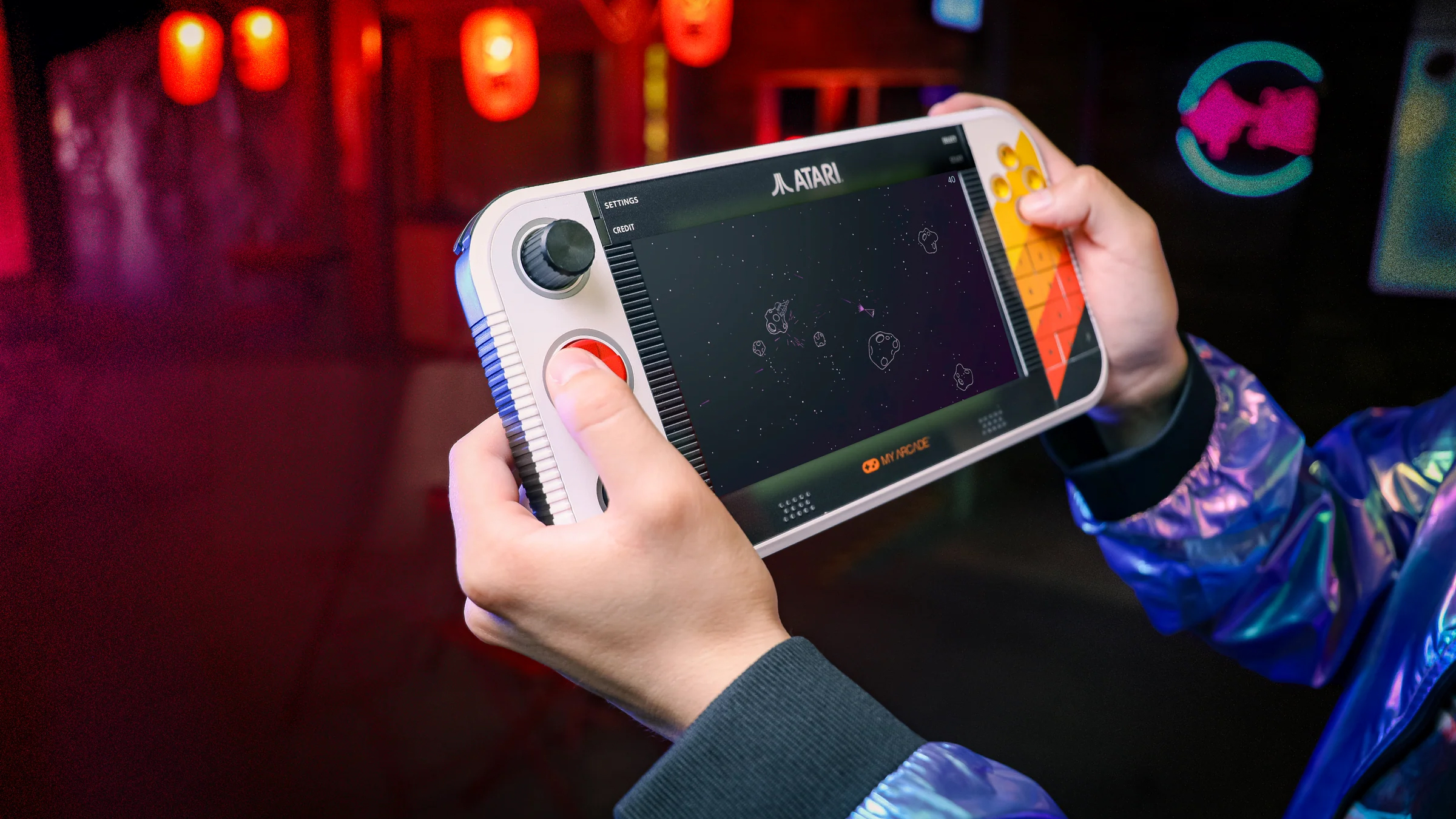
From a hardware perspective, the unit is designed for versatility. It features a 7-inch display, which provides a suitably large canvas for 4:3 aspect ratio games without excessive stretching. Crucially, the control scheme is remarkably comprehensive, an aspect often overlooked in minimalist handheld designs. The inclusion of a D-pad, essential for platformers and early action games, is supplemented by a trackball, necessary for titles like Missile Command, and a functioning numerical keypad, a nod to more complex early vector graphics games. Furthermore, the presence of dedicated paddle controls and standard gamepad buttons ensures that nearly any control scheme from the Atari library can be replicated with reasonable fidelity. This multifaceted control layout distinguishes it from simpler, single-purpose retro handhelds, suggesting a more serious commitment to faithful gameplay representation.
Beyond Portability: The Hybrid Gaming Experience
While the "Go" in its designation emphasizes mobility, the device’s design architecture smartly incorporates home console functionality. The inclusion of an HDMI output port transforms the handheld into a micro-console. This feature is significant because it addresses a common limitation in portable retro devices: the desire to experience classic graphics on a modern, high-definition television. Being able to seamlessly transition from handheld play to a big-screen experience using a single unit enhances its utility significantly, making it a viable secondary or travel gaming system for households already invested in modern consoles.
This dual functionality—portable handheld and HDMI-out mini-console—reflects a broader industry trend where manufacturers attempt to maximize the return on hardware investment by supporting multiple play paradigms. It speaks to a consumer base that demands flexibility, a lesson learned from the success of devices like the Nintendo Switch, which normalized the concept of seamless transition between on-the-go and docked play.
Industry Context: The Value of Licensed IP in the Emulation Era
The existence and success of products like the Gamestation Go are fascinating case studies in intellectual property monetization in the digital age. The market is saturated with inexpensive, often poorly supported, generic Android-based emulation boxes running unlicensed software. These devices frequently suffer from accuracy issues, poor build quality, and legal ambiguity.
My Arcade, in collaboration with Atari, occupies a different segment. By securing official licensing, they gain several strategic advantages: guaranteed access to the authentic ROM sets, official branding cachet, and a higher degree of consumer trust regarding the legitimacy of the game collection. This licensing model justifies a premium price point compared to grey-market alternatives. The $50 discount, therefore, serves to attract consumers who might otherwise opt for cheaper, riskier emulation paths, offering a premium, legally sound alternative at a highly competitive introductory price.
The industry implication here is the maturation of the retro market. It is no longer sufficient to simply re-release old code; consumers now expect hardware that respects the original aesthetic and provides a robust, reliable user experience. The investment in complex control arrays on the Gamestation Go suggests an acknowledgment that authentic gameplay requires more than just a screen and a basic joystick; it requires the correct peripheral context.
Expert Analysis: Hardware Fidelity and User Experience
From a technical standpoint, the successful implementation of multiple control inputs on a compact device is noteworthy. Integrating functional trackballs and paddle controls, often requiring specialized potentiometers or rotary encoders, into a handheld chassis without making the device unwieldy is an engineering challenge. The quality of the underlying emulation software becomes paramount. If the emulation layer fails to accurately interpret the inputs or introduces input lag, the entire nostalgic premise collapses. Assuming the hardware and software stack is optimized—a necessary prerequisite for a positive review cycle—the Gamestation Go represents a significant step toward creating comprehensive, multi-genre retro platforms.
However, a critical area for long-term analysis concerns battery life and screen technology. Portable gaming relies heavily on endurance. While the specifics of the battery capacity are usually proprietary information, the demands of running an embedded operating system capable of handling 200+ titles, powering a 7-inch display, and managing diverse control inputs will dictate the practical limits of on-the-go play. Furthermore, while the screen must be suitable for classic pixel art, modern expectations often demand respectable brightness and viewing angles, even for retro titles.
Future Trends: The Evolving Role of Dedicated Retro Hardware
The sustained appeal of devices like the Gamestation Go forecasts several key trends in the future of gaming hardware:
- The Rise of Curated Content Ecosystems: Future retro devices will likely continue to succeed by offering expertly curated, licensed game libraries, moving away from open-source emulation where the burden of sourcing and setup falls on the user. Consumers are increasingly willing to pay for convenience and legality.
- Hybridization of Form Factors: The trend established by mainstream consoles—the convergence of portable and home play—will continue to influence niche hardware. Dedicated retro systems that can anchor to a television will gain market share over strictly handheld units.
- Deep Dive into Niche IP: While Atari represents the broadest appeal, we anticipate further licensed devices focusing on highly specific, passionate fan bases (e.g., dedicated Sega Genesis/Mega Drive handhelds, or systems dedicated solely to specific arcade lineages). The Gamestation Go’s comprehensive approach is a strong starting point, but targeted systems often achieve higher fidelity for their specific genres.
- Subscription Models vs. Fixed Hardware: The long-term challenge for fixed-hardware products like this will be maintaining relevance as subscription services (like those offered by major platform holders) continue to expand their libraries of classic titles accessible on mobile devices or streaming platforms. The hardware must justify its upfront cost through superior control and dedicated integration.
Navigating the Deal Parameters
The current promotion offers a window of approximately 21 days, suggesting a planned flash sale structure. This limited duration, coupled with Woot’s characteristic inventory constraints, necessitates prompt action for interested parties. The 90-day warranty is short by modern electronics standards, suggesting that the product, while new, is being moved through a secondary distribution channel, which inherently involves a higher risk tolerance from the buyer. For a product designed around legacy technology, the failure rate might be slightly higher than for cutting-edge mobile devices, making the warranty period a relevant, albeit brief, safety net.
In conclusion, the My Arcade Atari Gamestation Go deal represents a significant opportunity to acquire a highly versatile piece of retro-gaming hardware at a noteworthy discount. It successfully bridges the gap between the simplicity of Atari’s golden age and the expectations of modern, multi-platform gaming. Its robust control array and HDMI connectivity position it as a more complete package than many of its competitors, making it a strong contender for any enthusiast looking to relive the dawn of digital entertainment, provided they act within the constraints of the limited-time offering. The product’s success will be measured not just by its initial sales velocity driven by the discount, but by its ability to maintain relevance against the backdrop of evolving digital distribution methods, leveraging the immutable power of iconic, licensed intellectual property.
