

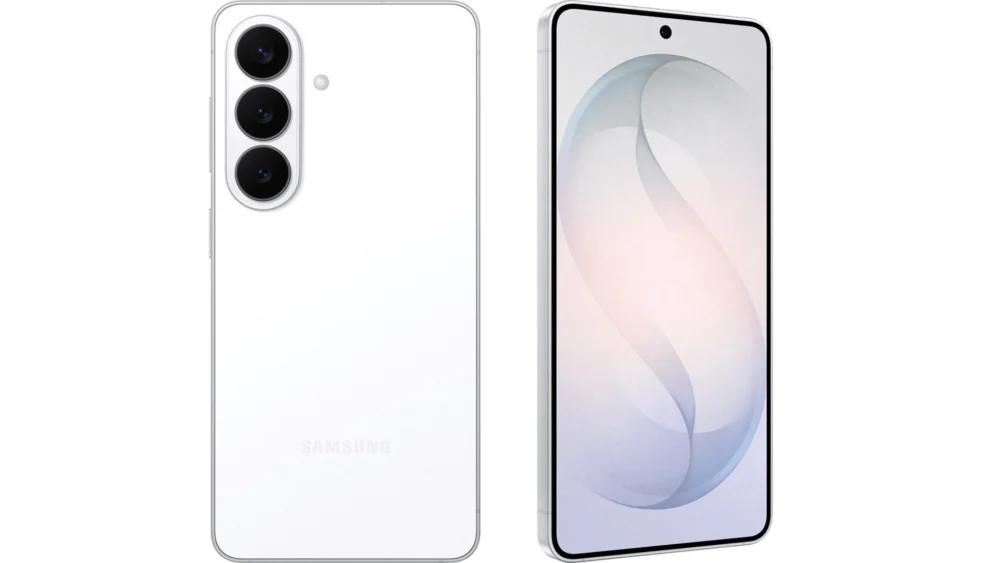
The relentless churn of the smartphone rumor mill continues to accelerate as the industry edges closer to the presumed unveiling of Samsung’s Galaxy S26 lineup. Despite the official launch being several months away, the information pipeline remains wide open, providing an almost continuous stream of preliminary details, specifications, and, most recently, aesthetic previews. Following a brief but significant leak concerning the flagship S26 Ultra in Cobalt Violet, attention has now shifted to the standard and Plus variants, specifically highlighting the introduction or confirmation of a classic, yet persistently popular, color option: white.
This latest dissemination of purported official renders, attributed to well-known industry informant Evan Blass, offers a notably crisp and detailed look at the design language Samsung intends to employ for the core S26 and S26 Plus models. While color preferences are inherently subjective, the presentation of a clean white finish is crucial, as it often serves as a benchmark for evaluating subtle changes in industrial design, material finishes, and the refinement of device contours. In the high-stakes arena of flagship smartphone design, even minor shifts in how a primary color interacts with the chassis material can signal significant engineering decisions regarding durability, fingerprint resistance, and premium feel.
The Context of Pre-Launch Information Flow
The current state of technology journalism often involves navigating a dense fog of leaks leading up to major product announcements. For Samsung, whose Galaxy S series launch remains the benchmark for the Android ecosystem’s annual hardware cycle, leaks are an expected, if sometimes frustrating, part of the pre-launch narrative. The strategy employed by major manufacturers, whether intentional or not, is often to build sustained anticipation. A steady drip-feed of information—from processor architecture rumors to camera sensor details—keeps the product relevant in tech discussions long before the official marketing blitz begins.
The appearance of these renders, following closely on the heels of the S26 Ultra’s brief video leak, suggests a coordinated—or at least, well-informed—leak cycle. The Ultra variant, as the technological spearhead, typically dictates the overarching design philosophy for the entire series. If the S26 and S26 Plus renders accurately reflect the design language seen in the Ultra, it implies a cohesive aesthetic strategy across the board, likely emphasizing subtle refinements over radical overhauls compared to their predecessors.
In the context of the white colorway, this serves a specific purpose. Black and deep hues like Cobalt Violet often mask surface textures and minor panel gaps. White, conversely, tends to highlight every curve, edge bevel, and the precision of the display-to-frame integration. A high-quality white render suggests confidence in the manufacturing tolerances and the finish quality applied to the device’s frame and back panel.
Analyzing the Color Palette Strategy
The expected color options for the Galaxy S26 series—Black, Cobalt Violet, Sky Blue, and the newly emphasized White—alongside rumored additions like Pink Gold and Silver Shadow, reflect a calculated market segmentation strategy.
-
White (The Anchor of Purity): White in the premium smartphone space often signifies elegance, minimalism, and a deliberate contrast to the often dark, aggressive aesthetics of gaming or niche performance devices. For many mainstream consumers, white represents a timeless, professional look that pairs well with diverse accessories and environments. Its prominence in these early renders suggests Samsung sees it as a core offering, not just a secondary option.
-
Cobalt Violet and Sky Blue (The Trendsetters): These vibrant, yet sophisticated, hues are Samsung’s typical play toward capturing younger demographics and capitalizing on current color trends in fashion and automotive design. They provide the necessary visual differentiation in a crowded market where hardware specifications increasingly converge.
-
Black (The Default): The perennial staple, serving users prioritizing discretion and traditional high-end aesthetics.
-
Pink Gold and Silver Shadow (The Niche Appeal): These colors often target specific segments seeking a more luxurious or unique statement piece.
The early focus on the white variant, while potentially arbitrary based on the leaker’s source, underscores the importance of foundational colorways. If the S26 series aims to compete fiercely on perceived quality against rivals like Apple’s iterative updates or emerging Chinese flagships, the execution of these base colors is paramount.
Industry Implications: The Race for Iterative Perfection
The smartphone market has entered an era of diminishing returns on year-over-year specification bumps. Processor gains are becoming incremental, and screen technology is already near peak visual performance for the average user. Consequently, the battleground has shifted to industrial design refinement, battery efficiency, and camera intelligence—areas where subtle external cues matter immensely.
When a device leaks this early, it forces competitors to evaluate their own roadmaps. If the S26 series exhibits a significant refinement in its edge curvature, a reduction in bezel thickness, or a novel approach to the camera housing integration (a perennial focal point for S-series design), other manufacturers must react quickly. The white render, by clearly showcasing the physical form factor, allows analysts and rivals to gauge the magnitude of these physical changes.
The industry implication here is a continuing emphasis on "hand-feel" and material science. Consumers are holding onto their devices longer. The premium feel must endure not just for the first month, but for two or three years. A successful white finish must resist discoloration and maintain a consistent sheen, demanding superior coating technology on the aluminum or titanium frame components.
Expert Analysis: Decoding the Design Cues
While the provided context is limited to the color, the source (Evan Blass) and the timing (long before official announcements) suggest these are likely early marketing assets, potentially based on near-final hardware prototypes.
Form Factor Assessment: The S26 and S26 Plus typically inherit the design language established by the Ultra, albeit usually with flatter sides and a slightly less imposing camera array. Early analysis of these renders should focus on:
-
Bezel Consistency: Are the bezels perfectly uniform on all four sides, a highly desired but technically challenging feat? Or does Samsung maintain a slightly thicker bottom "chin"? Any reduction in bezel size directly translates to a larger perceived display area without increasing the overall device footprint, a key marketing metric.
-
Camera Module Integration: The evolution of the rear camera housing is a major design signature. Leaks suggest Samsung may be moving towards a more seamless integration, perhaps dispensing with a distinct raised "island" in favor of individual lens rings subtly emerging from the back panel, similar to certain competitor approaches but uniquely executed. The white chassis would clearly reveal how the contrasting camera lens surrounds integrate visually.
-
Chassis Materiality: Given the industry trend toward greater durability and sustainability messaging, the material choice for the frame—whether it remains high-grade aluminum or adopts a rumored titanium alloy (as seen in some competitor flagships)—will be visually apparent in how the white finish catches light along the edges.
The Launch Timeline and Market Conditioning
The rumored launch schedule—a potential February 25th unveiling followed by a staggered pre-order and general availability period culminating around March 11th—is critical for understanding the timing of this leak. This places the S26 release window squarely in the first quarter, maintaining Samsung’s tradition of setting the Android pace before the global tech conversation shifts to mid-year releases from other players.
This timeline implies that the marketing assets, including the white renders, are finalized and entering the distribution chain for retailer training, carrier preparedness, and early press briefings. The leak timing is therefore strategically aligned with the final stages of logistical preparation.
The structure of the sales window—featuring distinct pre-order and "pre-sale" phases—is a classic Samsung tactic designed to maximize early sales velocity and secure customer commitment before competitors can react with aggressive trade-in offers. The early availability of visual information, even if unofficial, primes the consumer base, allowing potential buyers to mentally commit to a purchase decision (and color choice) well in advance of the official order gates opening.
Future Impact: Setting the Aesthetic Standard for 2026
The Galaxy S series sets the aesthetic baseline for the entire Android market for the subsequent year. When the S26 arrives, its established design language will be immediately benchmarked by every other OEM. If the white model proves particularly compelling—perhaps due to a revolutionary matte finish or a subtle pearlescent quality—it will likely influence design trends throughout the mid-range and budget segments later in the year, as manufacturers cascade premium design language downwards.
Furthermore, the sustained interest in color reveals underscores a fundamental shift in consumer purchasing behavior. While performance specifications still matter for early adopters, the initial "hook" for a broader audience is increasingly visual and tactile. Color is no longer an afterthought; it is a primary differentiator. The fact that a simple white render garners significant attention highlights the maturity of the smartphone market, where hardware parity forces competition onto the softer metrics of aesthetics and perceived luxury.
The relentless flow of these pre-launch details, culminating in clear visual confirmations like these white S26/S26 Plus renders, signifies a critical phase in the product lifecycle. Samsung is preparing to deploy its 2026 flagship, and based on this early visual evidence, the focus appears to be on polished refinement and a robust, classic color palette designed to appeal across its vast global consumer base. The true test, however, will be the official confirmation of the underlying technological leaps that must accompany this visual evolution.
