

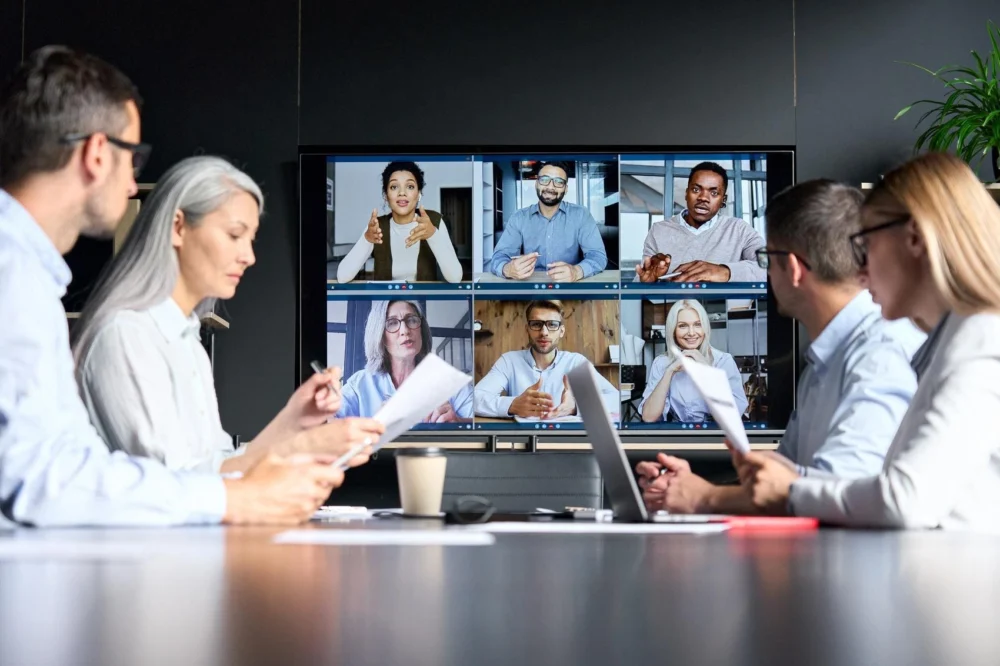
The transition to remote and hybrid work models was initially framed as a temporary response to global disruption, but it has since evolved into a permanent fixture of the modern corporate landscape. However, as organizations move beyond the "emergency phase" of distributed work, a stark divide is emerging between companies that are merely surviving and those that are thriving. The differentiating factor is not simply the presence of technology, but the sophistication of its integration and the preservation of the human element within a digital framework. For the modern remote worker, a laptop and a high-speed internet connection are no longer the benchmarks of support; they are the bare minimum. To unlock the true potential of a decentralized workforce, enterprises must look toward a holistic synthesis of integrated systems, generative artificial intelligence, and a renewed strategy for human connection.
The necessity of this shift is underscored by recent empirical data. A comprehensive study of 4,000 large-scale firms has revealed a troubling trend: remote work productivity tends to stagnate, or even decline, when it is not backed by a robust and unified technological infrastructure. The research suggests that simply providing tools is insufficient. Instead, the gains are found in "capital deepening"—a process where technology is so deeply embedded into the workflow that it fundamentally alters how tasks are allocated and executed. According to Jacques Bughin, a professor at the Solvay Brussels School of Economics and Management, the most successful firms are those that view technology not as a series of isolated investments, but as a coherent ecosystem. When digital collaboration tools and automation are woven into the fabric of the company’s operations, the result is a sustainable increase in performance rather than a fleeting spike in efficiency.
This "integration imperative" highlights a critical flaw in many remote work strategies: the digital silo. When a remote employee is forced to navigate a fragmented landscape of disconnected apps—one for messaging, another for project management, and a third for data retrieval—the resulting "toggle tax" erodes productivity and increases cognitive fatigue. For remote work to be a true equalizer, the technical experience of a worker in a home office must be indistinguishable from that of an employee in a corporate headquarters. This requires a seamless flow of information across the network, ensuring that distance does not result in information asymmetry.
However, as organizations rush to optimize their technical stacks, they often overlook the most significant hurdle to remote success: the erosion of social capital. While technology can bridge the physical gap, it often fails to bridge the emotional and psychological distance between team members. This is where the limitations of artificial intelligence become most apparent. AI is exceptionally skilled at removing the friction that historically plagued remote work. It can automate the mundane, summarize the complex, and route tasks with surgical precision. Yet, as Bobbi Wegner, an organizational psychologist at Harvard University and founder of Groops, points out, AI currently lacks a "connection strategy."
Human beings are inherently social creatures, and the workplace—whether physical or virtual—is a primary site for social interaction and professional validation. The risk of an AI-heavy remote environment is the "mechanization" of the employee experience. If an employee’s only interaction is with a task-assignment algorithm or an automated summary bot, the sense of belonging to a collective mission begins to dissolve. Wegner argues that the companies destined to lead the next decade are those that use AI to handle the heavy lifting of efficiency while simultaneously doubling down on a human connection strategy.

Innovative approaches to this problem are already beginning to surface. Research is currently being conducted into "team psychologist co-pilots"—AI systems that do not just track output, but measure the "cohesion index" of a group through ambient data. These systems can detect when team morale is dipping or when communication patterns suggest a breakdown in trust. Rather than replacing a human manager, these tools act as early-warning systems, prompting a live coach or leader to intervene with a "behavioral nudge." This represents a shift from AI as a productivity monitor to AI as a facilitator of psychological safety and team health.
From an operational standpoint, the role of AI in leveling the playing field cannot be overstated. Luca Rossi, Executive Vice President at Lenovo, emphasizes that AI is the key to eliminating the "lost time" that defines much of the remote experience. The hours spent hunting for a specific document, trying to decipher the outcomes of a meeting one couldn’t attend, or coordinating across time zones are significant drains on a firm’s intellectual capital. On-device AI agents, such as Lenovo’s "AI Now," are designed to act as a digital concierge for the knowledge worker. By utilizing natural language processing to retrieve information across devices and generating instant content summaries, these tools allow remote workers to focus on high-value creative and analytical tasks rather than administrative overhead.
Yet, the deployment of such powerful tools brings its own set of ethical and motivational challenges. Sam DeMase, a career expert at ZipRecruiter, warns that the line between "AI as an assistant" and "AI as a surveillance tool" is dangerously thin. When AI is used transparently to empower workers, it can significantly boost morale by removing drudgery. However, when used irresponsibly or opaquely, it can foster a culture of suspicion, leading to a precipitous drop in employee trust and motivation. The "human-centered leader" remains the most vital component in this equation. AI can assign a ticket, but it cannot provide the nuanced, empathetic feedback required to mentor a junior employee or help a high-performer navigate a mid-career crisis.
The future of work is not a binary choice between human intuition and machine efficiency; it is a sophisticated integration of both. We are entering an era of "true team integration," where the workforce is comprised of both human and non-human entities. In this landscape, the role of the manager evolves into that of an orchestrator. They must manage the output of AI assistants while nurturing the growth of human talent. They must ensure that the "capital deepening" described by economists does not come at the expense of the "social deepening" required for a healthy corporate culture.
As we look toward the next horizon, several trends are likely to define the remote work experience. First, we will see a move away from generic, cloud-based AI toward specialized, on-device AI that prioritizes data privacy and personalized workflows. This will give remote workers a "personal office assistant" that understands their specific habits and needs without compromising the company’s security posture. Second, the "connection strategy" will become a formal part of organizational design. Companies will appoint leaders specifically tasked with maintaining social cohesion in distributed environments, supported by the "ambient data" tools Wegner described.
Ultimately, the success of remote work hinges on a paradox: to make digital work more effective, we must make it more human. Technology provides the skeleton of the modern enterprise—the structure and the strength—but the human connection provides the lifeblood. Companies that treat remote work as a mere matter of hardware and software will find themselves struggling with high turnover and stagnant innovation. Those that view it as a holistic challenge—one that requires integrated systems, frictionless AI, and an unwavering commitment to human-centric leadership—will find that the distributed model is not just a viable alternative to the traditional office, but a superior one. The goal is a workplace where technology is invisible because it works perfectly, and where human connection is visible because it is valued above all else.
