

The essential artery of Romania’s hydrocarbon distribution network, Conpet, the state-owned oil pipeline operator, has confirmed a significant cybersecurity incident that paralyzed its corporate information technology environment and rendered its public website inaccessible. The disruption, which surfaced on Tuesday, prompted immediate engagement with national cybersecurity authorities and law enforcement agencies, underscoring the escalating threat landscape targeting critical national infrastructure (CNI) across Eastern Europe.
Conpet manages a vast network spanning nearly 4,000 kilometers of crucial pipelines, serving as the primary conduit for both domestically sourced and imported crude oil and vital refined derivatives, including gasoline and liquid ethane, feeding the nation’s refineries. The company issued a formal statement on Wednesday, characterizing the event as an intrusion that specifically impacted its administrative and business IT infrastructure. Crucially, Conpet asserted that the attack did not breach or disrupt its Operational Technology (OT) environment—specifically the Supervisory Control and Data Acquisition (SCADA) systems and the Telecommunications System—ensuring the continuous, unimpeded physical flow of oil and gas products across the National Oil Transport System.
"We confirm that the operational technologies (SCADA System and Telecommunications System) were not affected, meaning the company’s core business, which involves the transport of crude oil and gasoline through the National Oil Transport System, is functioning normally without any operational interruptions," the company communicated. However, the collateral damage included the complete takedown of its public-facing portal, www.conpet.ro, for the duration of the remediation efforts. Beyond involving specialized cybersecurity experts, Conpet has formally alerted the Directorate for Investigating Organized Crime and Terrorism (DIICOT) and initiated criminal proceedings related to the intrusion.
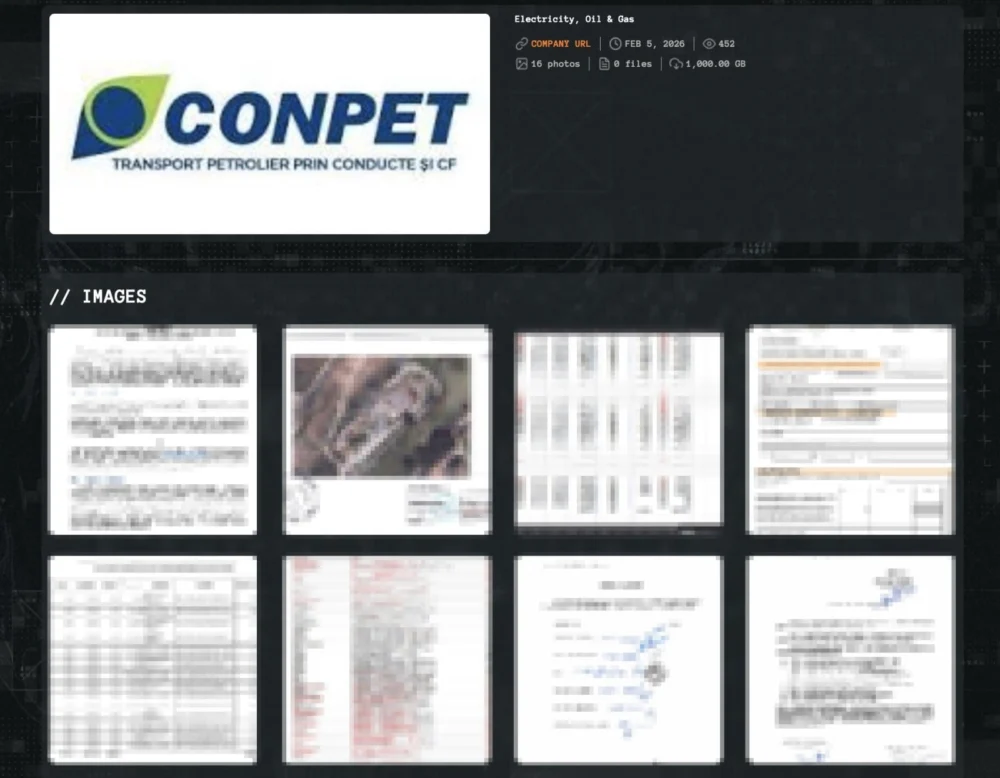
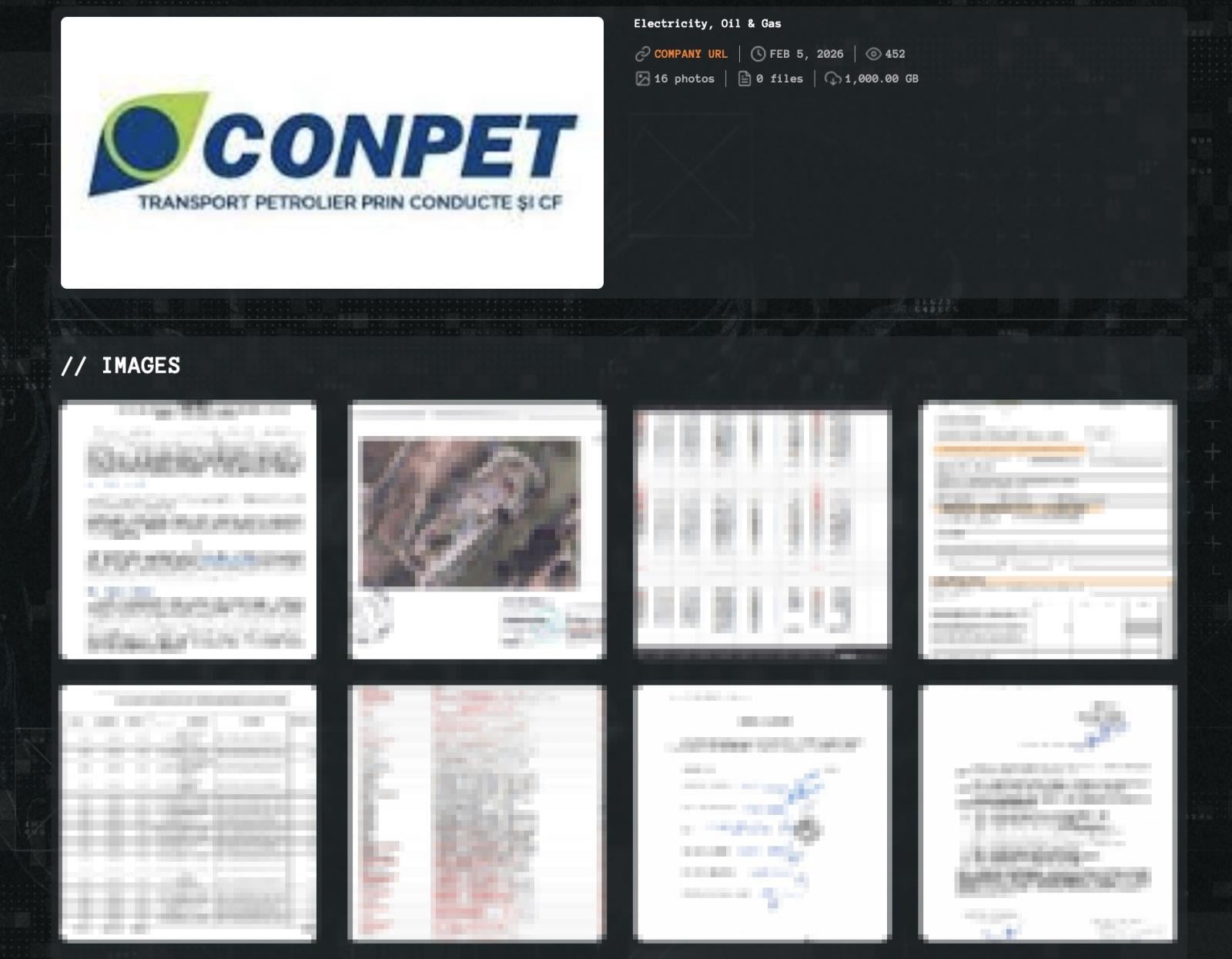
While Conpet initially remained guarded about the specific mechanism of the attack, the notorious Qilin ransomware syndicate quickly stepped forward, claiming responsibility. The group subsequently listed Conpet on its dark web leak site, signaling an escalation from system disruption to data exfiltration and extortion. Qilin affiliates asserted they had successfully pilfered approximately one terabyte (1TB) of sensitive documentation from the compromised corporate servers. To substantiate their claims, the threat actors released photographic evidence, showcasing over a dozen internal documents that allegedly contained sensitive financial records and digitized copies of employee passport scans—a clear demonstration of successful data harvesting preceding any potential encryption or denial-of-service action.
The Profile of the Adversary: Qilin’s Evolving Threat
The Qilin ransomware operation is a relatively recent but highly active player in the global extortion economy. It first surfaced in August 2022, initially operating under the moniker "Agenda" before rebranding. Qilin functions as a Ransomware-as-a-Service (RaaS) model, providing its malicious toolkit and infrastructure to affiliated threat actors in exchange for a cut of the ransom payments. Over its relatively short lifespan, the group has established a formidable reputation, claiming responsibility for attacks against nearly 400 distinct organizations worldwide.

Qilin’s target list is diverse and high-profile, reflecting a focus on high-impact victims where disruption or data exposure guarantees maximum pressure for payment. Notable past targets include automotive giant Nissan, the Japanese brewing conglomerate Asahi, the US publishing group Lee Enterprises, the UK pathology services provider Synnovis (which experienced a catastrophic system failure), and Australia’s Court Services Victoria. The group’s methodology often centers on double extortion: encrypting systems for operational disruption while simultaneously threatening to leak stolen data publicly if the ransom is refused.
The compromise of Conpet represents a strategic escalation for ransomware groups targeting the energy sector, particularly within the geopolitical context of Romania. The specific focus on corporate IT while leaving OT systems untouched suggests a nuanced operational objective—perhaps prioritizing the extraction of high-value intellectual property or financial data over immediate, catastrophic pipeline shutdown, which carries higher risk of immediate state-level retaliation.
Industry Implications: Vulnerability in Critical Energy Infrastructure
The incident at Conpet is not an isolated event; rather, it fits into a worrying pattern of persistent cyber assaults against Romania’s vital economic sectors. This attack follows closely on the heels of recent compromises against other key national utilities. In December, Romanian Waters (the national water management authority) and the Oltenia Energy Complex, the country’s largest coal-based energy producer, were both subjected to ransomware attacks. Furthermore, December 2024 saw the Electrica Group, a major electricity supplier and distributor, hit by a Lynx ransomware campaign, while February 2024 witnessed an attack by Backmydata ransomware that forced over 100 Romanian hospitals offline by compromising their critical healthcare management systems.
This concentration of attacks against CNI suggests several alarming trends. Firstly, it indicates that threat actors perceive Romanian critical infrastructure as possessing both high financial value (due to operational downtime costs) and potentially softer security postures compared to their Western European counterparts. Secondly, the consistent use of various ransomware strains (Qilin, Lynx, Backmydata) suggests that multiple, independent threat actors are actively probing and exploiting vulnerabilities within the national digital defense perimeter.
For the energy sector specifically, the distinction between IT and OT security is paramount but often poorly managed. While Conpet claims its SCADA systems remain isolated and unaffected, this separation is frequently porous. Corporate IT networks often interface with OT networks for maintenance, monitoring, and data aggregation. A successful breach of the IT environment, as occurred here, provides threat actors with a valuable beachhead. They can use compromised internal credentials, lateral movement capabilities, and reconnaissance data gleaned from the IT environment to map out the OT architecture, identify potential jump points, and prepare for a future, more destructive phase targeting physical operations.
Expert Analysis: The RaaS Model and Supply Chain Risk
From an expert security standpoint, the involvement of Qilin highlights the efficacy of the RaaS business model in propagating sophisticated attacks globally. RaaS lowers the barrier to entry for less technically proficient cybercriminals, allowing established ransomware developers to focus on tool refinement while affiliates handle the messy work of initial access and negotiation.

The exfiltration of 1TB of data, including financial records and passport scans, points toward a double extortion strategy that is increasingly common against entities handling sensitive corporate and potentially state-related information. Passport scans, in particular, suggest an attempt to leverage identity theft or compromise personnel security, adding leverage beyond the immediate operational disruption.
A key point of analysis revolves around the integrity of Conpet’s security segmentation. The fact that Qilin managed to compromise corporate systems severely enough to steal a significant volume of data suggests deficiencies in network segmentation, access control, or vulnerability management within the administrative domain. While the OT layer is protected for now, the presence of the attacker within the corporate ecosystem creates an immediate risk exposure that extends beyond data theft. Insider threat potential increases, and the window for forensic analysis and eradication is compressed by the need to maintain physical throughput.
Furthermore, the consistent targeting of Romanian CNI highlights a potential geopolitical dimension. State-sponsored actors often conduct reconnaissance and opportunistic attacks against CNI in neighboring or strategically important countries. While Qilin is generally characterized as financially motivated, the overlap between infrastructure targets and the proximity to geopolitical hotspots warrants scrutiny from national intelligence agencies to determine if the financial motives are intertwined with state-level espionage or disruption efforts.
Future Impact and Mitigation Trends
The Conpet incident serves as a stark reminder that cybersecurity resilience must be treated as a non-negotiable component of critical infrastructure management. For pipeline operators globally, the immediate fallout necessitates a comprehensive security overhaul focusing on several key areas:
1. Enhanced Network Segmentation and Zero Trust Architecture: The reliance on perceived air-gapping between IT and OT must be replaced by a robust Zero Trust model, even within the OT environment. Access to operational networks should require multi-factor authentication and continuous verification, regardless of the user’s physical location or network segment.
2. Proactive Vulnerability Management and Patching: The success of ransomware groups like Qilin often hinges on exploiting known, unpatched vulnerabilities in perimeter defenses or legacy internal systems. A continuous, automated vulnerability assessment program is essential for identifying and neutralizing entry vectors before they are weaponized.
3. Supply Chain Scrutiny: Given that many major infrastructure compromises begin through third-party vendors or managed service providers (MSPs), Conpet and its peers must rigorously vet the security postures of all external partners who connect to their internal networks, even for maintenance or monitoring purposes.
4. Incident Response Preparedness Focused on OT/IT Nexus: Response plans must specifically address scenarios where IT systems are compromised, detailing rapid isolation procedures that protect OT environments without halting essential physical operations entirely. Regular, realistic tabletop exercises simulating a combined IT/OT incident are vital for reducing response time confusion.
The long-term impact on Conpet involves not only the remediation costs and potential regulatory fines but also reputational damage regarding its stewardship of national energy security. The ongoing investigation by DIICOT will likely uncover the specific initial access vector, which will provide crucial intelligence for the entire regional energy sector on how to harden defenses against the Qilin threat actor and similar RaaS operations. As ransomware continues its trajectory toward increasingly vital targets, the separation between ‘business systems’ and ‘national security’ in the digital domain is rapidly dissolving, demanding a commensurate elevation in cybersecurity investment and strategy across all CNI operators. The Romanian energy sector, having faced a series of high-profile attacks recently, is currently on the front line of this escalating digital confrontation.
