

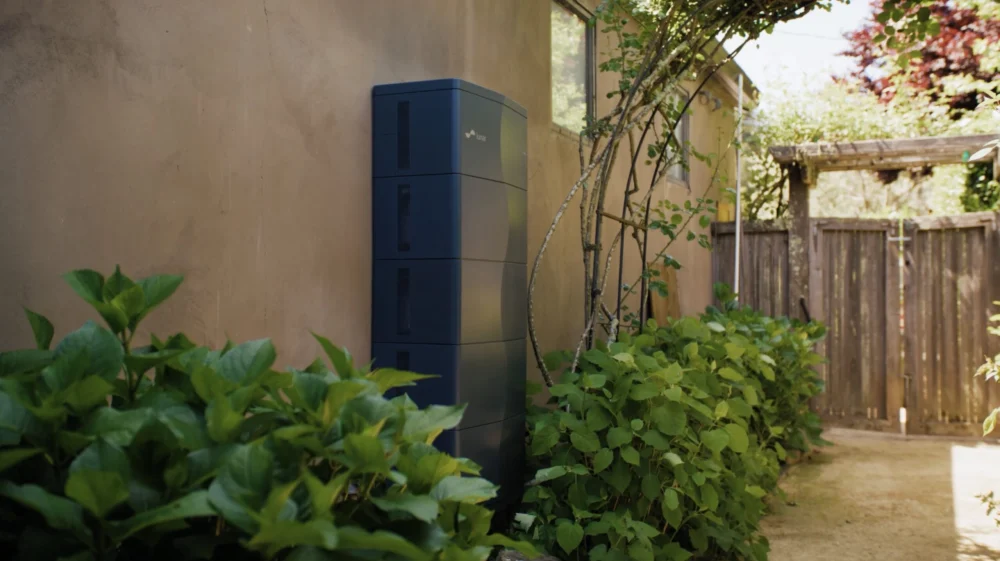
The financial currents dominating the American energy transition have shifted decidedly away from the highly publicized electric vehicle sector, now favoring the less glamorous but infinitely more crucial realm of stationary energy storage. This pivotal redirection of capital underscores a growing consensus among institutional investors: the immediate future of grid stability rests not just on massive utility-scale installations, but on highly distributed, intelligent assets located directly within consumer homes. Leading this charge is Lunar Energy, a six-year-old technology firm specializing in integrated home battery systems, which announced Wednesday the completion of two massive and concurrent funding rounds totaling $232 million.
This significant capital injection comprises a previously unannounced $130 million Series C round, spearheaded by Activate Capital, and a subsequent $102 million Series D round, led by B Capital and Prelude Ventures. With this latest haul, Lunar Energy’s total funding surpassed the half-billion-dollar mark, cementing its position as a major contender in the rapidly expanding market for residential battery and virtual power plant (VPP) solutions. The funding is earmarked for aggressive scaling, targeting an increase in manufacturing capacity to 20,000 units deployed by the close of the current year, with an ambitious, exponential ramp-up planned to reach 100,000 units by the end of 2028. This production timeline signals a commitment to mastering supply chain logistics and fulfilling the surging demand observed in key operational territories, which currently include California, Georgia, and Washington state.
The Imperative of Decentralized Storage
The fervent investor interest in stationary storage is directly proportional to the profound infrastructural pressures facing the U.S. electrical grid. The simultaneous demands of widespread economic electrification—including the rise of heat pumps and induction cooking—and the explosive growth in data center capacity, driven largely by the insatiable power demands of artificial intelligence workloads, have pushed legacy transmission and generation systems to their breaking point. In this environment, modular, grid-connected batteries have emerged as one of the most versatile and effective mechanisms for enhancing grid resiliency and reliability.
Lunar Energy’s technology is designed to leverage this modularity through sophisticated aggregation. The company provides homeowners with robust battery modules, available in 15 kilowatt-hour (kWh) and 30 kWh configurations, which serve dual purposes: providing reliable backup power during outages and acting as responsive, dispatched assets for the utility grid. The critical innovation lies in the company’s Virtual Power Plant (VPP) software platform. This system allows Lunar Energy to remotely call upon its aggregated fleet of batteries—effectively turning thousands of individual home storage units into a cohesive, centralized power resource.
Beyond simple energy supply, the VPP software provides crucial demand-side management capabilities. By integrating with and controlling other high-draw household appliances, such as smart thermostats and EV chargers, Lunar can not only discharge stored energy during peak stress periods but also simultaneously tamp down residential electricity consumption. This dual-action capability—both supplying electrons and reducing demand—provides grid operators with maximum flexibility, mitigating the risk of brownouts or blackouts when generation capacity is strained.
VPPs: Replacing the Peaker Plant
Expert analysis suggests that these decentralized, software-orchestrated VPPs are rapidly approaching the scale and responsiveness required to displace traditional, costly, and highly polluting natural gas peaking power plants. Peaker plants are designed to fire up rapidly only during brief periods of maximum demand (e.g., extreme summer heat waves) but are notoriously inefficient and environmentally detrimental. VPPs, by contrast, offer a cleaner, faster, and increasingly cost-effective alternative.
The economic argument for VPPs is compelling. They leverage existing residential infrastructure and energy assets, avoiding the massive capital expenditure and lengthy regulatory approval processes associated with building new centralized generation facilities. Furthermore, VPPs participate in ancillary services markets, offering crucial services like frequency regulation and voltage support—tasks traditionally monopolized by large generators. Industry models project that within the next decade, aggregated distributed energy resources (DERs) will significantly reduce the need for new peaking capacity across major U.S. markets, fundamentally altering the energy generation mix.
Policy and Market Dynamics
The robust investment flowing into stationary storage is also partially attributable to the policy instability experienced in other segments of the battery manufacturing sector. While federal incentives, particularly those outlined in the Inflation Reduction Act (IRA), were initially intended to spur domestic manufacturing across both the automotive and grid sectors, subsequent political and legislative efforts created periods of policy whiplash, particularly affecting tax credits and sourcing requirements for EV components.
In contrast, the market for stationary storage—driven primarily by non-negotiable grid reliability mandates, high electricity rates in states like California, and increasing climate volatility—offers a more stable, predictable demand curve for battery manufacturers. For companies committed to building battery packs and components domestically, the grid services market provides a reliable anchor for production capacity, insulating them somewhat from the fluctuating fortunes of the automotive supply chain. This stability is a significant factor attracting large-scale, long-term institutional investment.
The Battle for Residential Energy Control
The enthusiasm surrounding Lunar Energy’s massive capital raise must be viewed within the context of an increasingly fierce competitive landscape. The residential VPP space is rapidly consolidating and attracting vast amounts of capital.
A prime example is Base Power, which executed a stunning capital accumulation strategy last year, raising $1 billion just months after securing a $200 million initial round for its own residential battery-based VPP platform. Tesla, the pioneer in residential storage, continues to operate its ubiquitous Powerwall-based VPP programs, leveraging its massive installed base to offer services in key markets like California and Texas.
The competition extends beyond direct VPP providers and into the broader energy ecosystem. Tesla’s utility-scale storage division, which provides massive Megapack installations, has consistently demonstrated growth rates exceeding any other segment of the company’s business, confirming the overwhelming industrial appetite for large-scale storage. Simultaneously, major industrial players are scrambling to secure positions in the storage value chain. J.B. Straubel’s Redwood Materials, initially focused on battery recycling, recently launched an energy storage division, explicitly targeting high-demand sectors like AI data centers with specialized battery solutions. Even legacy automotive giants, such as Ford, are exploring ventures into battery storage businesses aimed at supplying industrial users and the grid, recognizing that the fundamental technology driving EVs has far greater utility in fixed applications.
Scaling the Infrastructure of Resilience
Lunar Energy’s proposed manufacturing scale-up—from 20,000 to 100,000 units annually within four years—is not merely an operational target; it represents a crucial strategic bet on the maturity of the domestic supply chain and the acceleration of consumer adoption. Achieving this scale requires significant investment not only in assembly lines but also in securing long-term contracts for battery cells and components, ensuring that the company can meet demand without succumbing to the supply bottlenecks that have plagued the industry previously.
This rapid scaling is essential for meeting the technological and economic thresholds necessary for VPPs to function effectively as true alternatives to conventional power plants. A VPP’s value is directly tied to the total aggregated capacity it can reliably dispatch. Reaching 100,000 high-capacity residential units (at an average of perhaps 20 kWh per unit) equates to 2,000 megawatt-hours (MWh) of available energy—a significant, dispatchable resource capable of providing crucial hours of load relief to major metropolitan areas during critical grid events.
Furthermore, this deployment scale has profound implications for utility interconnection processes. As tens of thousands of distributed assets come online, utilities must modernize their systems to handle bidirectional power flow and manage the complexity of numerous small energy sources. The success of Lunar Energy and its competitors hinges on smooth regulatory collaboration and technological integration with utility infrastructure, transforming what was once a passive network into a highly responsive, digitally managed decentralized grid architecture.
The Long-Term Trajectory
The current narrative surrounding battery technology has irrevocably shifted. What were considered niche or supplementary devices just five years ago are now recognized as foundational assets for modern energy infrastructure. Their modular design facilitates rapid construction and deployment—a vital advantage in a world where climate change demands speed and flexibility. While capital costs for battery installations remain high relative to certain established fossil fuel sources, the overall lifecycle costs are declining rapidly due to advancements in chemistry, economies of scale, and the increasing value of the grid services they provide.
The unprecedented level of financial backing, now exceeding half a billion dollars for a single VPP provider like Lunar Energy, underscores the market’s conviction that this distributed model is not just a trend but the structural future of reliable electricity delivery. As the U.S. grid continues its transition toward cleaner, intermittent renewable sources—solar and wind—stationary batteries, particularly those aggregated into intelligent VPPs, will be the indispensable stabilizers that ensure the lights stay on, regardless of weather conditions or peak demand surges. Investors are piling in because they recognize that controlling the flow and timing of energy in a highly electrified future represents one of the most significant technological and financial opportunities of the decade.
