

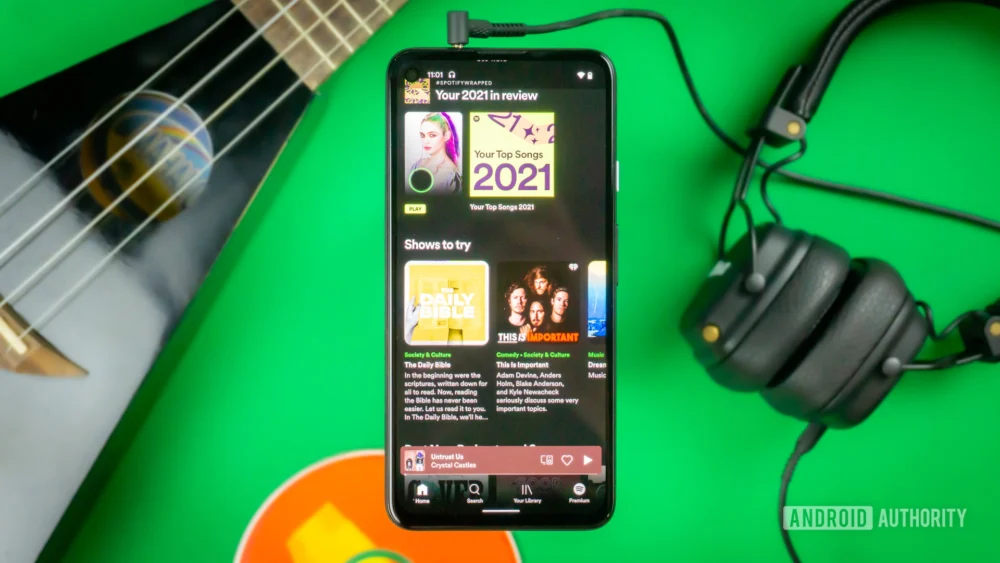
The digital audio landscape is perpetually evolving, driven by the relentless pursuit of enhanced user engagement and deeper platform integration. For Spotify, the undisputed titan of music streaming, this pursuit often manifests in innovative features designed to move beyond passive listening. Recent forensic analysis of the platform’s internal application build—specifically version 9.1.22.645—reveals compelling textual artifacts suggesting the development of a native, integrated music-guessing game. This potential feature marks a significant strategic pivot, particularly given the company’s previous, high-profile foray into this exact territory with the acquisition and subsequent sunsetting of Heardle.
The cultural obsession with music trivia and recognition games experienced an explosive surge parallel to the rise of Wordle in early 2022. This phenomenon underscored a fundamental human desire: to validate one’s musical expertise within a social context. Spotify capitalized on this trend by acquiring Heardle, a web-based game where users attempted to identify songs based on increasingly longer initial snippets. While Heardle enjoyed a period of sustained popularity, its existence remained siloed on the web, never fully embedding within the core mobile application experience. Its eventual decommissioning in May 2023 left a notable gap in Spotify’s engagement toolkit, a gap that these new code strings now strongly suggest the platform intends to fill with a proprietary, in-app solution.
The evidence extracted from the latest build is remarkably direct. Newly surfaced text strings within the application’s resource files explicitly reference parameters consistent with a structured, interactive music challenge. This is not vague speculation; the language suggests functionality is actively being engineered for integration, moving the concept from conceptual planning to tangible development stages. Although the current discovery lacks associated visual assets or functional demonstration—the application resists attempts to force an early reveal of the user interface or gameplay mechanics—the mere existence of these strings signals a renewed commitment to gamification within the streaming ecosystem.
The Context: Gamification and the Attention Economy
To fully appreciate the implications of this potential feature, one must consider the broader context of the streaming wars and the economics of user attention. Spotify operates in a highly saturated market where subscriber retention is paramount. Features that foster habit formation and increase daily active usage (DAU) are invaluable competitive assets. Simple playlist curation, while essential, is passive; gamified elements, conversely, drive active interaction and social sharing.
The failure to fully integrate Heardle demonstrated a strategic misstep: a successful peripheral service was maintained outside the primary revenue-generating and engagement hub. By bringing a similar mechanic natively into the main app, Spotify can achieve several critical objectives. Firstly, it lowers the friction for participation. Users no longer need to navigate to a separate website; the challenge becomes an immediate, one-tap extension of their existing listening session. Secondly, it allows for deep integration with user data. A native game can leverage personalized listening history, creating infinitely replayable, tailored challenges—a significant advantage over the generalized daily puzzles Heardle offered.
This move aligns with a broader industry trend where platforms are transforming from mere content delivery systems into comprehensive digital ecosystems. Social media platforms integrate commerce; productivity suites integrate communication; and streaming services are integrating interactive entertainment. For Spotify, this means transitioning from being solely a music library to becoming a core component of the user’s leisure time, commanding more screen time and reducing the likelihood of switching to a competitor for alternative entertainment.
Industry Implications: Data Leverage and Competitive Differentiation
The strategic value of an in-house music game lies heavily in its potential for data harvesting and competitive differentiation. If this new game mechanics relies on serving obscure tracks, deep cuts, or niche genres based on a user’s listening profile, it provides Spotify with granular feedback on which catalog segments resonate most strongly with specific user segments—data far richer than simple play counts.
Furthermore, consider the implications for music discovery. A well-designed guessing game can act as a highly effective, low-pressure recommendation engine. If a user consistently fails to identify songs from a specific era or genre during the game, the algorithm gains a clear signal to prioritize similar content in their future algorithmic playlists (like Discover Weekly or Release Radar). This creates a powerful, self-reinforcing loop: play the game, discover music relevant to your knowledge gaps, listen more, improve, and engage deeper.
Competitors, including Apple Music and Amazon Music, have focused heavily on exclusive content (podcasts, spatial audio) or hardware integration. While they possess vast catalogs, none have successfully embedded a universally recognized, daily interactive challenge. If Spotify launches a superior, native version of a music quiz, it establishes a new engagement benchmark that rivals will struggle to replicate quickly, especially without access to Spotify’s sophisticated personalization engine driving the game’s content.
Expert Analysis: Design Challenges and Potential Mechanics
The success of this venture hinges entirely on the execution, especially considering the ghost of Heardle lingers. Heardle’s primary mechanic—gradually revealing more of a track—was inherently satisfying. The new Spotify iteration will likely explore variations:
- Personalized Difficulty Scaling: Unlike Heardle, which reset daily for everyone, Spotify could introduce tiered challenges. "Casual Mode" might feature well-known hits, while "Expert Mode" pulls from a user’s most obscure listening habits or specific niche playlists they follow. This caters to the "bragging rights" mentioned in the original context, providing a genuine measure of fandom depth.
- Social Head-to-Head Play: The unearthed strings hinted at potential social components. A real-time, asynchronous challenge format where two users compete to name a track fastest, perhaps using a shared listening history pool, would dramatically boost social sharing and viral loops. Leaderboards tracking weekly accuracy or speed would feed the competitive spirit demonstrated by annual events like Spotify Wrapped.
- Integration with Original Content: The original prompt alluded to "original content." This could mean the game mechanics are tied to new, exclusive content drops. For example, a new exclusive podcast series might debut a theme song, which then becomes the first track in a limited-time game challenge accessible only to premium subscribers. This intertwines engagement features directly with premium value propositions.
A major technical hurdle will be latency and licensing. While Heardle used short clips, integrating this seamlessly into the main app requires perfect synchronization and rapid processing of track snippets without disrupting the core streaming service stability. The platform must also navigate the complex web of music licensing to ensure any snippet used in the game adheres to existing agreements, potentially requiring new, specific licenses for interactive game use.
Future Impact and Technological Trajectories
The emergence of this gaming feature is indicative of a broader trajectory in digital media consumption: the fusion of entertainment formats. We are moving past the era where an application served a single purpose. Spotify is aiming to become a holistic sonic destination, blending utility (playback), discovery (recommendations), and pure entertainment (gamification).
If successful, this initiative could pave the way for even more ambitious interactive features. Imagine synchronized listening parties with integrated trivia overlays, or augmented reality experiences linked to album releases where users must solve auditory puzzles using their phones. The data gathered from a successful music quiz game serves as foundational intelligence for these future interactive layers. It validates the user’s relationship with the catalog, transforming music consumption from a transactional relationship (paying for access) to a participatory one.
Moreover, this internal development suggests Spotify is learning from past experiments. Acquiring Heardle was a proof-of-concept; building it internally, leveraging existing infrastructure and user data, is the optimization phase. This suggests a maturing strategy where successful external concepts are brought in-house and deeply embedded to maximize their long-term engagement ROI. While the feature remains shrouded in development secrecy, the textual breadcrumbs signal that the era of passive listening on Spotify may soon be punctuated by moments of competitive, personalized musical testing. The race is on to see how quickly users can prove their mastery of the digital jukebox.
