


The digital shadows that cloak illicit online commerce continue to recede as global law enforcement agencies secure significant convictions against the architects of darknet marketplaces. In a landmark sentencing, Rui-Siang Lin, a Taiwanese national identified as the operator of Incognito Market, one of the most expansive narcotics bazaars operating on the dark web, has been handed a 30-year federal prison term. This severe penalty underscores the gravity with which judicial systems now treat large-scale, digitally facilitated drug trafficking, especially given the platform’s profound global reach and devastating social impact.
Lin, who navigated the criminal underworld using aliases such as "Pharoah" and "faro," was apprehended in May 2024 following a complex international investigation culminating in his arrest in New York. Prior to sentencing, the 24-year-old had already entered a guilty plea in December to a trifecta of serious federal charges: conspiracy to distribute narcotics, money laundering, and conspiracy to distribute adulterated and misbranded medication. The sheer scale of his operation placed it among the most significant cyber-enabled drug enterprises ever dismantled.
Presiding over the sentencing, U.S. District Judge Colleen McMahon delivered a stark assessment of the case’s severity. In her remarks, she noted that the case represented "the most serious drug crime I have ever been confronted with in 27.5 years" on the bench. Judge McMahon explicitly characterized Incognito Market not merely as an online shop, but as "a business that made [Lin] a drug kingpin," reflecting the structural sophistication and massive profit margins achieved by the operation.
The Architecture of Illicit Commerce
Incognito Market functioned as a sophisticated, highly organized digital ecosystem designed to evade detection while maximizing sales volume. Operating from October 2020 until its shutdown in March 2024, the marketplace became a critical node in the global supply chain for illicit substances. Official court documents detail a staggering inventory, facilitating the exchange of over one metric ton of dangerous narcotics. This inventory included approximately 364 kilograms of cocaine, 295 kilograms of methamphetamine, 112 kilograms of amphetamine, and 92 kilograms of MDMA (ecstasy). Crucially, the complaint highlighted that a significant portion of these substances were contaminated or "laced with fentanyl," directly implicating the platform in the escalating overdose crisis gripping many nations.

The operational scope of Incognito Market was immense. It supported a sprawling network comprising more than 1,800 registered vendors catering to an account base exceeding 400,000 customers. Over its lifespan, the platform processed more than 640,000 distinct transactions. Lin, as the ultimate authority, maintained comprehensive control over all operational facets, from vendor vetting to dispute resolution, cementing his position at the apex of this shadow economy.
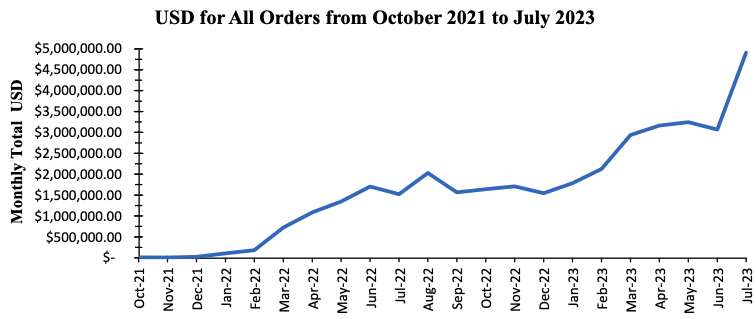
Financially, the enterprise was breathtakingly lucrative. The total gross revenue generated by the platform surpassed $83.6 million. Lin’s personal enrichment stemmed from a standard 5% commission levied on every sale, translating to a personal profit exceeding $4.1 million. Transactions were exclusively conducted using cryptocurrencies, routed through a proprietary payment system dubbed "Incognito Bank," a common feature in darknet markets designed to obfuscate the financial trail.
Technical Takedown and Evidence Acquisition
The successful prosecution hinged on meticulous, multi-year intelligence gathering and technical infiltration. Law enforcement agencies were able to secure crucial evidence by executing search warrants against three dedicated servers utilized by the market. These servers were strategically segmented: one housed the complete transaction ledger, another managed defense protocols, specifically blocking Distributed Denial of Service (DDoS) attacks intended to disrupt the site, and the third processed all cryptocurrency movements. These warrants were executed in two key phases, July 2022 and August 2023, providing investigators with a deep dive into the market’s financial and operational back end well before Lin’s eventual capture.
The end of the platform was marked not by a quiet exit, but by an aggressive attempt at extortion. In March 2024, Lin abruptly ceased operations, immediately threatening to leak the comprehensive transaction histories of both vendors and customers unless they submitted an additional, unscheduled payment. This desperate move, intended to extract final profits or secure silence, ultimately served as a significant operational misstep, likely providing law enforcement with final pieces of evidence needed for prosecution.
U.S. Attorney Jay Clayton emphasized the profound real-world impact of Lin’s digital activities. "Rui-Siang Lin was one of the world’s most prolific drug traffickers, using the internet to sell more than $105 million of illegal drugs throughout this country and across the globe," Clayton stated. He further stressed the human cost: "While Lin made millions, his offenses had devastating consequences. He is responsible for at least one tragic death, and he exacerbated the opioid crisis and caused misery for more than 470,000 narcotics users and their families."

In addition to the 30-year custodial sentence, Judge McMahon imposed a five-year period of supervised release post-incarceration. Furthermore, a massive forfeiture order was issued, demanding that Lin surrender assets totaling $105,045,109.67—a figure that closely matches the total sales volume, demonstrating the government’s intent to strip the defendant of all illicit gains.
Broader Industry Implications and Context
The dismantling of Incognito Market is not an isolated event; rather, it is part of a sustained, global offensive against the specialized infrastructure supporting cyber-enabled organized crime. This case provides critical context for understanding the evolution of darknet markets and the corresponding adaptation of law enforcement tactics.
The operational success of Incognito Market—its longevity, volume, and reliance on cryptocurrency—demonstrates the resilience of these clandestine platforms. They mirror legitimate e-commerce giants in their structure, employing sophisticated encryption, escrow services, and vendor rating systems to foster trust within a fundamentally untrustworthy environment. The use of cryptocurrency, while often touted as anonymous, is increasingly subject to sophisticated forensic analysis, as evidenced by the ability of investigators to track and seize the $105 million in assets. This underscores a critical industry trend: while crypto offers speed and cross-border capability, the ledger remains immutable, offering long-term intelligence value.
This prosecution arrives on the heels of other high-profile darknet arrests, signaling a maturing capacity among international agencies to collaborate and leverage technical data. For example, last month saw a Virginia man, a co-creator of the infamous Empire Market (which facilitated approximately $430 million in transactions), plead guilty to drug conspiracy charges. Separately, a Slovakian national admitted guilt for operating the Kingdown Market, which trafficked narcotics alongside cybercrime tools, fake IDs, and stolen personal data. These parallel actions illustrate a strategic focus not just on individual markets, but on the interconnected nodes and individuals who enable the broader darknet ecosystem.
Expert Analysis: The Shift from Anonymity to Accountability
From an expert security and law enforcement perspective, the Lin sentencing highlights several key technological and strategic shifts.
1. Decoupling of Infrastructure and Identity: Lin’s successful operation for nearly four years demonstrates the effectiveness of modern anonymity tools like Tor, but his eventual capture proves that operational security (OpSec) failures—or the strategic compromise of underlying infrastructure—remain the weakest link. The ability to seize three distinct, segmented servers (transactional, defense, and financial) suggests a well-executed multi-jurisdictional operation that likely involved cooperation with hosting providers or initial infiltration points.
2. The Fentanyl Factor as an Aggravating Circumstance: The inclusion of fentanyl-laced substances in the charges is a significant legal marker. Prosecutors are increasingly framing darknet drug sales not just as distribution, but as directly contributing to public health crises. This allows judges to impose sentences reflecting the severe societal damage, moving beyond simple financial metrics. Judge McMahon’s reference to Lin as a "drug kingpin" is supported by the scale of narcotics moved, but the fentanyl link justifies the near-maximum sentence imposed.
3. Evolution of Darknet Exit Strategies: Lin’s final act of extortion is a common, yet flawed, tactic seen when darknet operators realize their time is up. They attempt an "exit scam" to maximize final profit. However, this action often provides the final piece of digital evidence needed for prosecutors to tie the anonymous administrator to the platform, turning a planned escape into a self-incriminating admission of control.
Future Impact and Trends in Cybercrime Enforcement
The lengthy sentence handed down to Rui-Siang Lin serves as a potent deterrent, yet the underlying technology that enables these markets continues to evolve. Analysts anticipate several future trends in this ongoing conflict:
A. Migration to Decentralized Architectures: As law enforcement becomes more proficient at seizing centralized servers, future darknet markets will likely pivot toward more resilient, decentralized architectures, potentially utilizing peer-to-peer networks or blockchain-native structures that lack easily identifiable physical choke points. This will increase the technical complexity of future takedowns.

B. Increased Focus on Cryptocurrency Tracing: The substantial forfeiture order in the Lin case signals that financial recovery is a primary goal. Advances in blockchain analytics tools mean that cryptocurrencies, even those obfuscated by mixers or privacy coins, are less safe than operators assume. Future investigations will rely heavily on sophisticated tracing firms to follow the money, potentially leading to arrests years after a market has closed.
C. International Cooperation in Takedowns: The successful arrest of a Taiwanese national operating a global network suggests deepening collaboration between US, European, and Asian cybercrime units. The jurisdictional challenges inherent in prosecuting cross-border darknet operations are increasingly being surmounted through formal treaties and intelligence-sharing agreements.
D. The Blurring Lines of Illicit Trade: The mention of other markets selling cybercrime tools alongside drugs underscores a trend toward consolidation or specialization within the dark web economy. Operators are finding synergistic value in running multi-faceted criminal enterprises, offering everything from narcotics to ransomware code, requiring law enforcement to adopt a holistic view of cybercriminal ecosystems rather than focusing on single commodities.
In conclusion, the 30-year sentence for Rui-Siang Lin represents a significant victory in the fight against technologically sophisticated drug trafficking. It reinforces the message that while the dark web offers perceived sanctuary, the long arm of international law, bolstered by advanced forensic capabilities, is capable of identifying, prosecuting, and severely punishing those who build empires on illicit digital trade. The collapse of Incognito Market serves as a stark warning to the next generation of would-be darknet entrepreneurs regarding the steep personal cost of commanding such criminal enterprises.
