

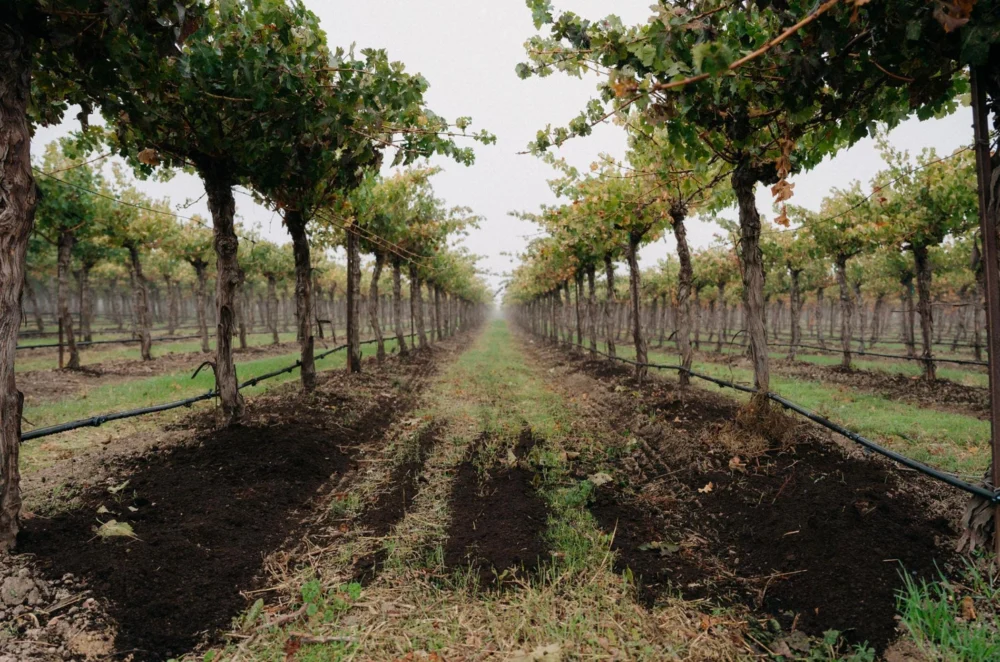
In the rolling hills of Paso Robles, California, a quiet but profound shift in the philosophy of land management is taking place. While the wine industry has long romanticized the concept of terroir—the unique environmental factors that give a wine its character—a new movement is looking deeper than the surface of the soil. Regenerative organic agriculture, once dismissed as a niche pursuit for the idealistic, is rapidly emerging as the most viable strategy for the long-term survival of the global wine industry. At the heart of this transition is the "One Block Challenge," a strategic onboarding ramp designed to de-risk the transition to chemical-free farming by starting small and scaling through evidence.

For Caine Thompson, a leader in the movement and a trustee of the Regenerative Viticulture Foundation (RVF), the mission is far more than an environmental or economic calculation. It is a personal crusade born of tragedy and a deathbed promise. Thompson’s journey began in Tauranga, New Zealand, an area famously dubbed the "fruit bowl" of the nation. Growing up as the son of an orchardist and gardener, his life was defined by the rhythm of the seasons and the tactile reality of raising seeds into sustenance. However, that idyllic upbringing was shattered when his father, Frank, was diagnosed with an aggressive form of cancer that ravaged his liver, lungs, and bones. He was given three months to live.
The diagnosis was linked to high levels of exposure to glyphosate and other synthetic herbicides used for pest control—chemicals Frank had handled for years without fully grasping their impact on human health. At just 13 years old, Thompson made a vow to his father: he would commit his life to finding agricultural solutions that did not rely on the synthetic chemicals that had stolen his father’s future.

This personal history has fueled a career that spans the Pacific, from the oldest vineyards in New Zealand to the cutting-edge estates of California. Today, that mission has culminated in the One Block Challenge, a global initiative that seeks to prove that regenerative organic winemaking is not just a moral imperative, but a superior farming model that produces more resilient vines and higher-quality fruit.
The Science of Restoration
To understand the significance of the One Block Challenge, one must first distinguish between "sustainable," "organic," and "regenerative" farming. While organic farming primarily focuses on what cannot be used—prohibiting synthetic pesticides and fertilizers—regenerative agriculture is proactive. It focuses on restoring the health of the entire ecosystem. This includes increasing soil organic matter, improving water retention, enhancing biodiversity, and sequestering carbon to mitigate climate change.

The challenge for many commercial vintners is the perceived risk. Transitioning an entire estate to regenerative practices involves a steep learning curve and potential fluctuations in yield during the initial years. The One Block Challenge solves this by encouraging growers to implement regenerative practices—such as planting diverse cover crops, integrating livestock for natural fertilization, and eliminating tilling—on just one specific block of their vineyard. By comparing the data from this experimental plot against the rest of their conventionally farmed land, growers can see the benefits in real-time without "betting the whole farm."
The results from the first year of the program in Paso Robles have been nothing short of seismic. Fifty winegrowers who initiated the challenge reported that their regenerative blocks showed more resilient canopies and fruit that handled climate extremes better than their conventional counterparts. Almost all participants have since doubled their regenerative acreage, proving that once the "proof of concept" is established, the transition becomes an easy decision.

Paso Robles: The Crucible of Innovation
It is no coincidence that Paso Robles has become the global epicenter for this movement. Unlike more rigid regions like Napa Valley or Oregon’s Willamette Valley, which are often defined by a single grape variety and a high-stakes economic model that discourages experimentation, Paso Robles maintains a "wild west" spirit of collaboration. With over 40,000 acres of vines, the region is home to a diverse array of varieties and a community of farmers who are inherently open to innovation.
Paso Robles currently boasts five Regenerative Organic Certified (ROC) wineries, including Tablas Creek Vineyard, which was the first in the world to achieve the designation. Jason Haas, the owner of Tablas Creek, notes that the region’s extreme climate—marked by drought and intense heat spikes—provides a natural incentive for investment in soil health. Healthy soil acts like a sponge, retaining moisture during dry spells and keeping vines cooler during heatwaves.

The success of the Robert Hall Winery trial, led by Thompson and owner Jeff O’Neill, served as a catalyst for the region. Spanning 135 acres, the winery dedicated a significant portion of its estate to a side-by-side trial comparing regenerative and conventional methods. The data collected was exhaustive, covering soil carbon levels, pest populations, yield, and wine quality. A year into the study, the regenerative vines were not only healthier but slightly more productive. This empirical evidence was the "green light" the industry needed, leading Robert Hall to convert its entire estate and achieve ROC status.
The Global Snowball Effect
The One Block Challenge is now a global phenomenon. In Stellenbosch, South Africa, approximately 40 vineyards have joined the movement, adapting the practices to their specific challenges. In some South African regions, for instance, growers have integrated cattle into their vineyards instead of sheep, as cattle are more resilient to local predators and less likely to be stolen. This kind of cross-continental knowledge sharing is a hallmark of the RVF’s mission.

By 2026, the challenge is set to expand into Sonoma, Santa Barbara, and the San Luis Obispo Coast. By 2027, it will reach Chile, Spain, France, and Italy. The ultimate goal of the Regenerative Viticulture Foundation is ambitious: to have 10% of the world’s vineyards farming regeneratively by 2035.
This global scale is essential because it breaks down the isolation many farmers feel when moving away from industrial monoculture. In conventional farming, growers are often taught to "de-risk" by controlling every variable with chemistry. Moving toward a biological system requires courage and evidence. The One Block Challenge provides both, creating a community where competition is set aside in favor of shared survival.

Technology and the Future of the Vine
As the movement grows, it is increasingly intersecting with the world of AgTech. Thompson himself is moving into a new phase of his mission by joining Saga Robotics, a company that utilizes AI-powered autonomous machines. These robots use UV light at night to control pests and diseases like powdery mildew, offering a high-tech alternative to synthetic fungicides. By replacing "chemistry with physics," technology is providing the tools necessary to scale regenerative practices to the largest industrial vineyards in the world.
Jeff O’Neill, the owner of O’Neill Vintners & Distillers, emphasizes that the transition is no longer a matter of choice. "We can’t afford not to do it," he says, pointing to the twin pressures of climate change and the ethical responsibility to protect farmworkers. The memory of Frank Thompson and the countless other farmworkers exposed to glyphosate remains a driving force behind the push for safer, cleaner landscapes.

A Legacy in the Soil
Regenerative organic winemaking is, at its core, an act of humility. it is a recognition that nature, when allowed to function in balance, is more efficient and resilient than any synthetic system humans can devise. When you walk through a regenerative vineyard, the difference is sensory: you hear the buzz of insects, see the vibrancy of the cover crops, and feel the coolness of the soil.
But the true test is in the glass. Because wine is a "pure expression" of its environment, a wine made from healthy, living soil carries a depth and vitality that is increasingly recognized by critics and consumers alike. As the One Block Challenge continues to dismantle the barriers to entry, the wine industry is proving that it can be a leader in the broader agricultural revolution.

For Caine Thompson, the mission is about ensuring that the next generation of 13-year-olds doesn’t have to make the same vow he did. By creating "onboarding ramps" for farmers around the world, he is fulfilling a promise made decades ago in a New Zealand hospital room—not just for his father, but for the health of the planet and every community that depends on the land. The revolution started with a single block, but its destination is nothing less than the global restoration of the vine.
