

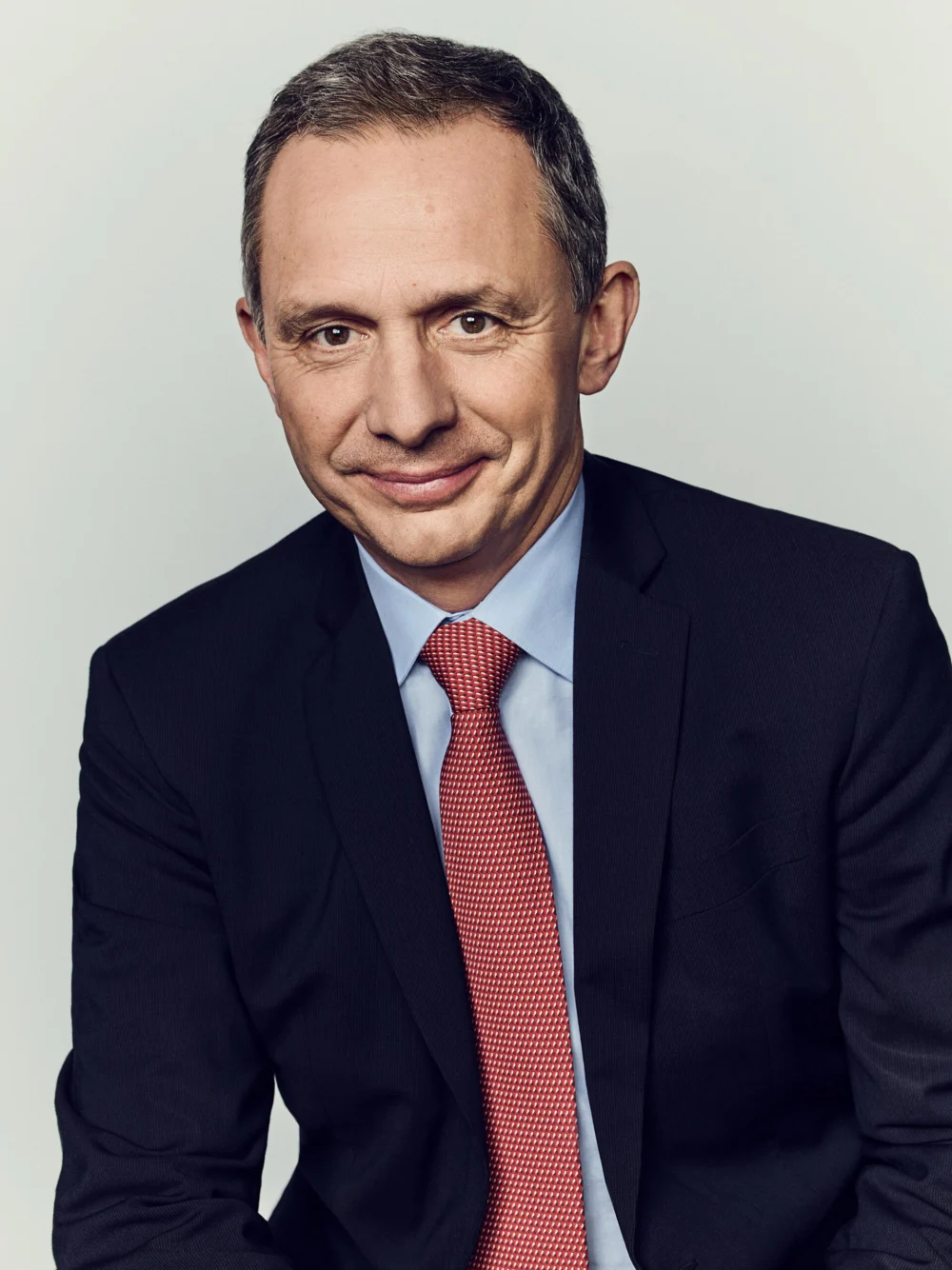
The leadership landscape at PayPal Holdings, Inc. underwent a seismic shift early Tuesday morning, as the digital payments giant announced the immediate appointment of Enrique Lores, formerly the long-serving CEO of HP Inc., as its new President and Chief Executive Officer. Lores, who has been intimately familiar with PayPal’s strategic challenges as the Chairman of its Board since July 2024, replaces Alex Chriss, whose tenure proved remarkably brief and ultimately insufficient in meeting the stringent expectations of the directorial body. The timing of this high-stakes executive transition is critical, coinciding directly with the release of a deeply disappointing fourth-quarter earnings report that saw the company’s stock valuation plummet dramatically in premarket trading.
The swiftness of Chriss’s departure underscores a profound impatience within the PayPal boardroom regarding the company’s trajectory. Chriss had only assumed the CEO mantle in September 2023, succeeding the veteran Dan Schulman, who steered PayPal through its separation from eBay and subsequent years of rapid expansion. The Board’s official statement indicated that the core driver for the change was a failure to achieve adequate operational acceleration, noting pointedly that the company’s “pace of change and execution was not in line with the Board’s expectations” considering the fierce headwinds and rapid evolution of the broader market. This highly unusual, rapid turnover suggests that the attempted turnaround strategies initiated under Chriss—who joined from Intuit—failed to secure investor confidence or show concrete results quickly enough to satisfy demanding stakeholders facing macroeconomic pressures.
In the interim period, while Lores finalizes his transition from HP and officially assumes the full duties of the chief executive role, Jamie Miller, PayPal’s seasoned Chief Financial Officer and Chief Operating Officer, will step in to serve as the acting CEO. This temporary arrangement is designed to provide stability during the handover, although the market’s focus remains squarely on Lores’s long-term mandate.
The Financial Catalyst for Executive Change
The executive reshuffle was inextricably linked to the financial disclosures released concurrently. PayPal reported lower-than-expected figures for both revenue and profit in the critical fourth quarter, a period typically buoyed by holiday consumer activity. This performance deficit was attributed primarily to a noticeable dip in consumer spending, reflective of global pressures emanating from a persistent cost of living crisis and a softening, albeit still tight, labor market across key geographies.
More alarming to investors than the Q4 miss, however, was the company’s full-year profit forecast. PayPal projected a dip in its expected full-year profit outlook—a forecast that directly contravened Wall Street’s consensus, which had broadly anticipated a return to growth. This surprising bearish outlook served as a shockwave, instantly triggering a massive sell-off. In the immediate aftermath of the announcement, PayPal’s shares plunged by approximately 17.9% in premarket trading on Tuesday, wiping out billions in market capitalization and signaling a deep crisis of confidence in the company’s strategic planning and near-term revenue generation capabilities.
Expert analysis suggests that this stock reaction goes beyond typical earnings volatility. For several quarters, PayPal has been navigating the challenging transition from being valued as a high-growth technology stock to a more mature, value-oriented financial services platform. The previous investment thesis relied heavily on aggressive user acquisition and expanding market share. However, as user growth plateaued and competition intensified, investors began demanding improved operating margins and demonstrable efficiency. The negative profit forecast signaled to the market that the required operational rigor and strategic pivots were either failing or taking far longer than acceptable.
Lores: The Operational Rigor Mandate
Enrique Lores arrives at PayPal not as a pure fintech visionary, but as a proven leader known for imposing operational discipline and successfully navigating complex corporate separations and turnarounds in the challenging hardware sector. His six-year tenure as President and CEO of HP, where he oversaw the company’s reorganization and adaptation to shifting PC and printing markets, positioned him as a manager capable of making tough decisions and prioritizing efficiency over aspirational growth metrics.

Lores’s initial comments reflect this focus on measurable performance and accountability. While acknowledging the non-negotiable importance of product innovation—the lifeblood of any technology company—he introduced a critical element of his leadership philosophy: rigorous financial accountability. He explicitly stated that PayPal will hold itself accountable for delivering solid quarterly accounts, signaling a shift toward managing expectations tightly and focusing on profitability margins rather than just transaction volume.
In a statement addressing the dramatic industry changes, Lores encapsulated the magnitude of the challenge: "The payments industry is changing faster than ever, driven by new technologies, evolving regulations, an increasingly competitive landscape, and the rapid acceleration of AI that is reshaping commerce daily. PayPal sits at the center of this change, and I look forward to leading the team to accelerate the delivery of new innovations and to shape the future of digital payments and commerce."
This perspective highlights a dual mandate for Lores: first, stabilizing the core financial performance and restoring investor trust through predictable earnings; and second, accelerating product development to maintain relevance in a hyper-competitive, technologically volatile environment.
Industry Implications and the Competitive Gauntlet
PayPal’s internal instability occurs against a backdrop of intense competition that has eroded its traditional dominance in both peer-to-peer (P2P) payments and merchant services. Once the undisputed leader in online transactions, PayPal now faces powerful adversaries that possess unique advantages.
On the consumer side, the proliferation of platforms like Apple Pay, Google Pay, and established banking apps has significantly fragmented the digital wallet space. Apple Pay, in particular, leverages its deep integration into the iOS ecosystem, offering a seamless and often default checkout experience that bypasses the need for third-party platforms like PayPal.
In the merchant sector, the rivalry with companies like Block (formerly Square) is fierce. Block’s integrated ecosystem—combining hardware point-of-sale systems, software, and financial services—offers small and medium businesses (SMBs) a cohesive solution that PayPal has struggled to match holistically. Furthermore, traditional financial institutions and credit card networks are increasingly pushing their own secure, tokenized payment solutions, reducing the reliance on intermediaries.
Lores’s challenge is not merely about execution; it is about redefining PayPal’s value proposition in a saturated market. PayPal must move beyond being a simple "checkout button" and leverage its vast trove of data to offer highly personalized, high-margin services, potentially in lending, credit facilitation, or advanced fraud protection tailored for specific merchant categories. The market demands that PayPal re-establish a clear moat around its business model.
The AI Imperative and the Future of Commerce
The mention of Artificial Intelligence in Lores’s initial statement is not incidental; it represents the most significant technological frontier defining the next generation of fintech. AI is rapidly transforming commerce by enabling predictive analytics for inventory management, hyper-personalized consumer credit risk assessment, and highly automated fraud detection that operates at scale.

For PayPal, leveraging AI is crucial for two reasons. Firstly, to enhance its core security and compliance infrastructure. As transaction volumes increase and regulatory scrutiny tightens globally, AI-driven compliance and anti-money laundering (AML) protocols are essential for operational efficiency and regulatory adherence. Secondly, AI must be integrated into the consumer and merchant experience. This could mean AI-powered recommendation engines that guide consumers to specific payment methods or AI-enhanced tools for merchants that optimize cash flow management and dynamic pricing.
Lores’s experience managing large-scale, enterprise technology operations at HP may prove beneficial here. The successful integration of AI requires significant investment in data infrastructure, cloud computing capabilities, and disciplined execution—areas where Lores’s background in managing a complex global technology supply chain and enterprise client base offers a unique skill set compared to a leader solely focused on consumer software.
The regulatory environment also looms large. The payments industry is under increasing pressure globally, particularly concerning data privacy, cross-border transfers, and the rising interest in central bank digital currencies (CBDCs). PayPal must proactively navigate this evolving legal landscape, ensuring its global platform remains compliant without sacrificing innovation speed. Lores’s mandate includes positioning PayPal not just to react to regulations but to influence and shape the debate, particularly concerning open banking standards and consumer data control.
Expert Analysis: Beyond the Quick Fix
Market observers view Lores’s arrival as a necessary, if aggressive, intervention. Financial analysts suggest that the market is now demanding a strategic overhaul, not just marginal improvements. The consensus is that PayPal needs to streamline its product offerings, potentially divest non-core assets, and focus relentlessly on high-margin merchant services rather than low-margin P2P transactions.
A primary concern for analysts following the Q4 report was the perceived lack of agility in capitalizing on emerging trends. While competitors were aggressively rolling out "Buy Now, Pay Later" (BNPL) solutions or integrating cryptocurrencies, PayPal’s response was often seen as reactive. Lores must inject a culture of proactive product development and a willingness to take calculated risks in new payment verticals.
Furthermore, Lores must address the internal culture that may have contributed to the perceived "lack of execution." The quick succession of CEOs—Schulman, Chriss, and now Lores—risks internal disruption and uncertainty among key engineering and product teams. Stabilizing the executive team and clearly articulating a cohesive vision will be critical to retaining top talent, especially those focused on cutting-edge fintech development.
The long-term success of PayPal under Lores will hinge on his ability to blend the operational efficiency of a mature enterprise with the necessary speed and innovation of a fintech pioneer. He must convince skeptical investors that PayPal’s massive scale—its hundreds of millions of active accounts and its widespread merchant acceptance network—can still translate into sustainable, high-velocity revenue growth in an era dominated by ubiquitous, low-cost alternatives. The 17.9% premarket decline serves as a stark reminder that the clock is ticking, and the turnaround strategy must yield tangible results in the immediate fiscal quarters ahead. Lores’s initial actions will be scrutinized intensely as the company attempts to chart a path back to market leadership and investor favor.
