

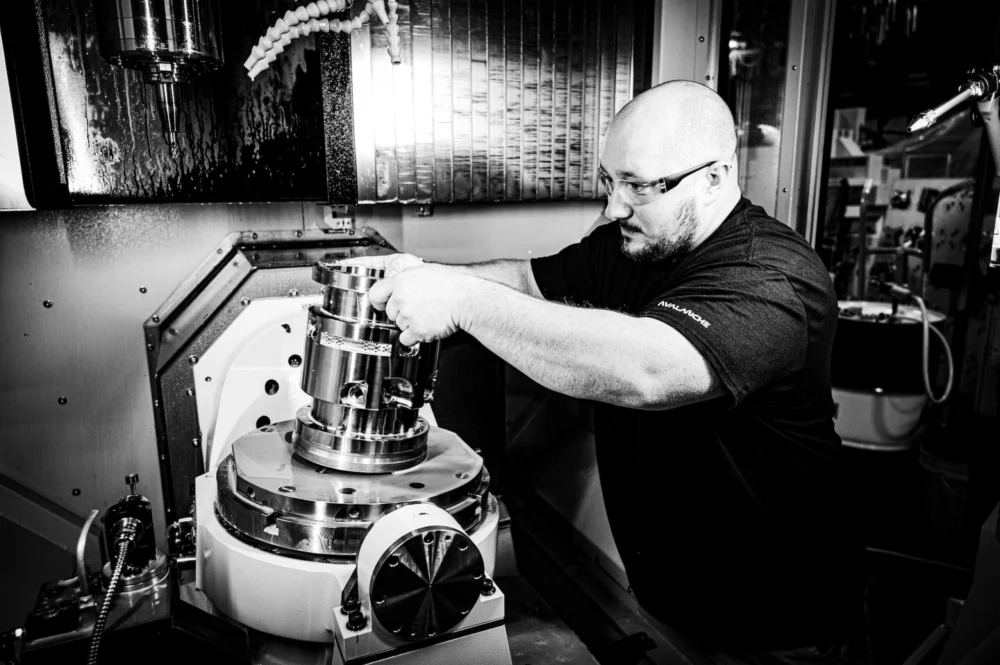
The quest for nuclear fusion, the energy source that powers stars, has long been characterized by projects of colossal scale. For decades, the dominant approaches—epitomized by kilometer-wide research facilities utilizing massive superconducting magnets or high-powered laser arrays—have reinforced the notion that only gargantuan machinery can successfully capture and control plasma heated to hundreds of millions of degrees Celsius. However, a new wave of private ventures is challenging this fundamental assumption, arguing that size is not merely an engineering choice but a critical bottleneck to innovation speed. Leading this disruptive charge is Avalanche, a startup that has purposefully miniaturized the fusion process, developing what is essentially a high-performance, desktop-scale reactor.
Avalanche co-founder and CEO Robin Langtry posits that the traditional approach, while scientifically sound, suffers from a crippling inability to iterate. Fusion, a famously difficult challenge involving exotic physics, materials science at the limits of engineering tolerance, and immense energy requirements, demands rapid feedback loops. When devices are billions of dollars and take years to construct, the pace of learning grinds to a near halt. Avalanche’s strategic countermeasure is simplicity and smallness, enabling them to “learn quickly and iterate quickly,” thereby collapsing the traditional research timeline.
The Fusion Imperative and the Scale Trap
Fusion power represents the ultimate energy endgame: a carbon-free, virtually inexhaustible power source that promises to fundamentally decouple global energy consumption from geopolitical instability and environmental degradation. The physics mandate is deceptively simple: heat and compress isotopes of hydrogen (typically deuterium and tritium) into a superheated plasma state long enough for their nuclei to overcome their natural electrostatic repulsion and fuse, releasing substantial net energy. Achieving the necessary conditions—known as satisfying the Lawson criterion—requires extreme temperatures, density, and confinement time.
The conventional fusion landscape is dominated by two highly capitalized, large-scale methodologies. Magnetic Confinement Fusion (MCF), exemplified by the massive tokamak reactors pioneered by organizations like ITER and utilized commercially by companies such as Commonwealth Fusion Systems (CFS), uses powerful toroidal magnetic fields to confine the plasma in a doughnut shape. Alternatively, Inertial Confinement Fusion (ICF) involves using powerful banks of lasers or ion beams to compress tiny fuel pellets rapidly, mimicking a miniature hydrogen bomb explosion. Both methodologies demand infrastructure of immense complexity, precision, and cost. Building a large tokamak or laser facility often entails multi-year construction timelines and operational costs in the hundreds of millions annually, effectively precluding the kind of agile, trial-and-error experimentation necessary to solve the final, vexing engineering hurdles.
This is the ‘scale trap’ that Avalanche seeks to avoid. When a fundamental component change requires weeks of modeling, months of specialized fabrication, and a facility shutdown, the rate of scientific progress slows dramatically.
Avalanche’s Compact Confinement Mechanism
Avalanche’s technology diverges sharply from the established tokamak and ICF architectures. Instead of relying on massive external magnets to contain the plasma within a toroidal chamber, Avalanche employs a unique approach rooted in electrostatic confinement and high-voltage physics. The system utilizes electric current applied at extremely high voltages to manipulate plasma particles. These particles are drawn into a tight, circular orbit around an electrode. While the system incorporates auxiliary magnets to maintain plasma stability and order, they are far less powerful and complex than the superconducting magnets required for a large tokamak.
As the plasma orbits tighten and the particle velocities increase, the density and temperature rise dramatically, leading to fusion events. This method, sometimes characterized as a form of Magnetized Target Fusion (MTF) but executed on a dramatically reduced scale, offers several potential advantages. First, the required magnetic field strength scales down with the reactor size, reducing material stress and energy consumption for confinement. Second, the system’s physical dimensions are radically smaller. The current experimental reactor boasts a mere nine-centimeter diameter.
Langtry has indicated that the next generation of the device is planned to grow to approximately 25 centimeters and is engineered to target an output of roughly 1 megawatt (MW) of thermal power. Crucially, this scaling effort is aimed at achieving a significant improvement in plasma confinement time—the period during which the plasma remains hot and dense enough to sustain reactions. The ultimate goal for this new device is to achieve $Q>1$. In fusion science, the Q factor (or gain factor) is the ratio of power output (fusion energy produced) to power input (energy required to heat and confine the plasma). Crossing the $Q=1$ threshold, or the breakeven point, is a landmark scientific achievement signifying net energy gain.
The "New Space" Influence: Iteration as a Core Technology
The foundational philosophy guiding Avalanche is deeply rooted in the operational models of the contemporary commercial aerospace sector, often termed the "New Space" movement. Langtry and co-founder Brian Riordan both gained valuable experience at Blue Origin, the space technology company founded by Jeff Bezos. Their time in the aerospace industry, which has seen companies like SpaceX rapidly accelerate development through vertically integrated manufacturing and relentless, high-frequency prototyping, directly informed Avalanche’s strategy.
Langtry argues that this ‘New Space’ approach—prioritizing fast failure, rapid iteration, and modular design—is the key to unlocking the fusion puzzle. Traditional fusion R&D often resembles governmental or academic projects, characterized by long procurement cycles and conservative design choices. Avalanche, by contrast, has leveraged its compact design to accelerate its development cycle drastically. The company has demonstrated the ability to test significant design changes and device modifications sometimes twice a week. This velocity of experimentation is simply unachievable for competitors operating multi-billion dollar, multi-ton facilities.
This rapid-fire experimentation allows Avalanche to gather empirical data on plasma behavior, material resilience, and confinement efficacy at an unprecedented pace. In an industry where progress is often measured in quarterly milestones, Avalanche measures its progress in weekly design pivots. This speed minimizes the capital required per learning cycle, making the company’s $80 million in total funding—raised across rounds led by R.A. Capital Management, with participation from firms like Founders Fund, Lowercarbon Capital, and Toyota Ventures—a highly efficient investment relative to the several hundred million or even billion dollars raised by some larger-scale competitors. Investors are betting that this philosophical advantage in iteration speed will ultimately outpace the sheer scale and resources of their rivals.
Distributed Power and Industry Implications
The implications of a successful miniaturized fusion device extend far beyond the laboratory. If Avalanche can successfully scale its reactor from the 9 cm prototype to a functional 25 cm, 1 MW power unit achieving $Q>1$, it would fundamentally re-engineer the commercial deployment model for fusion energy.
Traditional fusion concepts, such as large tokamaks, are inherently designed for centralized, utility-scale power generation—likely producing gigawatts of power, requiring immense infrastructure, and necessitating connection to major national grids. Avalanche’s approach, however, opens the door to Modular Fusion Reactors (MFRs) or distributed generation. A 1 MW unit is perfectly sized for niche, high-demand applications, such as powering isolated military bases, large industrial complexes, remote communities, or, most notably in the current energy landscape, highly power-intensive data centers.
This shift to modularity offers significant economic and logistical advantages:
- Reduced Upfront Capital Cost: Smaller units require less specialized construction and civil engineering, making deployment cheaper and faster.
- Market Flexibility: Units can be deployed where energy demand is highest, minimizing transmission losses and grid strain.
- Faster Regulatory Pathway: While fusion regulatory frameworks are still evolving globally, a smaller, potentially less complex reactor design might navigate permitting and safety licensing with greater agility than a multi-gigawatt facility.
To facilitate both its own development and the broader industry, Avalanche has established FusionWERX, a commercial testing facility that is also leased out to other fusion startups. This move underscores the collaborative necessity within the competitive fusion ecosystem while strategically positioning Avalanche as a key infrastructure provider. A critical future milestone for FusionWERX is achieving the necessary licensing by 2027 to handle tritium, an unstable isotope of hydrogen essential for the high-efficiency deuterium-tritium fuel cycle required for grid power production. This step signifies Avalanche’s transition from pure scientific proof-of-concept experiments to preparing for true commercial output.
Future Trajectory and the Race for Breakeven
While Langtry remains cautious about setting a specific date for achieving the $Q>1$ milestone—a necessary prudence in an industry defined by unpredictable scientific breakthroughs—he maintains an optimistic outlook that places Avalanche’s timeline squarely alongside its most heavily funded competitors, such as CFS and Helion Energy. He predicts that the years 2027 through 2029 will be pivotal for the entire fusion sector, expecting significant breakthroughs and demonstrations of net energy gain across multiple approaches.
The race to breakeven is not merely a scientific competition; it is a profound technological inflection point that will redefine the global energy matrix. Avalanche’s commitment to miniaturization and iterative design provides a powerful case study in how agile engineering methodologies, borrowed from adjacent high-tech sectors like aerospace, can potentially overcome the entrenched challenges of fundamental physics research. By focusing on rapid learning cycles rather than brute force scale, Avalanche is not just building a smaller reactor; it is building a fundamentally faster path to commercial fusion power.
If this miniaturized approach proves viable, the future of fusion may not look like centralized mega-projects feeding massive grids, but rather a constellation of distributed, modular energy sources, bringing the power of the stars to local communities and high-demand industrial users efficiently and rapidly. The success of the 25 cm prototype, targeting 1 MW output and $Q>1$, will be the crucial test validating the belief that in fusion, sometimes the fastest way forward is to think dramatically smaller.
