

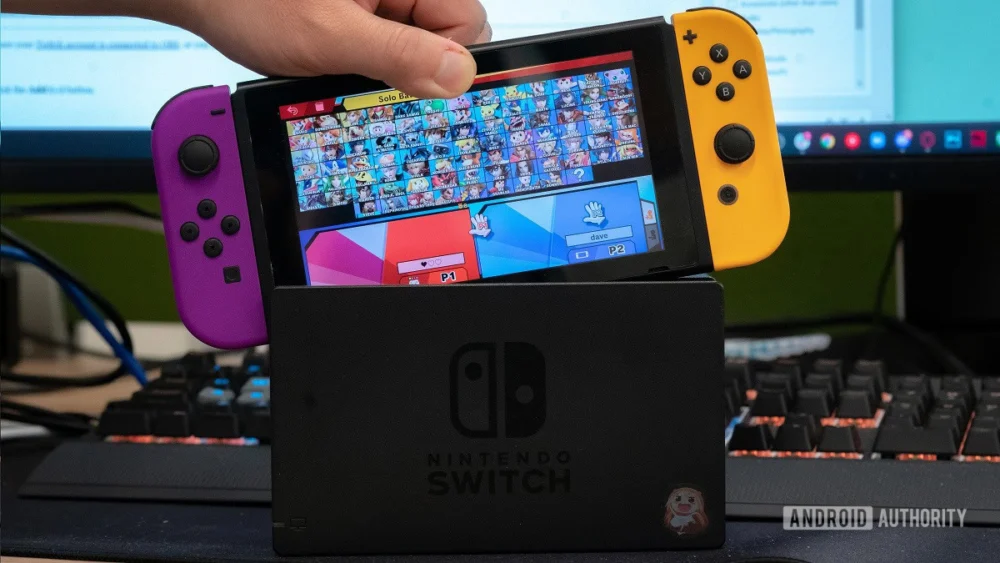
The ecosystem surrounding Nintendo Switch emulation continues its rapid evolution, with developers pushing the boundaries of performance and user experience across various platforms. Just as the alternative Android-focused emulator, Eden, demonstrated significant strides in mobile emulation capabilities, the established PC-centric emulator, Citron, has released its substantial "Pathfinder" update. This new iteration, deployed over the weekend, focuses heavily on optimizing the experience for desktop operating systems and the Steam Deck, yet it simultaneously rolls out quality-of-life improvements across all supported architectures, including Android. This continuous iteration underscores a vibrant, competitive environment driving emulation technology forward.
For enthusiasts dedicated to preserving and enhancing their gaming libraries, the most transformative additions in the Pathfinder release pertain to save state portability and streamlined content modification. Chief among these is the newly implemented, robust save management system. This feature moves beyond simple in-emulator save slots, offering users granular control over where their progress files reside. Users can now designate specific storage locations for save data, facilitating systematic backups, seamless importation from external sources, and crucially, interoperability between different emulator instances. The ability to transfer saves directly between Citron and competing platforms like Eden, or even legacy projects such as Yuzu, represents a significant commitment to user flexibility and future-proofing game progress, regardless of the specific emulation software chosen down the line. This management can be applied universally across the entire library or tailored on a per-game basis, offering precision control essential for complex emulation setups.
Complementing this data portability is the introduction of an integrated mod downloader and manager. Emulation has long been the primary gateway for the community to apply user-created modifications to first-party titles, transforming gameplay experiences. Whether it’s implementing character swaps, such as the popular Linkle model in The Legend of Zelda: Breath of the Wild, or drastically altering racing environments with custom tracks in Mario Kart 8 Deluxe, mods significantly extend the lifespan and replayability of these console exclusives. By baking the discovery, download, and application process directly into the emulator interface, Citron dramatically lowers the barrier to entry for modding. Previously, users often had to navigate external websites, manually locate installation directories, and resolve potential file conflicts. The Pathfinder update seeks to automate this entire pipeline, turning a multi-step technical process into a simple selection within the application’s GUI.
However, the excitement surrounding these two headline features—advanced save management and integrated modding—is tempered by a significant caveat: both are currently exclusive to the PC and Steam Deck builds of the emulator. The development team has not provided a clear timeline, or even confirmed intent, regarding the migration of these sophisticated features to the mobile (Android) branch. While the mobile version benefits from the general stability and performance enhancements of the new release, this platform disparity highlights the inherent divergence in development priorities, often dictated by hardware constraints and target audience behavior. Mobile emulation faces unique challenges related to thermal management, varying CPU/GPU architectures, and input latency, which can complicate the implementation of complex desktop-centric features.
Beyond these major additions, the Pathfinder update delivers substantial under-the-hood refinements that benefit all users. Performance optimization remains a cornerstone of ongoing emulation development. This release features significant enhancements to Vulkan API support, a crucial backend for translating console graphics calls to modern PC hardware efficiently. Improved audio rendering is also noted, addressing common synchronization issues and crackling artifacts that often plague early emulation stages. These incremental, yet vital, bug fixes and stability patches contribute to a more authentic and less jarring gameplay experience across the board.
The user interface (UI) has also undergone a modernization sweep. Recognizing the unique hardware profile of the Steam Deck—a dedicated handheld PC running Linux—Citron has introduced a bespoke UI layer tailored for its form factor, optimizing touch targets and menu navigation for handheld play. Furthermore, general UI elements across Windows, Linux, and macOS builds have received aesthetic and functional tweaks, contributing to a cleaner, more contemporary application feel. In a move that speaks to the playful nature often found within the enthusiast community, the update cheekily includes a "surprise me" button designed to launch a random game from the user’s installed library, perhaps encouraging exploration of less-frequently played titles. Furthermore, the inclusion of a built-in CRT filter, while perhaps niche, caters directly to retro enthusiasts seeking to replicate the visual artifacts of legacy displays on modern high-resolution screens.
Perhaps the most significant structural advancement, mirroring efforts seen in competing projects, is the nascent support for QLauncher emulation. QLauncher functions as a functional approximation of the Nintendo Switch’s native Home Menu interface. By implementing this layer, Citron moves beyond simply launching individual games in a sterile window environment. Instead, it aims to recreate the holistic console experience—the ability to browse titles, view system notifications (or their emulated equivalents), and manage settings as if operating the physical hardware. While the developers acknowledge this is an initial implementation, fraught with potential bugs and incomplete functionality, its inclusion signals a long-term strategic goal: achieving total system fidelity rather than mere game execution. This is vital for developers aiming to attract users who want a comprehensive console replacement, particularly those utilizing handheld form factors like the Steam Deck or forthcoming Android gaming devices.
The ongoing competition between major Switch emulators, exemplified by the parallel development between Citron and Eden, serves as a powerful accelerant for the entire field of software emulation. Historically, emulation projects have often operated in relative isolation, but the current environment sees features iterating rapidly between projects. When one emulator introduces a significant quality-of-life improvement—like enhanced shader compilation or improved input mapping—the expectation from the user base is that competitors will quickly match or surpass that capability. This rapid feature parity race benefits the end-user immensely, pushing the boundaries of what is possible on non-native hardware.
From an industry perspective, the viability of these advanced emulation features has tangible implications. As console hardware ages, the demand for high-fidelity emulation increases, particularly as manufacturers discontinue support or games become difficult to access legally. Emulators like Citron are not just tools for preservation; they are becoming sophisticated platforms capable of extending the life and utility of game libraries far beyond the intended lifespan of the original console. The focus on cross-emulator compatibility (save states) suggests a maturing view within the community that portability across tools is more important than vendor lock-in to a single project.
However, the elephant in the room remains the reliance on the user possessing a legally obtained copy of the Nintendo Switch firmware and game files. Emulators, by their nature, operate in a legal gray area contingent upon providing an experience that is functionally separate from the copyrighted BIOS and operating system components of the original hardware. The continued development of features that enhance the experience—like QLauncher integration and mod management—is strategic; it demonstrates that the focus is shifting from simply making games run to improving how those games run, which can sometimes be perceived as a defense against accusations of purely facilitating piracy. The high performance benchmarks achieved, particularly on optimized hardware like the Steam Deck, also challenge the necessity of proprietary hardware for accessing these game libraries.
Looking toward the future, the trends established by the Pathfinder update suggest several key directions for emulation development. First, further refinement of system-level emulation (like QLauncher) will likely lead to near-perfect environment replication, potentially allowing for software that requires specific system calls to function correctly. Second, the integration of content management systems (like the mod downloader) will continue to blur the line between official software distribution and community-driven content enhancement. Future iterations may see more sophisticated DRM-bypass techniques or even automated discovery of game updates, though such features always carry increased legal risk.
Finally, the platform divide—PC versus mobile—will likely persist, but the gap may narrow. As high-performance mobile chipsets continue to close the gap with mid-range desktop CPUs and GPUs, the development hurdles for bringing advanced features like Vulkan optimizations and complex UI overlays to Android will diminish. We can anticipate that features currently exclusive to PC will eventually trickle down, perhaps first to high-end gaming handhelds running custom Android ROMs, before reaching the broader spectrum of consumer smartphones. The commitment shown by Citron’s development team to continuous, feature-rich updates confirms that the emulation arms race for the Nintendo Switch is far from over, offering enthusiasts ever more powerful and flexible ways to engage with one of Nintendo’s most successful console generations. The full patch notes, available via the developer’s repository, confirm a host of minor bug fixes and platform-specific tweaks that contribute to this robust, evolving ecosystem.
