

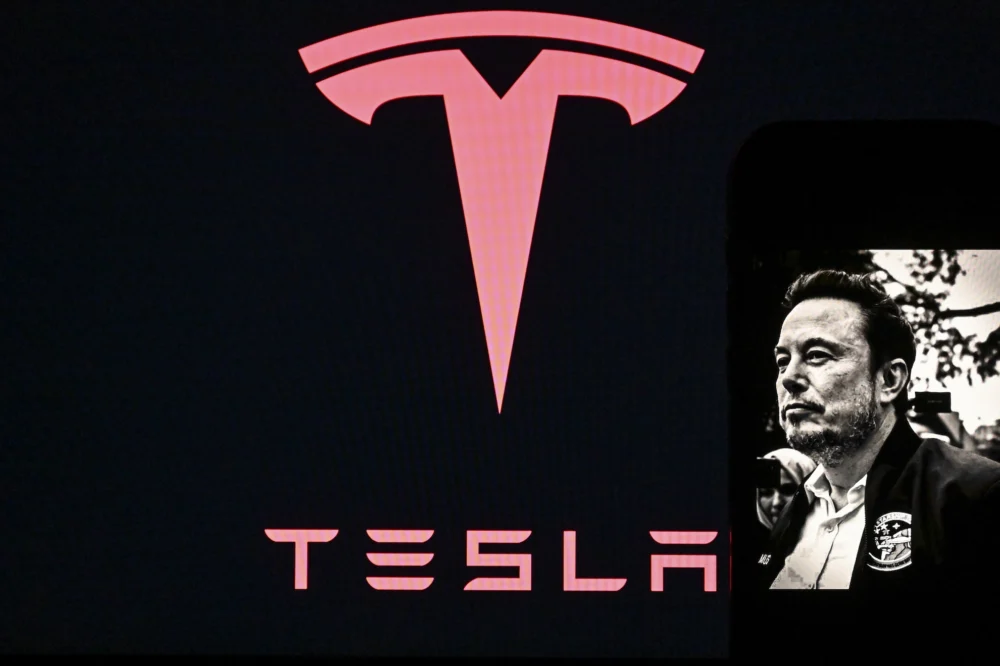
The technology landscape of mobility is undergoing a fundamental transformation, driven by massive capital injections into autonomous systems and a profound, financially mandated strategic shift at the industry’s most prominent disruptor, Tesla. Far from being content with its status as the world’s leading electric vehicle (EV) manufacturer, CEO Elon Musk is aggressively attempting to re-engineer the company’s public identity and internal structure, pivoting toward artificial intelligence and robotics as the core business model. This rebranding effort, however, is not simply aspirational rhetoric; it is a critical response to sobering financial realities revealed in the company’s 2025 fiscal results.
The Financial Imperative Behind Tesla’s AI Pivot
For years, Musk has positioned Tesla as a generalized sustainable energy company, an image reinforced by the 2016 acquisition of Solar City. More recently, the narrative has evolved to center on AI and robotics. The latest earnings report, however, starkly illustrates the disparity between this futuristic vision and current revenue streams. In 2025, Tesla generated $94.8 billion in total revenue, yet an overwhelming $69.5 billion—roughly 73%—originated from the sale and leasing of EVs and associated regulatory credits. The remaining $25 billion was split between the energy generation and storage business and the "services and other" category, which encompasses high-growth areas like Supercharger revenue and Full Self-Driving (FSD) subscriptions.
This heavy dependence on EV deliveries proved fragile as the broader market experienced a sales slowdown. Consequently, Tesla’s profitability suffered a significant decline, recording a 46% year-over-year drop in profits for 2025. This downturn provides the crucial context for the company’s dramatic, capital-intensive strategic pivot announced during the Q4 and full-year earnings call.
Musk’s announced plan for 2026 is unprecedented in its scale and risk: a capital expenditure (CapEx) spree potentially exceeding $20 billion, more than double the prior year’s spending. This spending commitment is so vast that it threatens to push the company into negative-cash-flow territory, a highly unusual stance for a mature, publicly traded technology titan. This enormous investment signals a commitment to build out non-vehicular revenue infrastructure at an accelerated pace, prioritizing long-term dominance in future sectors—namely, generalized AI and autonomous robotics—over short-term profit margins derived from vehicle sales.
Symbolic Endings and Future Foundations
The shift in focus is underscored by several material and symbolic corporate decisions. Most notable is the discontinuation of production for the Model S and Model X. While these flagship vehicles represent only about 2% of Tesla’s total sales volume, their retirement marks a genuine end-of-an-era. The Model S, launched in 2012, was instrumental in redefining the performance and desirability of EVs, fundamentally altering the trajectory of the global automotive industry. Its phasing out symbolically clears the deck, signaling that the company is moving past its foundational luxury EV legacy to focus on mass-market volume and, critically, future non-automotive products.

The production void left at the Fremont, California, factory is planned to be filled by the manufacturing of Optimus, the company’s humanoid robot. This transition is perhaps the clearest physical manifestation of the new AI-first strategy. Furthermore, Musk detailed aggressive plans to scale Tesla’s robotaxi operations to more cities in 2026, and even introduced the concept of building a "TerraFab" factory dedicated to shoring up critical chip supply—a direct effort to vertically integrate the necessary hardware for its expanding AI and robotics initiatives.
The Rise of the Musk Conglomerate
Beyond internal manufacturing pivots, the most intriguing strategic move involves a deep alignment with Musk’s other ventures. Tesla announced a $2 billion investment into xAI, the CEO’s dedicated artificial intelligence startup. This cross-pollination is a textbook example of the "Elon Inc." circular economy, designed to mutually reinforce the technological capabilities of his portfolio companies.
This financial commitment arrives alongside reports suggesting active discussions about a potential merger, or at least a radical formal alignment, between three core Musk entities: SpaceX, Tesla, and xAI. Such a combination would create a consolidated technology conglomerate unlike any other, spanning terrestrial transportation and energy (Tesla), foundational general AI (xAI), and orbital/deep space infrastructure (SpaceX).
Expert Analysis: A merger of this scale would provide significant synergistic advantages. Tesla could leverage xAI’s sophisticated large language models and deep learning expertise to accelerate FSD and Optimus development, while xAI would gain access to Tesla’s vast real-world data collection fleet and manufacturing scale. SpaceX, meanwhile, offers potential specialized computing infrastructure or even communication backbone support. However, such a consolidation would also introduce immense governance and regulatory complexity, especially concerning shareholder interests across wildly divergent business models. The financial market’s reaction will hinge on whether investors view the combined entity as a robust, diversified technology platform or an overly complex, leveraged concentration of risk.
Capitalizing on Autonomy: Waymo and Waabi Drive Momentum
While Tesla charts its course into generalized AI, the dedicated autonomous vehicle (AV) sector is simultaneously hitting crucial milestones, backed by significant capital. Reports suggest Waymo, the Alphabet subsidiary, is on track to finalize a massive fundraising round, potentially reaching $15 billion. Although a large portion is sourced internally from Alphabet, the high interest from external investors, including potential Original Equipment Manufacturers (OEMs), signals robust market confidence in Waymo’s long-term commercialization pathway. This level of capital ensures Waymo can aggressively scale its operational footprint and navigate the inevitable regulatory and technological hurdles of widespread deployment.
Adding to the capital influx, AV startup Waabi secured a blockbuster $1 billion total package, comprising a $750 million Series C co-led by Khosla Ventures and G2 Venture Partners, and a pivotal $250 million commitment from Uber. The Uber milestone capital is explicitly tied to deploying 25,000 or more Waabi Driver-powered robotaxis exclusively on the ride-hailing giant’s platform.

This partnership marks a significant strategic pivot for Waabi, which initially focused exclusively on self-driving trucks. The decision to pursue a dual-vertical strategy (robotaxis and trucking) is a high-stakes gamble. History is littered with AV companies—including Waymo and Aurora—that attempted a broad approach before retreating to focus on a single, more manageable domain (Waymo to robotaxis, Aurora to trucking). Waabi’s confidence rests on its perceived technological advantage, presumably a single, generalizable AI stack capable of operating across both complex urban passenger mobility and structured logistics corridors. Should they succeed, it validates the multi-domain AI approach, potentially accelerating the entire industry’s maturation.
Commercial Success in the Logistics Niche
Crucially, commercial viability is being proven in the less glamorous but highly lucrative field of logistics. Gatik AI, a leader in autonomous middle-mile trucking, announced a five-year contract with a major consumer-goods company projected to deliver $600 million in revenue.
The significance of this deal is twofold: first, the revenue size confirms that driverless logistics is generating substantial, predictable returns; and second, the operations are entirely driverless, without a safety operator behind the wheel. Gatik reports successfully completing 60,000 fully driverless orders since mid-2025, moving refrigerated and frozen goods between distribution centers. This demonstrates that Level 4 autonomy is already a reliable, scalable commercial reality in structured, defined-area logistics, providing a tangible pathway to profitability that robotaxi ventures are still striving to achieve in dense urban environments.
The Harsh Reality of Hardware and Consolidation
The mobility sector’s maturation is inevitably bringing consolidation and market pressure to specialized hardware providers. This was highlighted by the sale of Luminar’s lidar business to MicroVision for $33 million, despite a last-minute flurry of higher bids. MicroVision, itself a sensor developer, successfully acquired the assets, signaling a phase where smaller, independent lidar specialists face intense pressure to either integrate into larger automotive ecosystems or be acquired for their intellectual property.
Further underscoring the volatility of the mobility startup landscape is the bankruptcy and subsequent sale of Rad Power Bikes. Once valued at $1.65 billion and having raised $329.2 million, the e-bike pioneer was sold for approximately $13.2 million to Life Electric Vehicles Holdings. This collapse illustrates the rapid market shifts and intense competitive pressures facing micro-mobility companies, where high valuations often fail to translate into sustainable financial models when market conditions tighten.
On a more positive note for the infrastructure layer, Redwood Materials, focused on battery recycling and material recovery, secured $425 million in a Series E round, attracting Google and Nvidia’s venture arm, NVentures, as strategic investors. This funding highlights the growing importance of closing the loop on the EV supply chain and recognizes that the long-term sustainability of the EV transition hinges on efficient, localized battery material processing.

Regulatory Scrutiny and Public Trust
As AV deployments increase, so does regulatory scrutiny and the challenge of maintaining public trust. Waymo achieved a major operational victory by securing permission to operate robotaxi services to and from the highly complex San Francisco International Airport (SFO). This approval is a significant indicator of regulatory bodies accepting the safety case for driverless operations in highly dynamic, high-traffic zones.
However, this expansion is tempered by concurrent investigations from the National Highway Traffic Safety Administration (NHTSA) and the National Transportation Safety Board (NTSB) following a reported incident where a Waymo robotaxi struck a child near an elementary school in Santa Monica. Separately, the San Francisco Police Department is investigating a collision involving a Zoox autonomous vehicle hitting a parked car. These incidents, regardless of fault, feed public anxiety and increase the regulatory burden, demonstrating that the path to ubiquitous autonomy is still subject to significant friction and requires continuous demonstration of safety improvements.
Meanwhile, data from ride-hailing aggregators like Obi indicates a narrowing price disparity between Waymo’s robotaxi services and those provided by traditional human-driven platforms like Uber and Lyft in the Bay Area. This competitive pricing signals that robotaxis are rapidly moving from a novelty service to a viable, cost-competitive alternative, placing direct economic pressure on legacy ride-hailing models.
In response to this shifting dynamic, Uber is moving strategically by launching Uber AV Labs, a division dedicated to collecting and sharing real-world driving data with its robotaxi partners (including Lucid, Waymo, and Waabi). This move confirms that Uber views its future role not as an autonomous vehicle developer, but as a crucial data-broker and platform provider, cementing its position in the emerging transportation ecosystem without bearing the massive R&D costs of building the autonomous technology itself.
The cumulative effect of these developments—Tesla’s risky pivot into AI infrastructure, the massive capitalization of dedicated AV players, and the intensifying regulatory oversight—confirms that the future of mobility is fundamentally shifting away from hardware manufacturing toward integrated AI and robotics platforms, a transition demanding unprecedented levels of capital, technological execution, and regulatory compliance.
