

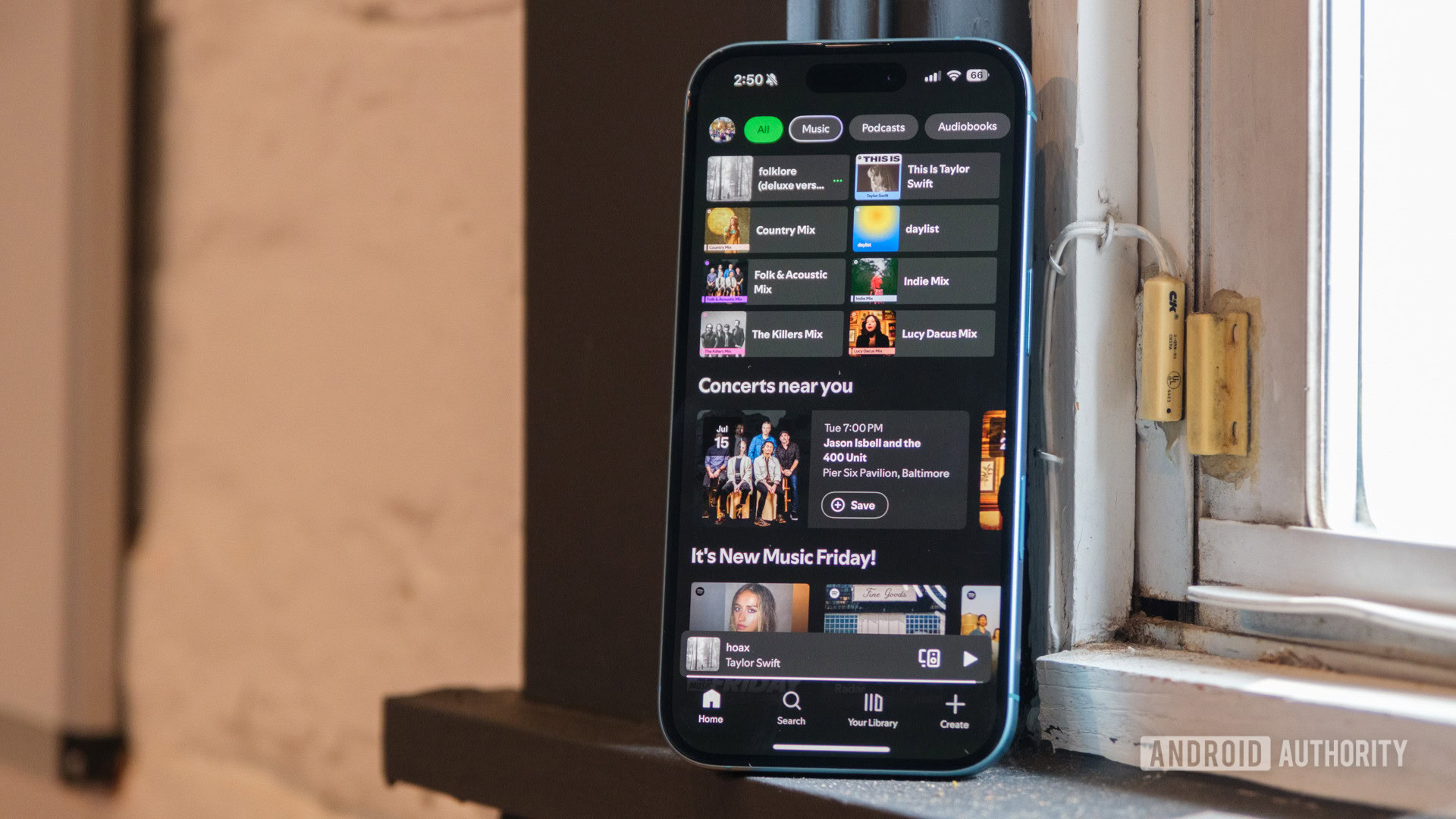
For years, the core experience of music streaming platforms like Spotify has relied on sophisticated, often opaque, recommendation engines. These algorithms analyze listening history, skips, saves, and time spent with specific tracks to curate an ever-present stream of personalized content. While remarkably effective at keeping users engaged within established preferences—think Discover Weekly or Daily Mixes—this algorithmic echo chamber inevitably leads to creative stagnation. Even a self-proclaimed aficionado, someone adept at sharing musical discoveries with friends, can find themselves cycling through the same favored genres and artists across multiple algorithmic outputs. It becomes a testament to the algorithm’s accuracy, yet a limitation on genuine musical exploration.
This friction between deep personalization and the desire for novelty has created a fertile ground for innovation. The introduction of Prompted Playlists marks a significant pivot in this dynamic. By mirroring the mechanics of contemporary generative AI tools—where natural language input dictates the output—Spotify is handing the reins, albeit cautiously, back to the user’s immediate intent. This move signals an evolution from passive recommendation to active, creative curation, bridging the gap between what the user has listened to and what they want to listen to right now.
The fundamental difference between traditional algorithmic playlists and Prompted Playlists lies in the source of direction. Standard mixes are derivatives of past behavior; they are predictive. Prompted Playlists, conversely, are directive; they are generative. Users are no longer merely selecting a mood or genre tag; they are crafting a narrative, a specific scenario, or a complex emotional state, treating the streaming service less like a library and more like a creative partner.
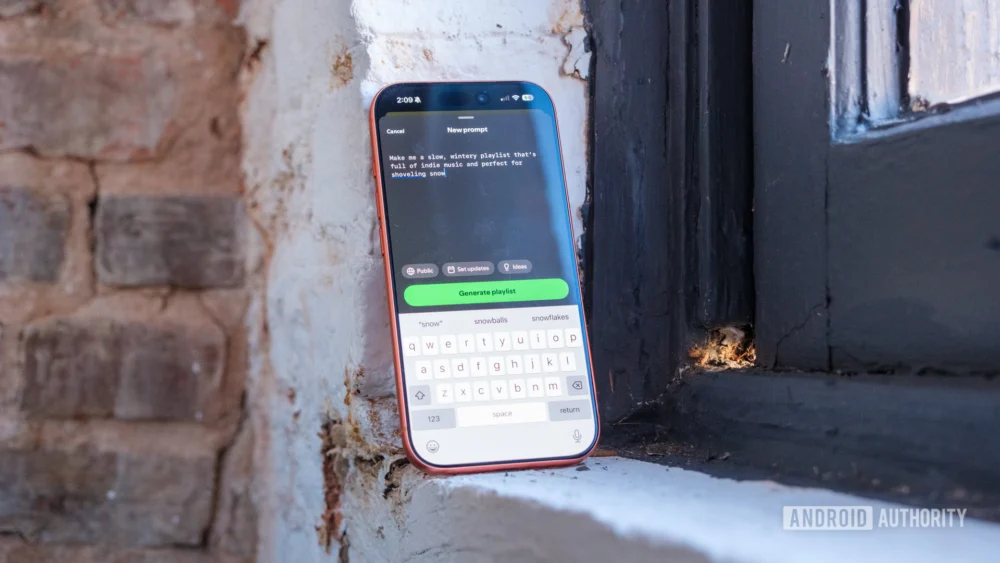
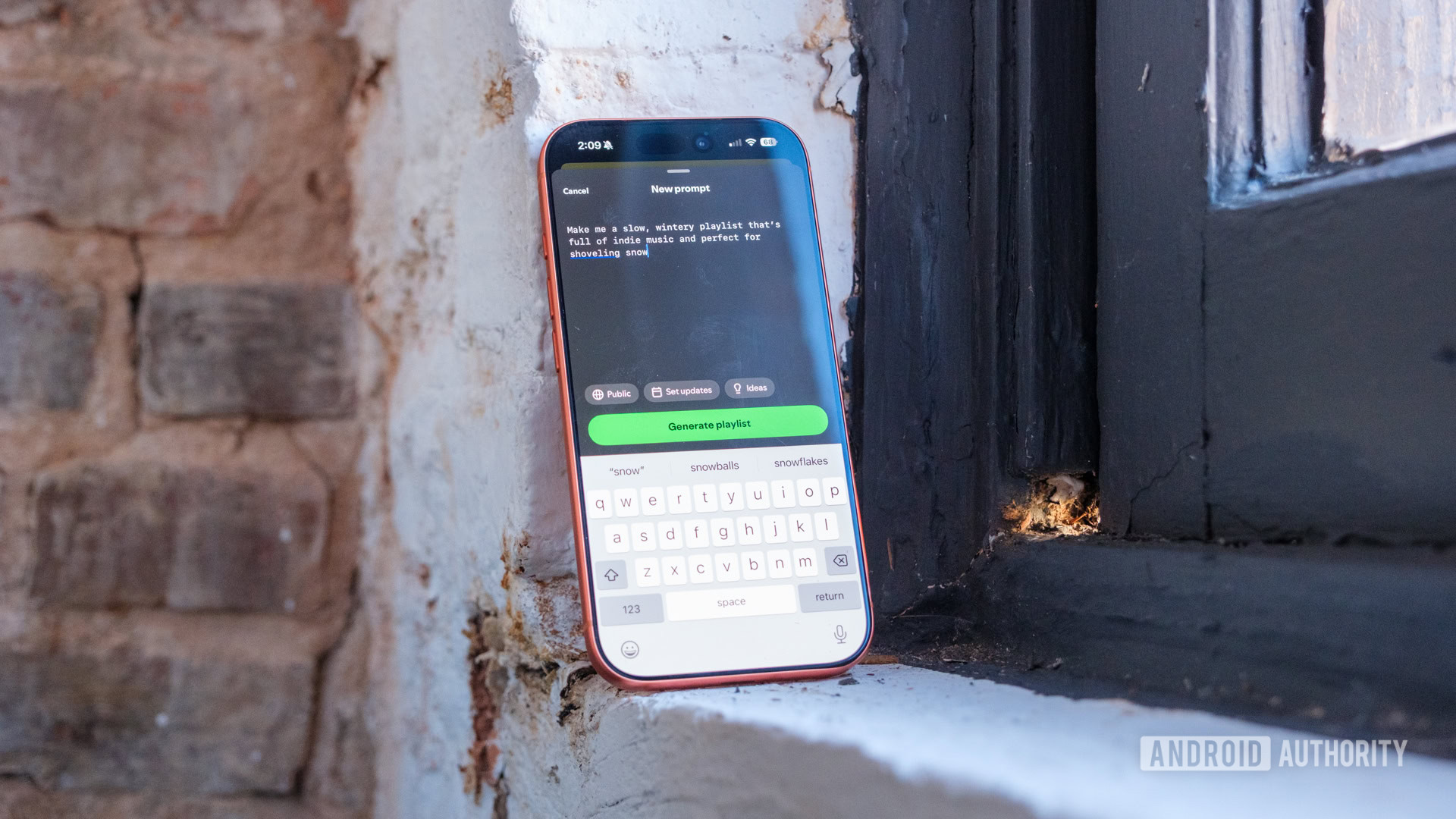
My initial foray into this new modality was fraught with the kind of rookie errors one makes when first interacting with a large language model or an image generator. The temptation is to keep the prompt broad, relying on the system’s assumed intelligence. My first attempt—a request for a "slow, wintery playlist full of indie music and perfect for shoveling snow"—was a classic example of under-specification leading to unexpected results. The system, operating strictly on the semantic components of the prompt, delivered an eclectic, if technically accurate, selection featuring instrumental pieces from Italian and Vietnamese artists. While the sonic texture might have matched the "slow" and "wintery" criteria, the lack of linguistic familiarity broke the immersion required for a mundane but physical task like snow removal. The lyrics, inaccessible to me, rendered the experience purely academic rather than engaging.
This initial misstep illuminated the key lesson of generative curation: specificity is paramount. The platform, much like sophisticated image models that require precise details on lighting, style, and composition, demands granular instruction to produce relevant results. Recognizing the failure of abstraction, the prompt was immediately iterated to include a crucial constraint: "include familiar music." The subsequent regeneration yielded an entirely different, and far more successful, outcome. The resultant hour-long mix contained music I recognized, allowing for active engagement (singing along) while performing the chore. Crucially, the system provided metadata justifications for each track—linking specific tempos or instrumentation to the "wintery" theme—a transparency feature that demystifies the curation process itself. The heavy inclusion of artists like Phoebe Bridgers, perhaps a safe anchor in the user’s established indie profile, demonstrated the AI’s dual mandate: satisfy the prompt while hedging risk with known quantities.
The implications of this shift extend far beyond escaping personal ruts. For the music industry, Prompted Playlists represent a potential seismic change in how music discovery is mediated. Historically, algorithmic curation risks flattening the discovery landscape, prioritizing commercially proven paths. Prompted Playlists introduce user-defined vectors, allowing niche tastes, highly specific moods, or even transient activities (like shoveling snow) to generate bespoke listening environments that traditional, broader algorithms often overlook.
Consider the technical architecture. These systems must rapidly parse highly nuanced, context-rich natural language queries, map them onto a vast, multi-dimensional catalog based on audio features (tempo, key, energy, timbre), lyrical content, and the user’s historical affinity graph. This requires a deeper level of semantic understanding than simply matching genre tags. It necessitates linking abstract concepts—like "adventure" or "happy hour"—to measurable sonic attributes and then cross-referencing those with the user’s recognized musical lexicon.
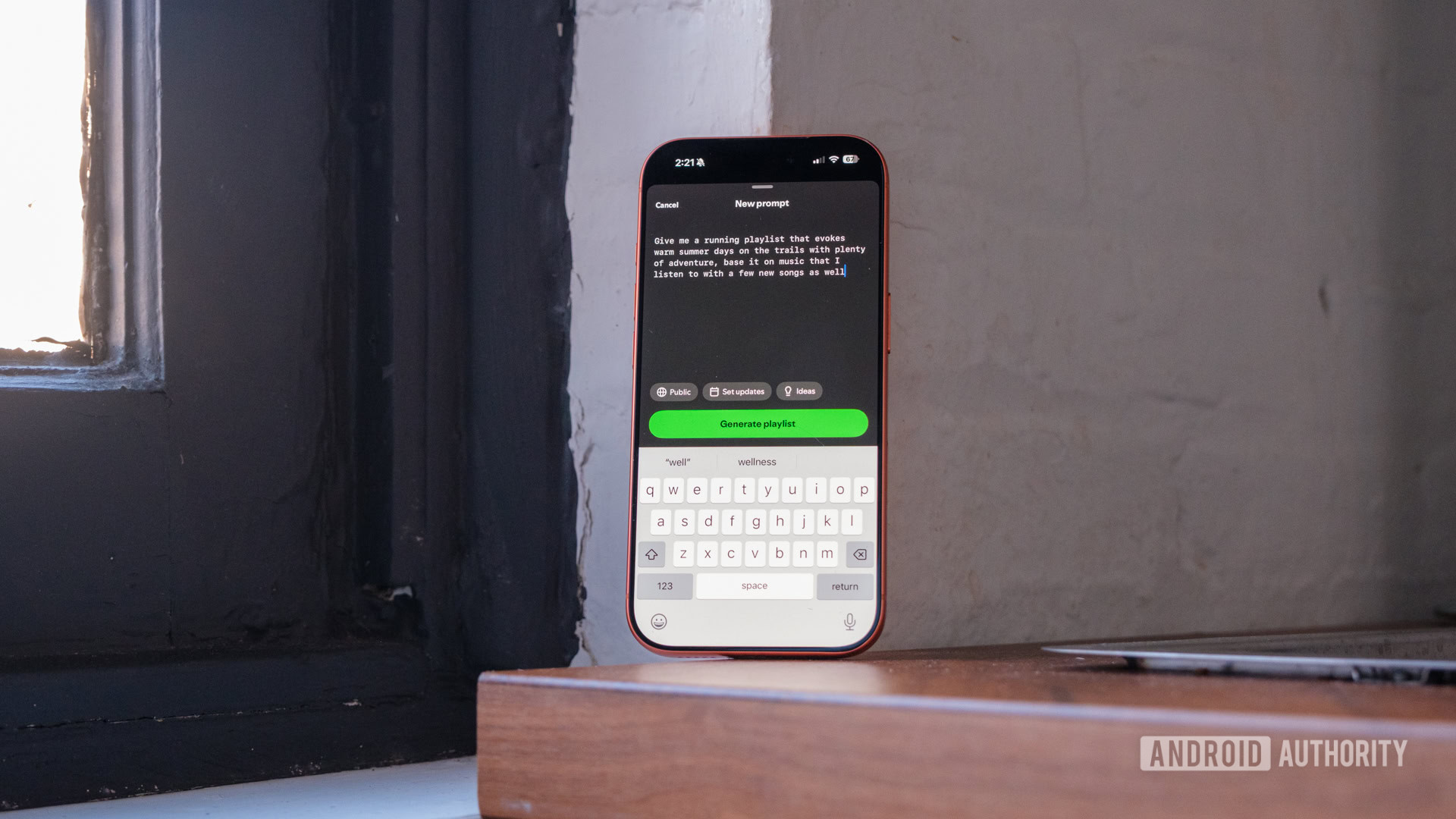
To test the system’s robustness against established routines, I shifted focus to an activity requiring sustained, consistent energy: running. The prompt evolved: "a mix evoking warm summer days on trails with plenty of adventure, using familiar music as a base, with new songs interspersed throughout." This attempt demonstrated a far better grasp of the required balance. The resulting 20 tracks offered a comfortable familiarity (about 15 known songs) augmented by new discoveries. In this case, the AI seemed to heavily favor one new artist, Kingfishr, suggesting a mechanism where, once a suitable new track is identified, the system over-samples from that source to maintain internal coherence. The one identifiable flaw in this execution was the BPM range—spanning from a relaxed 115 to a near-sprint 190—indicating that while the AI understood the vibe of "adventure," it struggled to strictly adhere to the physical requirement of maintaining a consistent running pace. This highlights a current limitation: the AI excels at abstract mood but may falter on precise, quantifiable physiological parameters unless those are explicitly weighted in the prompt.
The ultimate success metric for these tools appears to be achieving a "sweet spot" of curated novelty—the point where the user is delighted by the new inclusions but anchored by enough familiarity to remain comfortable. My final test case involved a genre far outside my typical rotation: jazz for a "happy hour" setting. My baseline jazz exposure is minimal, largely confined to contemporary artists like Laufey. A generic jazz playlist would likely fail. By specifying the context ("happy hour") and anchoring it with a known artist ("Laufey"), the AI generated a 25-track playlist featuring two Laufey selections. This provided the necessary familiar foundation, allowing the remaining, unfamiliar tracks—presumably selected for their appropriate "lounge" or "sophisticated" sonic markers—to be sampled without immediate rejection. This confirmed that the AI is not just a randomized generator but a context-aware curator capable of synthesizing disparate user requirements.
From an expert perspective, the trajectory of Prompted Playlists suggests a move toward hyper-contextualized listening experiences, which has profound industry implications.
Firstly, The Death of the Static Genre Box: Traditional playlists, constrained by genre labels, often fail to capture the complex interplay of mood, activity, and cultural reference. Prompted Playlists dissolve these rigid boundaries. A user is no longer limited to "Indie Pop"; they can request "1990s electronic music that sounds like a rainy drive through Tokyo." This granular control forces catalog metadata to evolve beyond simple genre tags into a richer taxonomy of emotional, temporal, and spatial associations.
Secondly, Artist Exposure and the New Gatekeepers: While the goal is discovery, the initial results suggest the AI might rely on "clusters" of similar new artists (like the repeated inclusion of Kingfishr). If users begin relying heavily on these AI suggestions, these generative clusters could become the new, unseen gatekeepers of music promotion, potentially overshadowing traditional playlist curators or human-driven editorial content. A minor artist might find success if the AI deems them the perfect fit for a popular prompt, but this path lacks the strategic promotion that established label relationships once guaranteed. The "reasoning" provided by the AI for each track is vital here, as it validates the inclusion, pushing users to accept the AI’s logic.
Thirdly, The User Experience Paradigm Shift: The iterative process—prompt, review, refine prompt—mirrors interaction patterns seen in visual AI. This conversational approach lowers the cognitive barrier to deep customization. Users who might never navigate complex filter menus are comfortable refining conversational text. This suggests that future streaming interfaces will lean heavily into natural language processing for all aspects of service interaction, from searching to account management.
Looking forward, the evolution of this technology points toward several key trends. We can anticipate integration with real-time environmental data. Imagine a prompt that factors in current local weather, time of day, and even the user’s wearable data (e.g., heart rate or step cadence) to generate a dynamically adjusting soundtrack. For instance, a prompt specifying a long run could result in a playlist whose BPM subtly accelerates as the user’s heart rate increases, then gradually tapers down towards the end of the session, all managed without manual intervention once the initial parameters are set.
Furthermore, the intellectual property and licensing aspects surrounding generative AI in music are only beginning to be mapped out. While these playlists pull from the existing catalog, the creation of the playlist structure itself—the unique combination and justification—is an emergent property of the AI. As this technology matures, debates around compensation for artists whose catalog informs these generative outputs will intensify, especially if these features drive significant shifts in listening behavior away from established, editorialized content.
Ultimately, the initial skepticism surrounding AI-driven curation gives way to a grudging, then genuine, appreciation once the user masters the syntax of the prompt. It is not about replacing the user’s taste but providing a powerful, responsive tool to translate complex, fleeting desires into tangible, listenable realities. The initial surprise—that the technology designed to create music I thought I would dislike actually provided moments of profound, tailored satisfaction—suggests that generative curation is not just a novelty but a fundamental upgrade to how we interface with the infinite library of recorded sound. The future of music consumption appears to be less about passive listening and more about active, conversational creation.
