

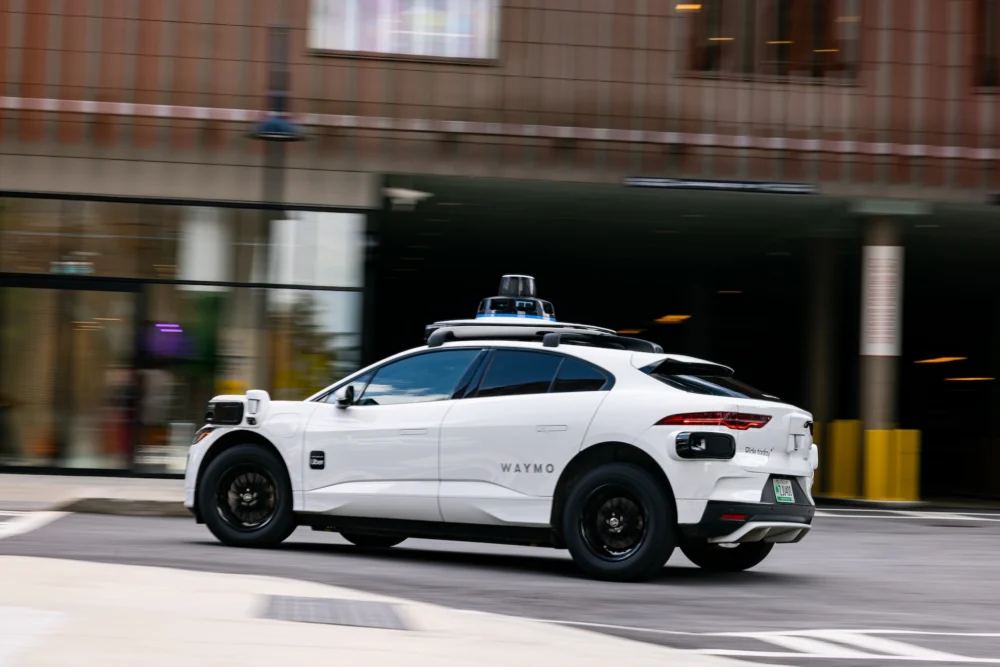
The recent billion-dollar capital injection into Waabi, a self-driving truck startup, transcends the immediate implications for the freight industry, signaling a decisive shift in the autonomous vehicle (AV) landscape engineered by Uber. This landmark financing round, structured with an initial $750 million upfront and a critical $250 million commitment from Uber contingent upon specific deployment milestones, immediately recalibrates Waabi’s trajectory. Founded by Raquel Urtasun, the former head of Uber’s Advanced Technologies Group (ATG) AI division, Waabi is leveraging this massive influx of capital to aggressively expand its mandate from Level 4 autonomous trucking into the far more competitive and capital-intensive domain of robotaxis. This pivot is not merely a strategic decision by Waabi; it represents the latest, high-stakes chip placed by Uber onto the global AV roulette table, solidifying its position as the ultimate platform aggregator in the future of mobility.
Uber’s history in the autonomous sector is fraught with expensive ambition and subsequent retrenchment. Having spent billions attempting to vertically integrate AV technology through its ill-fated ATG division—a venture ultimately sold off to Aurora Innovation in 2020—Uber learned a painful, yet invaluable, lesson: the cost and timeline associated with developing proprietary, full-stack AV technology are prohibitive for a company fundamentally focused on network effects and logistical execution. The ATG saga concluded with Uber becoming a significant minority investor in Aurora, essentially exchanging the burden of development for a guaranteed seat at the commercialization table.
This experience catalyzed a profound strategic pivot. Rather than acting as a technology developer, Uber transitioned into its current, more advantageous role as a technology agnostic deployment platform. This "asset-light" approach dictates that Uber maintains control over the demand side (the ride-hailing app, customer base, and logistics infrastructure) while outsourcing the highly specialized, risky, and varied development of the autonomous driving systems (ADS) to a diverse portfolio of partners. The Waabi investment is the most tangible evidence yet of this refined strategy, which now encompasses over two dozen AV partnerships worldwide, spanning various geometries, geographies, and technological methodologies.
The central thesis of Uber’s current strategy rests on minimizing idiosyncratic risk associated with any single technological path. The AV industry remains highly volatile; debates persist regarding the superiority of Lidar versus camera-based systems, the efficacy of specific sensor arrays, and the challenges of scaling generalized AI for urban complexity. By backing multiple horses—from legacy players like Waymo and Cruise (via GM/Honda collaborations) to emerging innovators like Waabi and established trucking firms—Uber ensures that regardless of which technological approach ultimately achieves commercial viability first, its platform will be ready to facilitate deployment.
The scale of the Waabi commitment—particularly the pledge to deploy more than 25,000 robotaxis onto the Uber network—underscores the seriousness of this alliance. For Uber, this commitment is vital for achieving the critical mass necessary to fundamentally alter the unit economics of ride-hailing. The ultimate prize in the mobility sector is the elimination of the human driver, the single largest variable cost in the current model. Achieving wide-scale deployment of Level 4 autonomous vehicles promises to transform Uber’s profitability, shifting it from a low-margin logistical intermediary to a high-margin technology platform.
Waabi’s Differentiated Technological Approach
Waabi, under the leadership of Urtasun, presents a compelling counterpoint to some of the industry’s more traditional, mileage-heavy testing methodologies. Waabi champions a "simulation-first" or "AI-centric" approach, built around the proprietary Waabi Driver system. This methodology dramatically reduces reliance on millions of miles of physical road testing, which is slow, costly, and inefficient for encountering the rare, high-consequence "edge cases" that truly challenge autonomy.
The Waabi model utilizes advanced generative AI and highly realistic digital environments to test and train its ADS. This allows the system to simulate millions of complex scenarios, including catastrophic failure conditions and unusual environmental factors, in a fraction of the time and cost required for real-world testing. The simulation environment, or "digital twin," is designed to be so photorealistic and physically accurate that lessons learned in the virtual world transfer seamlessly to the physical world. This approach is highly appealing to Uber because it promises a significantly accelerated path to verifiable safety and commercial readiness, potentially circumventing the regulatory delays and public skepticism that have plagued competitors relying on extensive, visible street testing.
Moreover, Urtasun’s deep pedigree in deep learning and perception systems, honed during her tenure at Uber ATG, provides a technical credibility that validates the simulation-first model. This approach represents a necessary evolution in AV development, recognizing that brute-force data collection alone is insufficient; intelligent, targeted simulation is key to solving the final 1% of difficult driving scenarios.
Industry Implications and the Aggregation Model
The market capitalization of autonomous driving development is staggering, often exceeding the valuation of major traditional automakers. Uber’s pivot from developer to aggregator fundamentally changes the competitive dynamics. By offering its massive user base, unparalleled demand generation capabilities, and robust fleet management infrastructure, Uber provides AV developers with something they desperately need: a clear, lucrative path to monetization and scale.
This partnership strategy mitigates several critical industry hurdles:
- Capital Efficiency: Uber avoids spending the billions required for ADS R&D while ensuring it retains access to the resulting technology. The $250 million milestone payment structure in the Waabi deal is a masterclass in risk management, aligning Uber’s financial commitment with concrete, verifiable deployment targets. Uber pays for results, not for theoretical development.
- Geographic Diversity: Different regulatory and environmental landscapes require different technological solutions. Uber’s diverse portfolio ensures it has partners specializing in various regions, from densely packed urban cores (where robotaxis thrive) to less structured environments (where Waabi’s truck tech might be necessary for logistics).
- Technological Hedging: If Lidar proves too expensive for mass deployment, or if computer vision breakthroughs render certain sensor stacks obsolete, Uber is protected because its underlying platform architecture is standardized, allowing it to swap out AV partners as needed.
This strategy sharply contrasts with the vertical integration models adopted by entities like Waymo (owned by Alphabet) or the now-reforming Cruise (GM). While Waymo benefits from deep integration and control over its full stack, it bears the entire financial burden and risk of development. When Cruise faced catastrophic operational and regulatory setbacks in late 2023, the consequences were existential. Uber’s distributed risk model ensures that the failure or delay of one partner does not derail its overall autonomous strategy.
The Economics of Scale and Future Impact
The deployment target of 25,000 robotaxis by Waabi, while ambitious, is the crucial metric for evaluating the success of Uber’s aggregation strategy. To achieve a meaningful economic impact, AVs must transition from pilot programs to mass deployment across multiple metropolitan areas. The sheer volume of 25,000 vehicles represents a significant chunk of the operational fleet in major markets, offering Uber the first real opportunity to demonstrate sustainable, driverless unit economics at scale.
Expert analysis suggests that the true inflection point for AV profitability occurs when operational costs—dominated by maintenance, energy, and depreciation—fall significantly below the variable cost of human labor, including wages, benefits, and training. The ability of Waabi to validate and deploy its simulation-first technology rapidly is therefore a critical lever in Uber’s long-term financial modeling.
Furthermore, this expansion into robotaxis by a company primarily known for trucking highlights the convergence of mobility sectors. The underlying AI and simulation infrastructure required for Level 4 autonomous trucking (which operates primarily on predictable highway corridors) provides a robust foundation for tackling the more complex, lower-speed environments of urban ride-hailing. This dual-use capability makes Waabi a particularly valuable partner for Uber, which manages both passenger transport and extensive logistics/delivery networks.
The future of autonomous mobility, as dictated by Uber’s strategic alliances, will be defined by interoperability and platform dominance. Uber is positioning itself not just as a consumer-facing app, but as the essential operating system (OS) connecting diverse hardware and software providers (the AV developers) with the end-user market. This model mirrors successful platform plays in other industries, such as Android in mobile computing, where the platform owner controls the distribution and economics without bearing the full R&D cost of every component.
The biggest challenge remaining for Uber’s portfolio approach is the fragmented nature of regulatory approval and public acceptance. Even with 20+ partners, scaling globally requires navigating a patchwork of local, state, and national regulations. However, by partnering with specialized firms like Waabi, which may demonstrate a superior safety profile due to their simulation-first validation, Uber gains sophisticated regulatory advocacy aligned with best-in-class technology.
In conclusion, Uber’s investment in Waabi is far more than a simple financial transaction; it is a profound affirmation of the company’s revised, highly calculated strategy to dominate autonomous mobility. By leveraging its market power to aggregate technological solutions rather than developing them in-house, Uber has de-risked its future and placed itself in the central control node of the emerging ecosystem. The success of this diversified portfolio, particularly the rapid scaling of the simulation-validated robotaxis promised by Waabi, will determine whether Uber secures a commanding, profitable lead in the driverless era. The company is betting that strategic alliances, not singular technological prowess, will ultimately unlock the transformative potential of autonomy.
